Audit
and Risk Management Committee - Terms of Reference Ngā Ārahina Mahinga
|
Chair
|
Mr Bruce Robertson
|
|
Deputy Chair
|
Councillor McLellan
|
|
Membership
|
Councillor Fields
Councillor MacDonald
Councillor Scandrett
External Members:
Mrs Hilary Walton
Mr Michael Wilkes
|
|
Quorum
|
Half of the members if the
number of members (including vacancies) is even, or a majority of members if
the number of members (including vacancies) is odd.
|
|
Meeting
Cycle
|
Quarterly and
as required
|
|
Reports
To
|
Council
|
Purpose
To assist the Council to discharge
its responsibility to exercise
due care, diligence and skill in relation to the oversight of:
·
the robustness of the internal control framework;
·
the integrity and appropriateness of external reporting, and
accountability arrangements within the organisation for these functions;
·
the robustness of risk management systems, process and practices;
·
internal and external audit;
·
accounting policy and practice;
·
compliance with applicable laws, regulations, standards and best
practice guidelines for public entities; and
·
the establishment and maintenance of controls to safeguard the
Council’s financial and non-financial assets.
The foundations on which this
Committee operates, and as reflected in this Terms of Reference, includes:
independence; clarity of purpose; competence; open and effective relationships
and no surprises approach.
Procedure
·
In order to give effect to its advice the Committee should make recommendations to the Council and to
Management.
·
The Committee should meet the internal and the external auditors
without Management present as a standing agenda item at each meeting where
external reporting is approved, and at other meetings if requested by any of
the parties.
·
The external auditors,
the internal audit manager and the co-sourced internal audit firm should meet
outside of formal meetings as appropriate with the Committee Chair.
·
The Committee Chair
will meet with relevant members of Management before each Committee meeting and
at other times as required.
Responsibilities
Internal Control Framework
·
Consider the adequacy and effectiveness of internal controls and
the internal control framework including overseeing privacy and cyber security.
·
Enquire as to the steps management has taken to embed a culture
that is committed to probity and ethical behaviour.
·
Review the processes or systems in place to capture and
effectively investigate fraud or material litigation should it be required.
·
Seek confirmation annually and as necessary from internal and
external auditors, attending Councillors, and management, regarding the
completeness, quality and appropriateness of financial and operational
information that is provided to the Council.
Risk Management
·
Review and consider Management’s risk management framework
in line with Council’s risk appetite, which includes policies and
procedures to effectively identify, treat and monitor significant risks, and
regular reporting to the Council.
·
Assist the Council to determine its appetite for risk.
·
Review the principal risks that are determined by Council and
Management, and consider whether appropriate action is being taken by
management to treat Council’s significant risks. Assess the effectiveness
of, and monitor compliance with, the risk management framework.
·
Consider emerging significant risks and report these to Council
where appropriate.
Internal Audit
·
Review and approve the annual internal audit plan, such plan to
be based on the Council’s risk framework. Monitor performance against the
plan at each regular quarterly meeting.
·
Monitor all internal audit reports and the adequacy of
management’s response to internal audit recommendations.
·
Review six monthly fraud reporting and confirm fraud issues are
disclosed to the external auditor.
·
Provide a functional reporting line for internal audit and ensure
objectivity of internal audit.
·
Oversee and monitor the performance and independence of internal
auditors, both internal and co-sourced. Review the range of services provided
by the co-sourced partner and make recommendations to Council regarding the
conduct of the internal audit function.
·
Monitor compliance with the delegations policy.
External Reporting and
Accountability
·
Consider the appropriateness of the Council’s existing
accounting policies and practices and approve any changes as appropriate.
·
Contribute to improve the quality, credibility and objectivity of
the accounting processes, including financial reporting.
·
Consider and review the draft annual financial statements and any
other financial reports that are to be publicly released, make recommendations
to Management.
·
Consider the underlying quality of the external financial
reporting, changes in accounting policy and practice, any significant
accounting estimates and judgements, accounting implications of new and
significant transactions, management practices and any significant
disagreements between Management and the external auditors, the propriety of
any related party transactions and compliance with applicable New Zealand and
international accounting standards and legislative requirements.
·
Consider whether the external reporting is consistent with
Committee members’ information and knowledge and whether it is adequate
for stakeholder needs.
·
Recommend to Council the adoption of the Financial Statements and
Reports and the Statement of Service Performance and the signing of the Letter
of Representation to the Auditors by the Mayor and the Chief Executive.
·
Enquire of external auditors for any information that affects the
quality and clarity of the Council’s financial statements, and assess
whether appropriate action has been taken by management.
·
Request visibility of appropriate management signoff on the
financial reporting and on the adequacy of the systems of internal control;
including certification from the Chief Executive, the Chief Financial Officer
and the General Manager Corporate Services that risk management and internal
control systems are operating effectively;
·
Consider and review the Long Term and Annual Plans before
adoption by the Council. Apply similar levels of enquiry, consideration,
review and management sign off as are required above for external financial
reporting.
·
Review and consider the Summary Financial Statements for
consistency with the Annual Report.
External Audit
·
Annually review the independence and confirm the terms of the
audit engagement with the external auditor appointed by the Office of the
Auditor General. Including the adequacy of the nature and scope of the audit,
and the timetable and fees.
·
Review all external audit reporting, discuss with the auditors
and review action to be taken by management on significant issues and
recommendations and report to Council as appropriate.
·
The external audit reporting should describe: Council’s
internal control procedures relating to external financial reporting, findings
from the most recent external audit and any steps taken to deal with such
findings, all relationships between the Council and the external auditor,
Critical accounting policies used by Council, alternative treatments of
financial information within Generally Accepted Accounting Practice that have
been discussed with Management, the ramifications of these treatments and the treatment
preferred by the external auditor.
·
Ensure that the lead audit engagement and concurring audit
directors are rotated in accordance with best practice and NZ Auditing
Standards.
Compliance with Legislation,
Standards and Best Practice Guidelines
·
Review the effectiveness of the system for monitoring the
Council’s compliance with laws (including governance legislation,
regulations and associated government policies), with Council’s own
standards, and Best Practice Guidelines.
Appointment of Independent Members
·
Identify skills required for Independent Members of the Audit and
Risk Management Committee. Appointment panels will include the Mayor or
Deputy Mayor, Chair of Finance & Performance Committee and Chair of Audit
& Risk Management Committee. Council approval is required for all
Independent Member appointments.
·
The term of the Independent members should be for three
years. (It is recommended that the term for independent members begins on
1 April following the Triennial elections and ends 31 March three years
later. Note the term being from April to March provides continuity for
the committee over the initial months of a new Council.)
·
Independent members are eligible for re-appointment to a maximum
of two terms. By exception the Council may approve a third term to ensure
continuity of knowledge.
Long Term Plan Activities
·
Consider and review the Long Term and Annual Plans before
adoption by the Council. Apply similar levels of enquiry, consideration,
review and management sign off as are required above for external financial
reporting.
|
7. Long
Term Plan 2027 - Risk Assessment and Project Update
|
|
Reference Te Tohutoro:
|
25/1705241
|
|
Responsible Officer(s) Te Pou Matua:
|
Peter
Ryan, Head of Corporate Planning & Performance Peter.Ryan@ccc.govt.nz
|
|
Accountable ELT Member Pouwhakarae:
|
Bede
Carran, General Manager Finance, Risk & Performance / Chief Financial
Officer
|
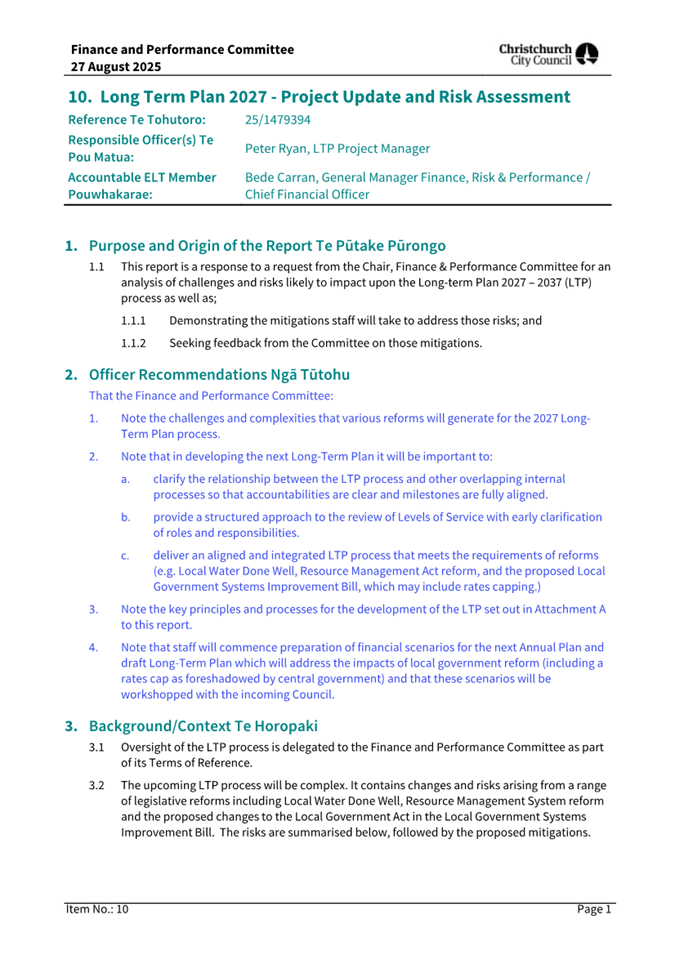
1. Purpose and Origin of the Report Te Pūtake Pūrongo
1.1 The
purpose of this report is to provide an analysis of workstreams required and
risks likely to impact upon the Long-term Plan 2027 – 2037 (LTP)
process. The report also provides proposed mitigations for consideration
by the Committee (refer Attachment A).
1.2 A
similar report was considered by the Finance and Performance Committee on 27
August 2025 (F&P meeting). The Committee endorsed a series of high-level
recommendations aimed at mitigating process risks for the LTP.
2. Officer
Recommendations Ngā Tūtohu
That the Audit and
Risk Management Committee:
1. Receives the Long Term Plan 2027 - Risk Assessment and Project
Update report.
2. Notes the Long-term Plan 2027 Project Update and Risk Assessment
report, recommendations and phasing’s approved by the Finance &
Performance Committee at its meeting on 27 August 2025 (refer Attachment A).
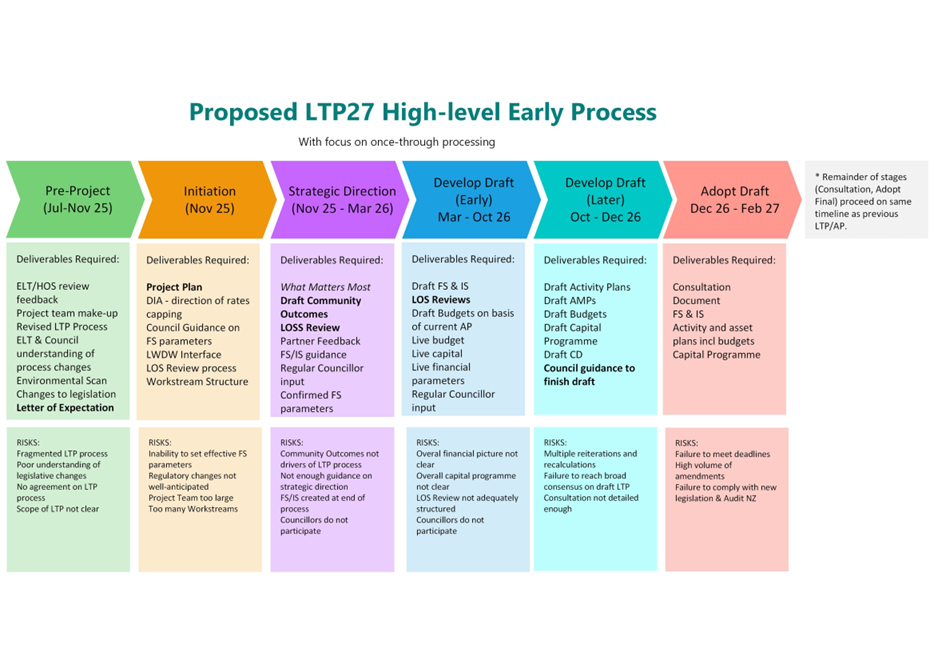
3. Endorses the high-level plans set out in Attachment B as an
early step in clarifying and managing process risks to key Long-term Plan
2027-37 (LTP) workstreams.
4. Notes that staff have detailed the key component parts of the LTP in
the report.
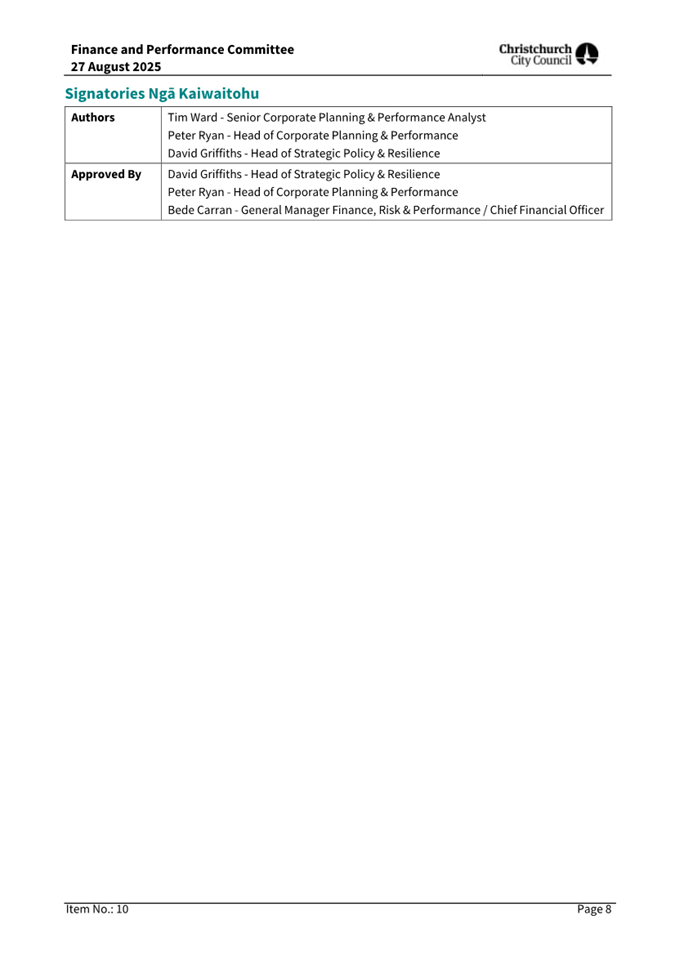
5. Notes that a full and detailed LTP project plan will follow
following receipt of the new Council’s Letter of Expectation.
6. Agrees to provide advice to Finance & Performance Committee on
the risks (and the effectiveness of their proposed mitigations) at regular
intervals throughout the preparation of the Long-Term Plan 2027, in line with
its Terms of Reference.
3. Background/Context Te Horopaki
3.1 Under
its Terms of Reference, the Audit and Risk Management Committee (ARMC)
considers and reviews LTP processes during the LTP development and prior to its
adoption by the Council.
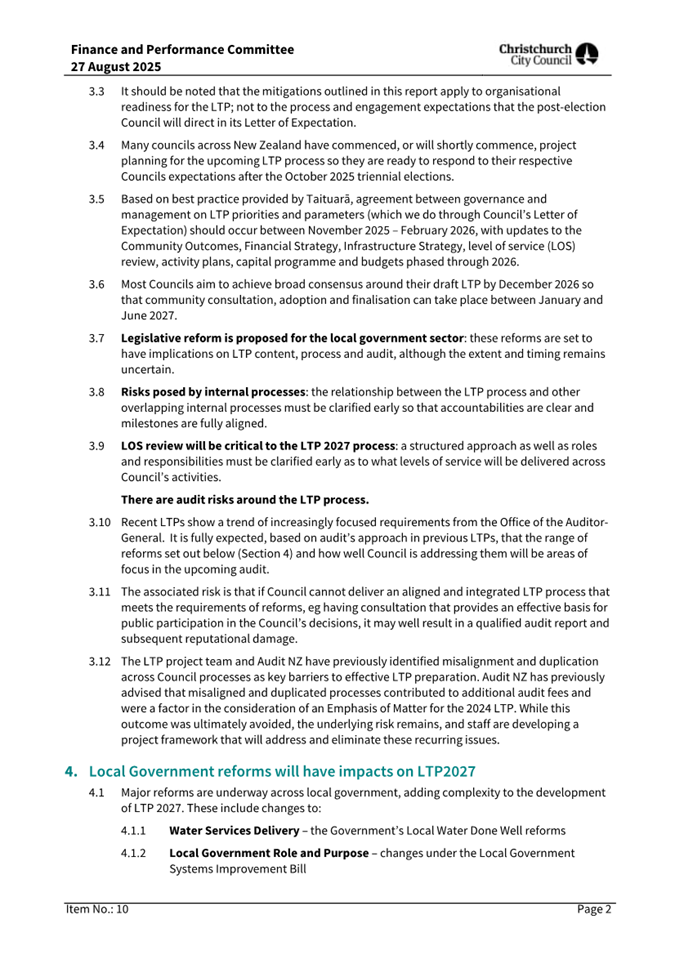
3.2 LTPs
are large and complex documents. The process of compiling them is an
organisational wide exercise carried out over an 18-24 month period with a
significant number of risks to be identified and managed. Risks are set
out in Attachment A and can be briefly summarised as arising from:
· a markedly uncertain geopolitical and economic environment;
· the central government elections during the 2026 LTP
‘build’ year;
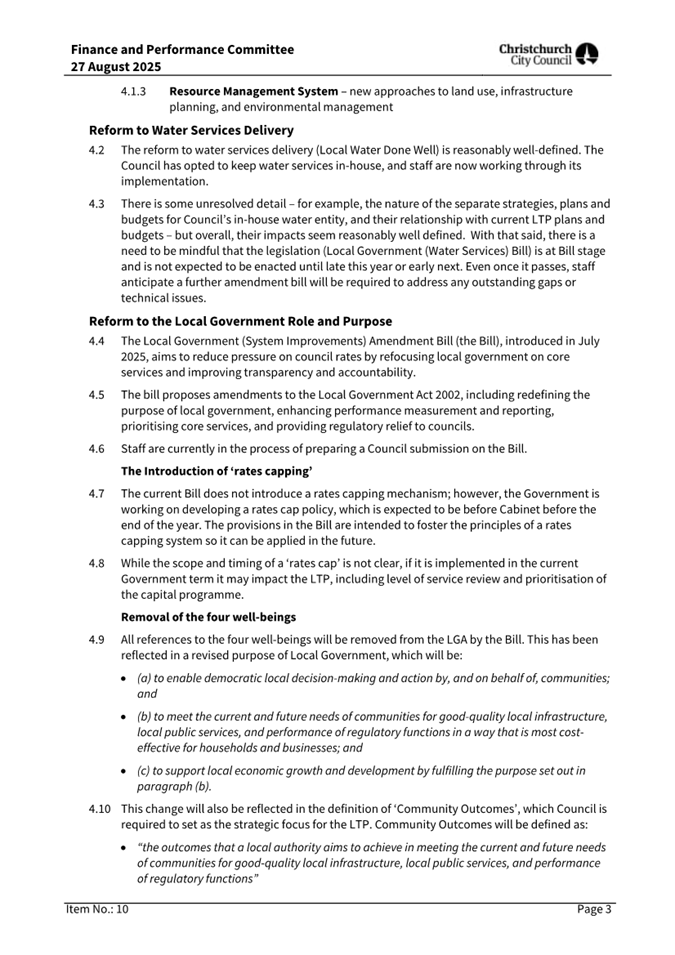
· a variety of legislative reforms currently being progressed, e.g.
Resource Management reform, the Local Government (Systems Improvement) Bill and
Water Services reform, with the full impact for Council and the sector
remaining uncertain;
· the potential introduction of a rates cap, although there is
considerable uncertainty on the shape and form of any rates capping; and
· a failure of Council internal processes, e.g. the relationship
between the LTP process and other overlapping internal processes is not
established early, accountabilities and milestones for completion not agreed in
advance and adhered to throughout the LTP’s development.
3.3 On
27 August 2025 the F&P meeting approved a range of staff recommendations
designed to mitigate process risks, which are more readily managed than risks
arising from external events. These recommendations originated from a Heads
of Service / ELT meeting on 15 May 2025 and were agreed with the Chief
Executive and ELT. They were developed as learnings from past LTPs and can be
summarised as:
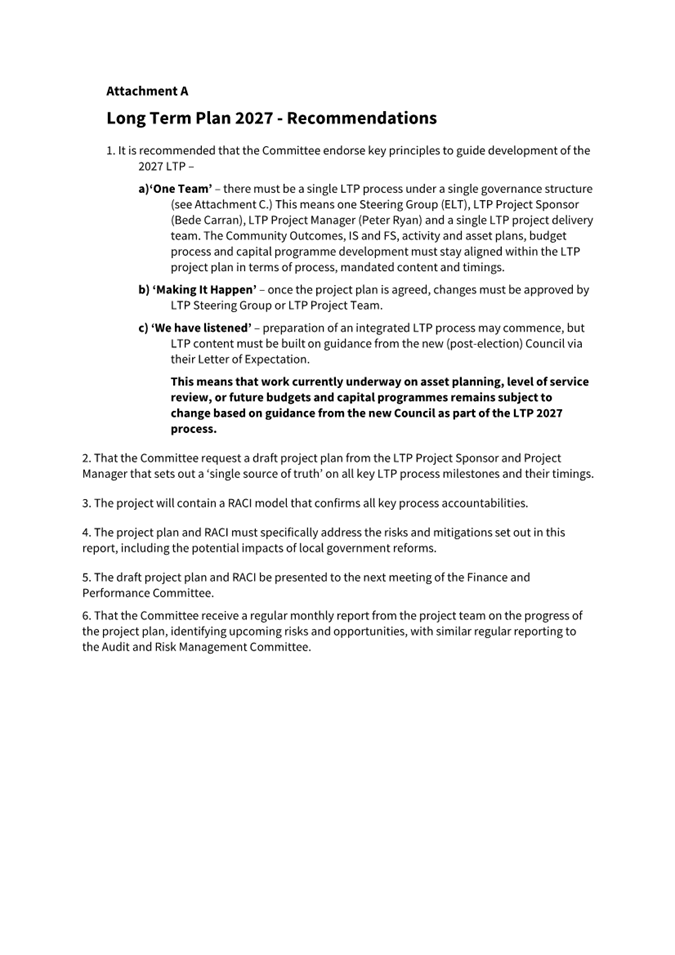
· ‘One Team’ – there
will be a single LTP process and single governance structure. This means one
Steering Group (ELT), LTP Project Sponsor (CFO), LTP Project Manager (Head of
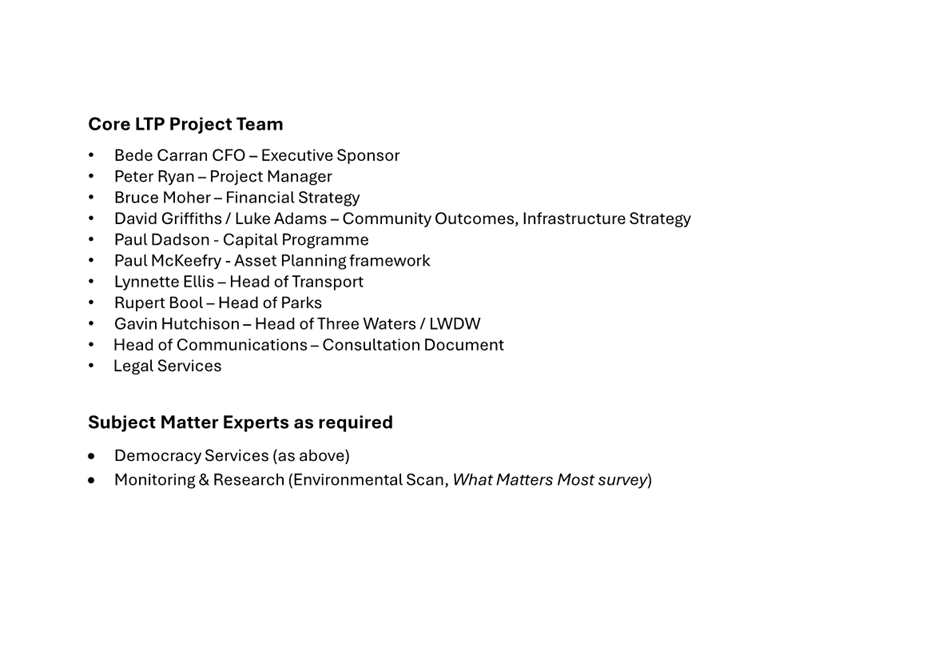
Corporate Planning & Performance) and single LTP project delivery team;
the
community outcomes, financial strategy, infrastructure strategy, activity and
asset plans, budget process and capital programme development must stay aligned
within the LTP project plan in terms of process, mandated content and timings.
· ‘Making It Happen’ –
once the single project plan is agreed, changes must be approved by the LTP
Steering Group or LTP Project Team. Teamwork, which is part of a ‘no
surprises’ policy.
· ‘We have listened’ –
preparation of an integrated LTP process may commence, but LTP content must be
built on guidance from the new (post-election) Council via its Letter of
Expectation (LoE).
3.4 This
means that work currently underway on asset planning, level of service review,
future budgets or capital programmes is on essential and statutory components
of the LTP and remains subject to content change based on LTP decision-making directions
from the new Council.
3.5 At
the same Heads of Service / ELT meeting the Chief Executive emphasised that all
components of an LTP currently exist in both approved and audited form.
Consequently, the focus of the LTP 2027 process must be on review and updating
not starting over from scratch.
3.6 The
F&P meeting identified three specific risks as focus areas:
· internal misalignment and duplication across LTP processes and
components are key risks to effective LTP preparation, to address this the LTP
project plan and accountabilities must address internal coordination issues so
that accountabilities are clear and milestones are fully aligned;
· rates cap: the LTP project plan to develop a scenario containing
options to model the effect of a rates cap (assuming this becomes a legislative
requirement); and
· transparency: the full suite of LTP documentation will remain
transparent to the Mayor, Councillors and the community through the development
of the LTP and thereafter.
3.7 The
F&P meeting requested a draft of a full project plan (full project plan) from
the Project Sponsor and Manager that sets out a ‘single source of
truth’ on all key LTP processes and their timings. It will contain a RACI
model
that confirms all key process accountabilities. The RACI model has been
used as it is a relatively well understood and applied in terms of clarifying
accountabilities in large complex projects.
3.8 Prior
to developing the full project plan, staff believe it is important to set out
the major workstreams, their accountabilities, risks and how it is proposed to
mitigate them (refer Attachment B). This is so the Committee can test the
process that staff are undertaking as part of the LTP’s
development. Once those matters have been framed to the satisfaction of
the ARMC, the full project plan in readiness for the new Council can be
completed and presented.
3.9 Early
direction on the process staff are following to develop the full project plan will
be beneficial to the LTP project, as post 7 October 2025 both the Finance &
Performance Committee and the ARMC will not reconvene until (nominally) late
November and mid-December respectively.
3.10 The summary of
key workstream in the full project plan including the risks, deliverables and
scope is attached (refer Attachment B). This summary has been built using
phasings, deliverables and principles already established with LTP project
team, ELT and Finance & Performance Committee.
3.11 To supplement
the summary of workstreams (Attachment B) key points for ARMC to note on LTP
components are set out below. The components below and the workstreams
referenced in Attachment B form the basis for developing the full project plan
requested at the F&P meeting.
3.12 Letter of
Expectation
3.12.1 Recent LTPs have
benefited from an LoE shortly after the new Council has been elected. Development
of the LoE provides an opportunity for Council to workshop its long-term
objectives, and to clarify priorities and trade-offs. The LoE also means that
staff can develop draft LTP content during the ‘build’ period with
confidence. As with any LoE, the key risks are that it does not provide
clear direction or arrives late which means that major changes in direction are
problematic.
3.12.2 Staff note that the LoE
would normally be finalised around late November or early December.
However, given that central government has signalled an announcement on rates
capping by the ‘end of the calendar year’ some flexibility may be
required to reflect a potentially significant change in government policy
affecting the sector.
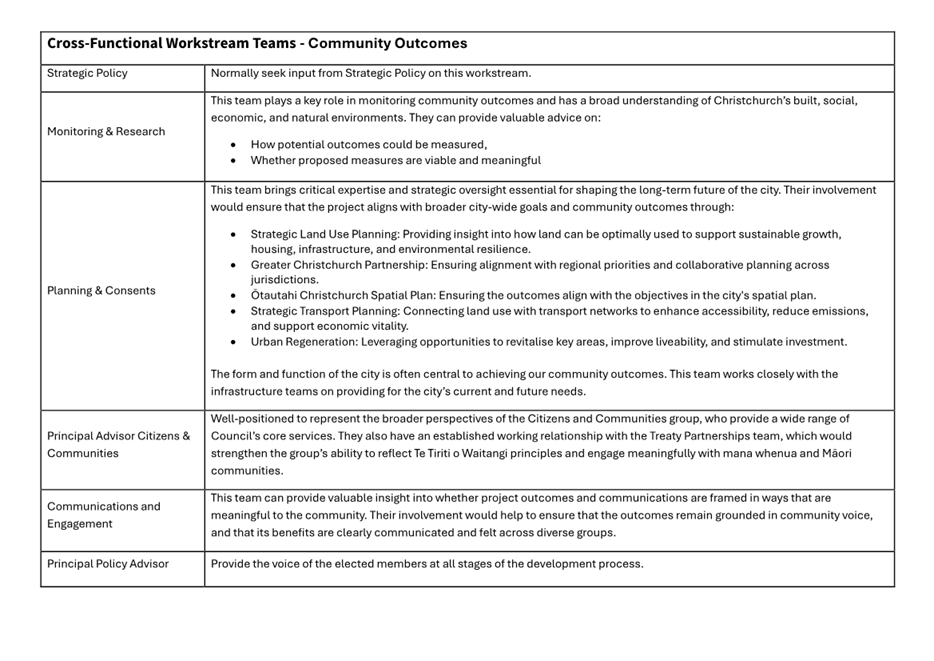
3.13 Community
Outcomes
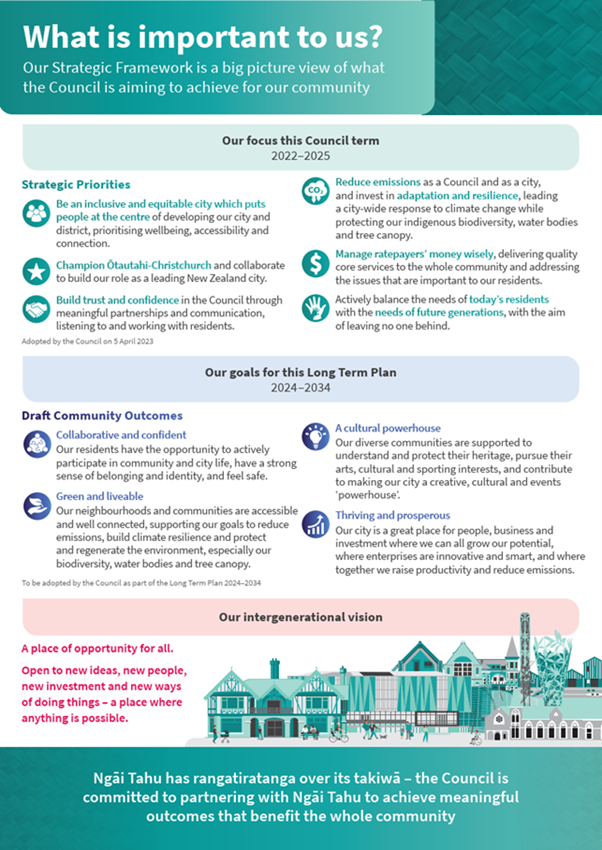
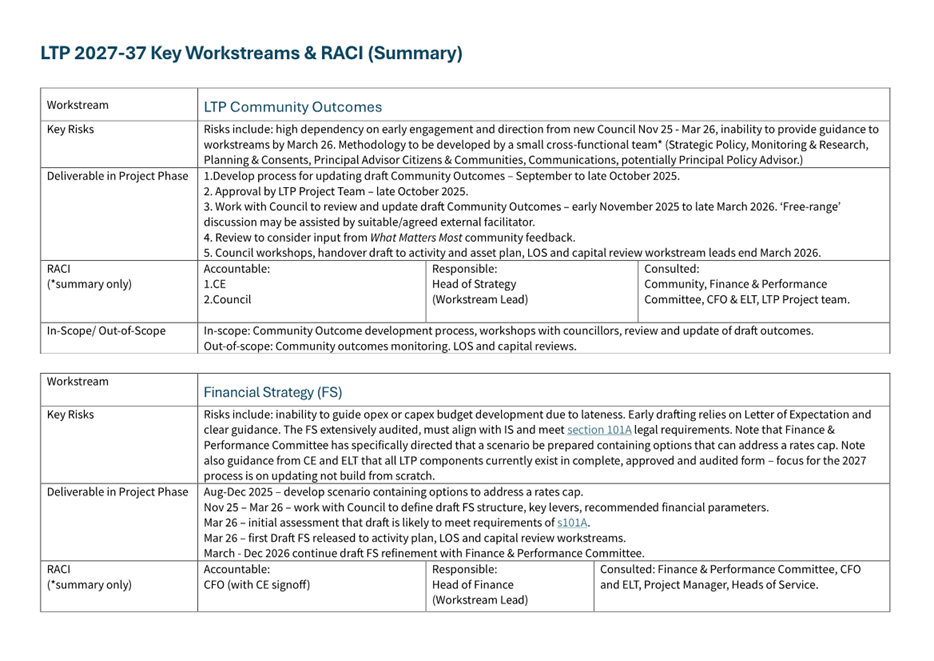
3.13.1 Community outcomes are a
legislative component and sub-set of the LTP project. They describe the
outcomes that a local authority aims to achieve to promote the social,
economic, environmental, and cultural well-being of its district in the present
and for the future.
3.13.2 Community outcomes should
describe desired end states for the community (an outward view) not for the
Council organisation (an inward view). If not carefully framed they may
be expressed in vague or theoretical language, or as operational workstreams or
capital projects. If community outcomes are not clearly defined or
genuinely reflective of what matters, it becomes difficult to use them
effectively in service level reviews and capital delivery prioritisation. This
can undermine the development of an integrated LTP that aligns with the
Council’s priorities for the community.
3.13.3 Broadly, development of
the community outcomes occurs in stages. The first is for Council to have
a ‘free range’ discussion on the outcomes its wishes to achieve
including its priorities and projects. Consideration could be given to
external facilitation for this exercise.
3.13.4 Secondly, a
cross-functional team of staff takes the Councillor guidance in terms of its
outcomes, priorities and projects and frames these as community outcomes.
These are then presented back to Council for it to consider and adopt if they
meet its expectations. It is envisaged this cross-functional staff team
would be made up of key stakeholders representing Infrastructure, Citizens
& Communities, Planning, Strategic Policy, Communications, and potentially
the Principal Policy Advisor.
3.14 Financial
Strategy (FS)
3.14.1 The FS is a legislative
component and sub-set of the LTP project. The purposes of the FS are to:
(a) facilitate prudent financial management by providing a
guide to consider proposals for funding and expenditure against; and
(b) provide a context for consultation on Council’s
proposals for funding and expenditure by making transparent the overall effects
of those proposals on the local authority’s services, rates, debt, and
investments.
3.14.2 Early input from Council
on key parameters will be important for the development of the FS, particularly
if the foreshadowed rates cap eventuates with significant rating constraints.
3.14.3 The statutory
requirements for the FS are set out in section 101A of the LGA, and it and the
infrastructure strategy (IS) need to be aligned and integrated.
3.14.4 Having subject matter
experts as part of the FS development is a key control to ensure the section
101A statutory requirements are met. In terms of integration with the IS,
continuous liaison will help manage this risk, and staff advise that it would
be prudent for a subject matter expert member of each team (FS and IS) to be
represented on the other respective workstream.
3.14.5 Staff also note that some
preliminary modelling has been commenced to understand the effects of a rates
cap on future budgets.
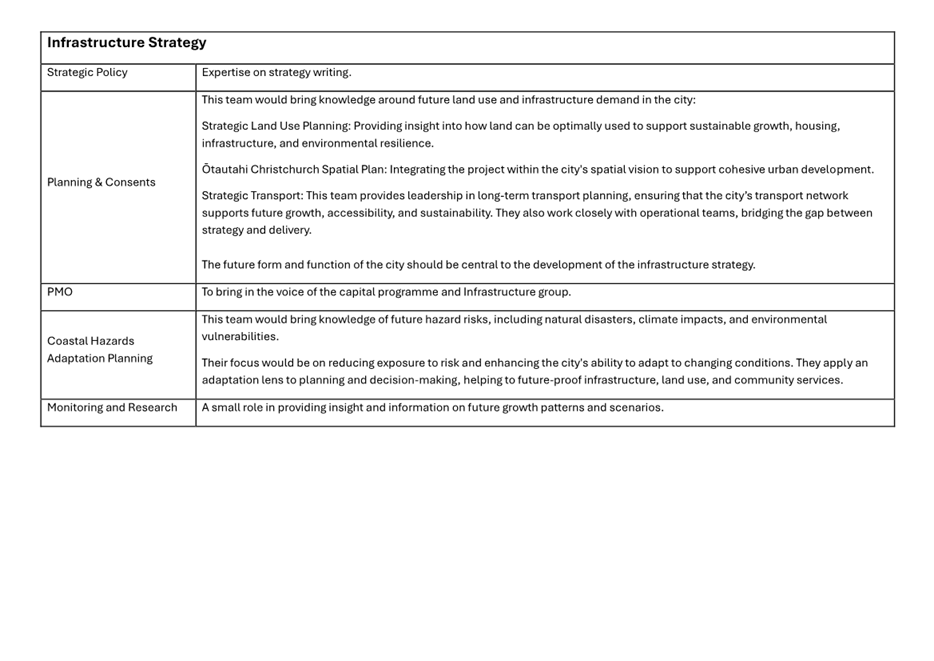
3.15 Infrastructure
Strategy (IS)
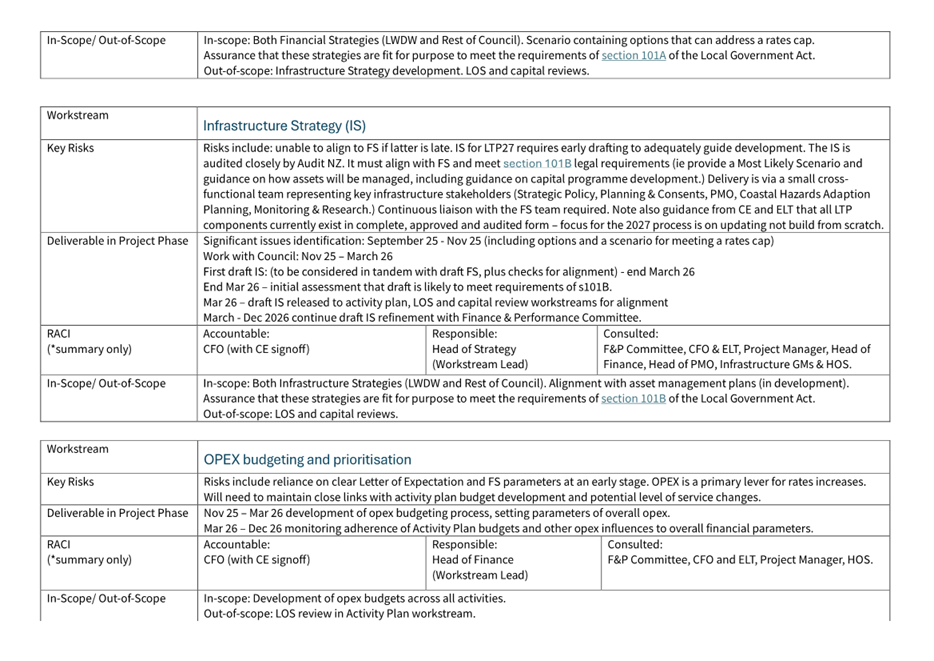
3.15.1 The IS is a legislative
component and sub-set of the Long-Term Plan project, covering a minimum 30-year
period, with the statutory requirements set out in section 101B of the LGA. Its
purpose is to identify significant infrastructure issues facing Council over
that timeframe, and to outline the principal options for managing those issues
along with their implications.
3.15.2 The IS must explain how
Council will manage its infrastructure assets, including the renewal or
replacement of existing assets, responding to changes in demand (growth or
decline), adjusting levels of service, protecting public health and the
environment, mitigating adverse effects, and improving resilience by managing
risks from natural hazards and making appropriate financial provisions.
3.15.3 The IS must outline the
most likely scenario for infrastructure asset management, including projected
capital and operating expenditure for each of the first 10 years and each
subsequent 5-year period, significant capital decisions (including timing,
options, and estimated costs), and the key assumptions underpinning the
scenario, such as asset life cycles, changes in demand and service levels, and
the impact of uncertainty.
3.15.4 The IS is a critical
component of LTP as it sets out the major drivers for managing assets and these
must align with both asset management plans, the development of the capital
programme and the FS. To manage the risks of misalignment between the IS
and other components of the LTP, staff advise that a small, well-rounded
cross-functional team is best suited to framing the IS. This group would
have representatives from key infrastructure stakeholders, eg Infrastructure
Group, Citizens and Community, along with Strategic Policy, Planning &
Consents, PMO, Coastal Hazards Adaption Planning, Monitoring & Research and
Finance to support continuous liaison with the FS workstream.
3.16 Opex
Budgeting
3.16.1 As with previous LTPs
this is both a ‘business as usual’ (BAU) function of Council and an
LTP workstream. It relies on a clear LoE, particularly around levels of
service and early FS parameters as operating expenditure is a primary driver of
rates increases.
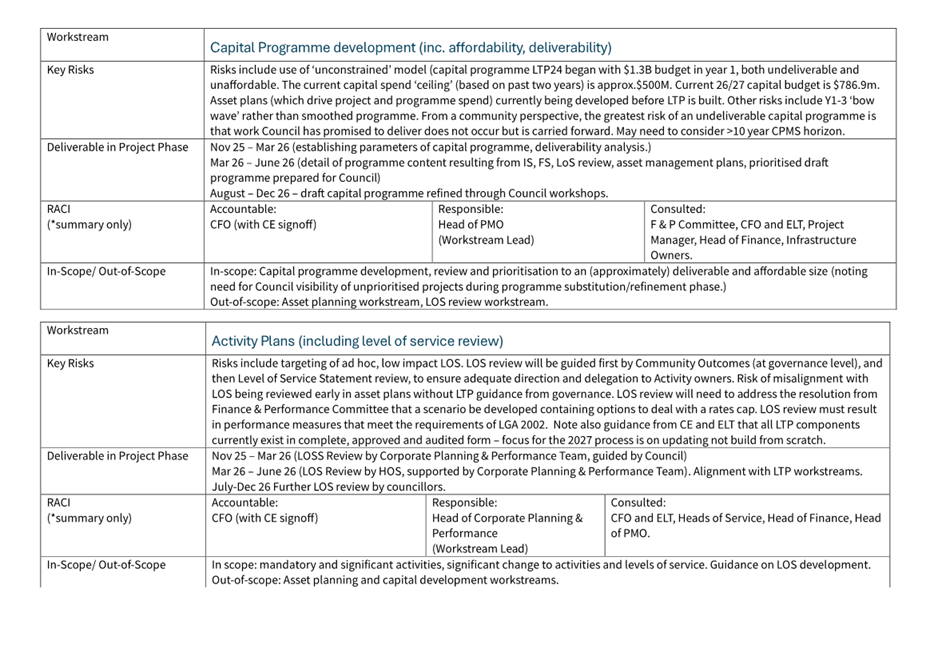
3.17 Capital
programme development
3.17.1 As with previous LTPs
this is both a BAU function of Council and an LTP workstream.
3.17.2 As part of the Annual
Plan 2025/26 development, significant work was carried out by Council’s
Project Management Office (PMO) to determine a ‘deliverable’
capital programme for the 2025/26 year. This resulted in a significant
reduction in the core capital programme (excluding Te Kaha) of circa $70m from
what was forecast in the LTP 2024-34 (down from $620m to $550m). A
similar exercise to determine what is deliverable is being conducted for the
2026/27 annual plan (currently under development).
3.17.3 As part of the LTP
development, the PMO will continue to work on what is a deliverable 10 year
capital programme. This work is informed from multiple sources including
the LoE, the asset management plans and both the FS and IS. It is cross
organisational involving Heads of Service, project managers and finance team
members.
3.17.4 With the current work on
deliverability, it is expected the PMO will be able to largely mitigate the
risk that emerged in the 2024 LTP where the capital programme began with a Y1
(unprioritised) budget of $1.3B. An inflated undeliverable capital budget
risks delay and confusion for the development of a rigorous deliverable final
capital programme to be adopted as part of the LTP.
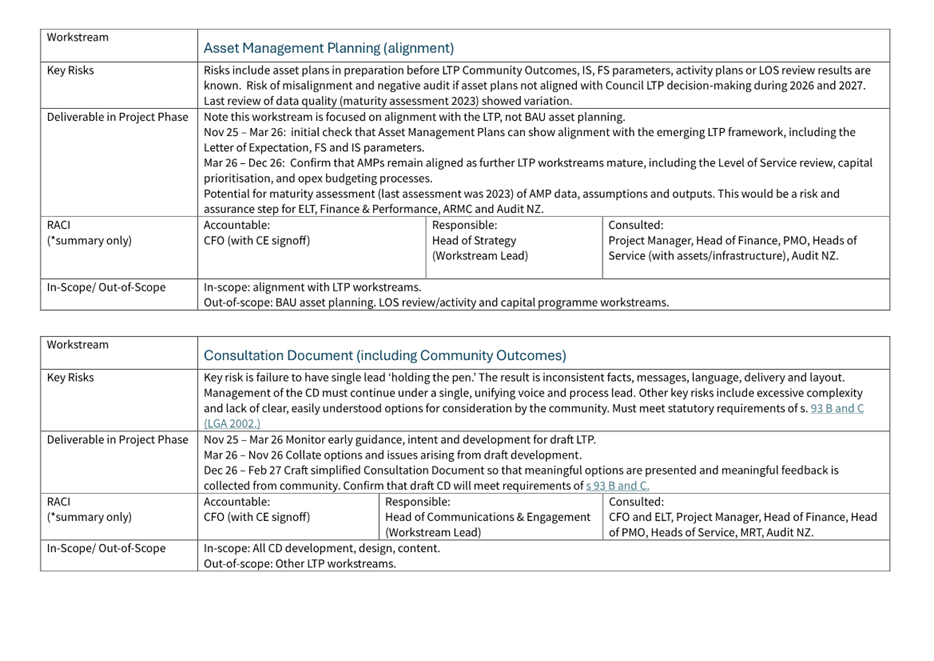
3.18 Asset planning
(alignment)
3.18.1 As with previous LTPs
this is both a BAU function of Council and – in terms of alignment only -
an LTP workstream. Asset plans (which drive the majority of capital programme
spend through renewals and replacements) are currently being developed before
community outcomes, IS, FS parameters or LoS review results are known.
3.18.2 However, this work is
proceeding on the basis that asset plans will be modified to align with LTP
decisions made by Council. This is important as asset plans are
scrutinised as part of the LTP audit, usually by a specialist asset planning
auditor, to assess alignment with other core LTP documents. Areas
examined include:
(a) whether the asset data on condition, performance and life
cycle are fit for purpose;
(b) whether the asset plans align with the guidance on
renewing and/or replacing existing assets in the IS; and
(c) whether the asset plans align with the levels of service,
budgets etc set in the LTP.
3.18.3 Audit has noted in the
past that there have been issues with unnecessary duplication and different
levels of service in asset plans and other LTP documents such as activity
plans, hence the focus on alignment across and within the various LTP component
documents.
3.19 Activity plans
/ level of service review
3.19.1 Following work with ELT
and Heads of Service a structured approach is being developed that will enable
a level of service review if that is a decision of Council and which
would be directed through the LoE (and potentially also initiated by central
government announcements on a rates cap).
3.19.2 Broadly, the plan is to
map the levels of service to the agreed community outcomes (when they are
finalised by Council) and test the alignment between them. Staff note
that where there are mandatory levels of services these will need to be
excluded from a level of service review, acknowledging that in some instances
the performance target for some mandatory measures can be adjusted.
3.20 Consultation document
(CD)
3.20.1 This is a legislative
component and sub-set of the LTP project. The purpose and statutory
requirements for the CD are set out in sections 93B -93D of the LGA 2002.
Lessons from earlier CDs highlight the importance of a single lead
‘holding the pen.’ This mitigates significantly the risk of
inconsistent facts, messages, language, delivery and layout. Management of the
CD under a single, unifying voice and process lead is considered important.
3.20.2 Key risks for a CD
include excessive length, complexity and lack of clear, easily understood
options for consideration by the community of significant issues.
3.21 Specific
risks from LTP audit
3.21.1 The effect and
implications of central government reforms and their implementation in the LTP
process will receive scrutiny from Audit NZ. Audit NZ has indicated that up to
$80K in extra funding for the audit process may be needed for the 2027 LTP.
Staff note this is in keeping with an $80K cost overrun for the 2024 LTP.
3.21.2 As noted above Audit NZ
has previously identified misalignment and duplication across Council processes
as key risks to effective LTP preparation. These have cost escalation
implications and has been referenced by Audit NZ when seeking a higher fee
recovery.
3.21.3 Where the LTP does not
provide adequately for the implementation of reforms or there is unresolved
misalignment of component documents, eg between asset plans and the IS and/or
FS, there is an increased risk of a qualified LTP. This has potential
implications for Council’s reputation and likely increased and unbudgeted
costs.
3.22 Risk around
conflating the purpose of an annual plan with LTP
3.22.1 In general the purpose of
an annual plan is to make transparent variations to the LTP, that are neither
material nor significant, and which is why annual plans are not audited.
An annual plan can include specific amendments to the LTP, provided they are
not deemed significant (section 97 of the LGA).
3.22.2 However, if the aim is to
significantly alter the intended level of service for any significant activity
(including a decision to commence or cease any such activity) or transfer the
ownership or control of a strategic asset to or from the local authority, then
those decisions must be taken within an LTP.
3.22.3 Unlike the one-year
horizon of an annual plan, LTPs cover a 10-year period and require
significantly more time and resources to prepare, as well having extensive
audit requirements. There is a high degree of risk around attempting to
prepare an LTP in the much shorter timeframes typically available to an annual
plan.
3.22.4 There needs to be a clear
distinction made between what are non-material variations to an LTP within the
annual plan process, having regard to the LGA and Council’s Significance
and Engagement Policy, and changes which require an LTP to be undertaken.
Having discussions with the Council early in the new triennium on the
distinction is important so that it is well informed on the implications of any
decision it makes to undertake an LTP rather than an annual plan process.
3.23 Special focus
areas identified by the Finance and Performance Committee
3.23.1 These have been addressed
in Attachment B but in summary the concerns raised were:
· internal misalignment and duplication across LTP processes and
components are key risks to effective LTP preparation, the LTP project plan and
accountabilities are the controls to address internal coordination risks and
issues;
· rates cap: the LTP project plan must develop a scenario containing
options that would address a rates cap, if legislation to that effect is
introduced;
· transparency: the full suite of LTP documentation will remain
transparent to the Mayor, Councillors and the community through the development
of the LTP and thereafter.
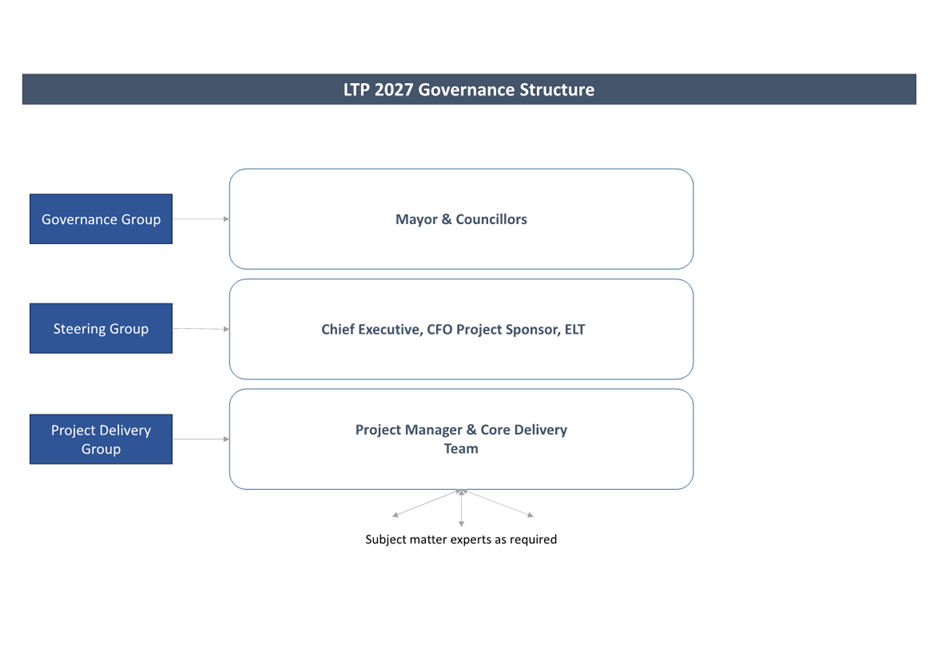
3.24 LTP Project
Governance and Decision-making
3.24.1 The governance model
approved by Finance & Performance Committee follows a clear and direct
approach:
· LTP Governance - All decisions on the content of the Consultation
Document and supporting LTP documents (FS, IS, activity plans (incl LoS), asset
plans, capital programme) rest with Council, or the Finance & Performance
Committee as delegate;
· LTP Steering Group (ELT) provides direction to staff on strategic
aspects of the LTP during development of draft components (for example, capital
programme deliverability, budget prioritisation decisions, CD options);
· LTP Project Team assists the Project Sponsor and Manager in project
co-ordination at operational level;
· The LTP Project Sponsor (CFO) has executive accountability for the
LTP process and advising the CE;
· The LTP Project Manager (Head of Corporate Planning &
Performance) is responsible for programme management of the LTP –
workstream phasing and milestones, deliverables, quality and risk assurance and
reporting, all materials for LTP workshops with Council to be managed and
coordinated by the Project Manager as a single point of contact.
4. Considerations Ngā Whai Whakaaro
4.1 The
Finance and Performance Committee endorsed the attachments to the LTP report of
27 August 2025, including key principles, phasings, deliverables and governance
structure.
4.2 If
the high-level work stream plans for the LTP development set out in Attachment
B along with the key component parts referenced above are approved by the ARMC
as fit for purpose, a detailed project plan and RACI matrix of accountabilities
will be developed by the LTP Manager for approval by the Project Sponsor.
This will be presented to both the Finance & Performance and Audit &
Risk Management Committees to provide assurance appropriate internal processes
are in place for the efficient and timely development and delivery of the LTP
and its component parts.
4.3 It
is proposed that this will occur at their next meetings, nominally set down for
late November (F&P Committee) and mid-December 2025 (ARMC).
Attachments Ngā Tāpirihanga
|
No.
|
Title
|
Reference
|
Page
|
|
a ⇩
|
Finance and
Performance Committee Long Term Plan 2027 - Project Update and Risk
Assessment 27 August 2025 Report
|
25/1844900
|
23
|
|
b ⇩
|
Summary of
Workstream Plans
|
25/1999975
|
35
|
In addition to the attached documents, the following background
information is available:
Signatories Ngā Kaiwaitohu
|
Authors
|
Boyd Kedzlie -
Senior Corporate Planning & Performance Analyst
Peter Ryan -
Head of Corporate Planning & Performance
|
|
Approved By
|
Peter Ryan -
Head of Corporate Planning & Performance
Bede Carran -
General Manager Finance, Risk & Performance / Chief Financial Officer
Mary
Richardson - Chief Executive
|