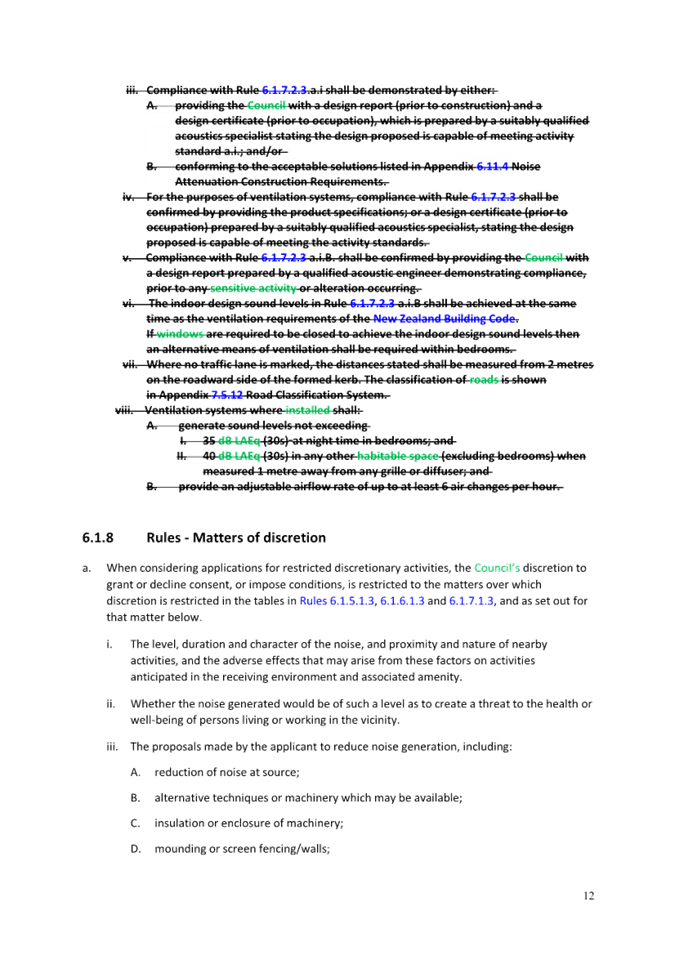
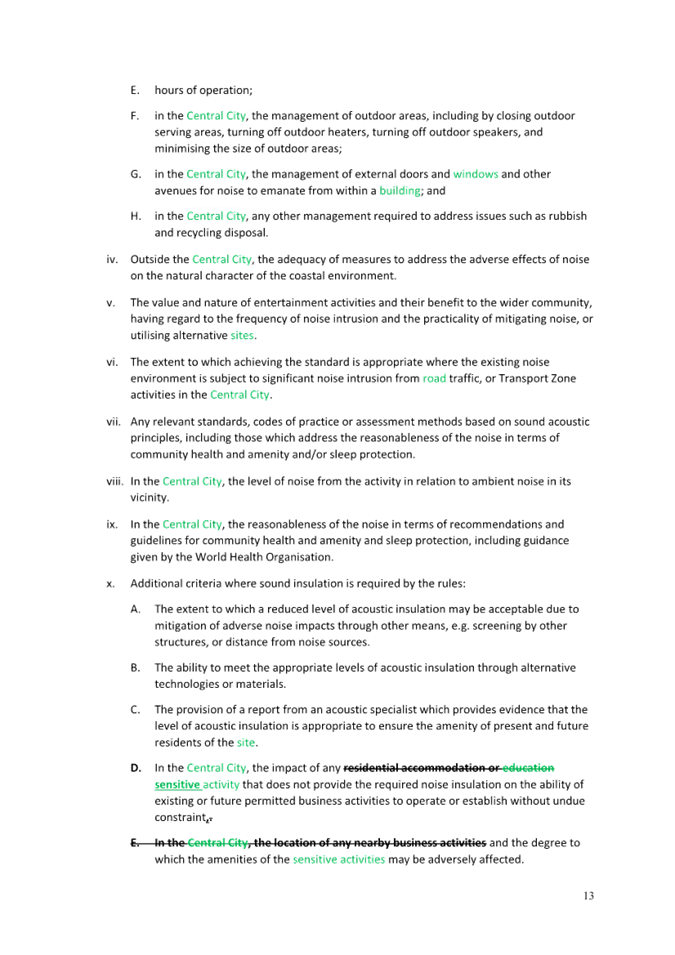
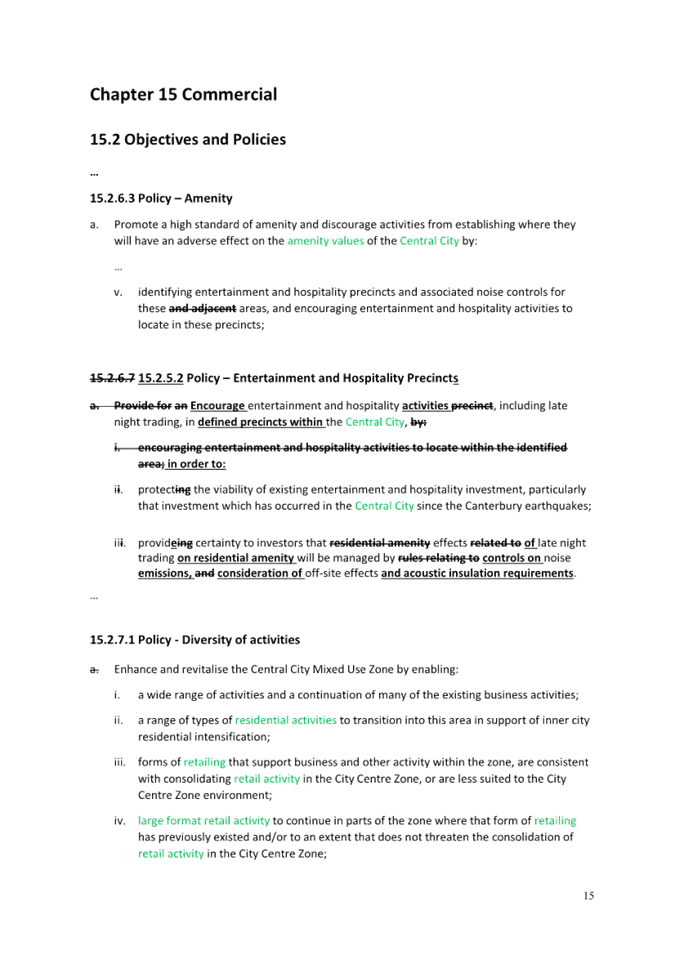
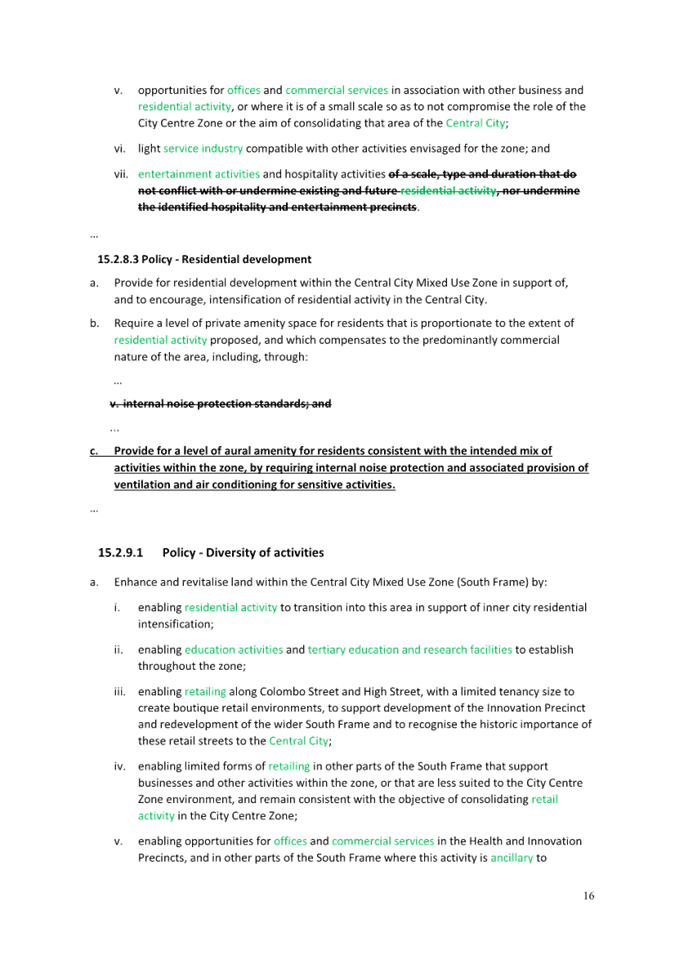
|
4. Plan
Change 21 Rules - Timing of Legal Effect
|
|
Reference Te Tohutoro:
|
26/1069724
|
|
Responsible Officer(s) Te Pou Matua:
|
Ben
Rhodes - Manager Planning
Brent Pizzey - Senior Legal Counsel
|
|
Accountable ELT Member Pouwhakarae:
|
John
Higgins, General Manager Strategy, Planning & Regulatory Services
|
1. Purpose and Origin of the Report Te Pūtake Pūrongo
1.1 The
purpose of this report is to inform the Policy and Planning Committee about
options if the Committee wants some Plan Change 21 rules to be in legal effect
before the Committee makes a decision on the rules after the hearing of
submissions.
1.2 The
report also asks the Committee to correct a minor error in a location specified
in its resolutions of 13 May 2026.
1.3 The
report is staff generated.
2. Officer
Recommendations Ngā Tūtohu
That the Policy and
Planning Committee:
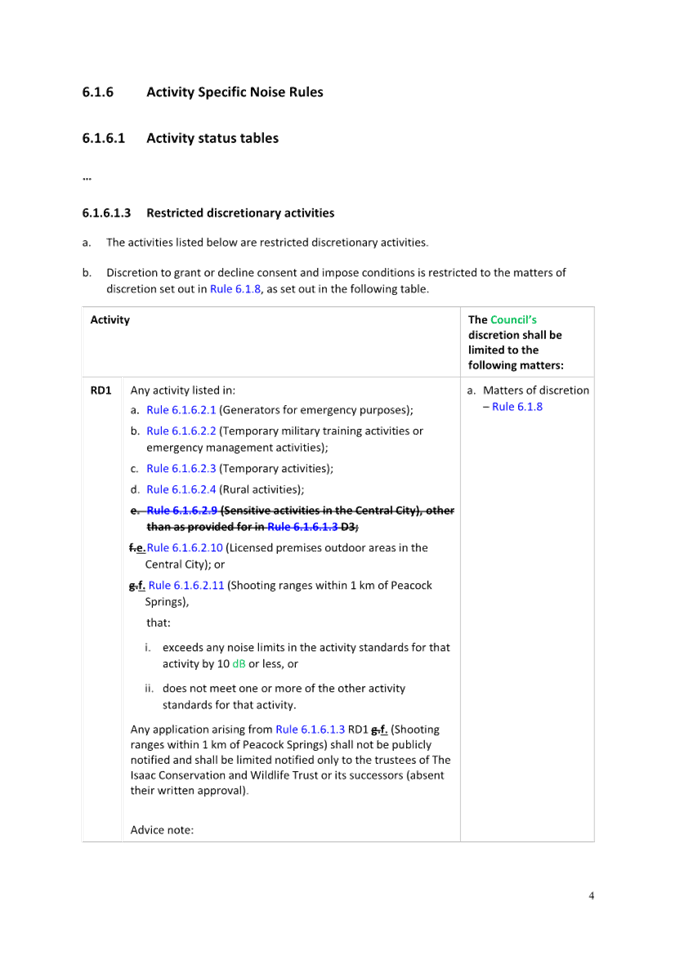
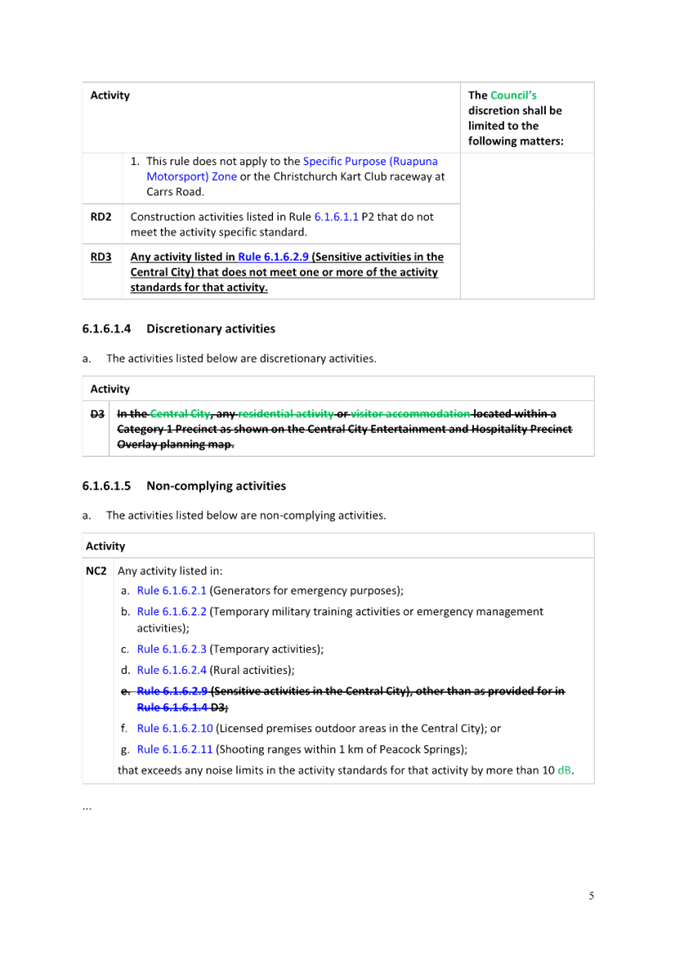
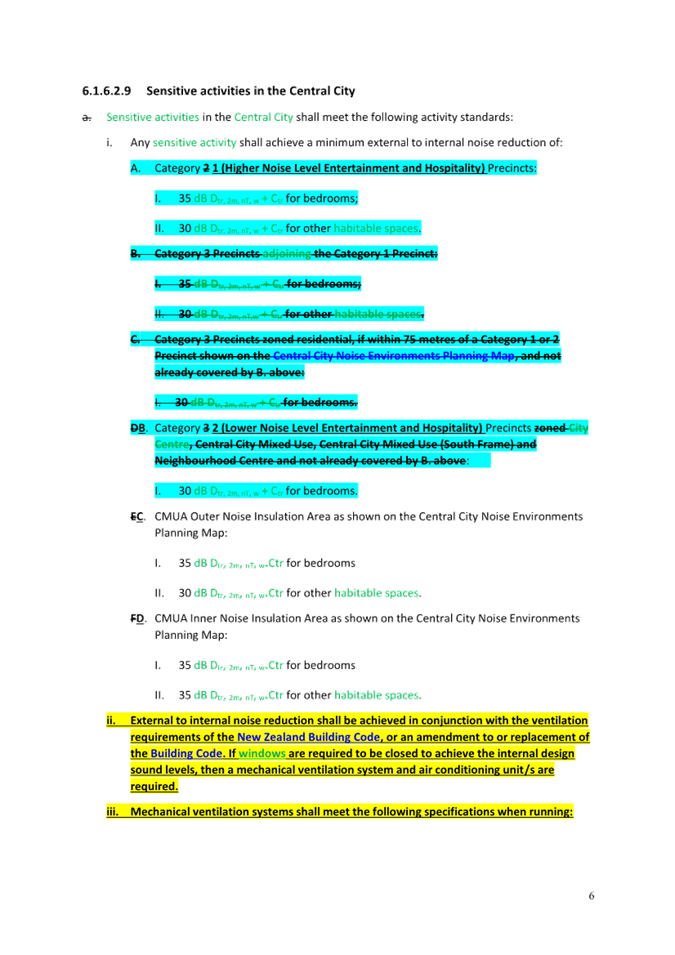
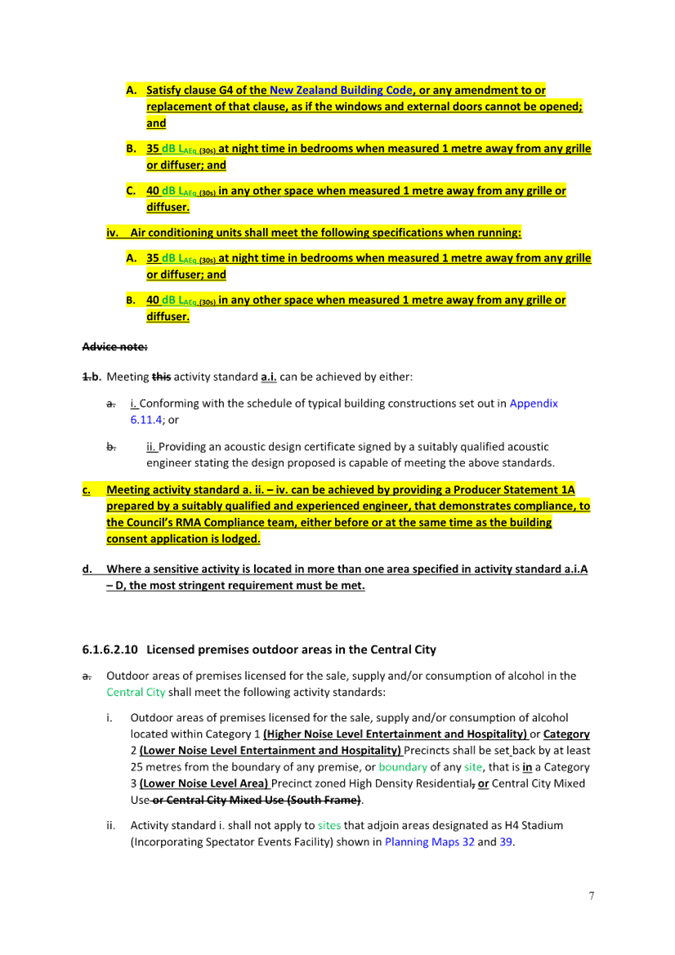
1. Receives the information in the Plan Change 21 Rules - Timing
of Legal Effect Report;
2. Notes that the decision in this report is
assessed as medium significance based on the Christchurch City Council’s
Significance and Engagement Policy.
3. Alters its 13 May 2026 resolution (PAPCC/2026/00021)
only to replace “Armagh Street” with “Gloucester
Street” in Resolution 3(e) as follows (changes in bold):
3(e)
The block bounded by Worcester, Rolleston Ave, Armagh Gloucester
Street, and Montreal Street being included in the Category 2 noise precinct.
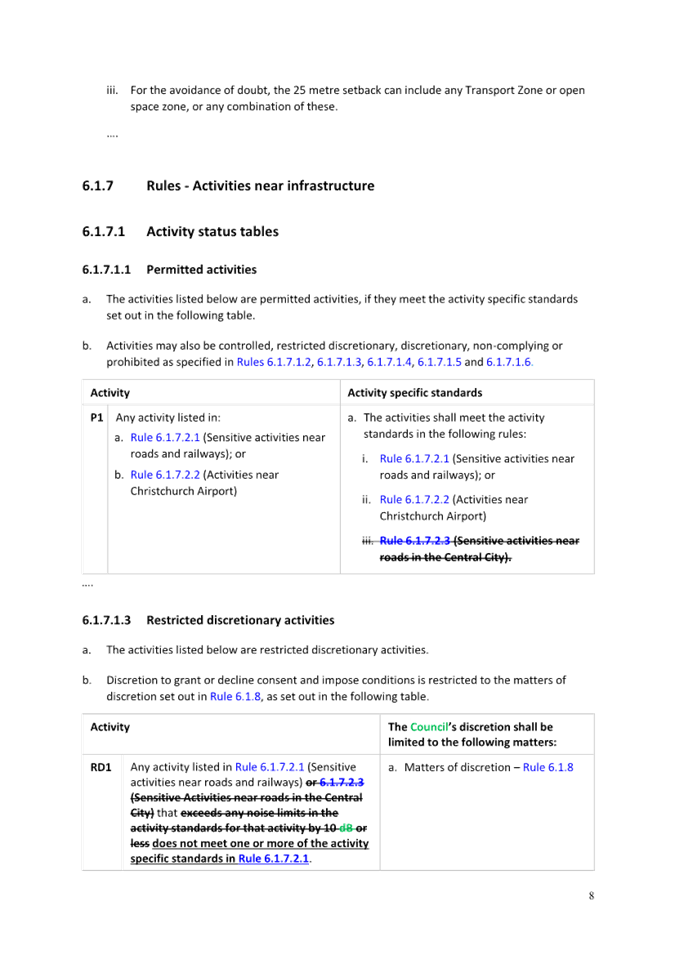
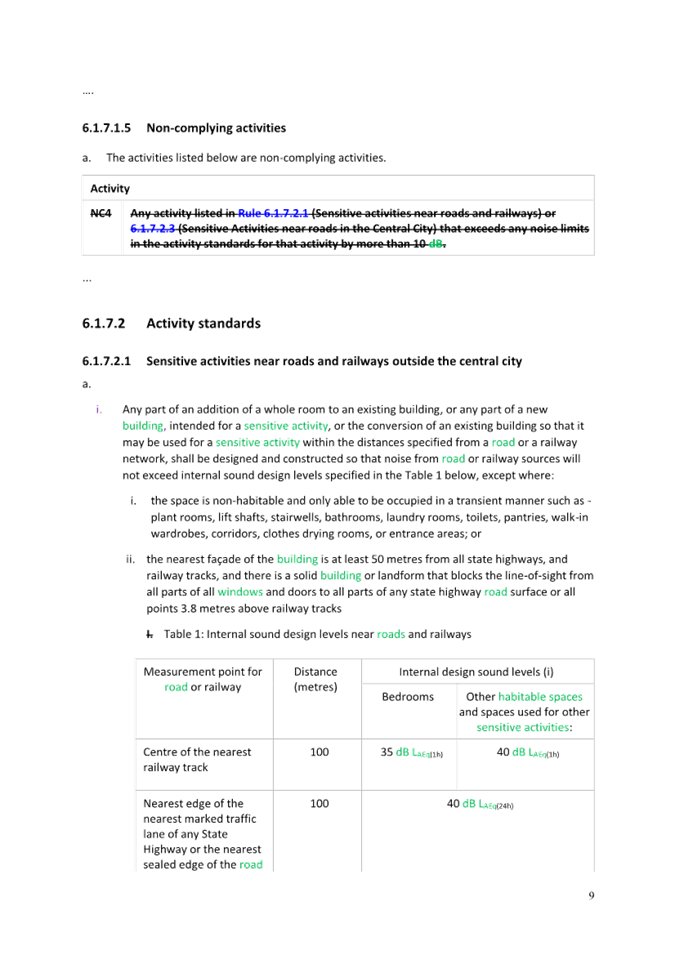
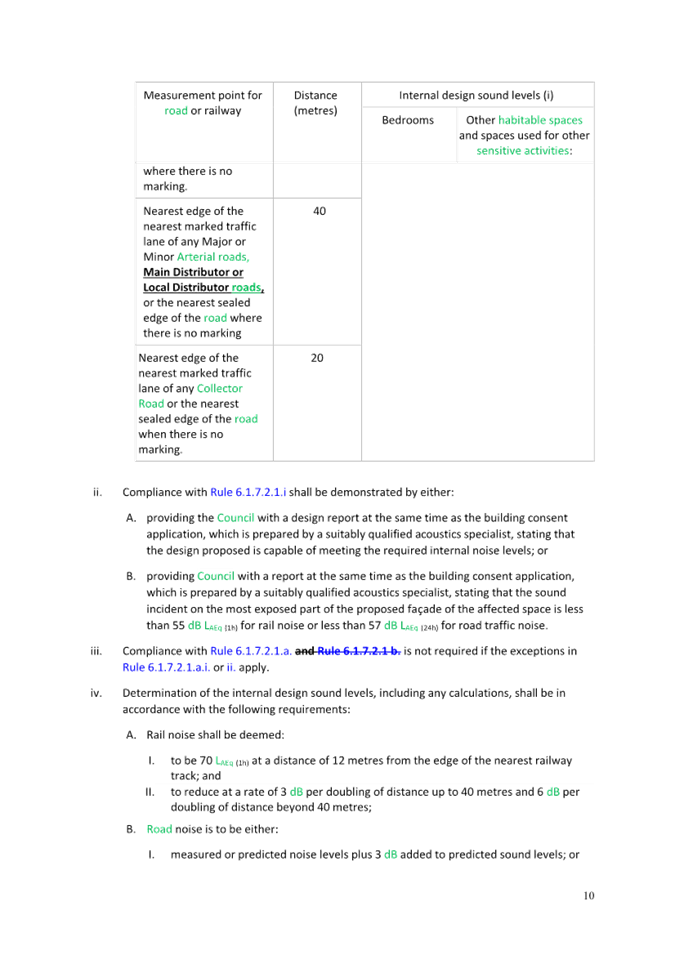
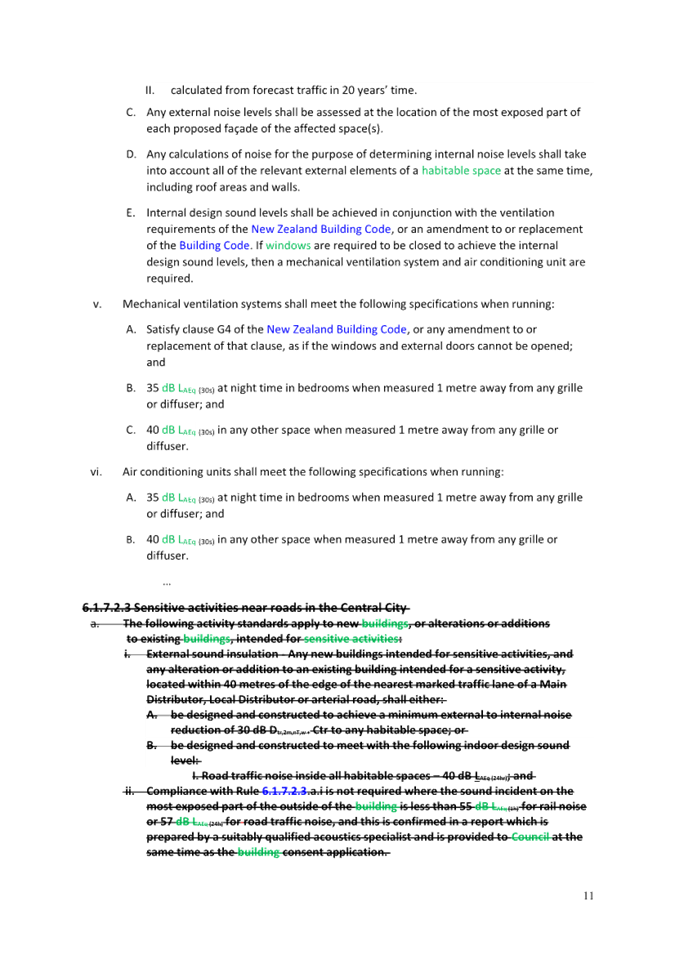
4. Agrees to apply to the Environment Court on an
ex parte basis under section 86D of the Resource Management Act for the noise
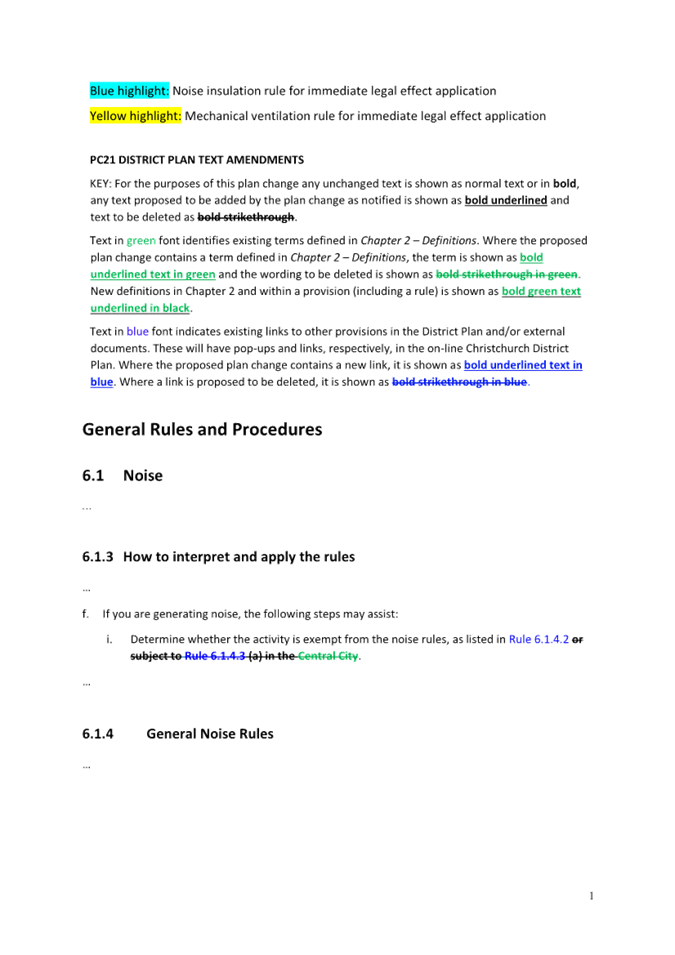
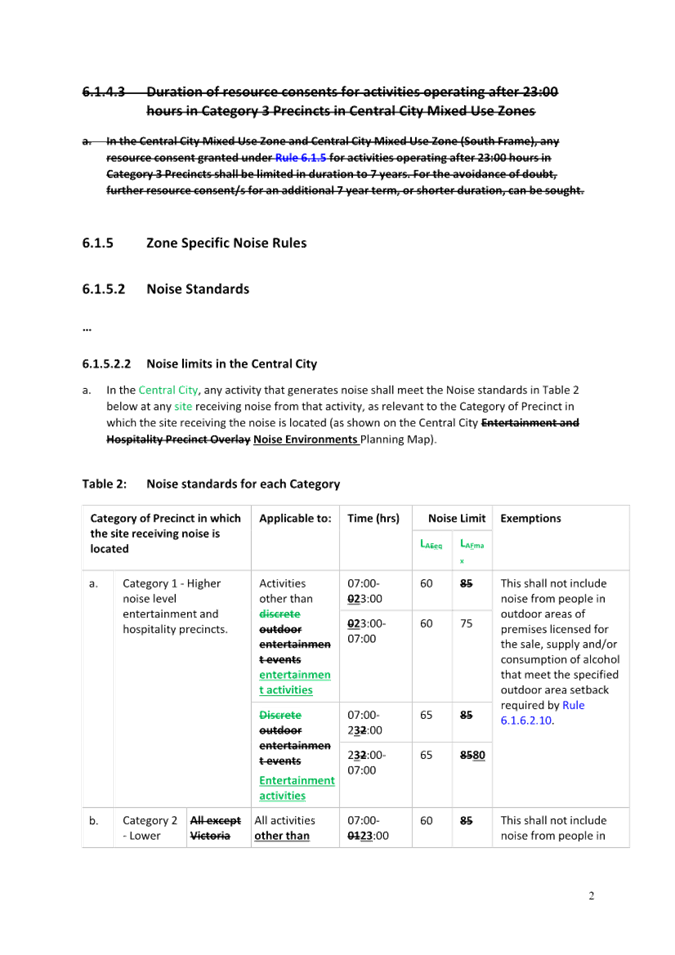
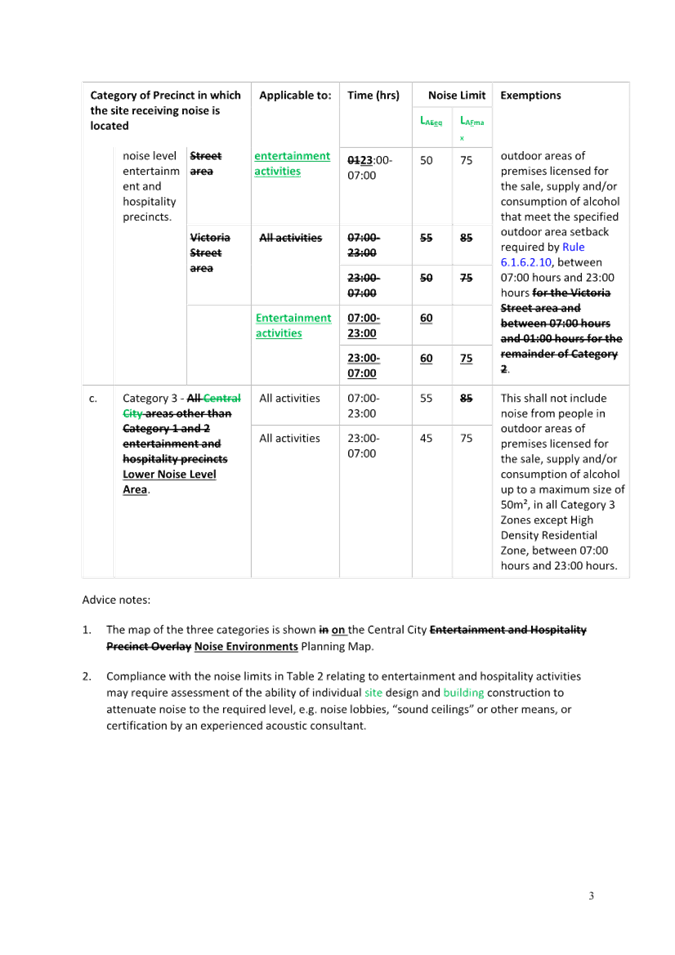
insulation and mechanical ventilation rules in Plan Change 21 that are
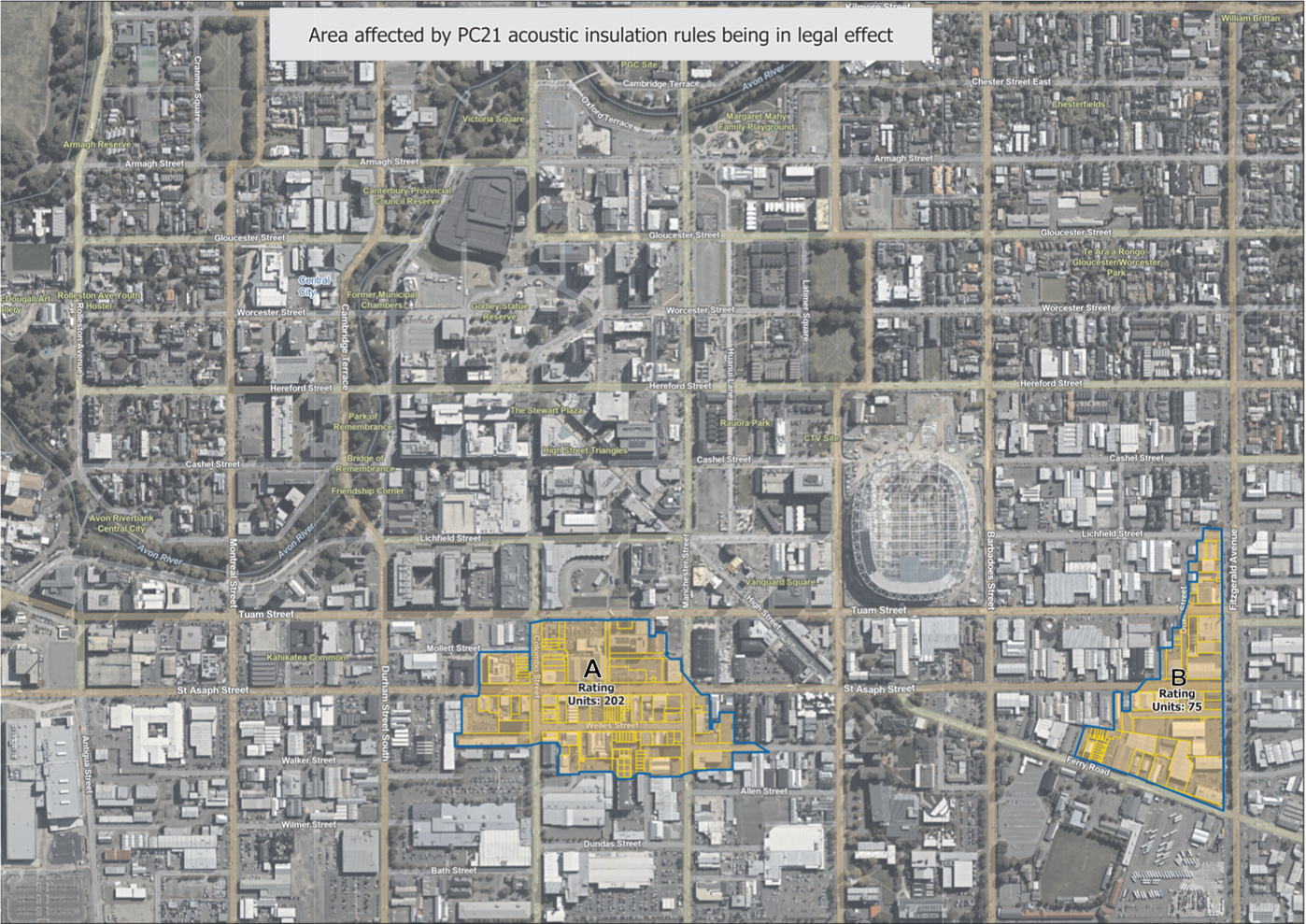
identified in Attachment A to be in legal effect in areas A and B identified in
Attachment B from the date of the Court order.
5. Requests staff to take all necessary steps to
urgently pursue that application under section 86D of the Resource Management
Act.
6. Notes that an application to the Environment
Court under section 86D of the Resource Management Act will not affect the
notification or processing of Plan Change 21.
3. Executive Summary Te Whakarāpopoto Matua
Correcting an Error
3.1 The
resolution corrects a minor error in the Planning and Policy Committee
resolutions on 13 May 2026 to notify PC21. The Committee intended that the
resolution apply to one block north of the Arts Centre. The streets named
mistakenly included two blocks.
3.2 The
original decision report to the Policy and Planning Committee, attachments
under separate cover, unconfirmed minutes and Officer presentation are
available at the following links:
3.2.1 Agenda
and decision report: https://christchurch.infocouncil.biz/Open/2026/05/PAPCC_20260513_AGN_10803_AT.PDF
(refer Item 8).
3.2.2 Attachments
Under Separate Cover https://christchurch.infocouncil.biz/Open/2026/05/PAPCC_20260513_ATT_10803_EXCLUDED.PDF
3.2.3 Unconfirmed
Minutes: https://christchurch.infocouncil.biz/Open/2026/05/PAPCC_20260513_MIN_10803_AT.PDF
(refer Item 8).
3.2.4 Minutes
Attachments (Officer Presentation): https://christchurch.infocouncil.biz/Open/2026/05/PAPCC_20260513_MAT_10803.PDF
(refer Item 8).
3.3 An
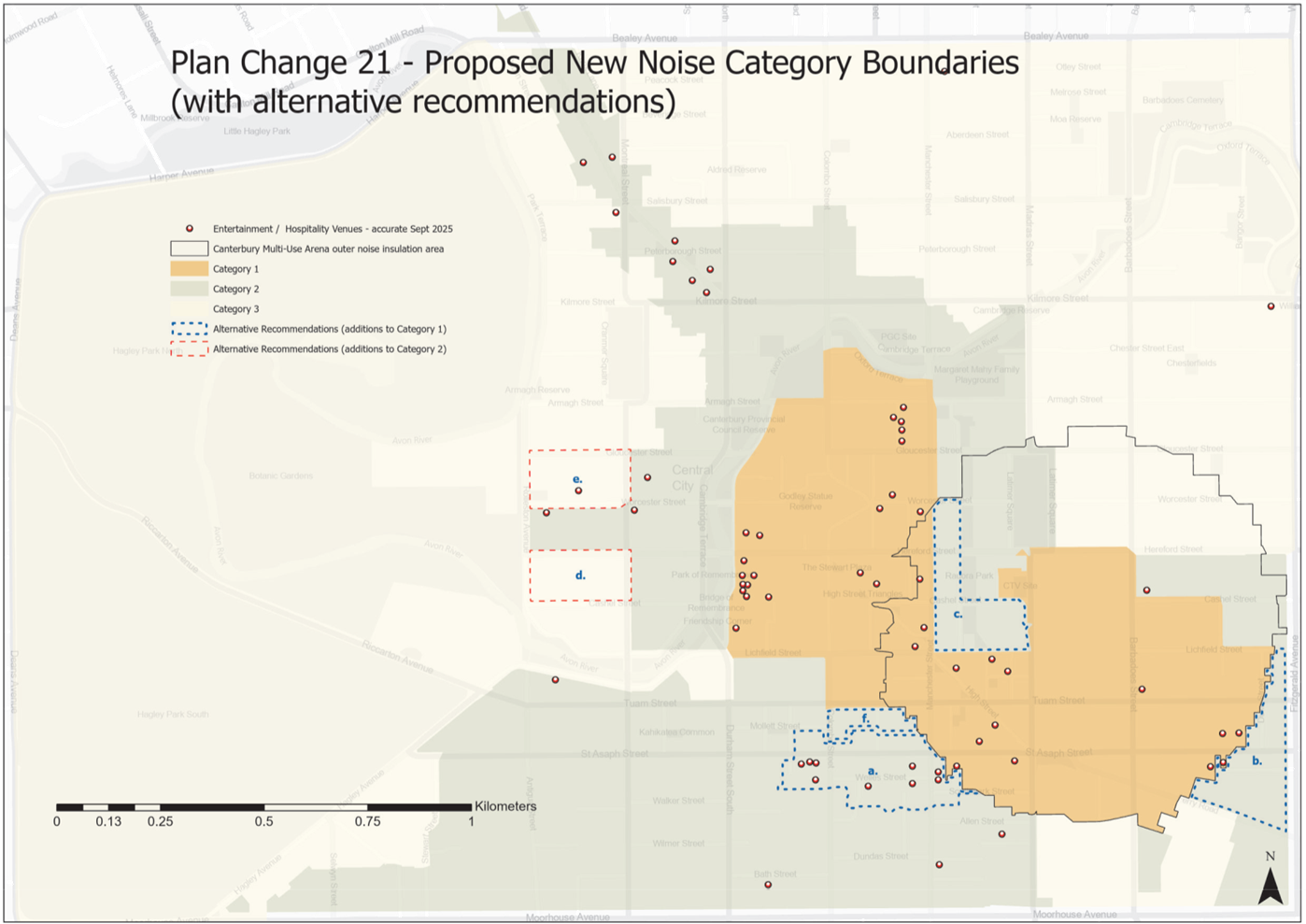
updated map outlining the additional areas and their designated noise
categories as incorporated by the Committee through alternative resolutions
3(a) – (f) is available at Attachment C.
Rules in legal effect
3.4 The
usual process is that rules in PC21 do not take legal effect – meaning,
requiring resource consent for breach of them – until after the
Council’s decisions after a hearing. However, the Council can apply to
the Court for some of the rules to take legal effect from an earlier date. It
is arguable - not certain – that the Court might agree to do that for
some PC21 rules.
3.5 One
of the Council’s objectives for PC21 is protection of existing music
venues from residential development that has inadequate noise insulation. There
is a risk to that objective if property owners are able to secure residential
development rights under current rules before more stringent noise insulation
and mechanical ventilation rules in PC21 are in legal effect close to existing
venues that PC21 intends to have more enabling noise rules.
3.6 That
potential risk does not arise for the areas in the staff recommendation for
PC21. Those recommended rules were either making provisions less stringent or
were matching the noise category areas with the existing rules for noise
insulation. The risk arises only for two of the three areas that were added to
PC21 during the Planning and Policy Committee meeting on 13 May 2026. That is
areas A and B in Attachment B.
3.7 The
people affected by these rules being in immediate legal effect would be
property owners in those areas who intend residential development in the short
term.
3.8 There
are no guarantees that the Court would grant an order that the rules take
immediate legal effect but it is reasonably arguable that the Court should do
so.
4. Background/Context Te Horopaki
4.1 If
rules are in “legal effect”, it means that resource consent is
needed for activity that breaches those rules. When rules in a proposed plan
change are in legal effect, it means that there are two sets of rules that
apply – those in the operative plan, and those in the proposed plan.
Whether resource consent is granted depends on the weight that is placed on
either set of rules in the resource consent decision making. So, if the PC21
rules are in legal effect from an early date after a Council application to the
Court, applicants for resource consent under the new rules could still argue
that resource consent should be granted because the new rules carry little
weight until after the hearing of submissions.
4.2 Rules
in proposed plan changes are not usually in legal effect until after the
Council’s decision following the hearing of submissions. The Resource
Management Act provides two exceptions to that. The first is rules of a special
category set out in the RMA. The PC21 rules are not in that category. The
second is if the Court grants an application by the Council for the rules to be
in legal effect from an earlier date.
4.3 Councils
and courts do not use that power very often. The courts say that “The
underlying principle when considering 86D applications is that the Court must
have a sound basis upon which to depart from Parliament's general intent that
rules do not have legal effect until they have been through the public
submission and decision process. That intention should not be set aside
lightly”.
4.4 The
big question for the Court is whether and why giving the rules immediate legal
effect is necessary to achieve the sustainable management purpose of the Act.
Relevant considerations for the Court are:
4.4.1 Vulnerability
– the scarcity of the resource subject to the plan change, the pressure
on it, and the possibility of irreversible effects;
4.4.2 The
nature, purpose, effect and significance of the plan change;
4.4.3 The
size of area or number of properties affected by the rules that the Council
seeks to have immediate legal effect;
4.4.4 Whether
the changes to rules are the result of a wider strategic policy, in particular
whether they are giving effect to national direction, or strategic plans under
the LGA;
4.4.5 How
much consultation and public input there has been for the proposed changes; and
4.4.6 The
fairness of people being deprived of the opportunity to submit before the rules
are in legal effect.
4.5 The
strengths of the application would be that there has been consultation
regarding most of the St Asaph St areas, that the geographic areas affected is
small, and that the resource – the venues – is limited and is
vulnerable.
4.6 There
would be costs for people to comply with the rules in immediate legal effect if
developers comply with the rules rather than seeking resource consent for
breach of them or waiting for the conclusion of the plan change process. If
developers design dwellings to comply with the rules in immediate legal effect,
the increased costs are a maximum of:
4.6.1 Noise
insulation: The difference between category 2 and category 1 noise insulation
costs, up to $10,000 - $22,000;
4.6.2 Mechanical
ventilation: up to $11,000.
4.7 It
is possible that people design residential units to comply with the rules in
immediate legal effect, and then the Council does not adopt the rules after the
hearing of submissions. Owners could claim that it was a wasted expense. The
Council does not have legal liability for that. The cost will be highly
variable depending on the stage of the development. Residents will get a
benefit from complying with the proposed mechanical ventilation and noise
insulation rules even if the rules are not adopted in the Council decision
after hearing submissions.
4.8 If
the Court makes an ex parte order that the rules have immediate legal effect,
the Court order will say that people can apply to the Court to change it if
they have a special case.
4.9 There have been no related memos/information circulated to the
meeting members.
Options Considered Ngā Kōwhiringa Whaiwhakaaro
4.10 The
following reasonably practicable options were considered and are assessed in
this report:
4.10.1 Do
not apply.
4.10.2 Apply
for just the more stringent noise insulation and mechanical ventilation rules
in Attachment A for areas A and B in Attachment B.
4.10.3 Apply
also for the mechanical ventilation rules for all of the category 1 and
category 2 areas.
4.11 The
following options were considered but ruled out:
4.11.1 Apply
for all rules in PC21 for all areas. The majority of the rules in PC21 are
enabling, in that they are of benefit to noise generators, and do not increase
costs for landowners or property developers. For these rules, there is not a
potential risk of people attempting to get ‘in front’ of the PC21
rules taking legal effect. The opposite is true for the protection rules (e.g.,
insulation) which bring a cost to people. The risk of development occurring
ahead of these rules having any legal weight, to avoid the potential cost,
could undermine the very purpose of the PC21 framework to enable an increased
noise environment.
4.11.2 Apply
also for the noise insulation and mechanical ventilation rule to apply for the
two blocks on either side of the Arts Centre. Staff do not recommend this
because the areas are currently zoned residential, with no insultation
requirements in the District Plan, unlike the mixed-use zone that has existing
requirements. Further there are few existing venues within these areas and
there has been no community engagement on the proposed rule applying here.
Options Descriptions Ngā Kōwhiringa
4.12 Preferred
Option: Apply for immediate legal effect for the noise insulation and
mechanical ventilation in Attachment A to be in immediate legal effect in areas
A and B in Attachment B.
4.12.1 Option
Advantages
· If granted by
the Court, it reduces the risk of the objective of PC21 regarding existing
venues being undermined by people securing residential development rights
before the rules are in legal effect.
4.12.2 Option
Disadvantages
· There is the
potential for unfairness and unnecessary costs of people having to comply with
rules before the merit of them has been tested in the submission and hearing
process, in circumstances in which it is not certain that the Council will
adopt the rules after hearing submissions.
· It does not
address the potential risk to the whole area that PC21 relates to, in
particular category 2. However, as described below, staff do not recommend that
rules have immediate legal effect in category 2 areas.
4.13 Do
not apply for any rules to have immediate legal effect.
4.13.1 Option
Advantages
· No cost of
applying and no cost for people to comply with rules that might not be adopted
by Council after hearing submissions.
4.13.2 Option
Disadvantages
· Risk of an
objective of PC21 concerning existing venues, being undermined by people
securing residential development rights before the rules are in legal effect.
4.14 Apply
also for the mechanical ventilation rules to be in legal effect for all of
Category 1 and category 2 noise areas.
4.14.1 Option
Advantages
· If granted by
the Court, it reduces the risk of new development undermining the objective of
PC21 to enable new venues across Category 2, as people may be able to secure
residential development rights before the rules are in legal effect.
4.14.2 Option
Disadvantages
· There is
potential for unfairness and unnecessary cost where parties are required to
comply with rules before their merits have been tested through the submission
and hearing process, particularly where it is uncertain whether Council will
ultimately adopt them. This issue is most pronounced for Category 2 areas,
where there are very few existing venues and the PC21 framework is primarily
directed at enabling a future noise environment.
· In areas with
limited or no existing venues, the planning framework should be allowed to
operate as intended, enabling residential development to establish under the
current rules. This approach reflects a matter of fairness. Where residential
development establishes first, any future venues should be expected to adapt to
that environment.
· Applicants
proposing new venues are able to make informed decisions based on the existing
environment at the time of establishment. Existing venues did not have this
opportunity and, for that reason, should be afforded protection.
Analysis Criteria Ngā Paearu Wetekina
4.15 Whether
seeking that rules have immediate legal effect are reasonable in the context of
the Council’s objectives for PC21.
5. Financial Implications Ngā Hīraunga Rauemi
Capex/Opex Ngā Utu Whakahaere
|
|
Recommended Option
|
Option 2 – No application
|
Option 3 -Mechanical ventilation rule
|
|
Cost to Implement
|
Within existing budget for
Planning and Consents
|
Nil
|
Within existing budget for
Planning and Consents
|
|
Maintenance/Ongoing Costs
|
Nil
|
Nil
|
Nil
|
|
Funding Source
|
Operational budget
for Planning and Consents
|
N/A
|
Operational budget
for Planning and Consent
|
|
Funding Availability
|
Funded in LTP
|
N/A
|
Funded in LTP
|
|
Impact on Rates
|
No additional impact beyond
LTP
|
Nil
|
No additional impact beyond
LTP
|
5.1 The
sole fixed cost is a small Court filing fee. Other costs arise if the Council
engages consultants to assist with the application to the Court.
6. Considerations Ngā Whai Whakaaro
Risks and Mitigations Ngā Mōrearea me
ngā Whakamātautau
6.1 There
are risks that the Court does not grant the application. The Court has
discretion. If the Council resolves that it wishes to make the application, the
application will emphasise why the Council considers that the Court order is
appropriate.
Legal Considerations Ngā Hīraunga
ā-Ture
6.2 Statutory
and/or delegated authority to undertake proposals in the report:
6.2.1 The
Resource Management Act provides the right for the Council to apply to the
Environment Court for rules in a proposed plan change to be in immediate legal
effect.
6.3 Other Legal Implications:
6.3.1 Other
legal considerations are discussed throughout this report.
Strategy
and Policy Considerations Te
Whai Kaupapa here
6.4 The
required decisions:
6.4.1 Align
with the Christchurch
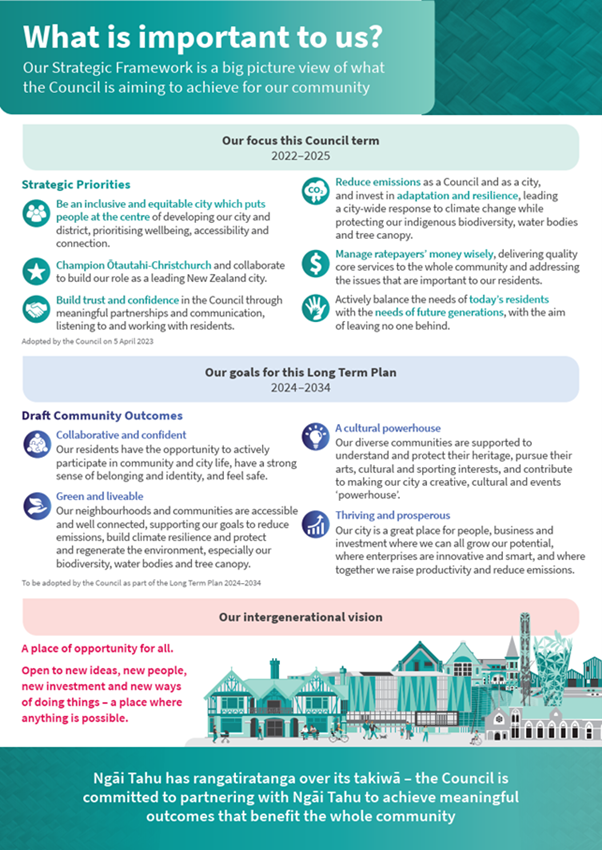
City Council’s Strategic Framework. It will contribute to
the ‘collaborative confident city’; ‘cultural
powerhouse city’ and ‘thriving prosperous
city’ community outcomes, by improving opportunities
for investment in venues which in turn contribute to the
cultural and social well-being of the city, while still supporting
residential life.
6.4.2 Are
of medium significance based on the Christchurch City Council’s
Significance and Engagement Policy. PC21 has been of high interest to the
community and continuing to progress this work is a priority for the
Council.
6.4.3 Is
consistent with Council’s Plans and Policies.
6.5 This
report supports the Council's
Long Term Plan (2024 - 2034):
6.6 Strategic Planning and Policy
6.6.1 Activity: Strategic Planning and Resource Consents
· Level of Service: 9.5.1.1 Prepare plan changes to the
District Plan to address issues and to implement national and regional
direction, identified as a high priority by Council - In accordance with
statutory processes and timeframes
Community
Impacts and Views Ngā Mariu ā-Hāpori
6.7 The decision affects the following wards/Community Board areas:
6.7.1 Waipapa
Papanui-Innes-Central Community Board
6.8 The
Waipapa Papanui-Innes-Central Community Board and community organisations in
their area have not been directly consulted on this decision, nor on PC21 in
general.
6.9 PC21,
as a whole, was open to the public for informal engagement, and over 1,429
responses were received, including from community organisations. There was
broad support for the change.
6.10 Officers
also directly consulted the Inner City West
Neighbourhood (ICON) association on PC21 as a whole during informal
engagement. Concerns were noted relating to the proposed noise categorisation
of the Victoria Street precinct, which is not subject to this decision.
Impact
on Mana Whenua Ngā
Whai Take Mana Whenua
6.11 The decisions do not involve a significant decision in relation
to ancestral land, a body of water or other elements of intrinsic value,
therefore this decision does not specifically impact
Mana Whenua, their culture, and traditions.
6.12 The decision does
not involve a matter of interest to Mana Whenua and will not
impact on our agreed partnership priorities with Ngā
Papatipu Rūnanga.
Climate
Change Impact Considerations Ngā Whai Whakaaro mā te Āhuarangi
6.15 The proposals in
this report are unlikely to contribute significantly to adaptation to the
impacts of climate change or emissions reductions.
6.16 This
is because the changes proposed in PC21 are unrelated to emissions or to
climate change matters more broadly.
7. Next Steps Ngā Mahinga ā-muri
7.1 If
the Council decides to apply, staff will prepare the application and lodge it
on an ex parte basis with urgency. That might take 2-3 weeks. It may take 1-8
weeks for the Court to issue a decision.
Attachments Ngā Tāpirihanga
|
No.
|
Title
|
Reference
|
Page
|
|
a ⇩ 
|
Provisions in
immediate legal effect
|
26/1103821
|
16
|
|
b ⇩
|
Map of areas
in immediate legal effect
|
26/1103777
|
33
|
|
c ⇩
|
Plan Change 21
Alternative Resolutions - 13 May 2026
|
26/1107685
|
34
|
In addition to the attached documents, the following background
information is available:
|
Document
Name – Location / File Link
|
|
Not
applicable
|
Signatories Ngā Kaiwaitohu
|
Authors
|
Ben Rhodes -
Manager Planning
Brent Pizzey -
Senior Legal Counsel
|
|
Approved By
|
Mark Stevenson
- Head of Planning & Consents
John Higgins -
General Manager Strategy, Planning & Regulatory Services
|