A black text on a white background

Description automatically generated


Workshop - Banks Peninsula Water Management

Zone Committee

Agenda


Notice of Meeting:

A Workshop - Banks Peninsula Water Management Zone Committee will be held on:


Date:                                    Tuesday 17 September 2024

Time:                                   5 pm

Venue:                                 Lyttelton Community Boardoom, 25 Canterbury Street, Lyttelton, Christchurch


Membership

Chairperson

Deputy Chairperson

Members

Gina Waibl - Community Representative

Trudi Bishop - Community Representative

Andrea Davis - Community Representative

George Howden - Community Representative

Elisa Knight - Community Representative

Ben Manson - Community Representative

Tyrone Fields - Councillor Christchurch City Council

Paul Dietsche - Councillor Environment Canterbury

Amber Moke - Te Hapū  o Ngāti Wheke/Rapaki

Rik Tainui - Te Rūnanga o Ōnuku

Jaleesa Panirau - Te Rūnanga o Wairewa

Vacancy - Te Rūnanga o Koukourārata

Tori Peden - Advisory Member


11 September 2024


Principal Advisor

Diane Shelander

Senior Policy Analyst

Tel: 941 8304

Christchurch City Council

Zone Facilitator

Jaimee Grant

Tel: 027 220 2694

Environment Canterbury

Democratic Services Advisor

Natasha McDonnell

Tel: 941 5112

Christchurch City Council


Please Note:

This forum has no decision-making powers and is purely for information sharing.


TABLE OF CONTENTS NGĀ IHIRANGI


Karakia Tīmatanga................................................................................................... 3 

1.        Apologies Ngā Whakapāha................................................................................. 3

Workshop Items

2.        Coastal Hazards Adaptation Plan........................................................................ 5

The time allocated for this briefing is 45 minutes.

3.        Erosion and Sediment Control, and Soil Conservation Resource Development........... 7

The time allocated for this briefing is 30 minutes.    

Karakia Whakamutunga


Karakia Tīmatanga

Whakataka te hau ki te uru

Whakataka te hau ki te tonga

Kia mākinakina ki uta

Kia mātaratara ki tai

E hī ake ana te atakura

He tio, he huka, he hau hū  

Tihei mauri ora!

English translation

Cease the winds from the west

Cease the winds from the south

Let the breeze blow over the land

Let the breeze blow over the ocean

Let the red-tipped dawn come with a sharpened air.

A touch of frost, a promise of a glorious day.


1.   Apologies Ngā Whakapāha

At the close of the agenda no apologies had been received.


2.     Coastal Hazards Adaptation Plan

Reference Te Tohutoro:

24/1542107

Presenter(s) Te Kaipāhō :

Jane Morgan, Team Leader, and Tom Simons-Smith, Principal Advisor, Coastal Adaptation, Christchurch City Council.


1. Detail Te Whakamahuki


Timing

This workshop is expected to last for 45 minutes

Purpose / Origin of this Workshop

The purpose of this report is to provide information on the Coastal Hazards Adaptation Plan to the Banks Peninsula Water Management Zone Committee.


Confidentiality

The workshop and any shared information are not confidential.


Background

The Coastal Hazards Adaptation Planning (CHAP) programme has been progressing an adaptation planning process in the Whakaraupō Lyttelton Harbour and Koukourarata Port Levy Adaptation Area.

A Coastal Panel of community and rūnanga representatives have identified their preferred adaptation pathways with guidance from the Specialist and Technical Advisory Group (STAG) which includes representatives from across Council, including asset owners.

In line with processes set out in the Council’s Coastal Adaptation Framework, the Coastal Panel’s preferred pathways will go out for a final community consultation in the form of a draft Plan, following a Council decision to adopt this draft Plan for consultation. After this final consultation, the draft Plan will be refined by the Coastal Panel and final sign off will be sought by Council in late 2024/early 2025.

A copy of Christchurch City Council’s (CCC) presentation will be provided at the meeting.


ELT Consideration

This has not been considered by ELT.


Key Issues

Effects of coastal hazards on our communities, infrastructure and environment.

Next Steps

Community consultation on the draft CHAP plan.


Useful Links

Our adaptation programme (CCC website).


Attachments Ngā Tāpirihanga

There are no attachments to this coversheet.


Signatories Ngā Kaiwaitohu

Author

Natasha McDonnell - Democratic Services Advisor

Approved By

Natasha McDonnell - Democratic Services Advisor


3.     Erosion and Sediment Control, and Soil Conservation Resource Development

Reference Te Tohutoro:

24/1595525

Presenter(s) Te Kaipāhō :

Jaimee Grant, Zone Facilitator, Environment Canterbury


1. Detail Te Whakamahuki


Timing

This workshop is expected to last for 30 minutes

Purpose / Origin of this Workshop

The purpose of this report is to provide an approach on the development of the Erosion and Sediment Control, and Soil Conservation resource and seek feedback from the Committee.


Confidentiality

The workshop and any shared information are not confidential.


Background

On 27 April 2023, a joint workshop on Erosion and Sediment Control was held with the Christchurch West Melton Zone Committee and multiple stakeholders. At the workshop, a need was identified for sharing practical knowledge and solutions for erosion and sediment control, and soil conservation (ESC) issues.

Banks Peninsula and Christchurch West Melton zone committees recommended and Environment Canterbury approved a total of $10,000 of the Zone Committee Action Plan Budget go towards a collaborative project with Whaka-Ora Healthy Harbour (WHH) and Te Rūnanga o Ngāti Wheke/Rāpaki Rūnanga, and others to begin developing a resource with information specific for the Port Hills and loess soils.

In 2017, an Erosion and Sediment Control (ESC) Toolbox was launched to “help everyone involved with any kind of earthworks on the land or near water—projects large and small.” The toolbox provides Environment Canterbury’s guidelines for land and waterway disturbance that can cause sediment and dust discharge. It replaces the 2007 Canterbury Erosion and Sediment Control Guidelines, incorporating improvements from industry and materials from Auckland Council's GD2016/005 and other industry-led advancements. It was noted that it lacks content relevant for rural issues however, the website was set up so information could be easily added to it. The website states it has not been updated since its launch in 2017 however, still contains highly relevant information.

Link: Erosion and Sediment Control Toolbox - Environment Canterbury (esccanterbury.co.nz).


Proposal overview

A high-level plan has been developed for initial feedback from the zone committees, WHH, Rāpaki Rūnanga and other recommended parties to be determined.

Purpose:  Document and share practical knowledge on erosion control, soil conservation, pasture management, and biodiversity enhancement in the Port Hills region specific to loess soils, for landowners.

Scope Statement: Gather and compile insights and solutions on erosion control, revegetation, soil conservation, forestry, and land management specific to the Port Hills and loess soils. Prepare a report that presents these tools and solutions in a user-friendly format for Port Hills landowners which can be readily adapted into suitable resource/toolkit.

Key tasks:

1.    ESC Toolkit Review

a.    Look at suitability of the toolkit and the information gaps relevant to land use issues in the Port Hills and loess soils.

b.    May be able to do this in-house (Environment Canterbury/WHH).

2.    Review - Literature and resource review and collation

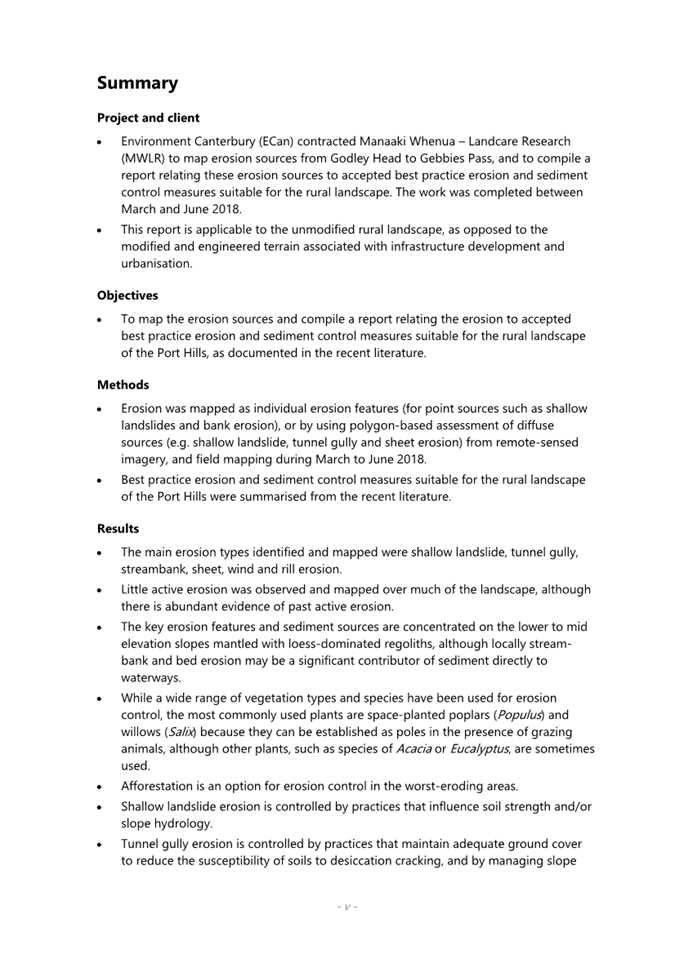
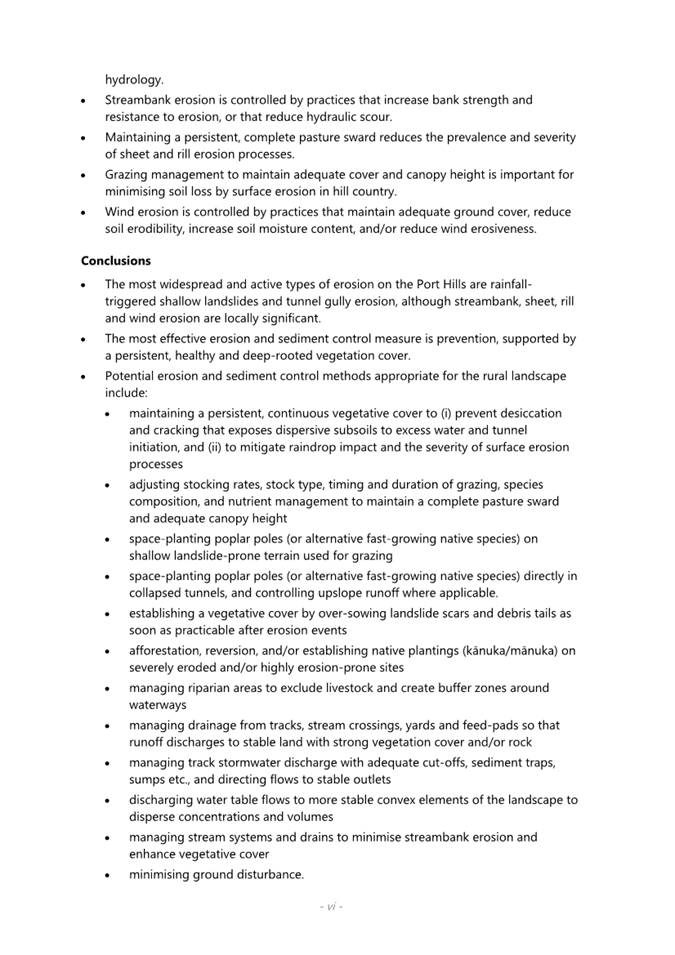
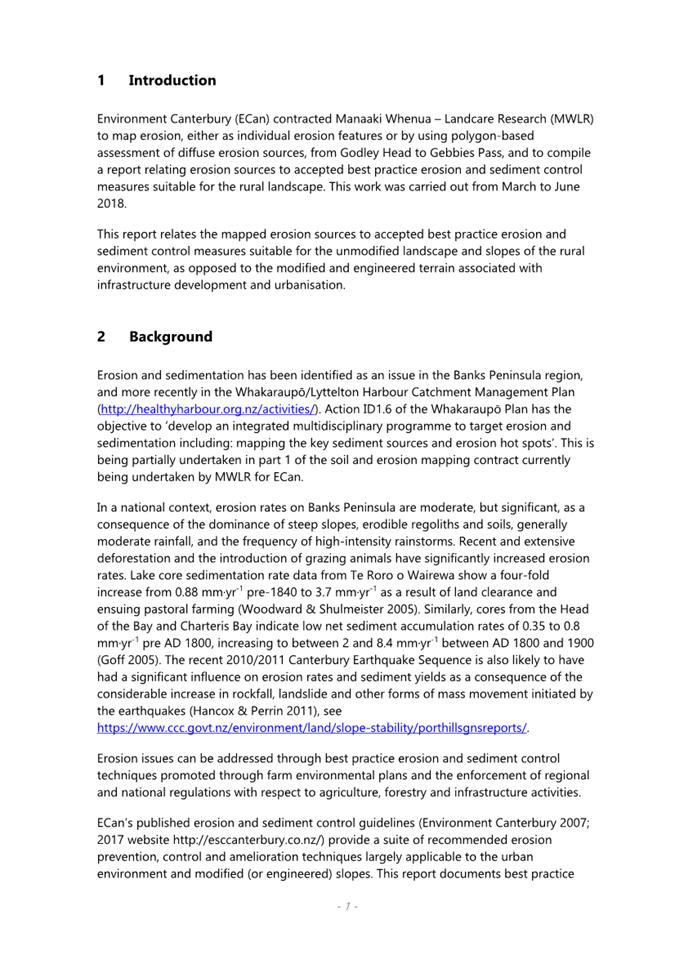
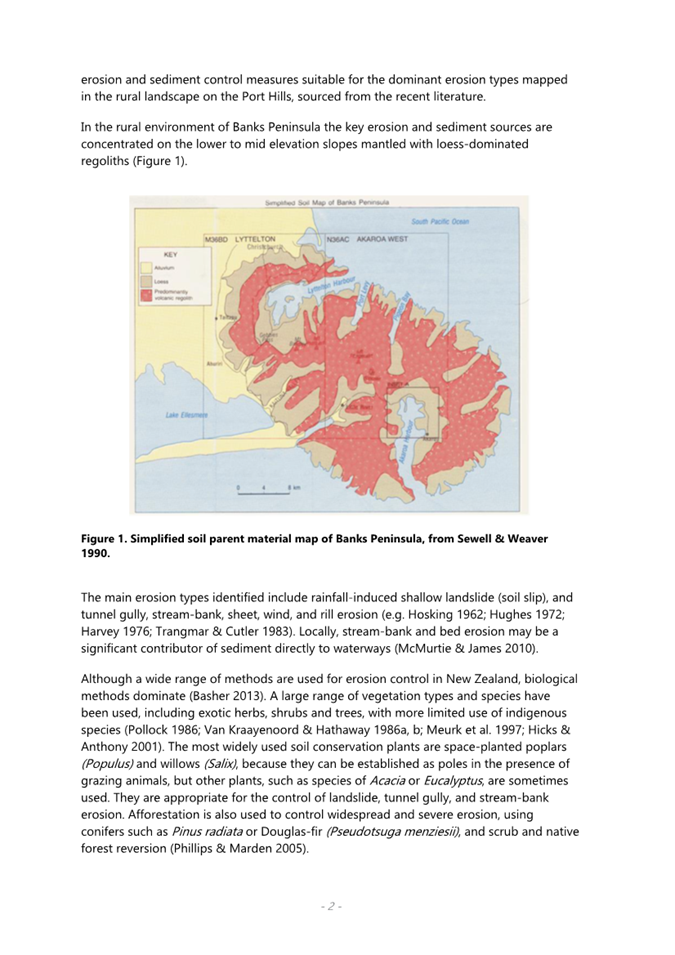
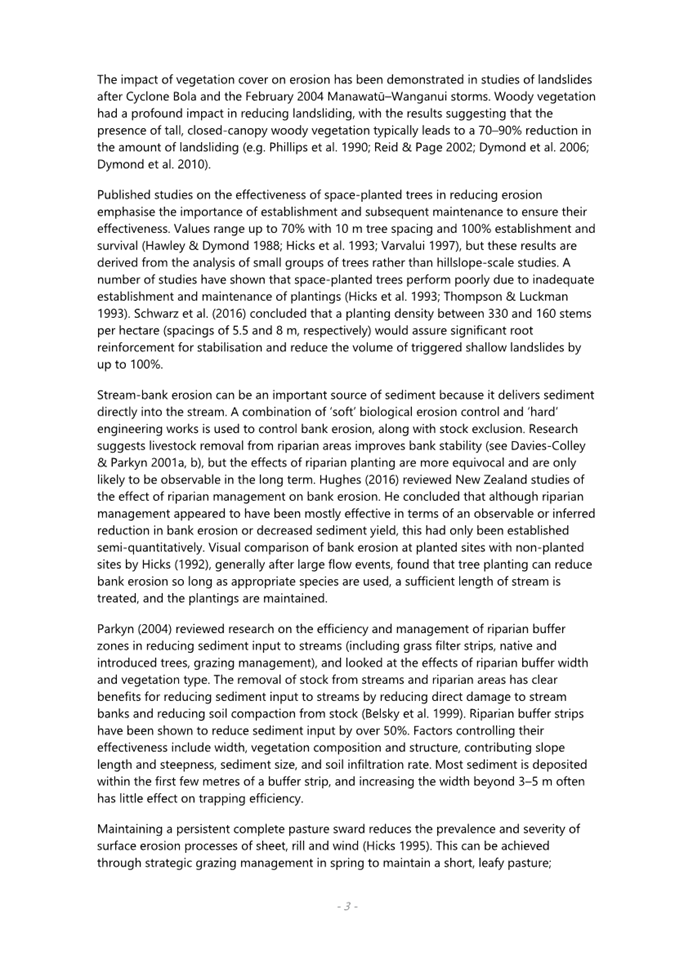
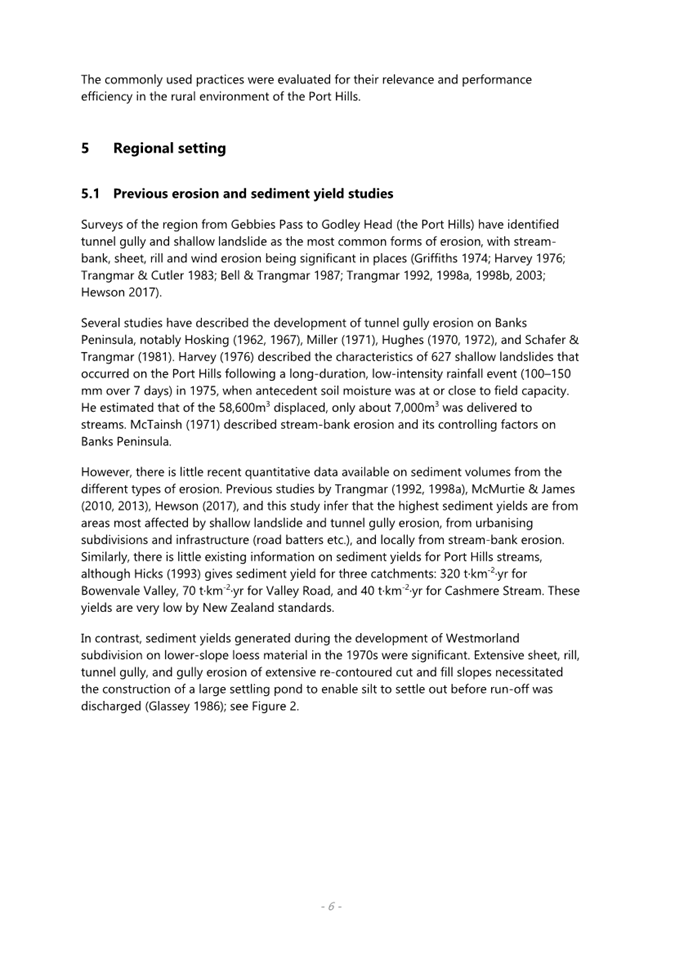
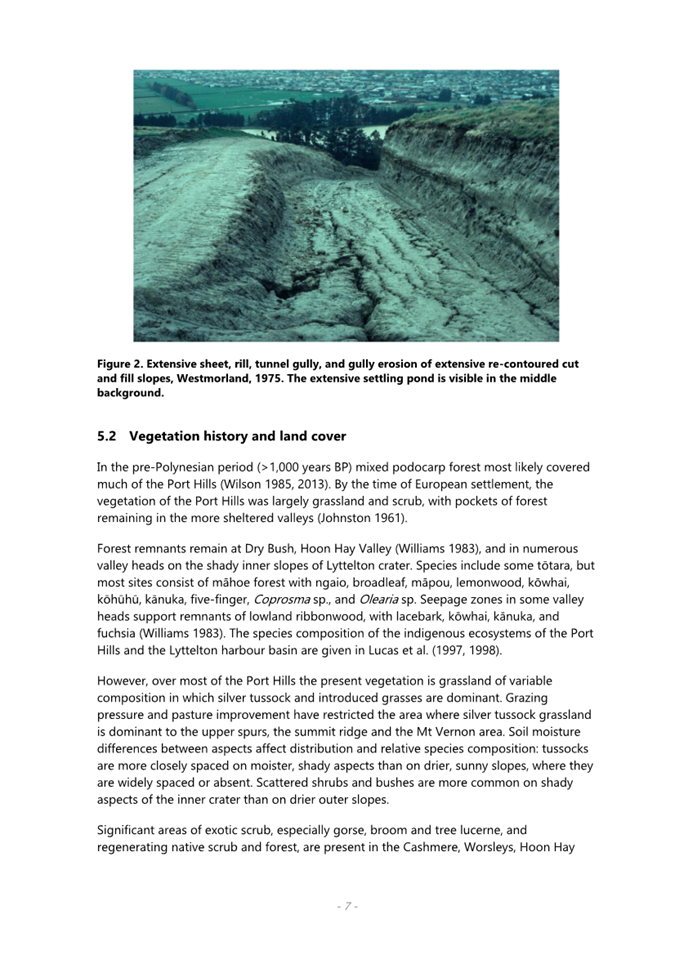
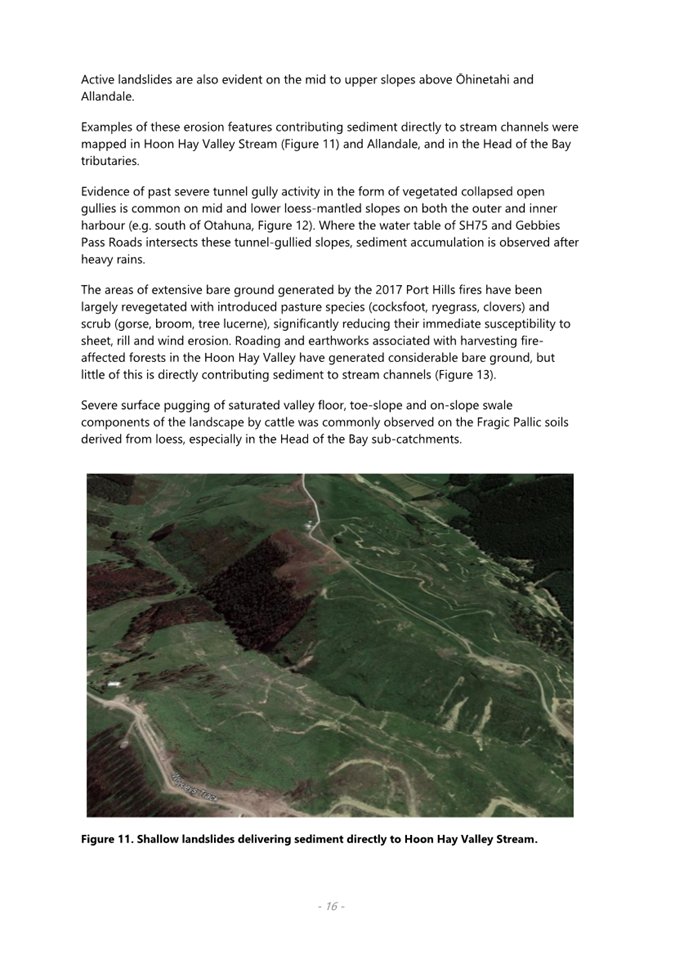
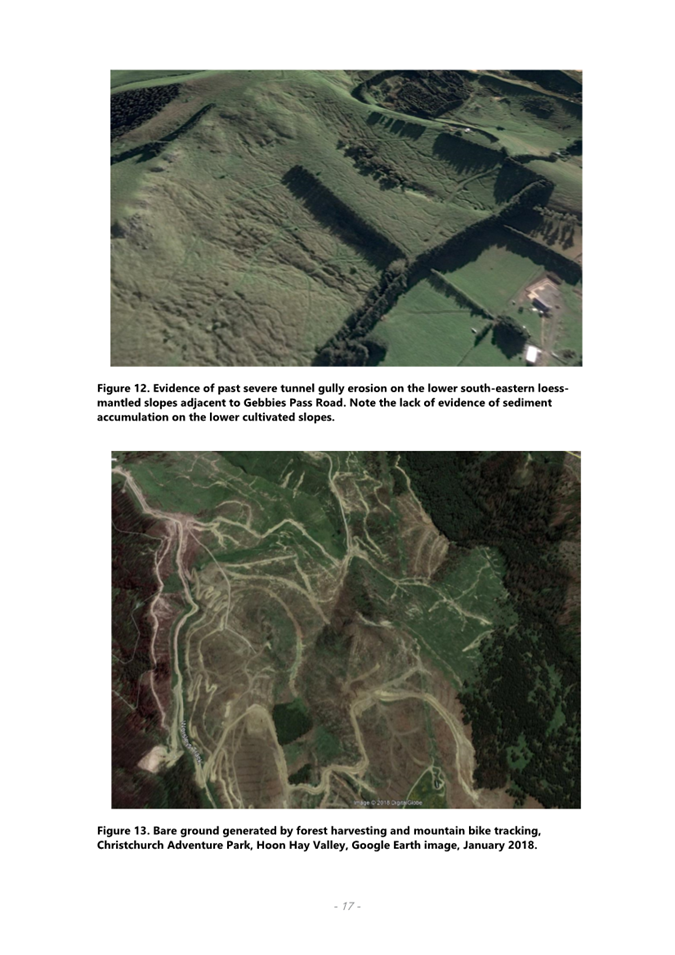
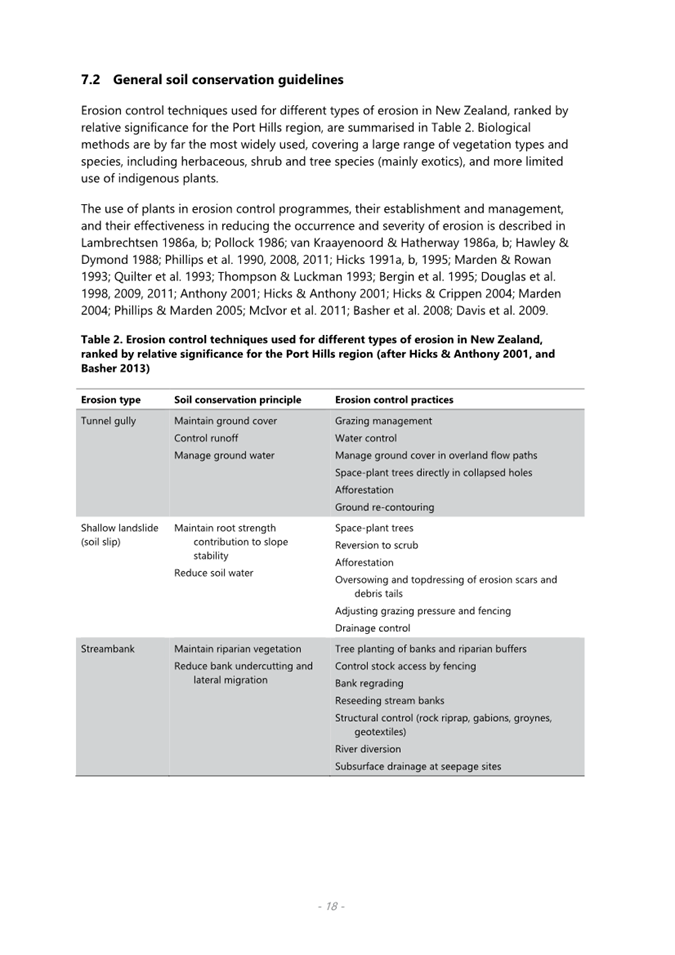
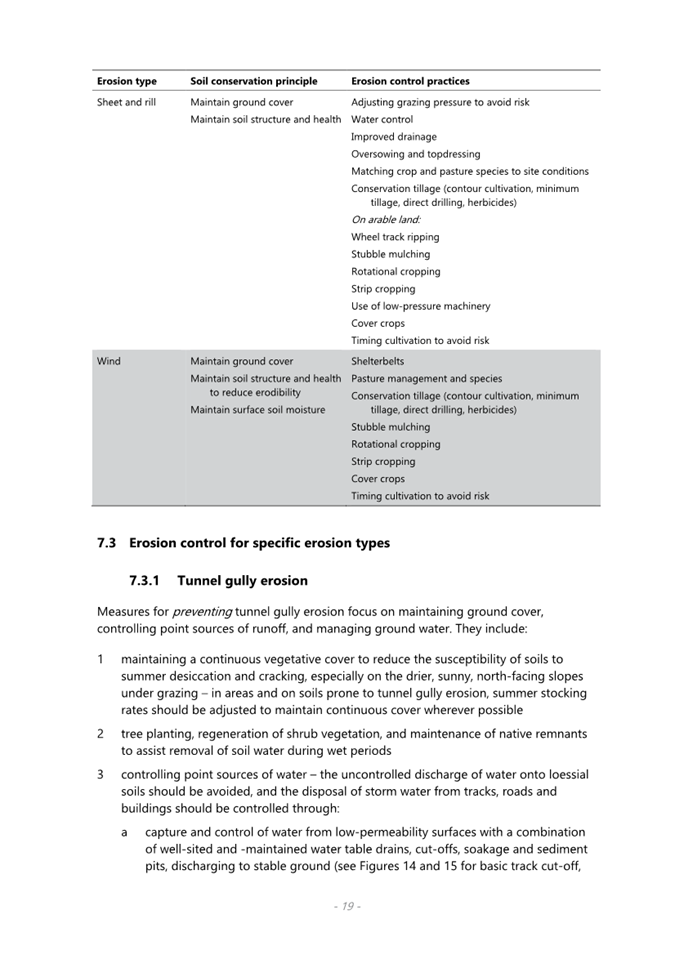
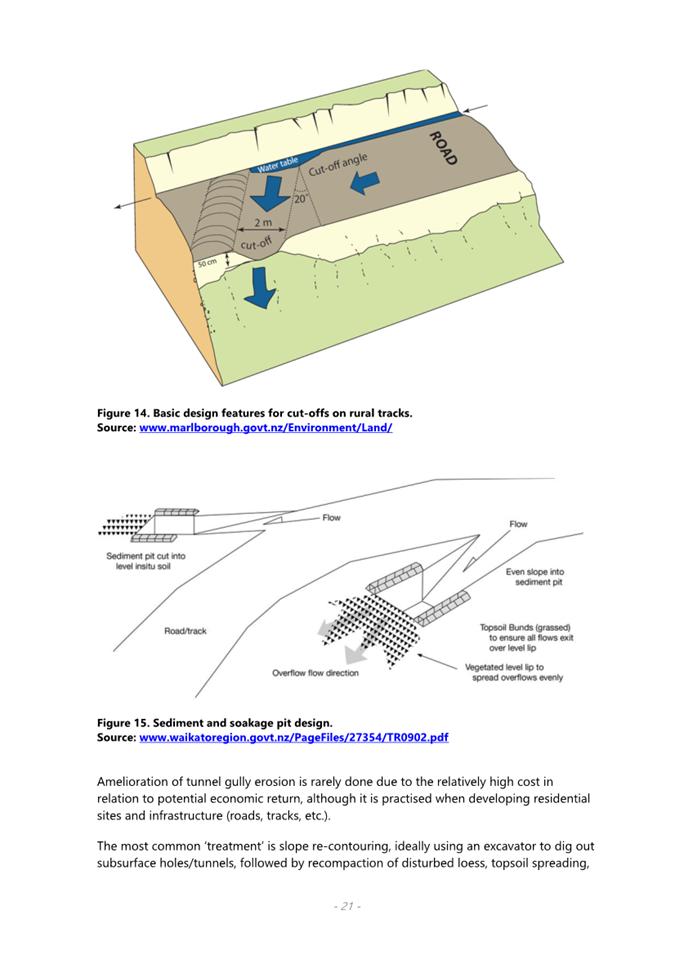
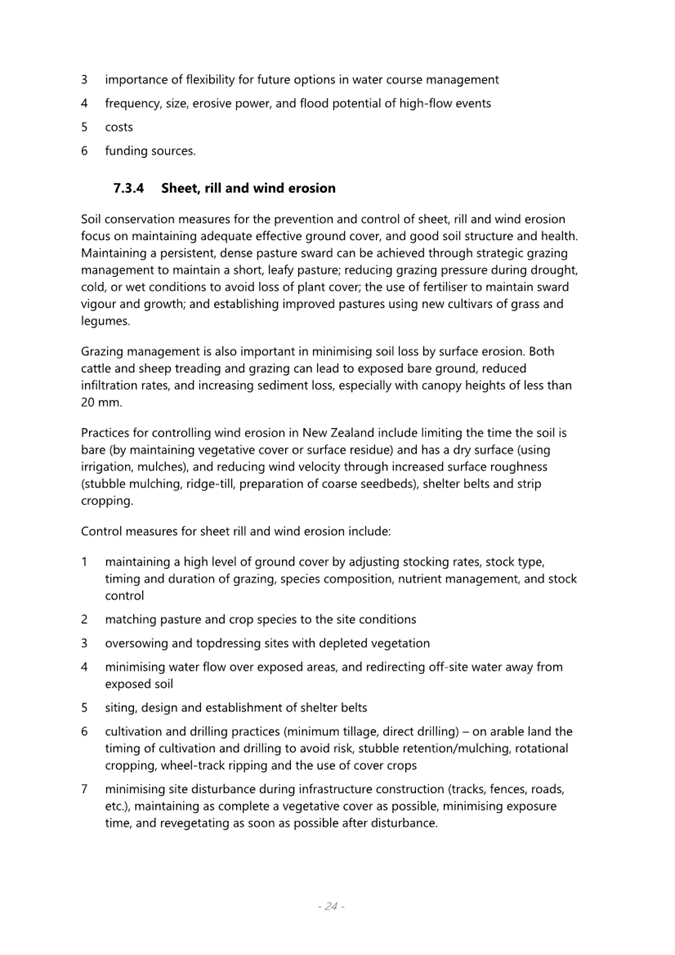
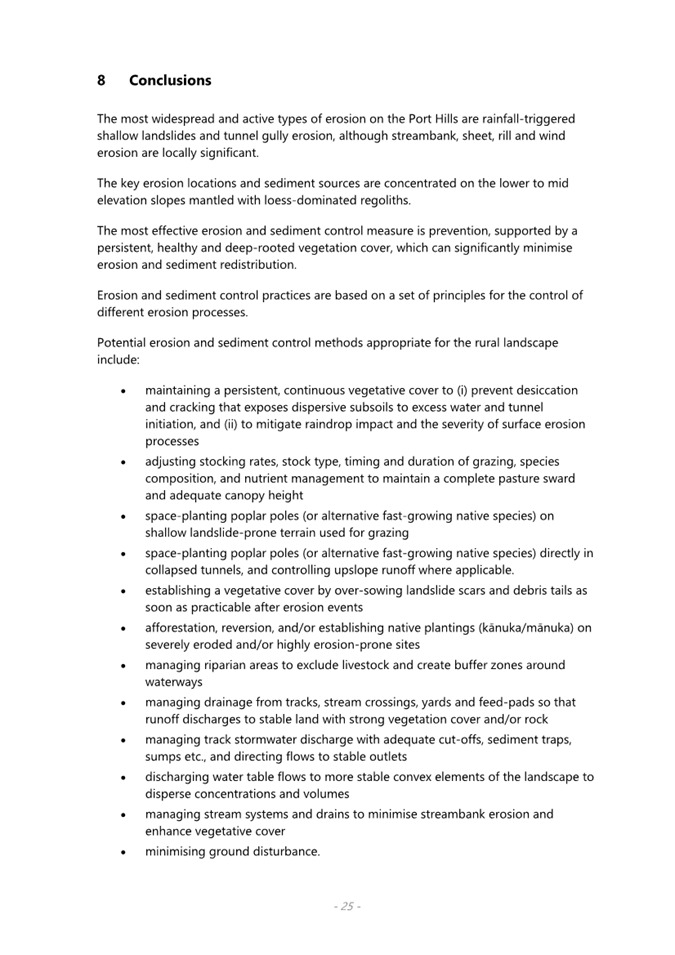
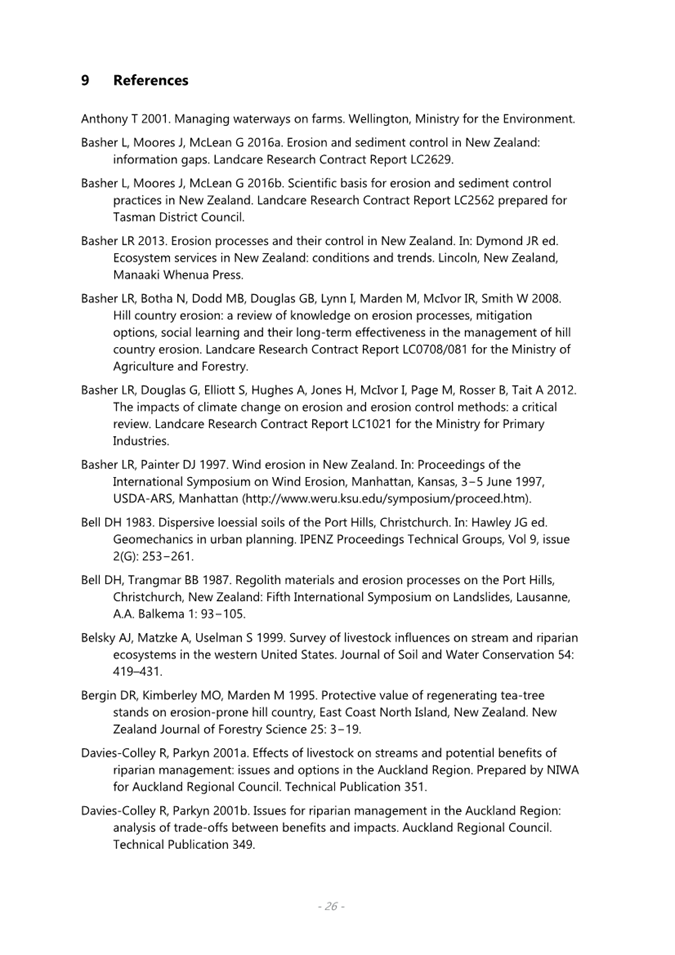
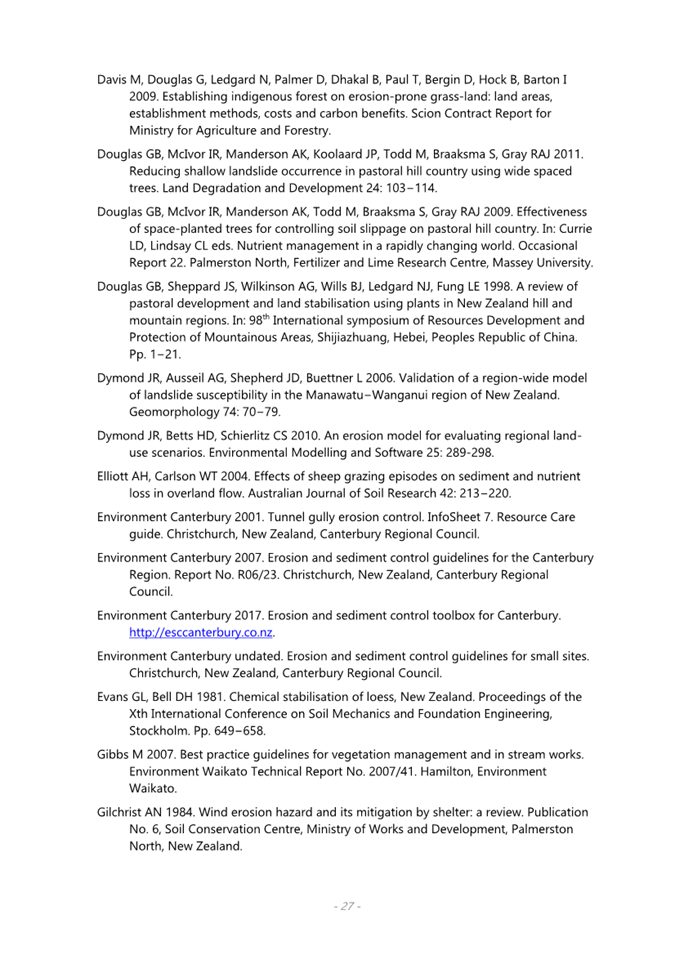
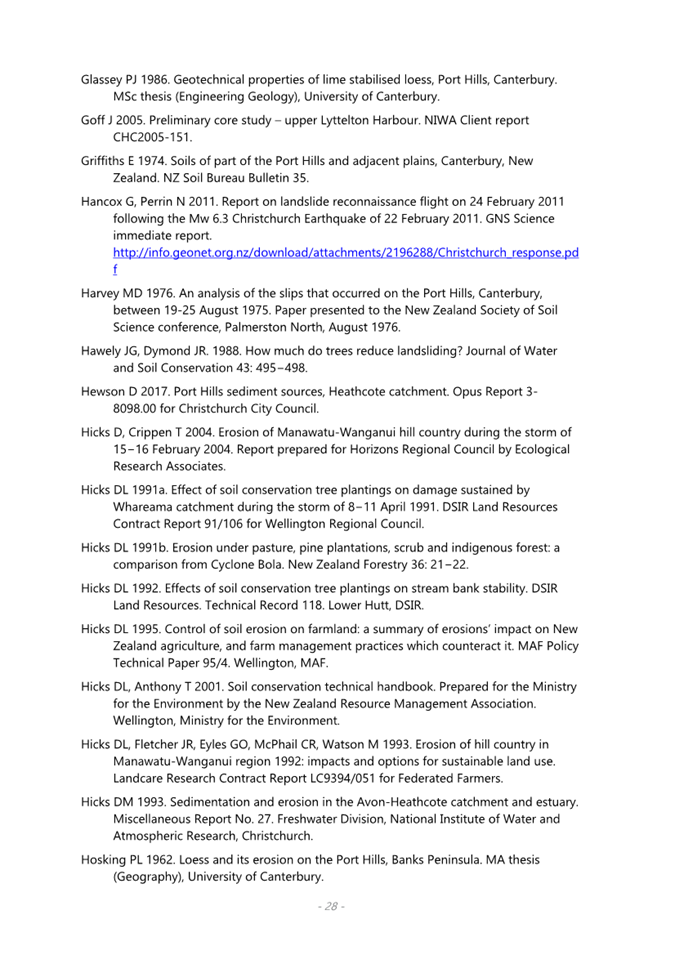
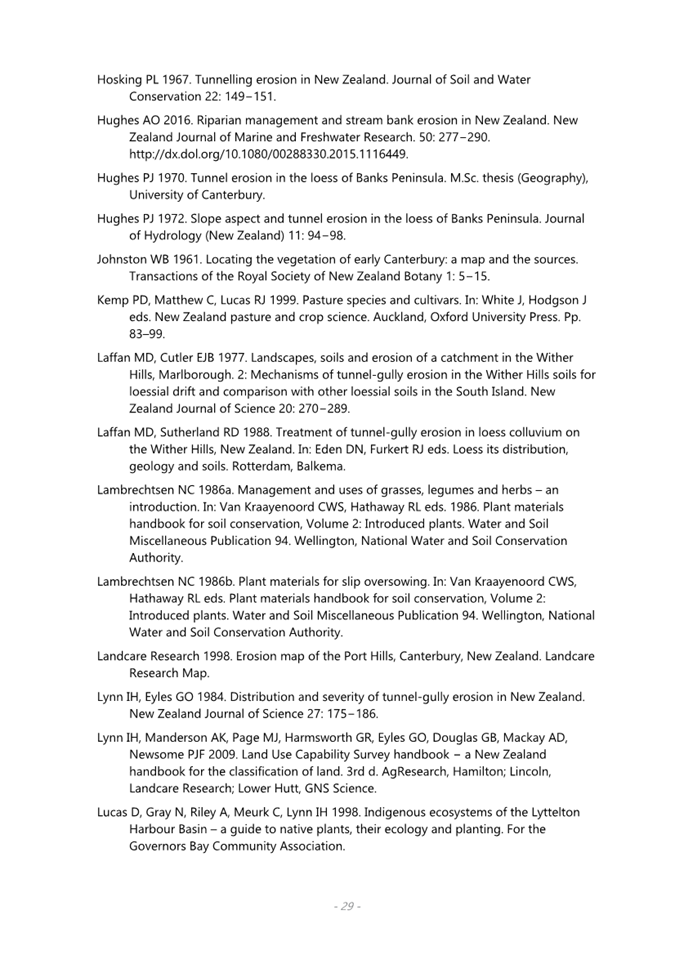
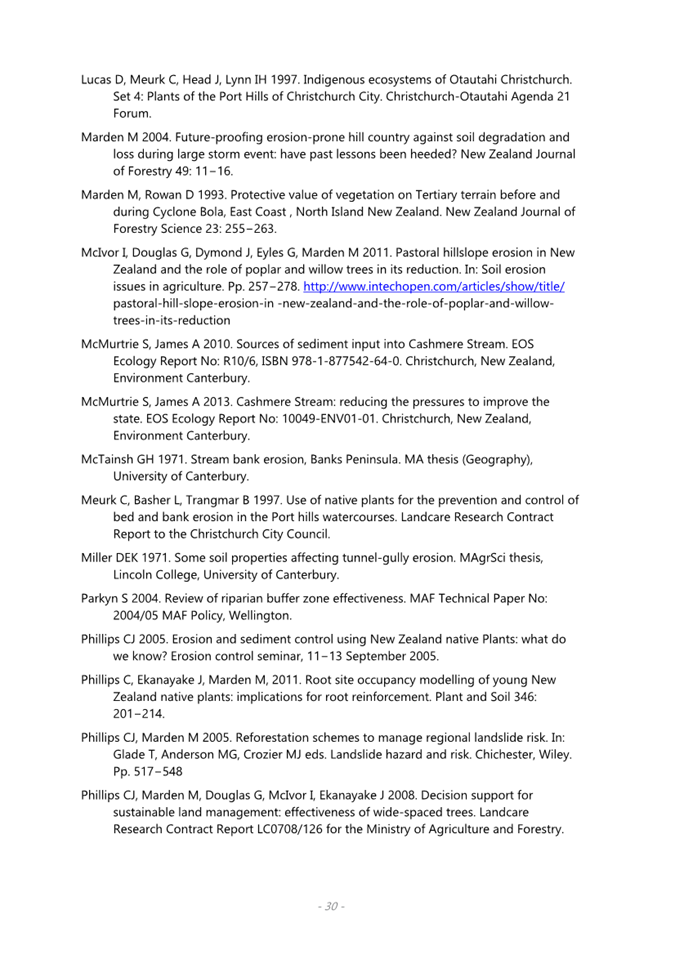
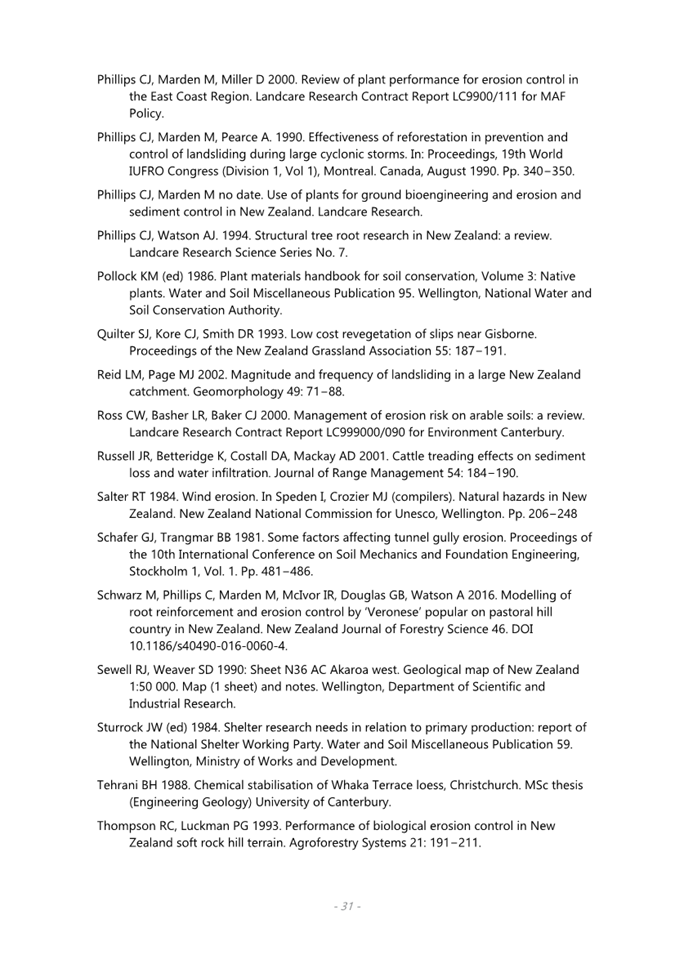
a.    In 2018, Environment Canterbury commissioned a literature review on best practice erosion and sediment control measures for the rural landscape of the Port Hills (see Attachment 1). This review serves as a useful starting point and will help streamline the process of gathering comprehensive information on the subject.

3.    Interviews - to collect information and/or draft case studies

a.    Interview a selection of practitioners whose projects, trials, etc have not been documented to date. There is also an option to develop case studies.

NOTE:  Options to investigate for Steps 2 and 3:

i. Contract individual with relevant expertise to do the review and/or interviews.

ii. Investigate with WHH employing a summer student with relevant expertise to complete Steps 2 and/or 3and funding sources e.g. part of the $10K or WHH.

iii. Steps 2 and 4 were followed in the development of the ESC Toolkit.

4.    Report production

a.    Contract a specialist writer to take the collated information and turn this into easy-to read content. This report is then ready to be utilised for development of/inclusion in a final tool/resource (product).

5.    Next steps -  Confirm Stage 2 – Tool development

a.    Confirm required product e.g an updated ESC Toolkit or other identified product.

b.    Investigate and secure funding - Likely that the $10K will not cover the costs needed to produce a final product e.g. ESC toolkit updates.

Timeframe

The committees are constrained by the CWMS Committees Review with a decision due to be made at the end of the year. Due to this uncertainty, it is preferable that a project plan is confirmed and initiated by December 2024 with the aim to complete the project in 2025.


Stakeholders and involvement

This is a joint project led by the Christchurch West Melton and Banks Peninsula zone committees, Whaka-Ora Healthy Harbour and Te Hapū o Ngāti Wheke/Rāpaki Rūnanga.

Stakeholder involvement to be determined and the following points are noted:

·    Stages 1 and 2 – may require some targeted consultation to determine resources and interview requirements.

·    Stage 3 – Will need to identify and interview relevant stakeholders.

·    Stage 4 – Minimal stakeholder input for the report drafting as will be turning complex information into suitable content. May require a small stakeholder group to review the content to ensure it is suitable for the end user.

Stage 5 – Will need stakeholder input to determine a suitable product.

Key Issues

No easy to use and readily accessible resource for landowners that relates specifically to the loess soil types and the Port Hills.

Next Steps

Continue proposal development with Christchurch West Melton Zone Committee, Te Hapū o Ngāti Wheke and Whaka-Ora Healthy Harbour.


Useful Links

Erosion and Sediment Control Toolbox - Environment Canterbury (esccanterbury.co.nz)


Attachments Ngā Tāpirihanga

No.

Title

Reference

Page

a

Best practice erosion and sediment control measures for the rural landscape of the Port Hills - a literature review

24/1595592

10


Signatories Ngā Kaiwaitohu

Author

Natasha McDonnell - Democratic Services Advisor

Approved By

Natasha McDonnell - Democratic Services Advisor


A cover of a document

Description automatically generated

A white background with black dots

Description automatically generated

A document with black text

Description automatically generated


A white background with black dots

Description automatically generated


A close-up of a document

Description automatically generated


A close-up of a paper

Description automatically generated


A document with text and images

Description automatically generated


A paper with text on it

Description automatically generated

A paper with text on it

Description automatically generated

A paper with text on it

Description automatically generated

A close-up of a document

Description automatically generated

A document with text on it

Description automatically generated

A document with text on it

Description automatically generated

A close-up of a document

Description automatically generated

A document with text on it

Description automatically generated


A close-up of a document

Description automatically generated


Karakia Whakamutunga

Karakia Whakamutunga

Unuhia, unuhia

Unuhia ki te uru tapu nui

Kia wātea, kia māmā te ngākau,

te tīnana,

te wairua i te ara tangata

Koia rā e Rongo, whakairia ake ki

runga

Kia tina! TINA! Hui ē! TĀIKI Ē!

English translation

Draw on, draw on,

Draw on the supreme sacredness

To clear, to free the heart, the body

and the spirit of mankind

Rongo, suspended high above us (in ‘heaven’)

Draw together! Affirm!


Karakia mō te kai

For food

Nau mai e ngā hua

O te wao

O te ngakina

O te wai tai

O te wai Māori

Nā Tāne

Nā Rongo

Nā Tangaroa

Nā Maru

Ko Ranginui e tū iho nei

Ko Papatūānuku e takoto nei

Tūturu whakamaua ki a tina

Tina, haumi ē, hui ē

Tāiki ē


E Rongo, e Rongo

Hōmai ngā tipu

Hei whakakī i te tīnana

Hei oranga

Au eke, au eke

Hui ē, tāiki ē!

English translation

Welcome the gifts of food

From the sacred forests

From the cultivated gardens

From the sea

From the fresh water

The food of Tāne

Of Rongo

Of Tangaroa

Of Maru

I acknowledge Ranginui above me

Papatūānuku who lies beneath me

Let this be my commitment to all

Draw together

Affirm!


Rongo, Rongo

Give us the foods, with which to fill the

body, and have health

That I may ascend

Affirm!