|
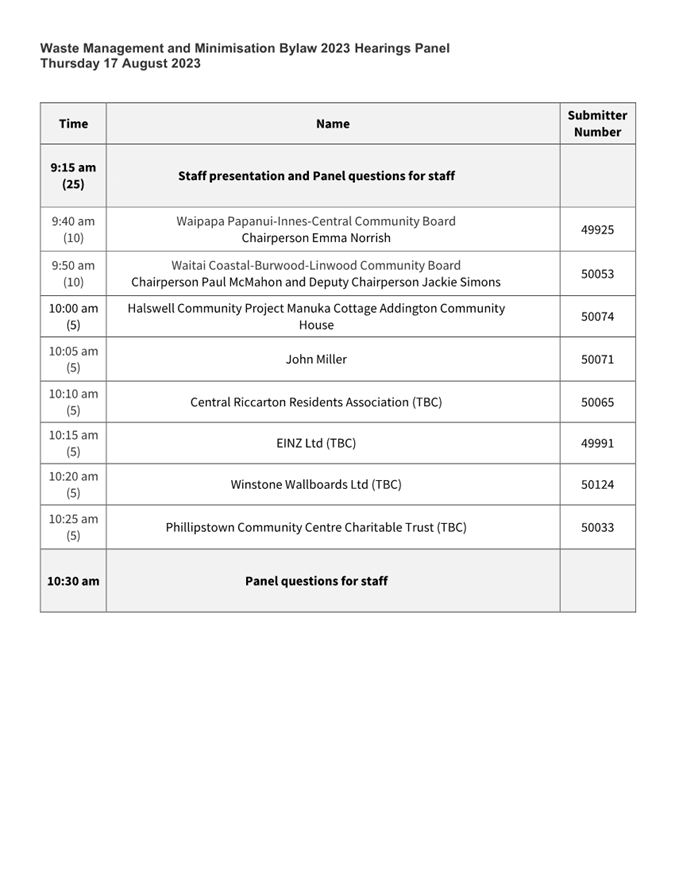
Bylaw Hearings Panel
17 August 2023
|
|
|
4. Submissions
on the Proposed Waste Management and Minimisation Bylaw
|
|
Reference / Te Tohutoro:
|
23/249957
|
|
Report of / Te Pou Matua:
|
Ruth
Littlewood, Senior Policy Analyst
Melanie Hayman, Contract Supervisor, Resource Recovery
|
|
General Manager / Pouwhakarae:
|
Lynn
McClelland, Assistant Chief Executive Strategic Policy and Performance
(lynn.mcclelland@ccc.govt.nz)
|
1. Nature of Decision or Issue and Report Origin
1.1 The purpose of this report is to summarise the submissions
received during consultation on the proposed Waste Management and Minimisation
Bylaw 2023. The proposed Bylaw will replace the current Waste Management
Bylaw 2009, and Cleanfill and Waste Handling Bylaw 2015.
1.2 This report is intended to support the Hearings Panel in
its deliberations on submissions.
1.3 The
decisions in this report are of low significance in relation to the
Christchurch City Council’s Significance and Engagement Policy. The level
of significance was determined on the basis that this report only contains
information on the submissions and options for amendments to the bylaw for
consideration of the Hearings Panel. The panel’s role is to consider all
submissions and to make recommendations to the Council on decisions on the
proposed replacement bylaw and terms and conditions.
2. Officer Recommendations Ngā
Tūtohu
That the Bylaw
Hearings Panel:
1. Receive this report including attachments to
support the hearings and deliberation process.
3. Detail Te Whakamahuki
Background
3.1 On
14 December 2022, the Council considered and approved the draft Waste
Management and Minimisation Bylaw and Terms and Conditions for consultation.
3.2 The
proposed draft bylaw integrates two current bylaws: the Waste Management Bylaw
2009 which provides the rules for the Council’s waste management services
and some other waste related matters and the Cleanfill and Waste Handling Bylaw
2015 relating to commercial waste handling operations, including
‘clean’ landfill operations.
Statutory power to make bylaws
3.3 The
proposed bylaw is made under the bylaw making provisions of section 56 of the Waste Minimisation Act 2008, section 64 of the
Health Act 1956, section 12 of the Litter Act 1979 and sections 145 and 146 of
the Local Government Act 2002. The Local Government Act
2002 (LGA) also sets out the process, considerations and requirements for
making a new bylaw or, as in this case, making a replacement bylaw.
3.4 In
terms of section 155 of the LGA, the Council, is required to determine that a
bylaw is the most appropriate way to address the identified problems and that
the bylaw is in the most appropriate form. In addition, the Council must
consider whether the bylaw gives rise to any implications under the New Zealand
Bill of Rights Act 1990.
4. Details Ngā mariu ā-Hāpori
4.1 Consultation
on the draft bylaw opened from 30 January to 26 February 2023.
4.2 Consultation
information was made available on the Council’ Have Your Say website.
Emails were sent to 93 stakeholders, inviting submissions.
4.3 A
Newsline story was published on our website on 30 January and was viewed 1,051
times.
4.4 A
post on our newsfeed on 30 January reached 15,159
people, had 31 reactions, 107 comments and 17 shares.
Summary of submissions Ngā Tāpaetanga
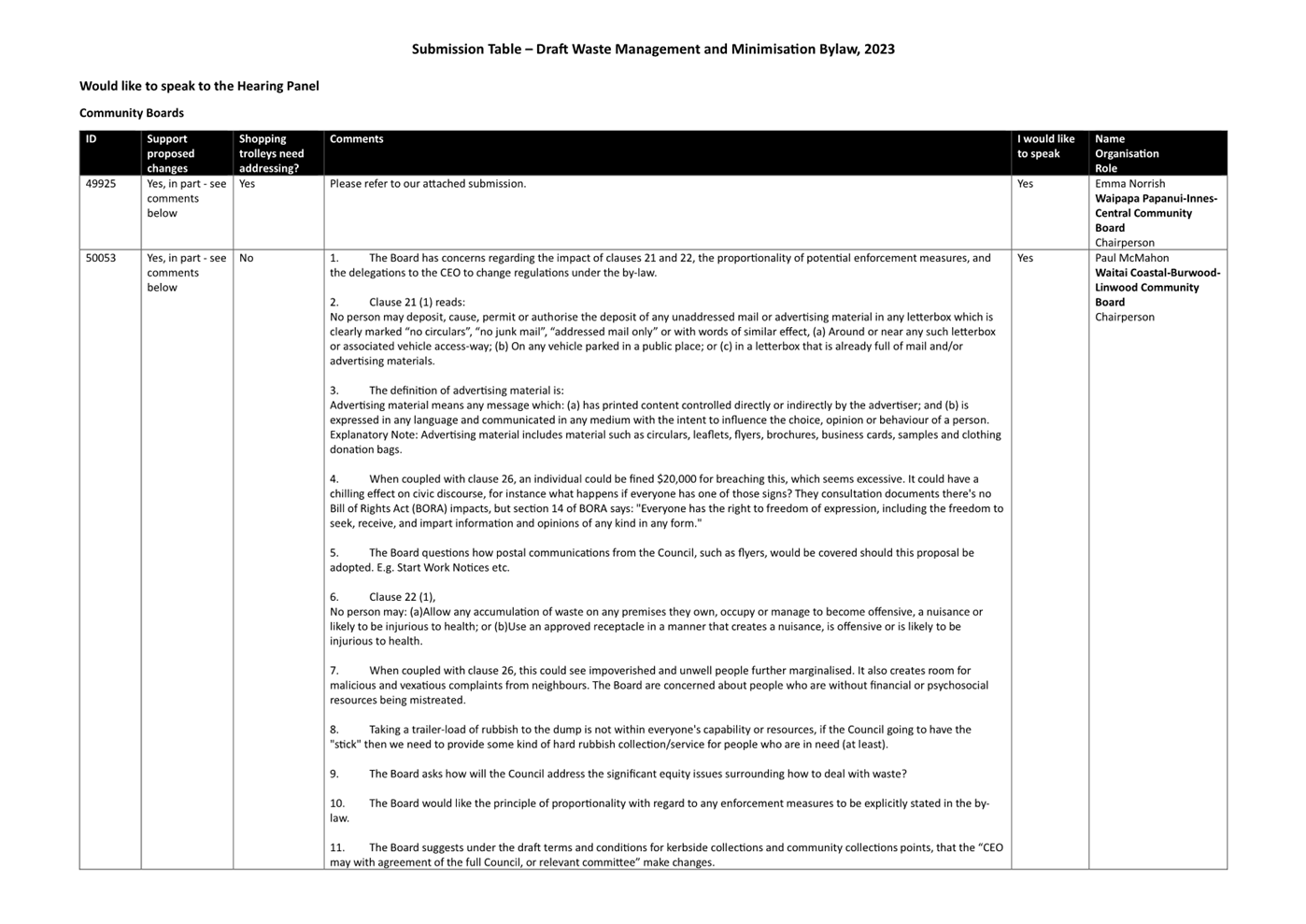
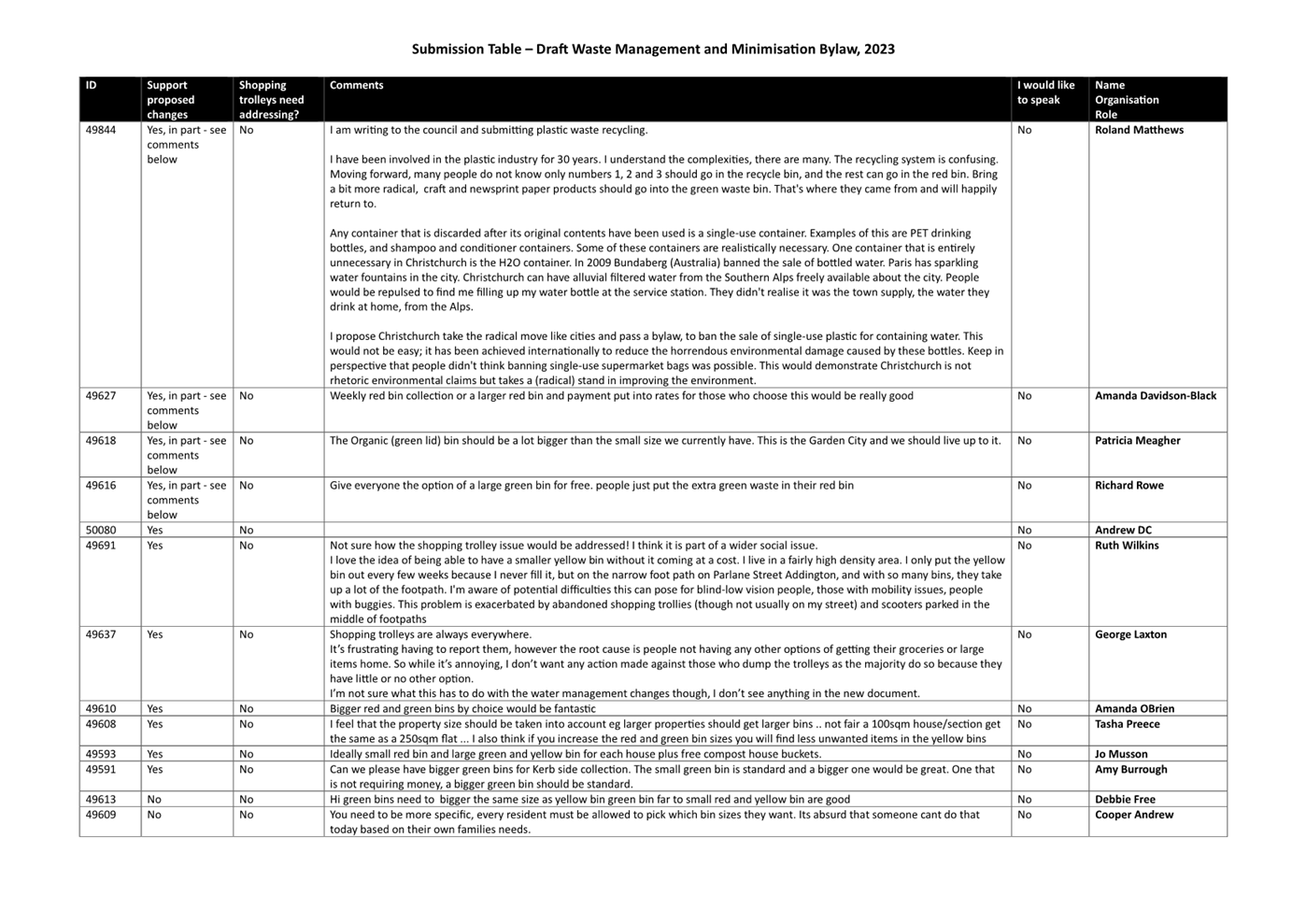
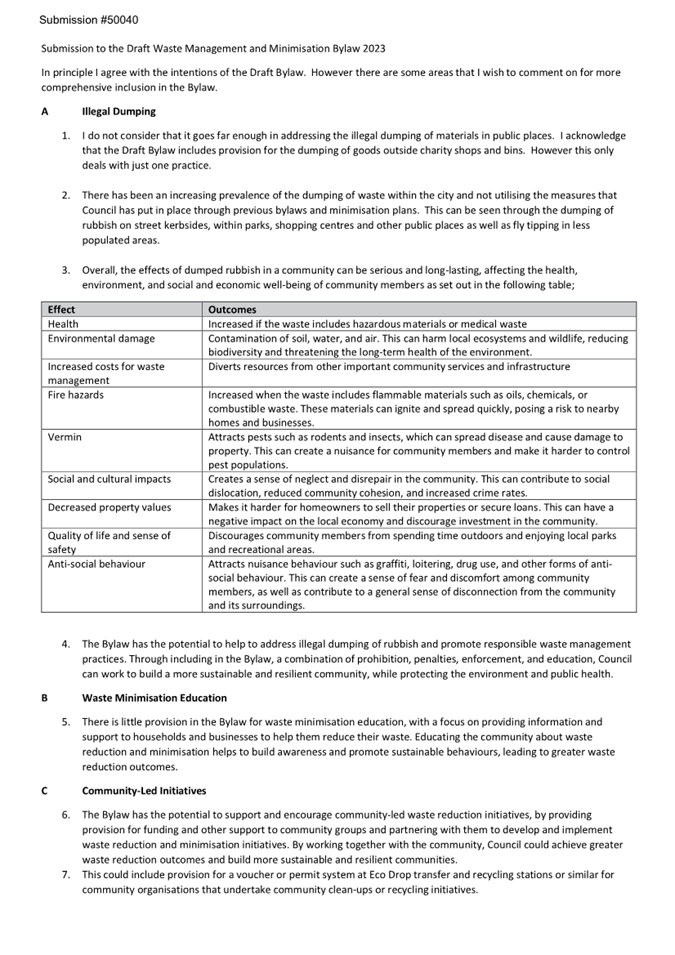
4.5 The number of submissions received was 74, 3 of them being
made via email and 71 through ‘Have Your Say’.
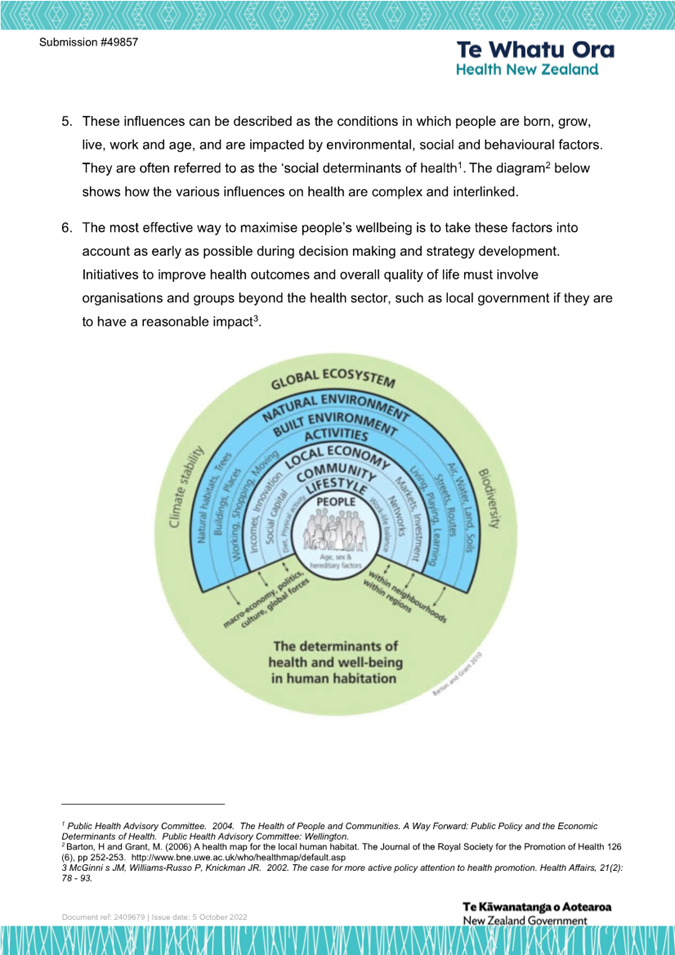
4.6 Submissions
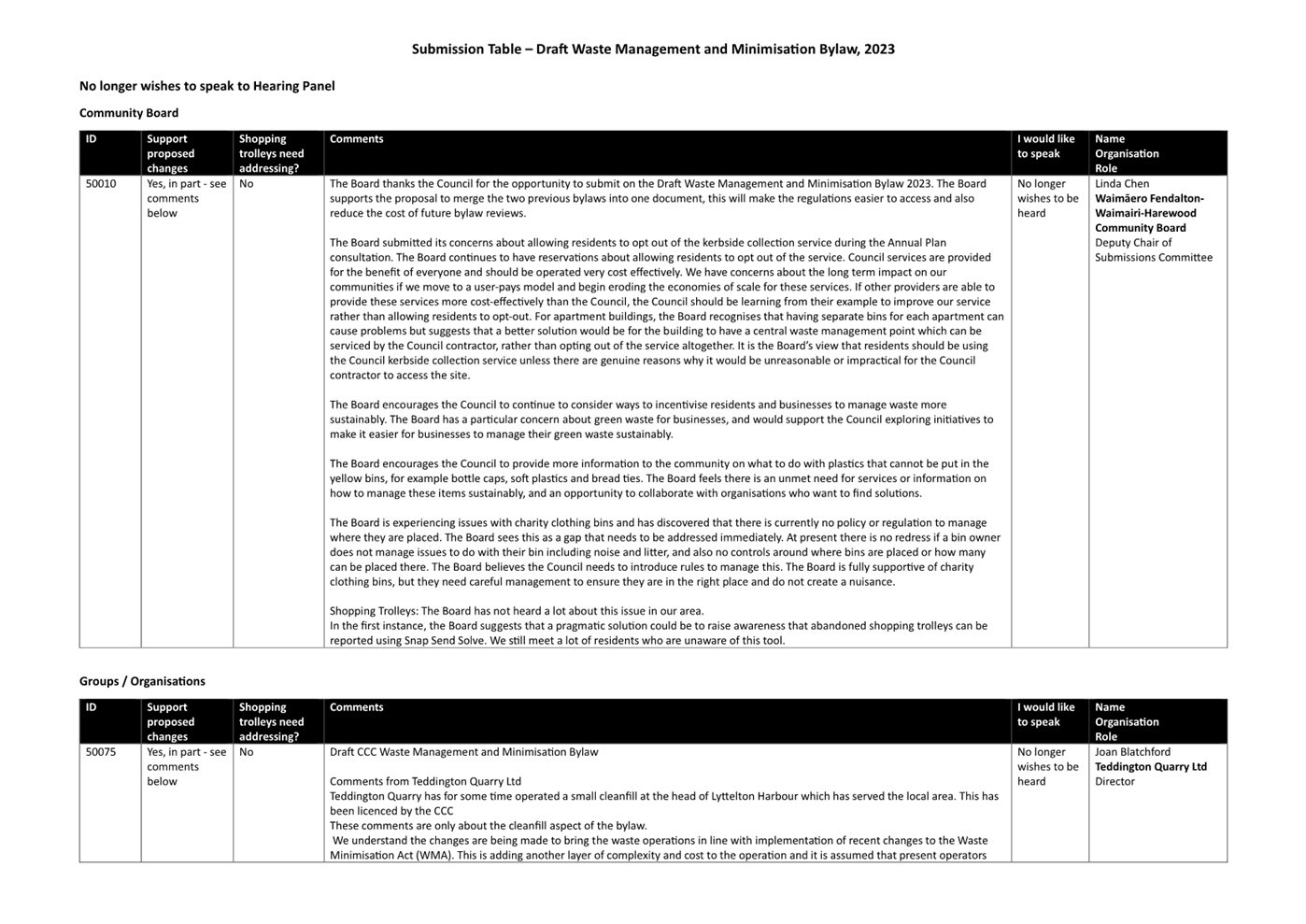
were received from 16 organisations comprising: Te Mana Ora; five community
boards; three residents’/neighbourhood associations; one not-for-profit
marketing association; one charitable trust; one community project; one
provider of education on sustainability and three businesses. There were 58
submissions from individuals.
4.7 There
were 17 submitters (6 individuals, 4 local community boards, and 7 organisations)
that indicated that they would like to speak to their submissions.
4.8 Most
submissions (65 of 74) support the draft bylaw, either wholly (35 submissions)
or in part (30 submissions). Overall, the proposal to replace the two current
bylaws with a single draft bylaw received positive responses with submissions
also generally supportive of specific changes (a. to h.) of the proposal. Those
submitters that supported the proposed bylaw ‘in part’ expressed
concerns about specific clauses or aspects of the proposed changes. These
submissions are discussed below and in Attachment A.
4.9 While
eight submissions responded ‘No’ to the question “Do you
support the proposed changes to the bylaw?”; the staff evaluation of
these submissions is that they do not oppose the substantive proposals for
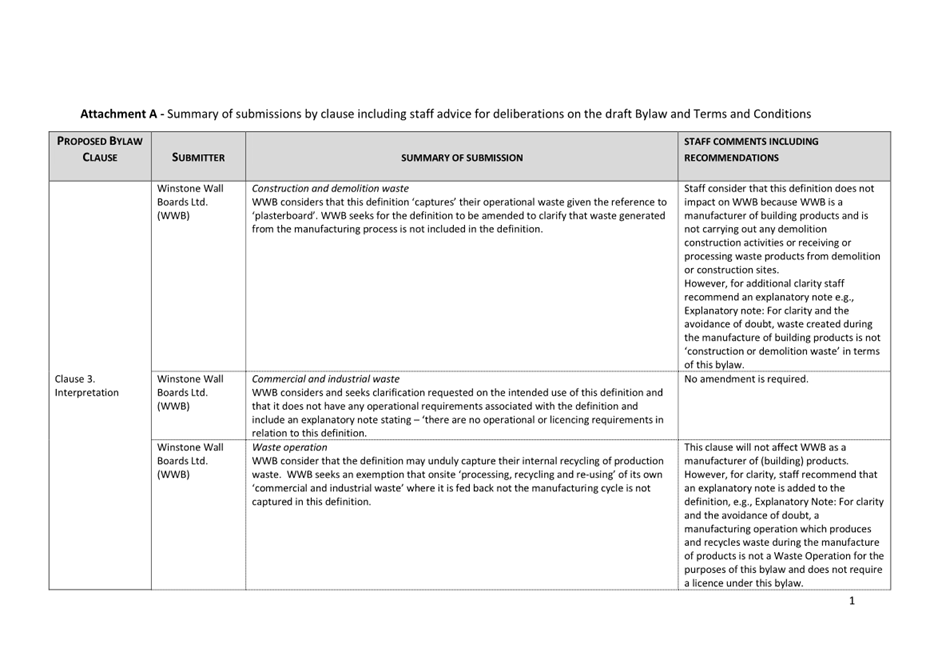
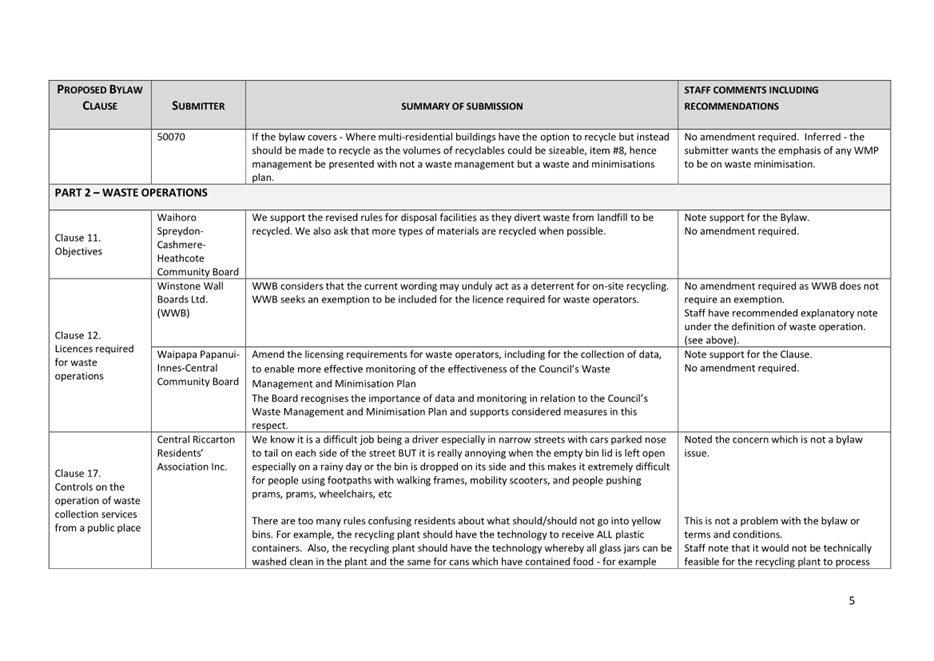
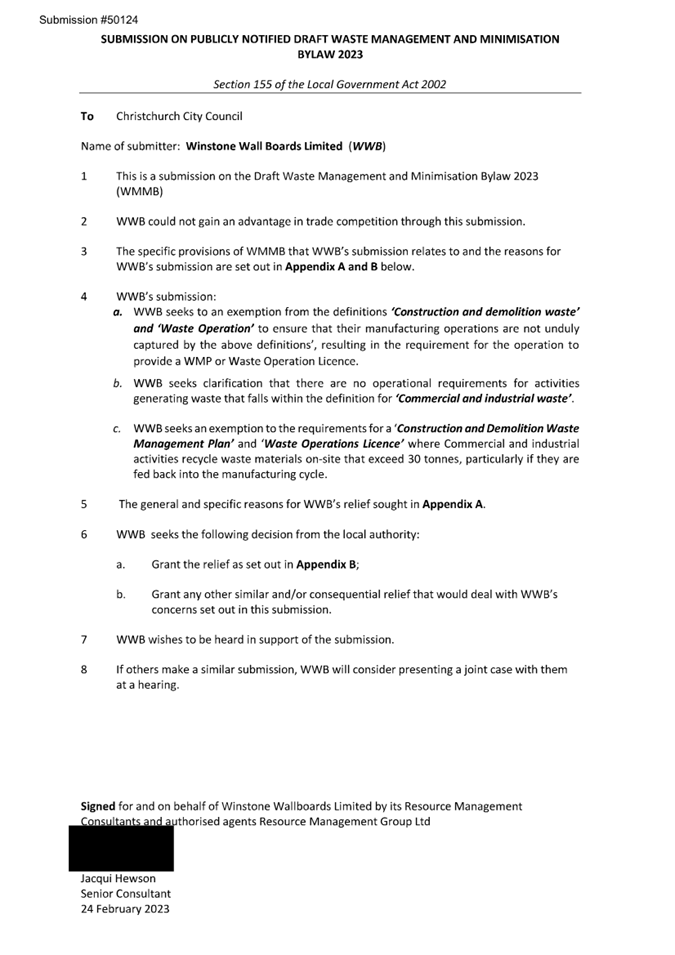
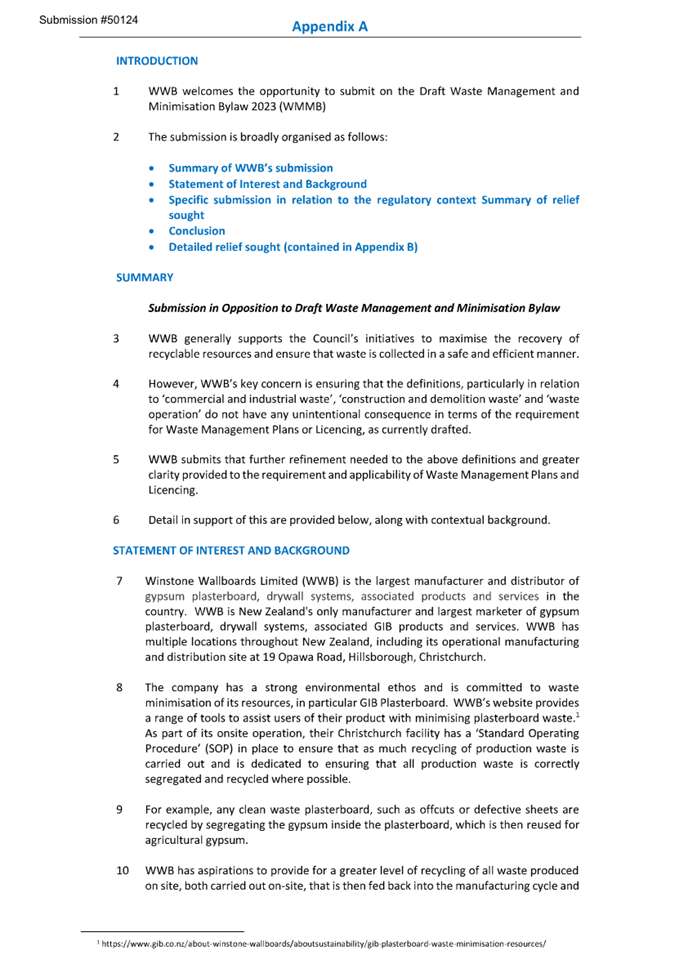
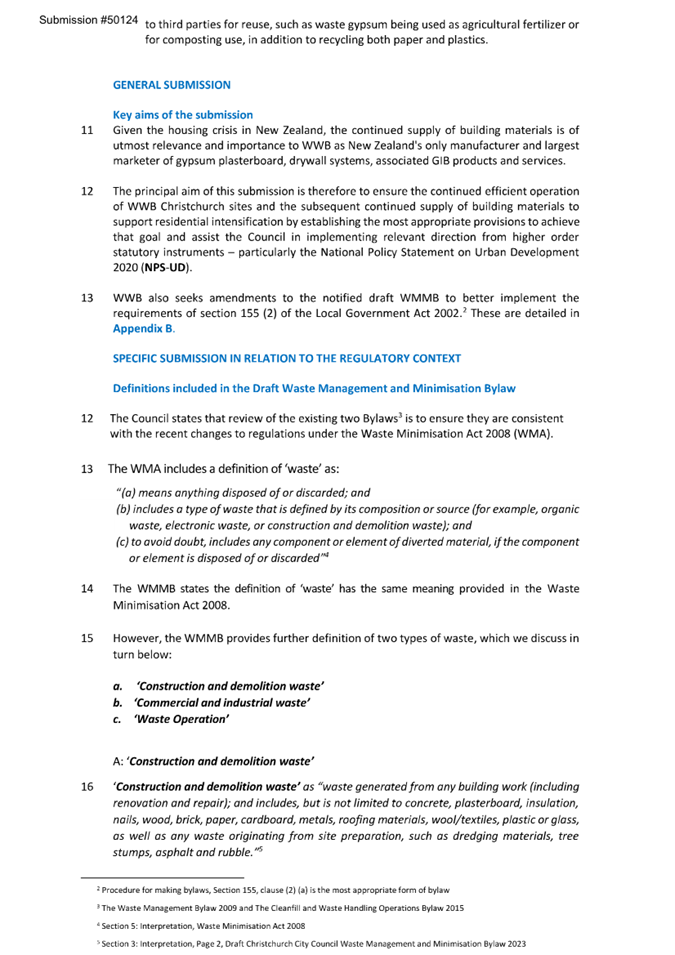
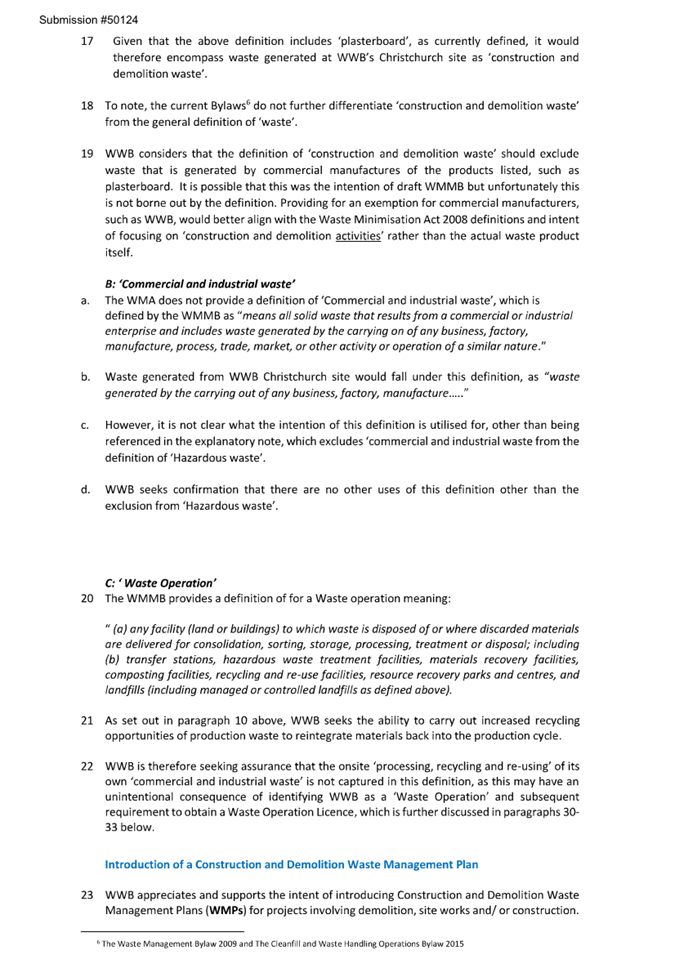
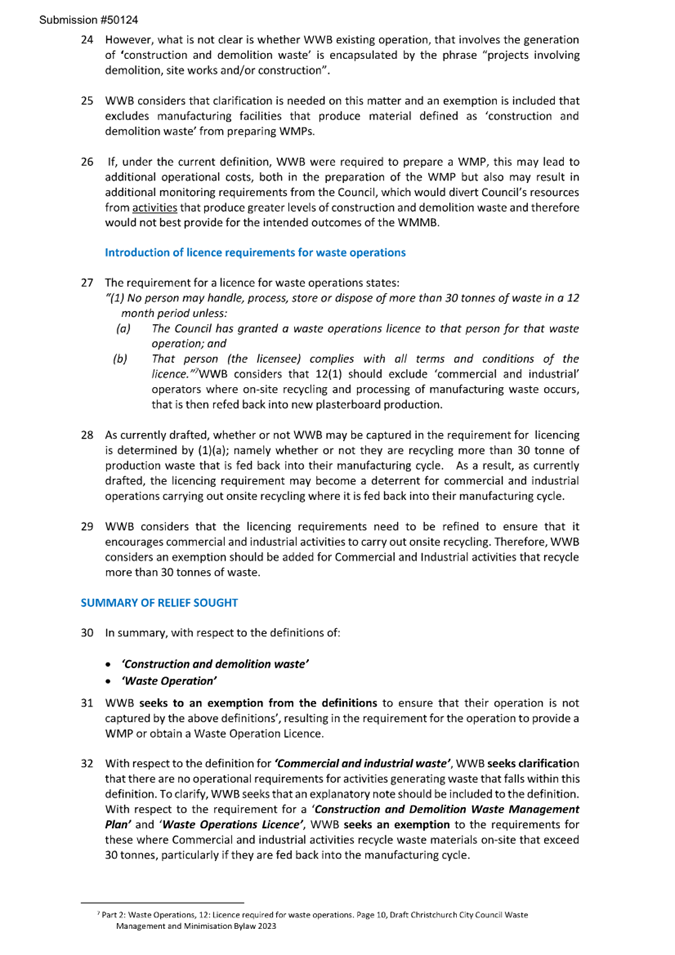
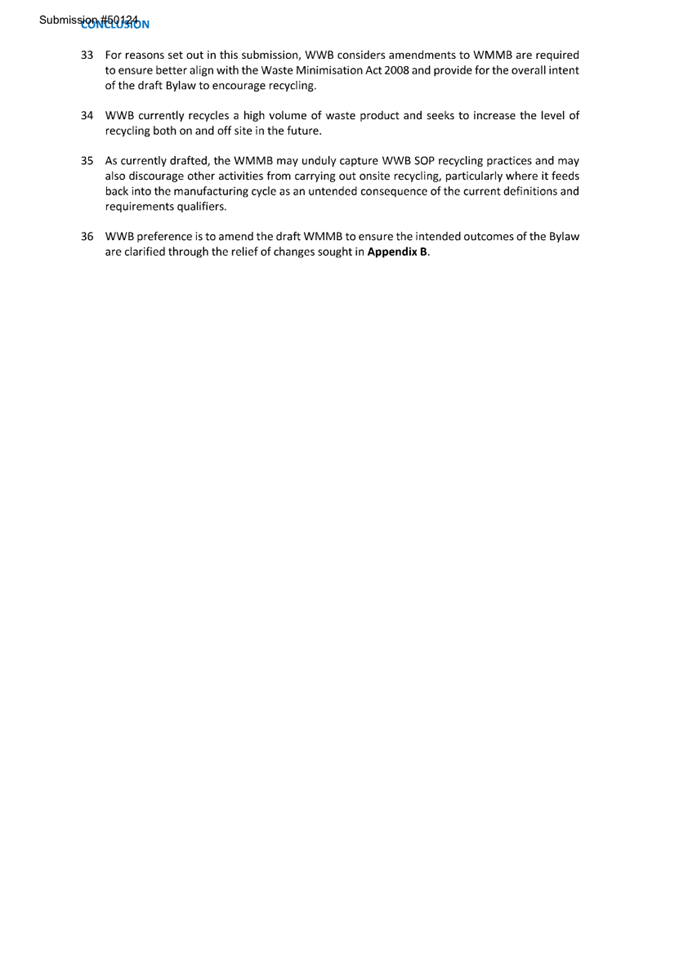
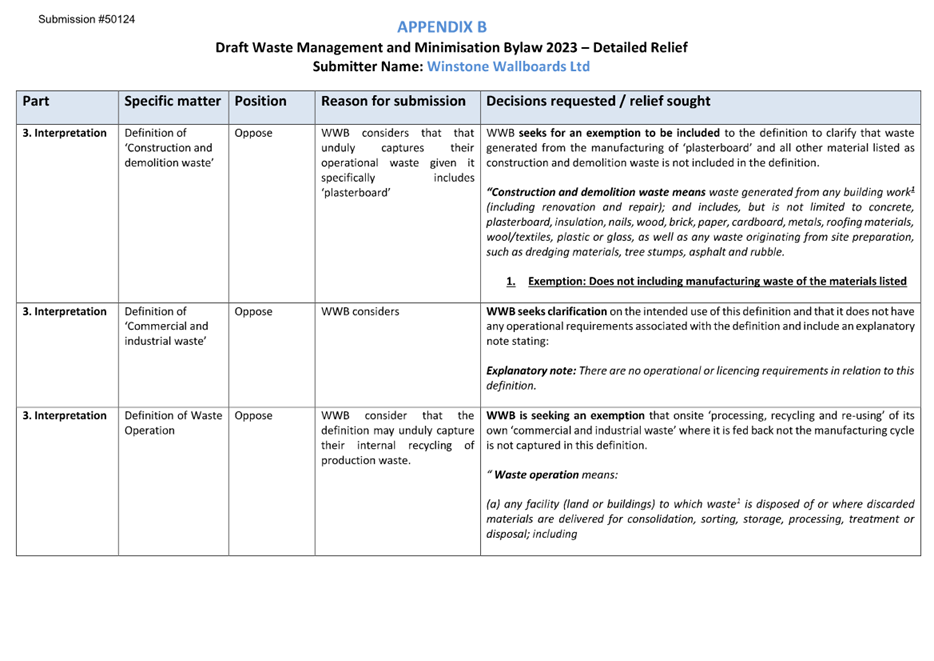
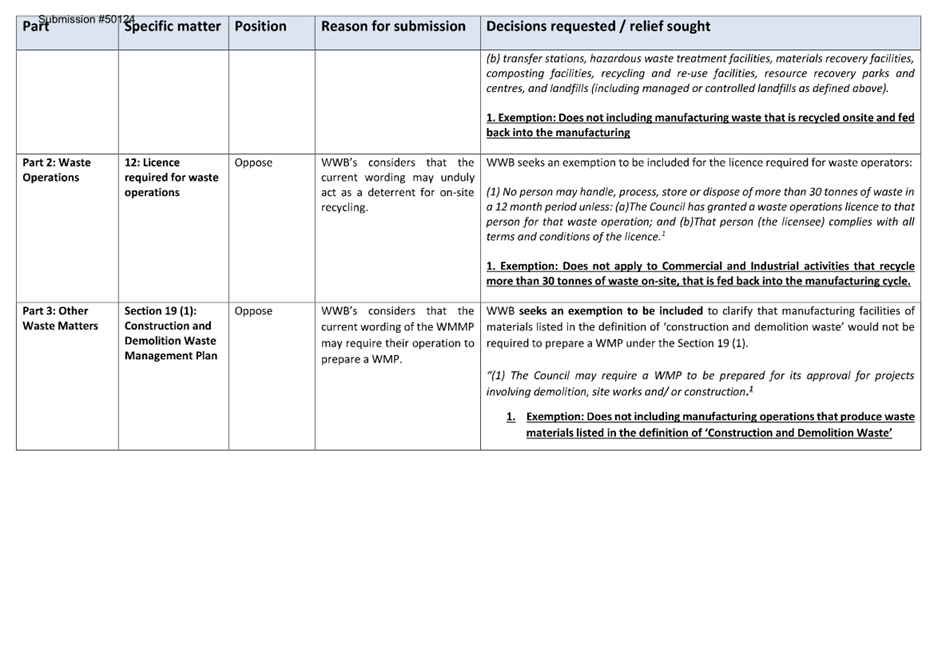
change. The ‘opposing’ submission by Winstone Wallboards Ltd (WWB),
seeks clarity in the interpretation clause of the bylaw to make it clear that
WWB is not a waste operation, while the seven ‘opposing’ individual
submitters want Council’s waste collection service to provide more choice
in bin options.
4.10
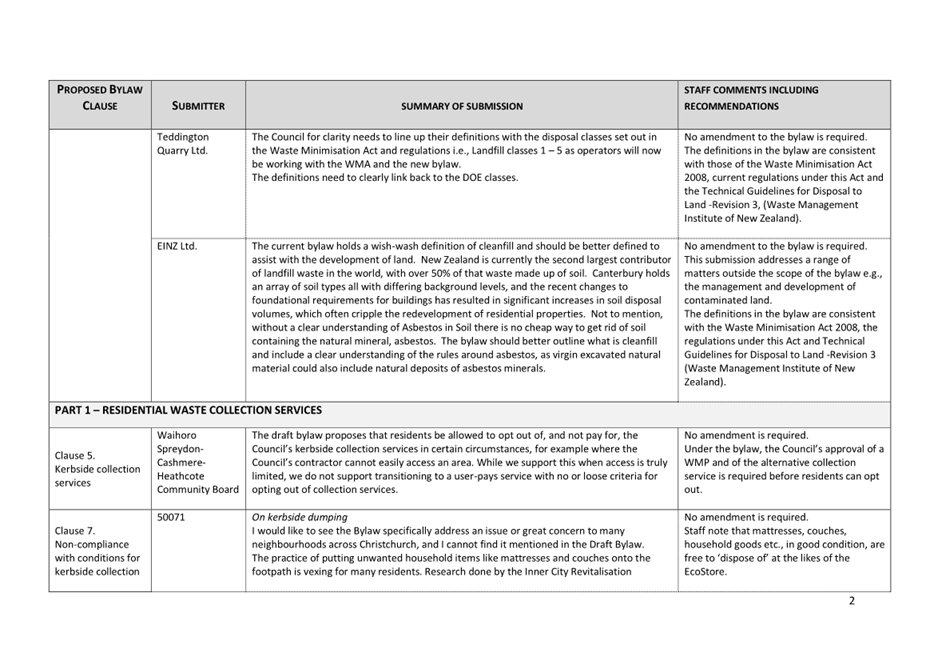
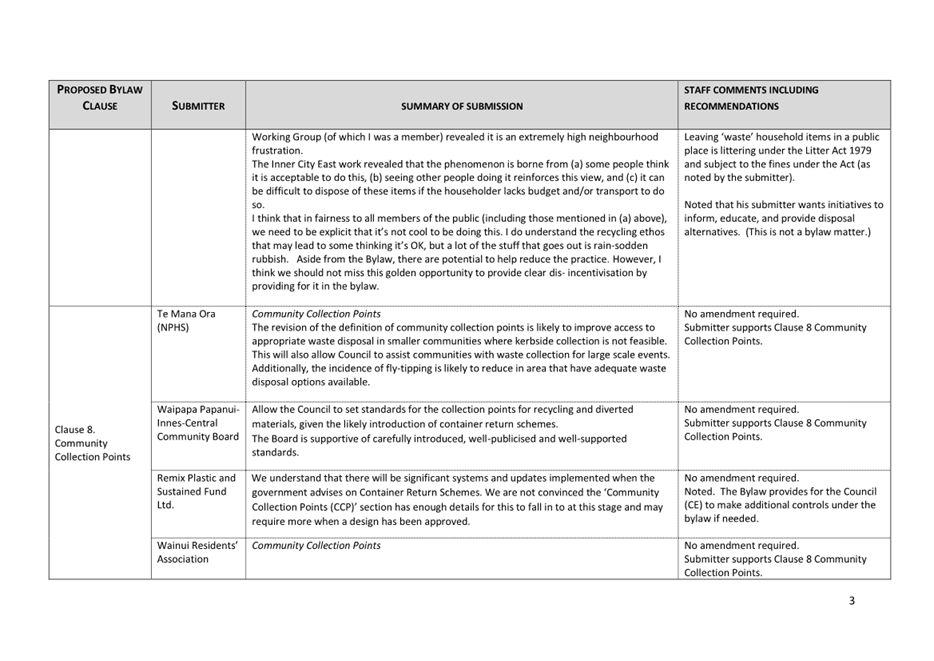
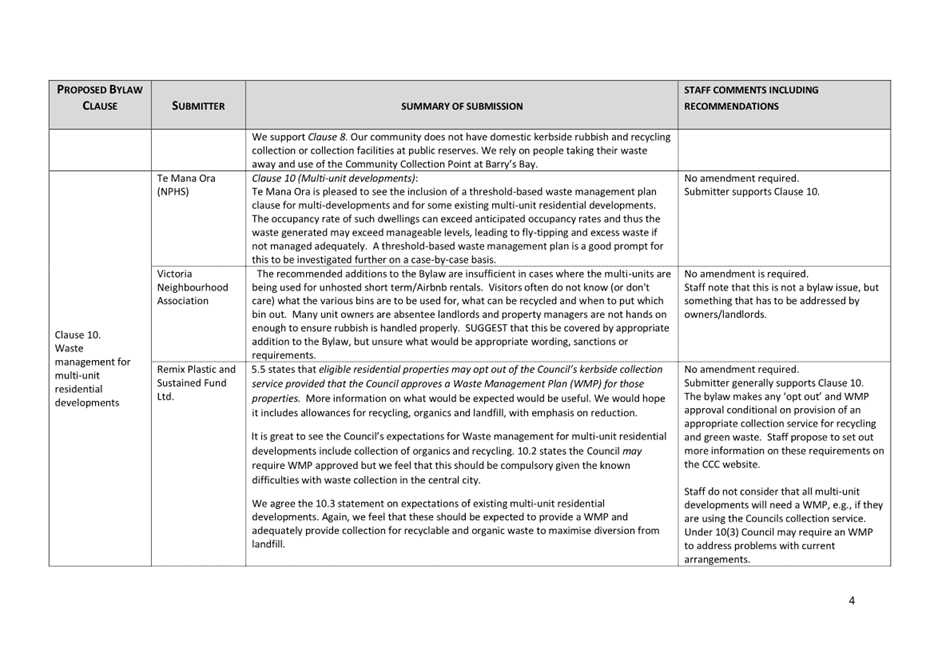
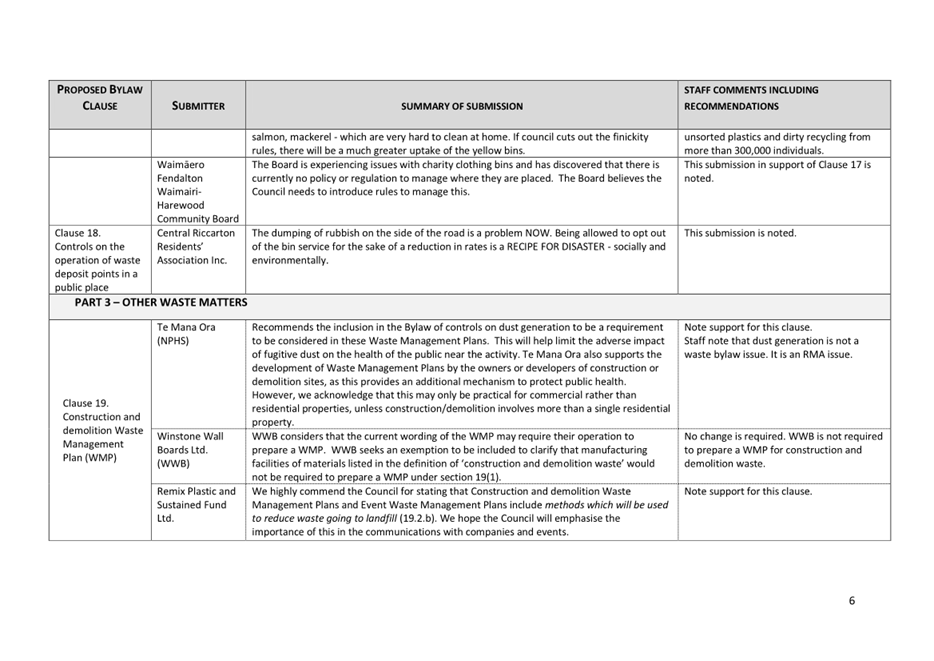
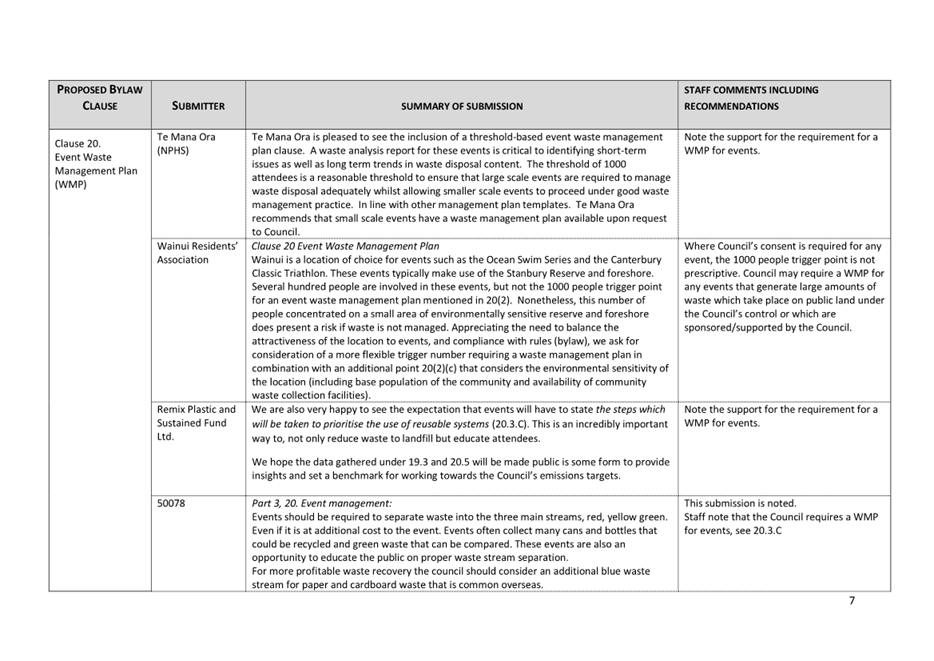
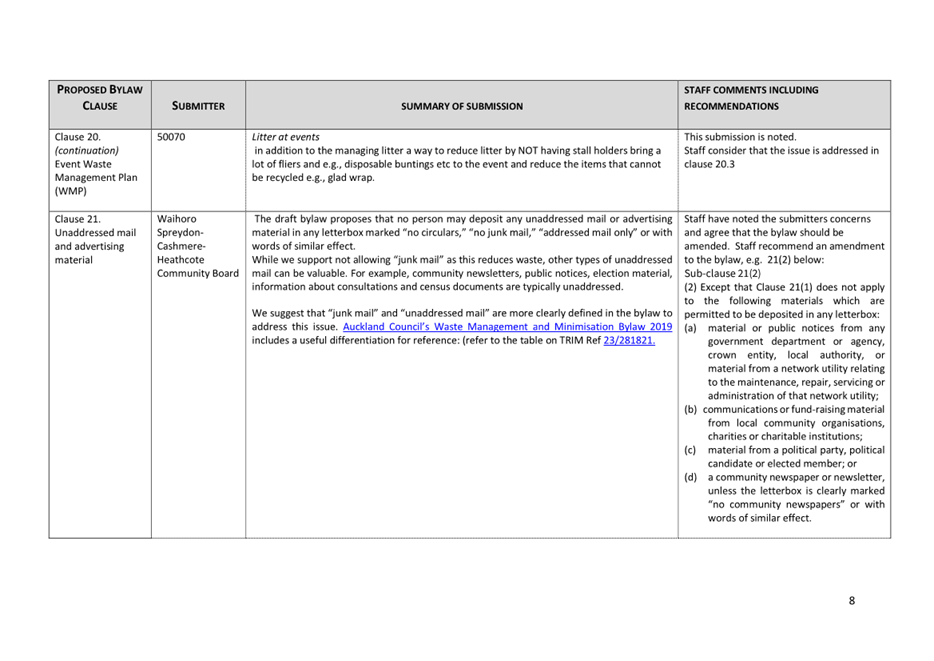
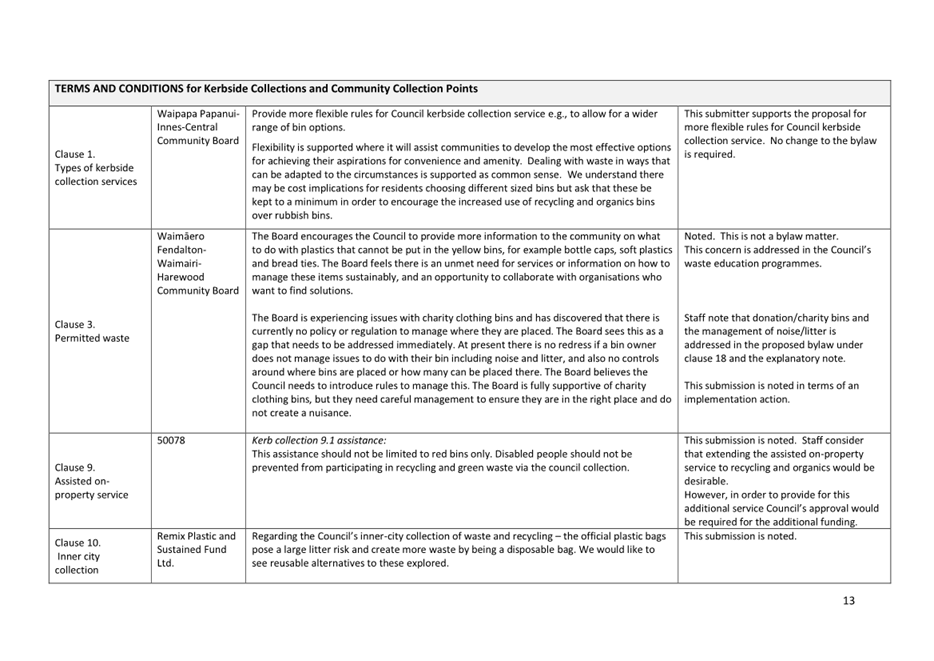
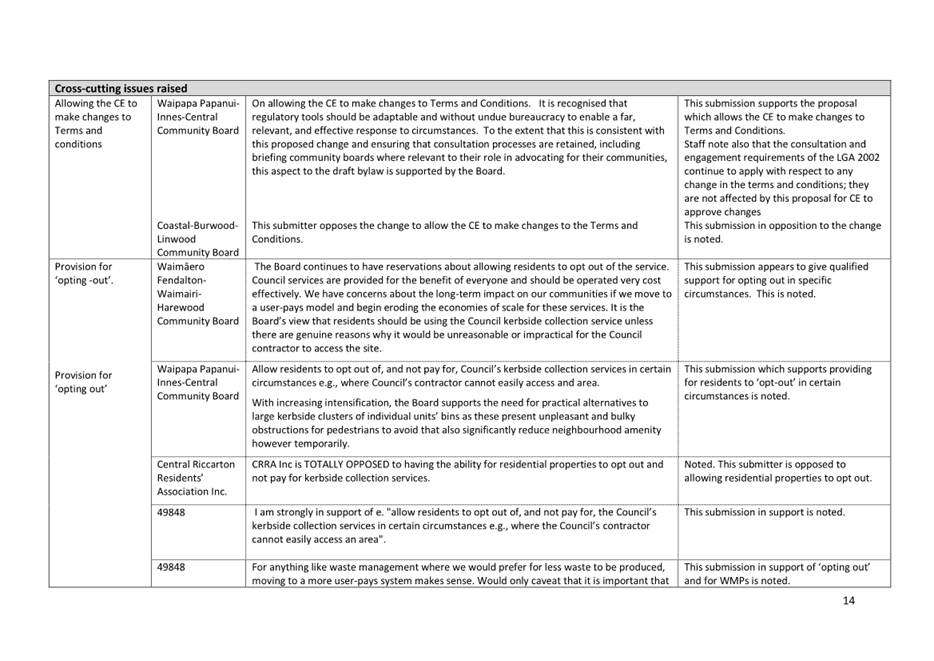
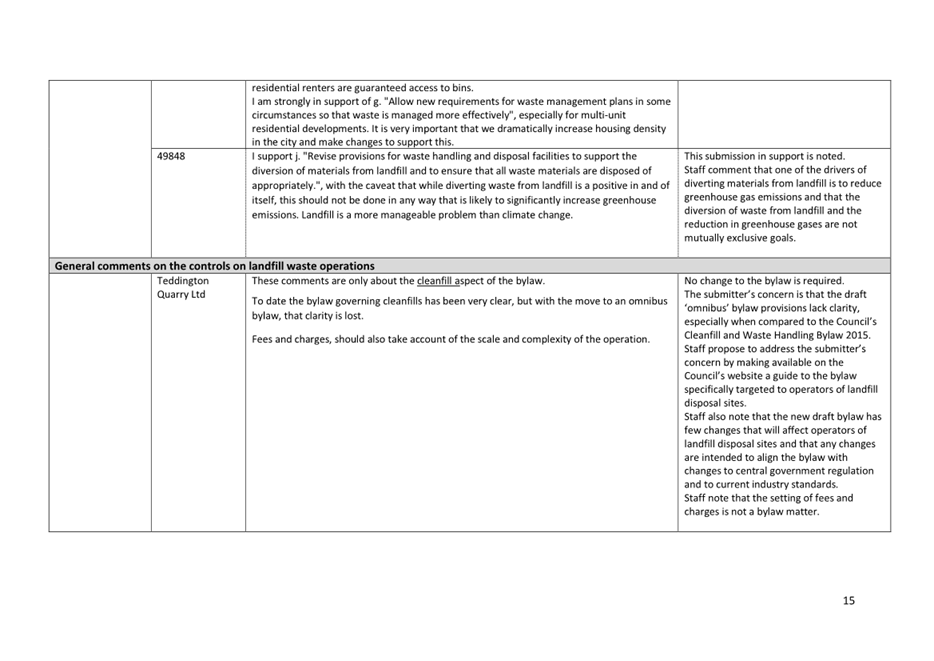
A brief summary of feedback from submitters on the
specific bylaw changes is provided below, including staff advice on possible
changes to the bylaw, while Attachment A provides a more comprehensive
summary of submissions.
Feedback from submitters by topic
4.11 The
consultation material for the bylaw identified eight key changes to the bylaw
(a-h below) and submissions were received on all of the following proposals for
changes to the bylaw and the terms and conditions of the bylaw:
a. To allow
the Chief Executive to make changes to terms and conditions.
b. To allow
multi-unit residential developments to opt out of and not pay for
Council’s kerbside collection services in certain circumstances.
c. More
flexible rules to allow for a wider range of bin options.
d. New
requirements for waste management plans:
· for multi-unit residential developments;
· demolition and construction activities; and
· large scale events.
e. New
rules for:
· unaddressed mail and advertising material; and
· litter around donation boxes for clothing and household goods.
f. Allowing
the Council to the set standards for the collection points for recycling and
diverted materials.
g. Changes
to the rules for waste handling and disposal facilities including landfills.
h. Changes to definitions.
Proposal a. To allow the Chief Executive to make
changes to terms and conditions
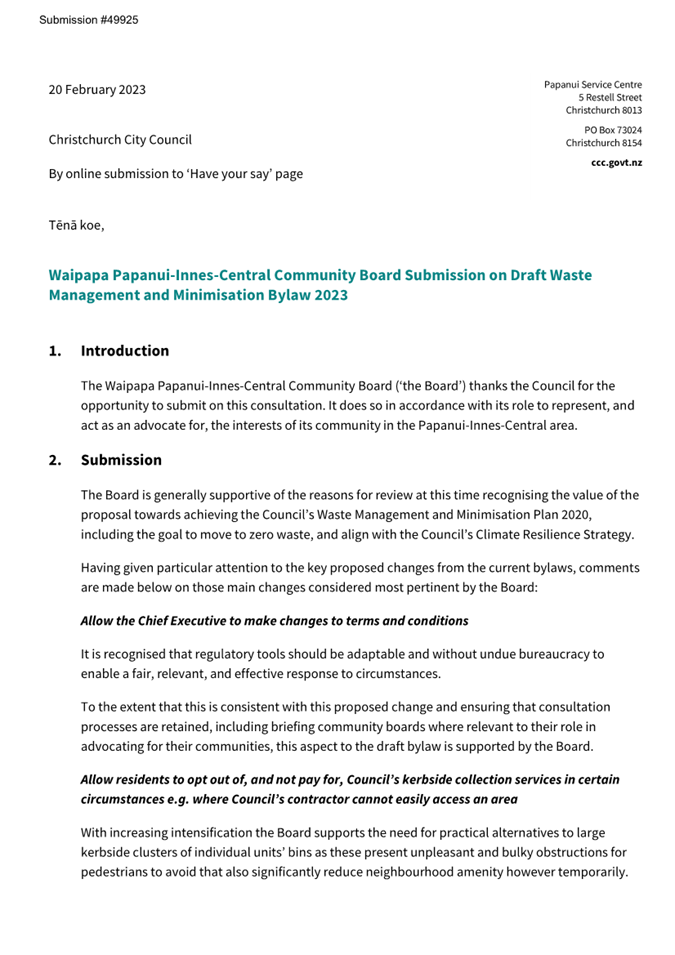
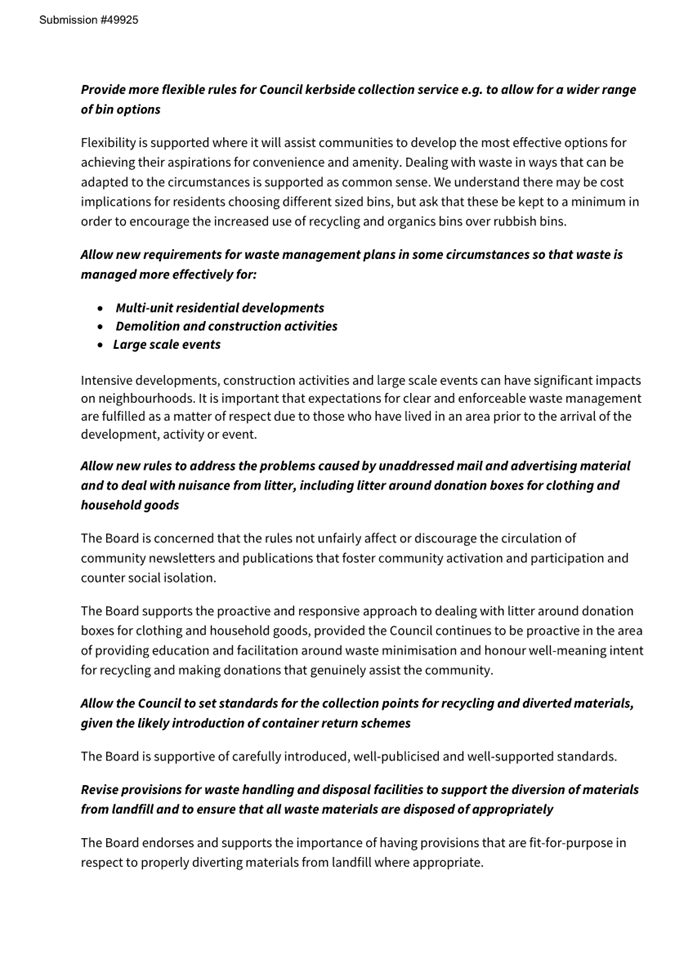
4.12 Submissions
were received from two community boards (one in support and one opposing) on
the proposal in the draft bylaw clauses 5 and 8 which allow the Chief Executive
(CE) to make changes to the terms and conditions of the Bylaw.
4.13 Staff
comment:
Under the current Waste Management Bylaw
2009, any change to the terms and conditions under the bylaw requires a decision of the (full) Council even if the change is
minor, very localised in its effect or otherwise required e.g., to bring the
terms and conditions into line with new central government regulation. Staff note
also that the change to allow the CE to make decisions doesn’t take away
from the requirements for engagement/consultation under the Local Government
Act 2002 (LGA), including the obligation to consult community boards as
advocates for their communities.
Proposal b. Allowing residents to opt out of and not
pay for Council’s kerbside collection services
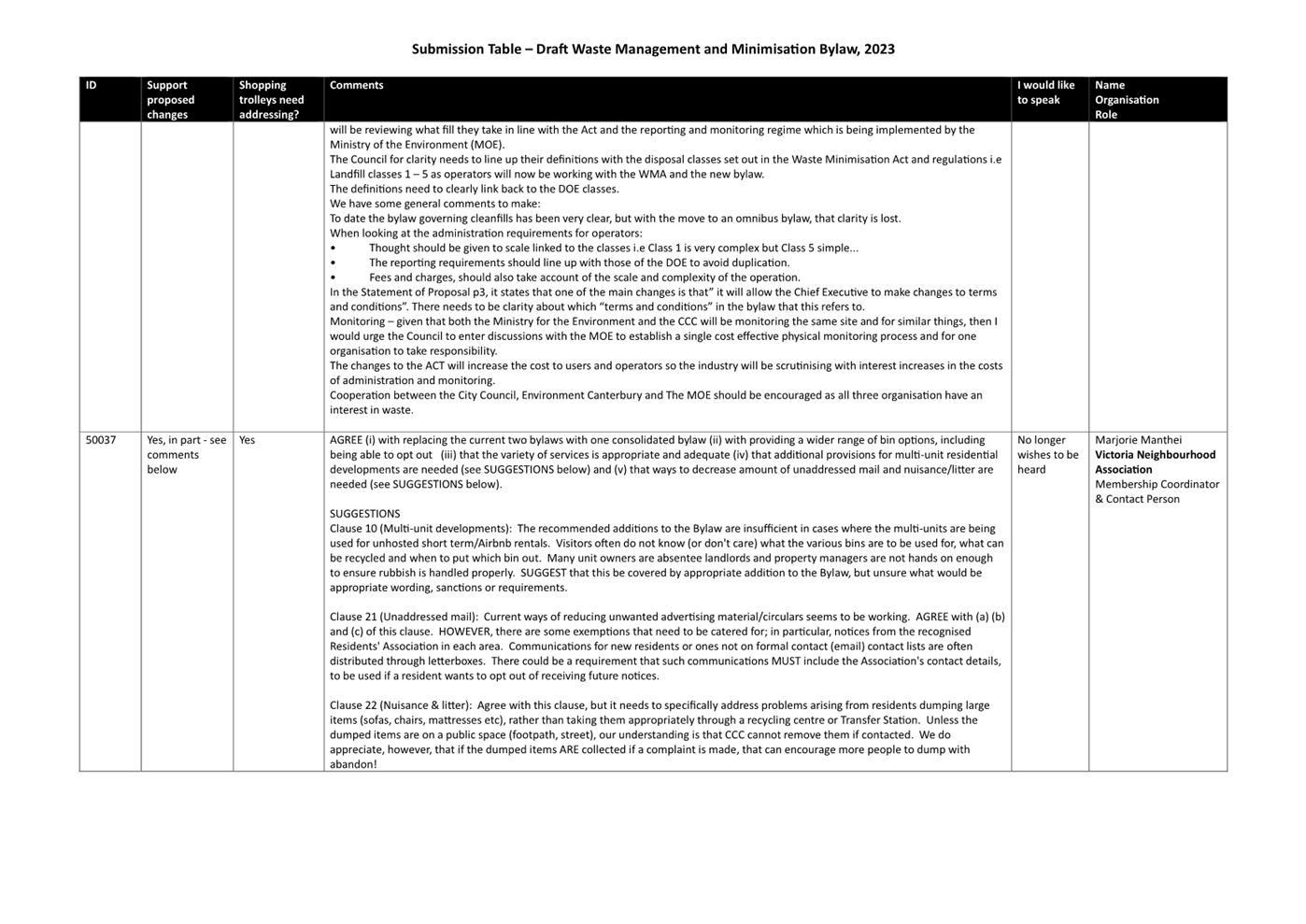
4.14 Clause
5 (5) of the draft bylaw provides for eligible residential properties to opt
out of (paying for) the Council’s kerbside collection services in certain
circumstances. This clause is intended to provide an option for multi-unit
developments e.g., when the Council’s residential waste collection
service provider is unable to access a large, multi-unit residential
development; the clause requires any approval to opt out to be conditional on
the approval of a Waste Management Plan for the property.
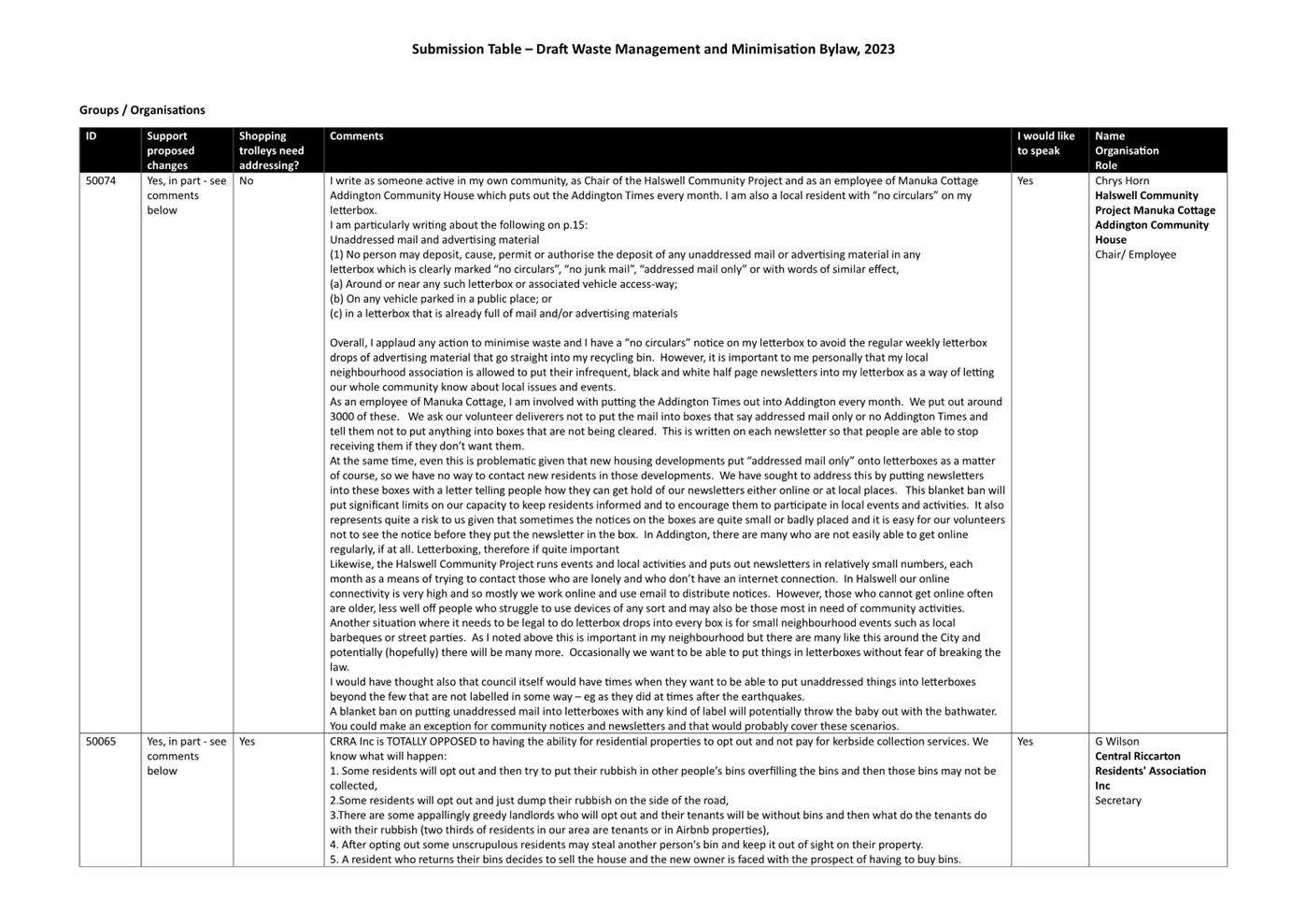
4.15 Six
submitters commented on this proposal (three community boards, one
residents’ association and two individuals). While the individual
submitters generally support the clause, the submissions from the community
boards and residents’ association express concerns about this provision,
including that it may enable the more widespread adoption of user-pays services
and could lead to sub-standard collection services for some residents.
4.16 Staff
comment:
Having considered
these submissions staff suggest that concerns may be addressed by an
explanatory note under Clause 5 (5); the following is provided for the
panel’s consideration:
Explanatory note: Properties would need to meet
specific requirements including, completing a waste management plan that meets the objectives
of the Council’s Waste Management and Minimisation Plan, and
demonstrating that there is ongoing provision, through a private contractor, of
a service equivalent to the Council’s three bin (rubbish, recycling and
organics) service.
Proposal c. More flexible rules to allow for a wider
range of bin options
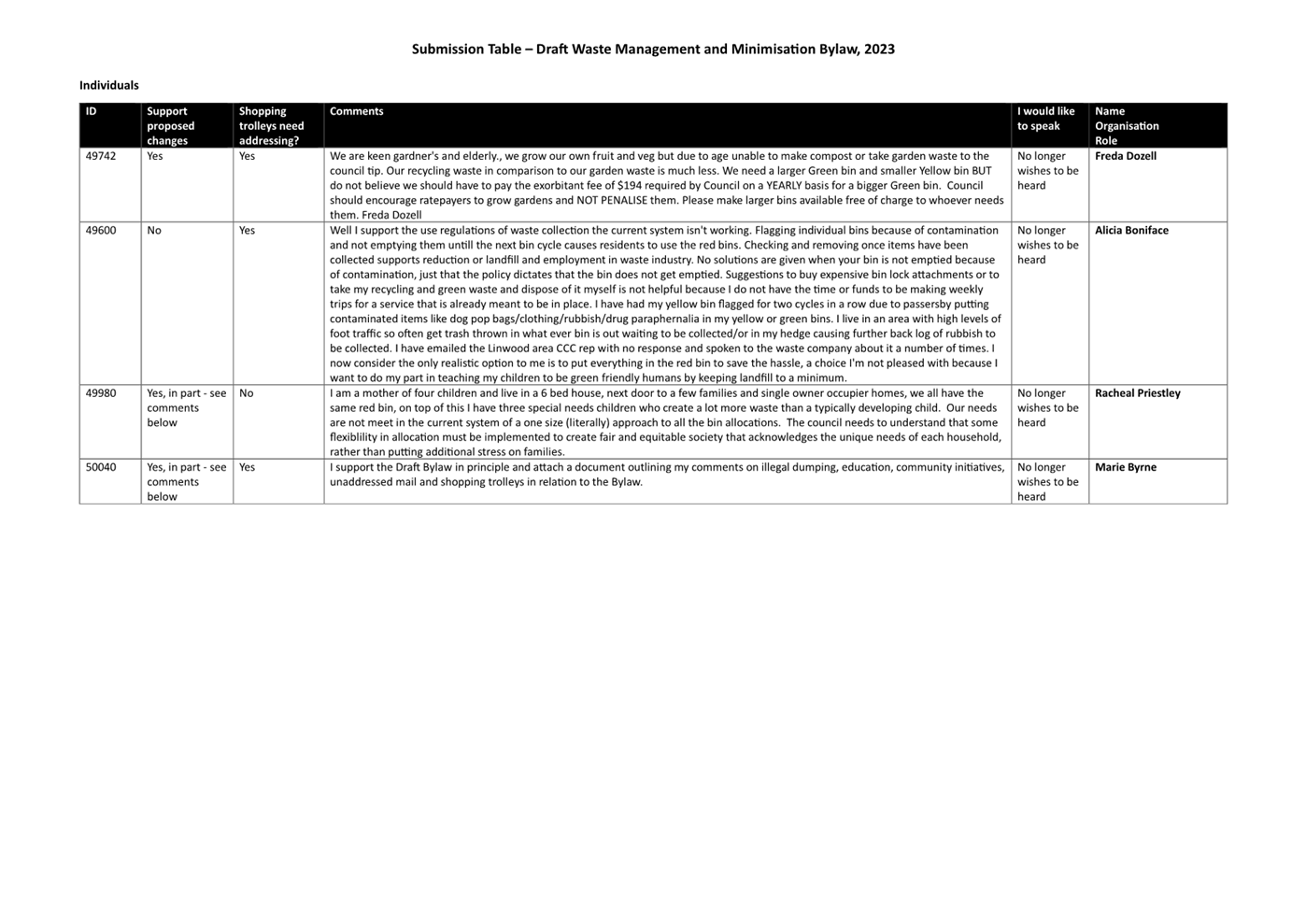
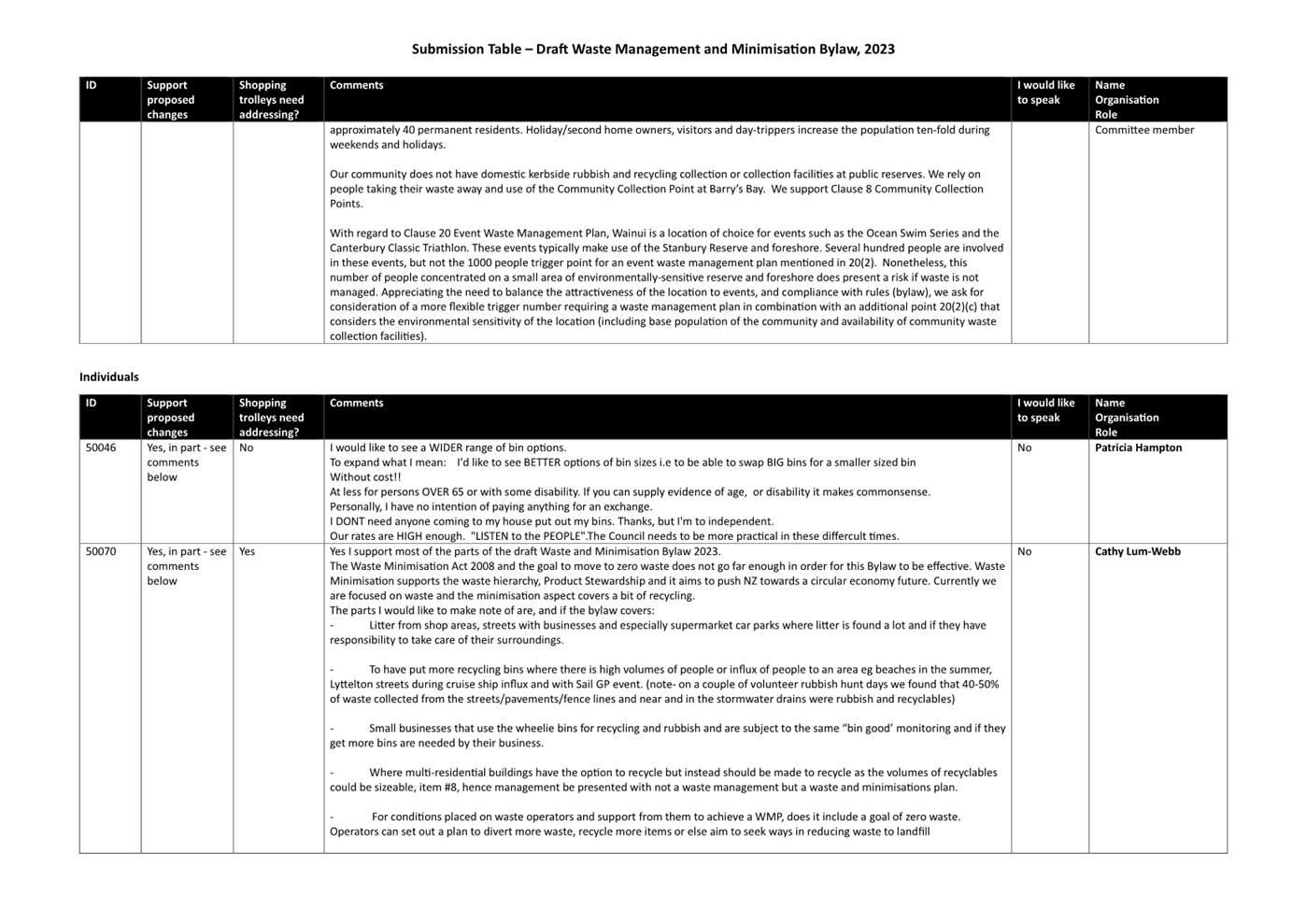
4.17 The proposal that drew the most (30)
submissions related to the change in the terms and conditions to allow for the
future provision of a wider range of bin options within Council’s
kerbside collection service. There were 29 individual submitters and one
community board in support of this proposal. There were no opposing submissions.
4.18 In
terms of comments, individual submitters specified the changes they wanted to
see in a more ‘flexible’ bin service, e.g., to be able to choose
any size of bin to suit their particular family circumstances or that they
should have the option to choose a larger green bin without payment of an
additional charge.
4.19 Staff
comment:
As all submissions are in support, no
changes to the bylaw are required.
4.20 Staff also note that a significant piece of work would need to take
place prior to making recommendations which could result in a change to the
current levels of service for kerbside collection services. This could include
evaluation of the rating structure, review of contractor operations, evaluating public refuse drop-off facilities and consultation with
the wider community on emerging options. This work could be undertaken as part
of preparing a bid for inclusion in the Long- Term Plan.
Proposal d. New requirements for waste management
plans.
4.21 Five
submissions were supportive of the new requirements for waste management plans
(WMPs) for large scale events, and the requirement for WMPs for multi-unit
residential developments and demolition and construction activities also drew
only supportive submissions. Some of the submissions considered that the
Council should go further in terms of requirements for WMPs.
4.22 Staff comment:
As all the submissions supported the
proposal, no changes to the bylaw are required. Staff advise that, as part of
the implementation of the bylaw, more guidance, including templates for WMPs, will be provided on the Council website.
Proposal e. New rules for unaddressed mail and
advertising material
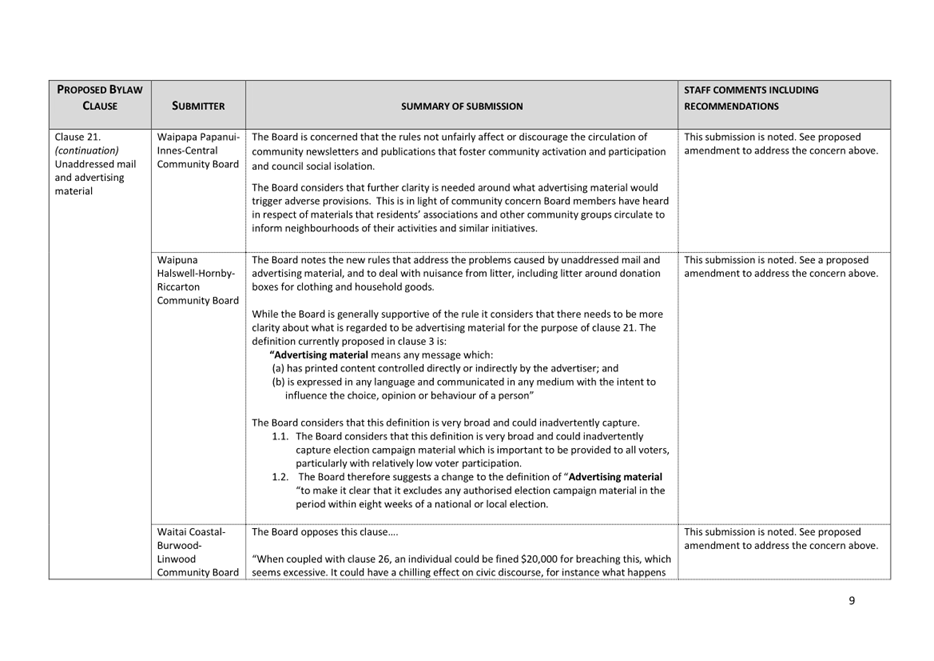
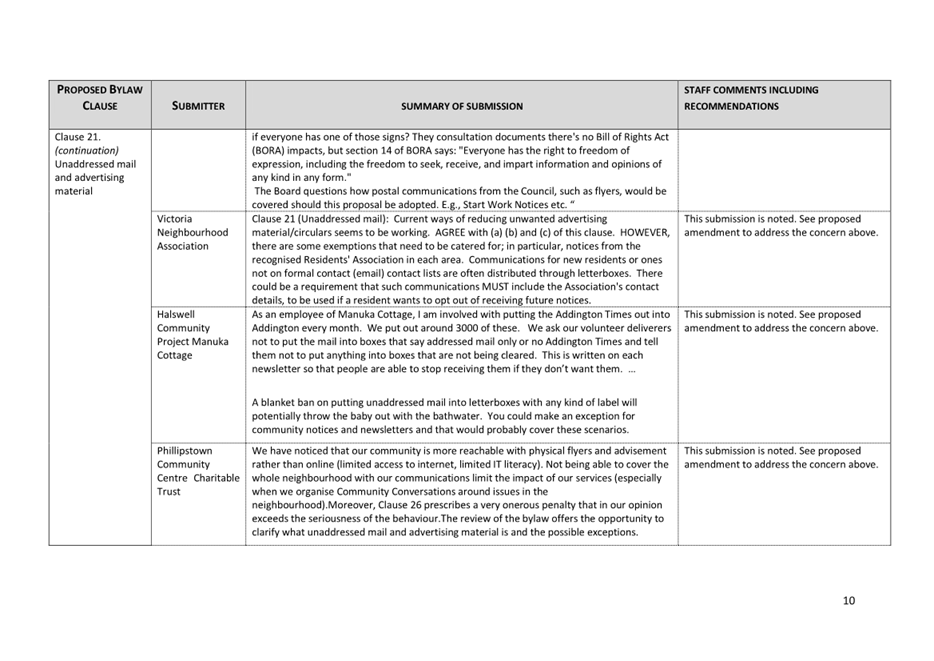
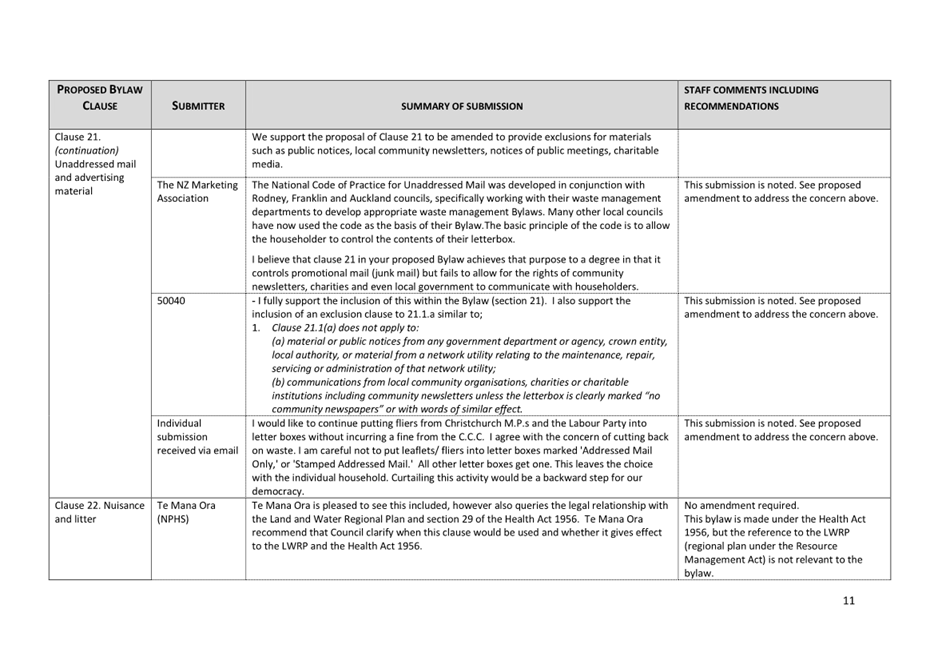
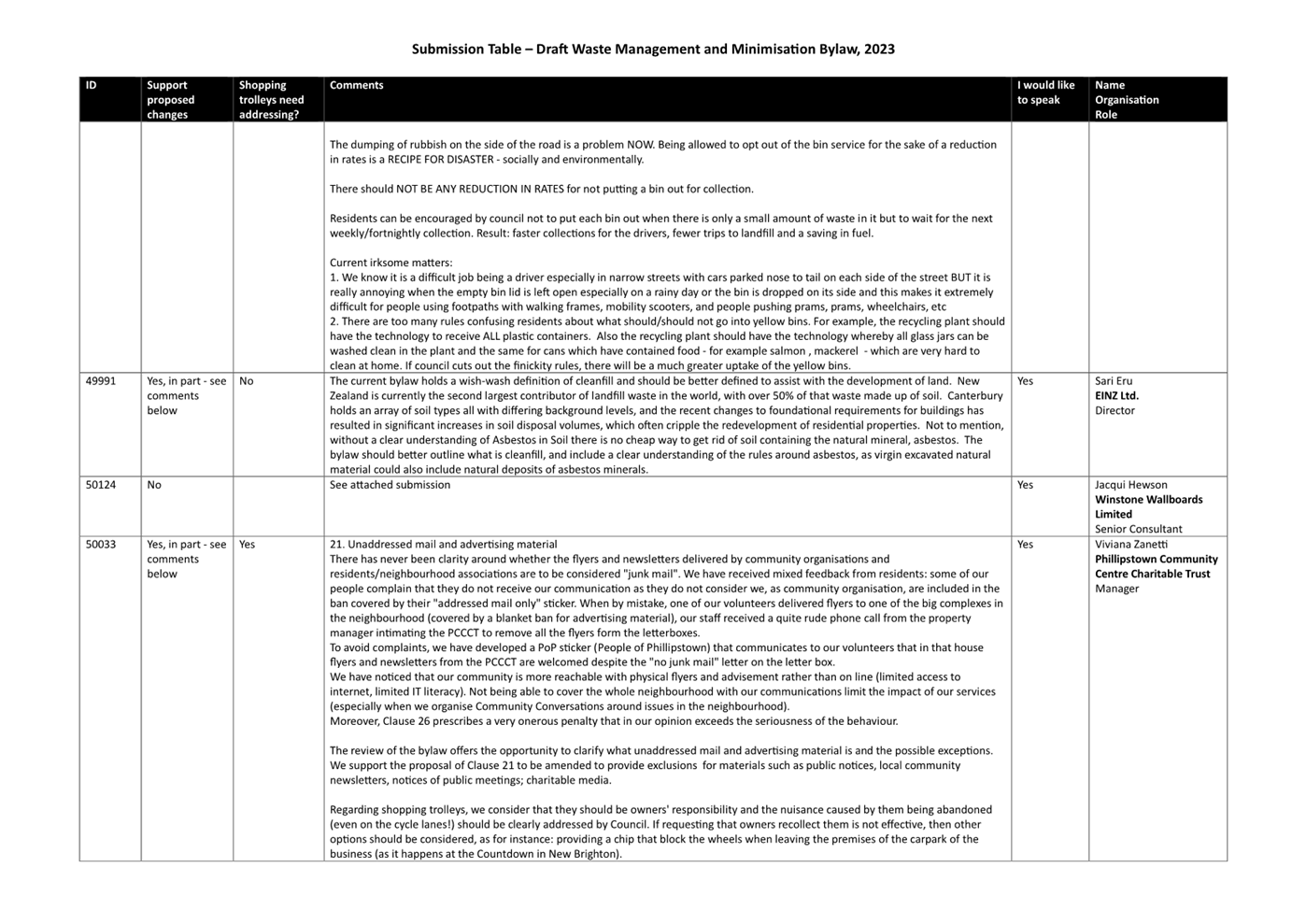
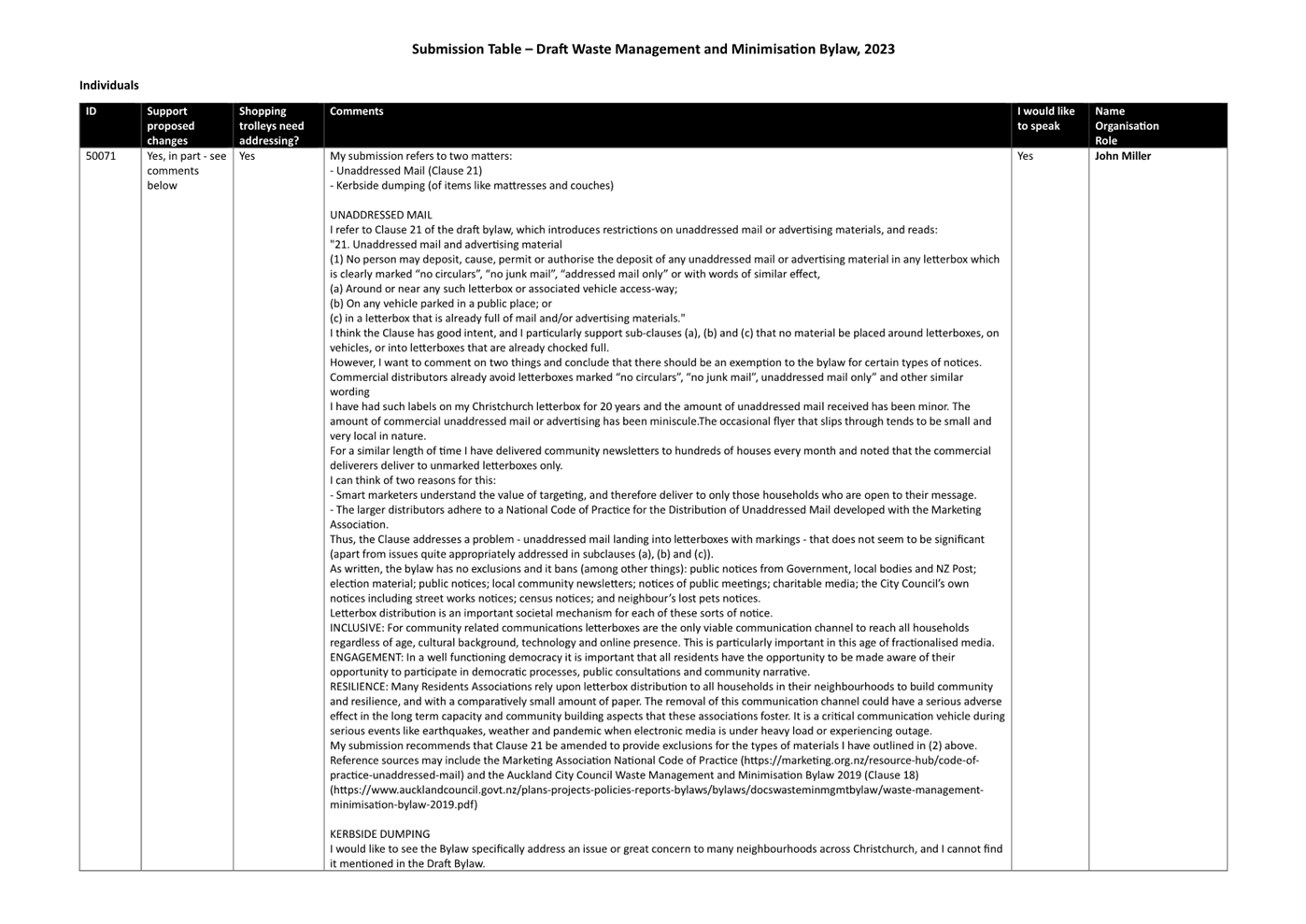
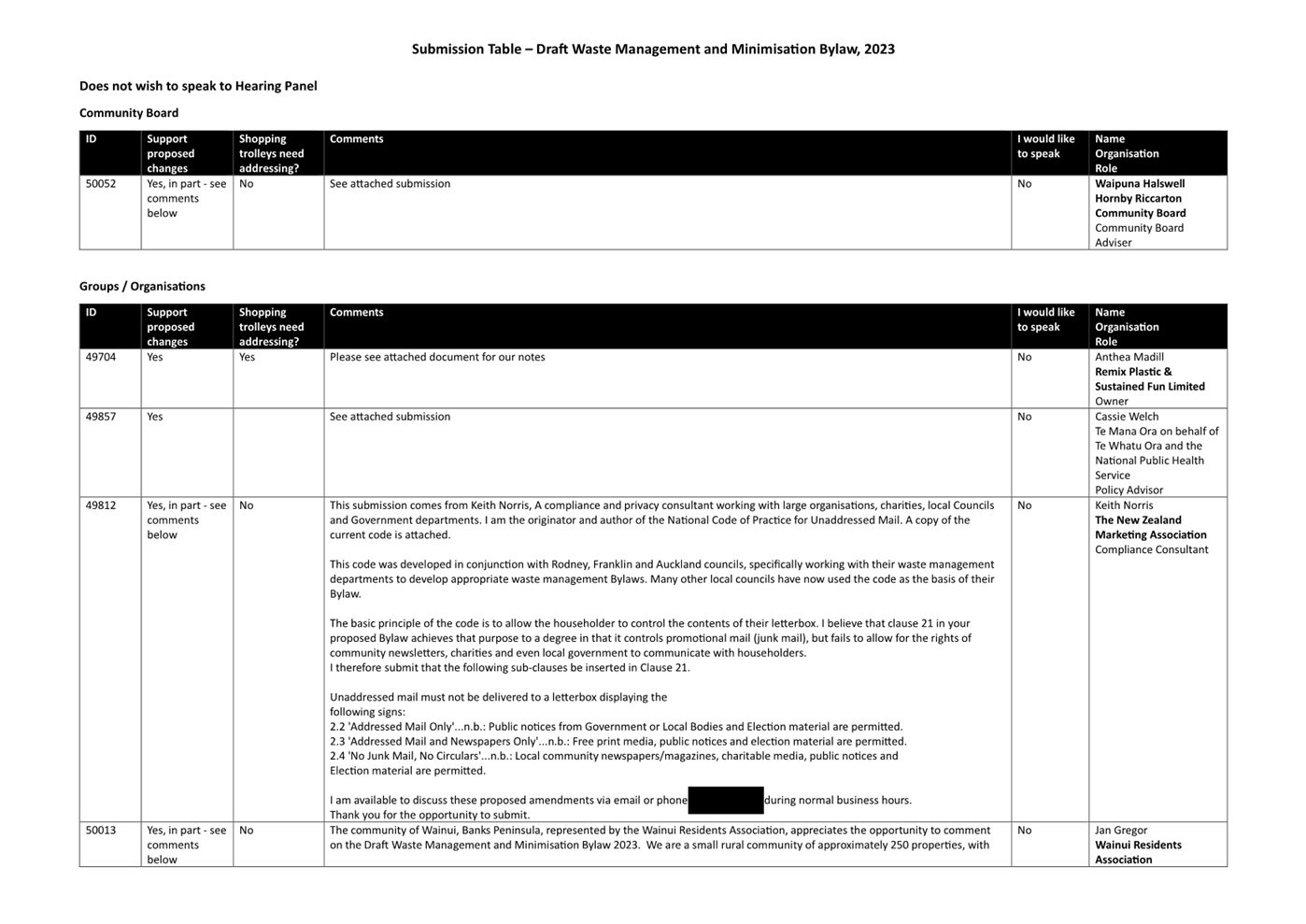
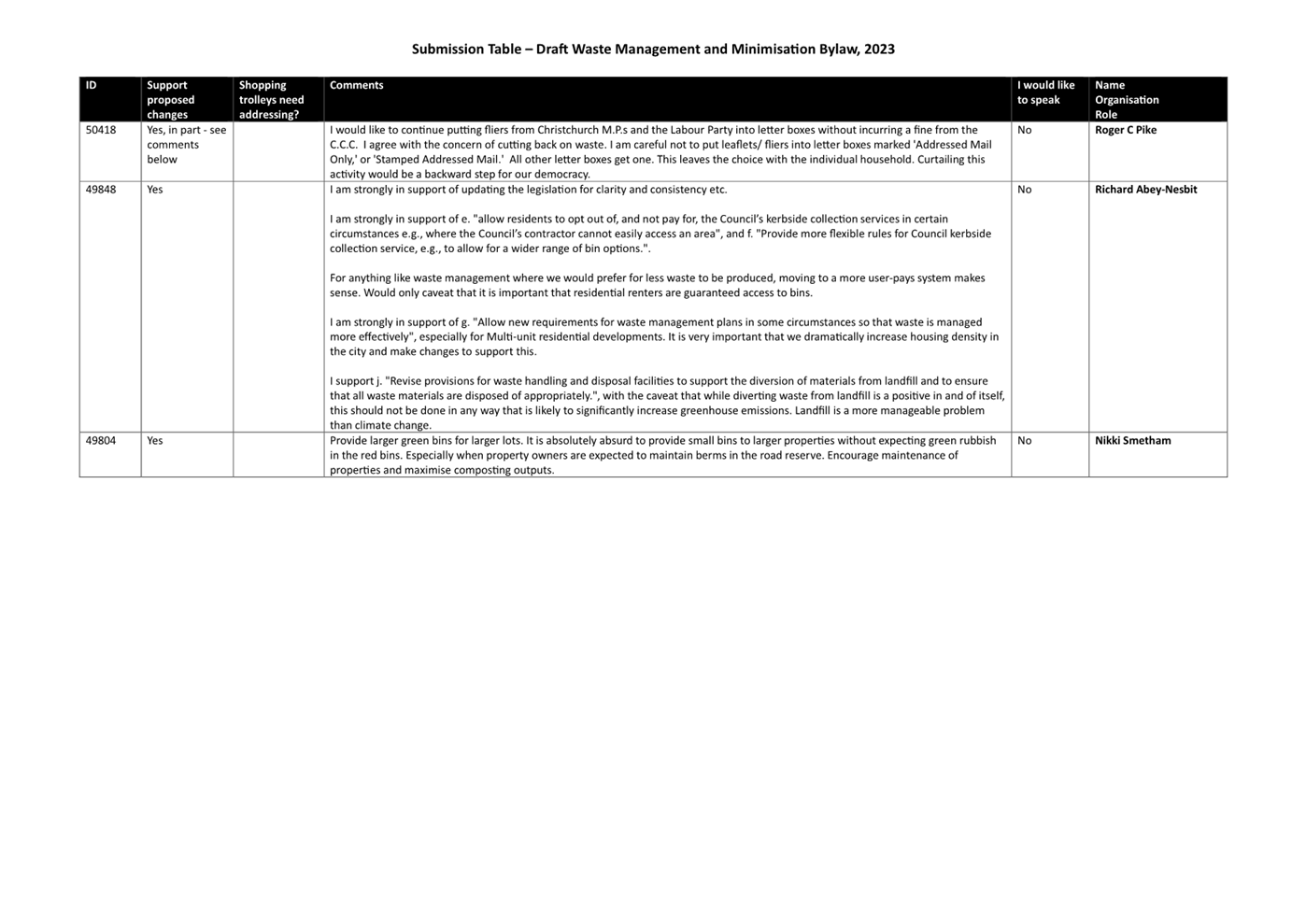
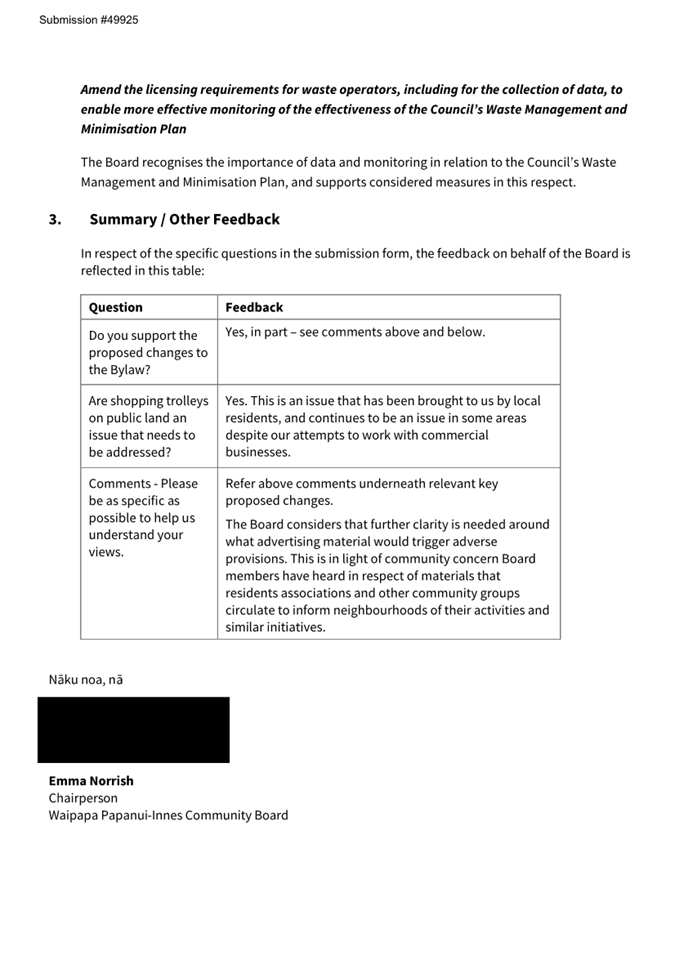
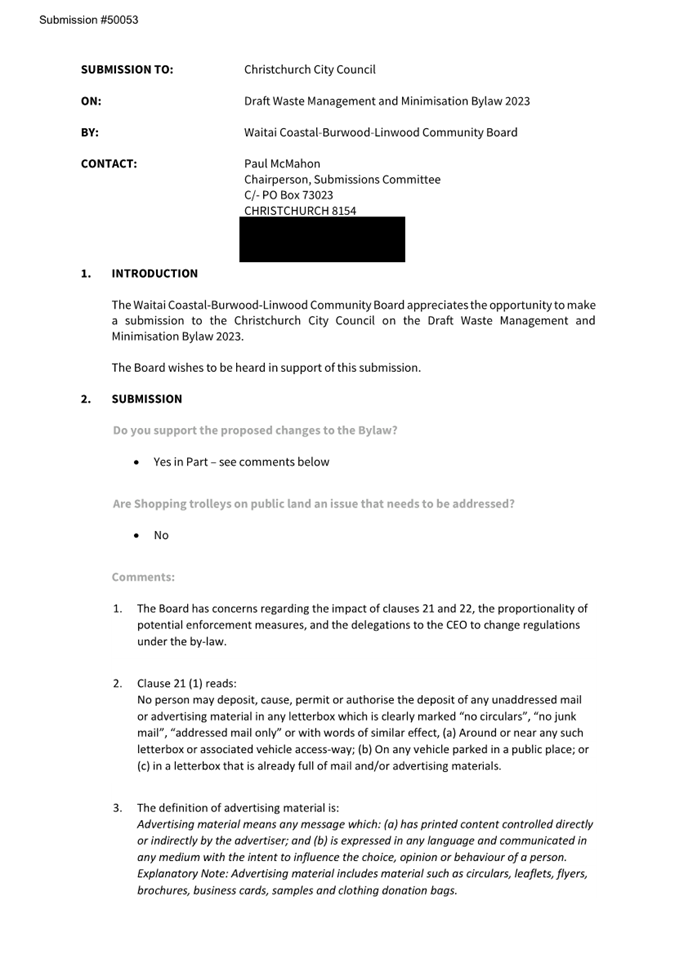
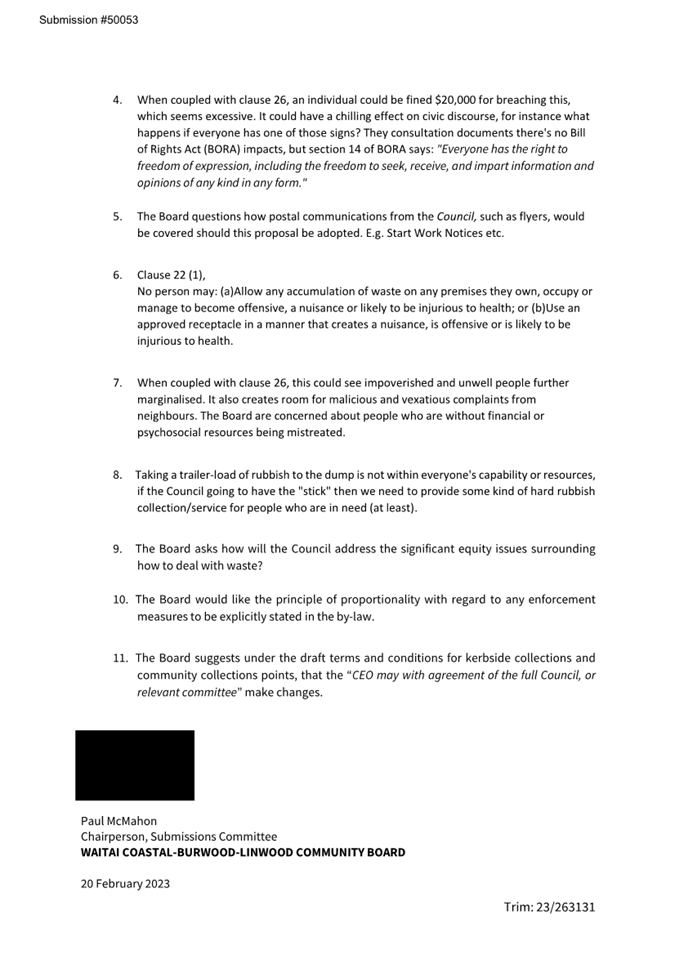
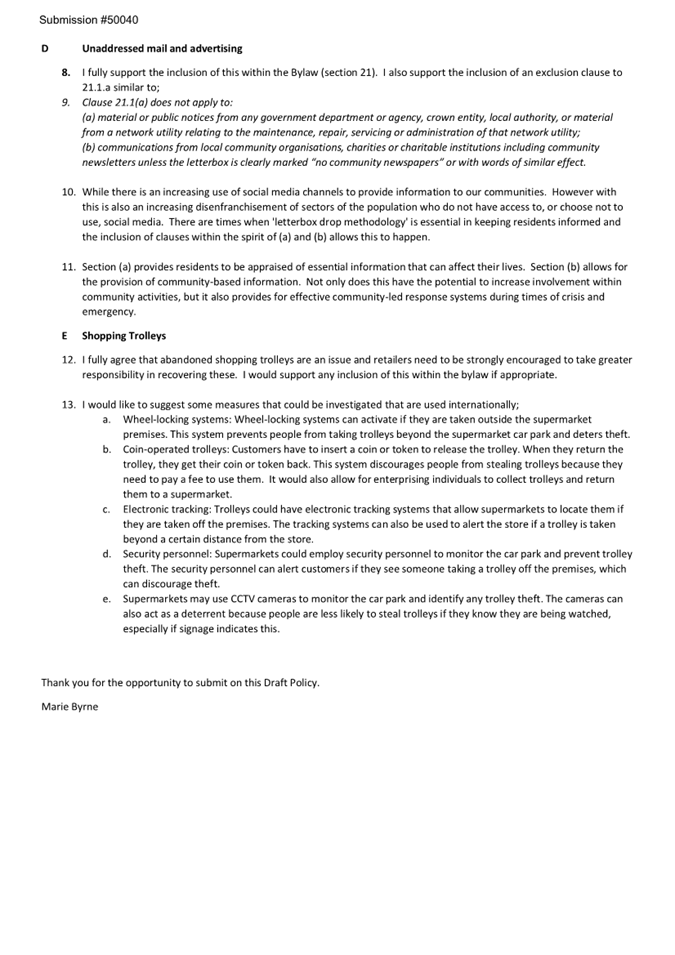
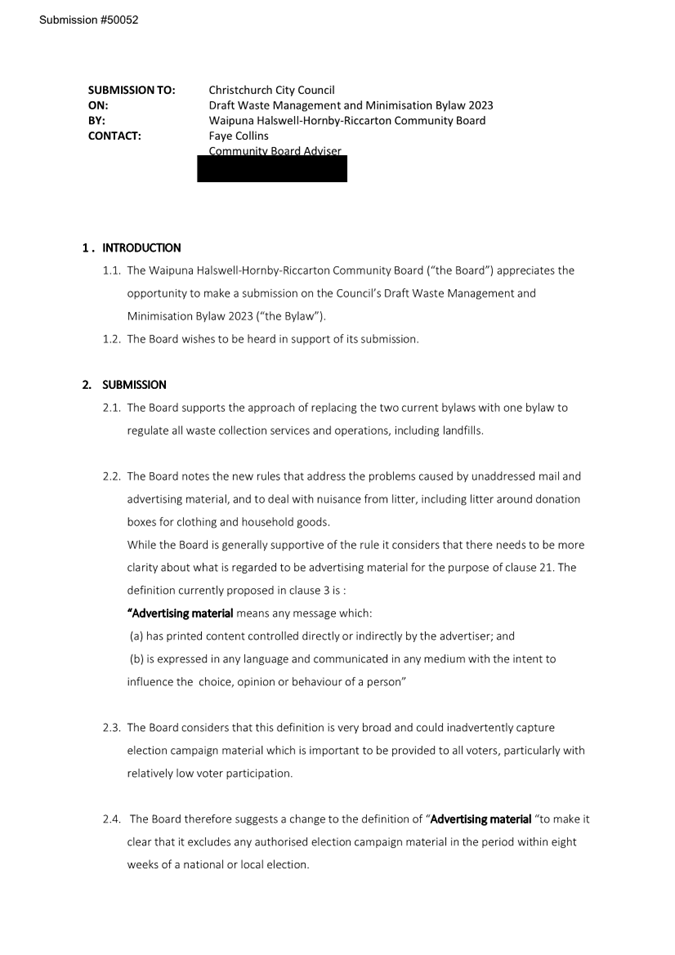
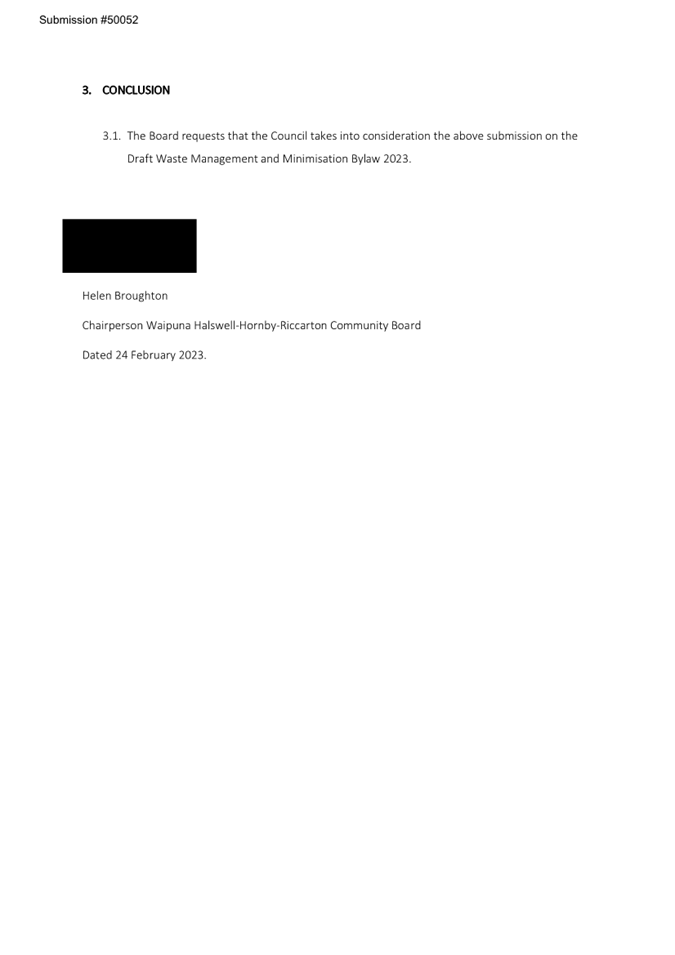
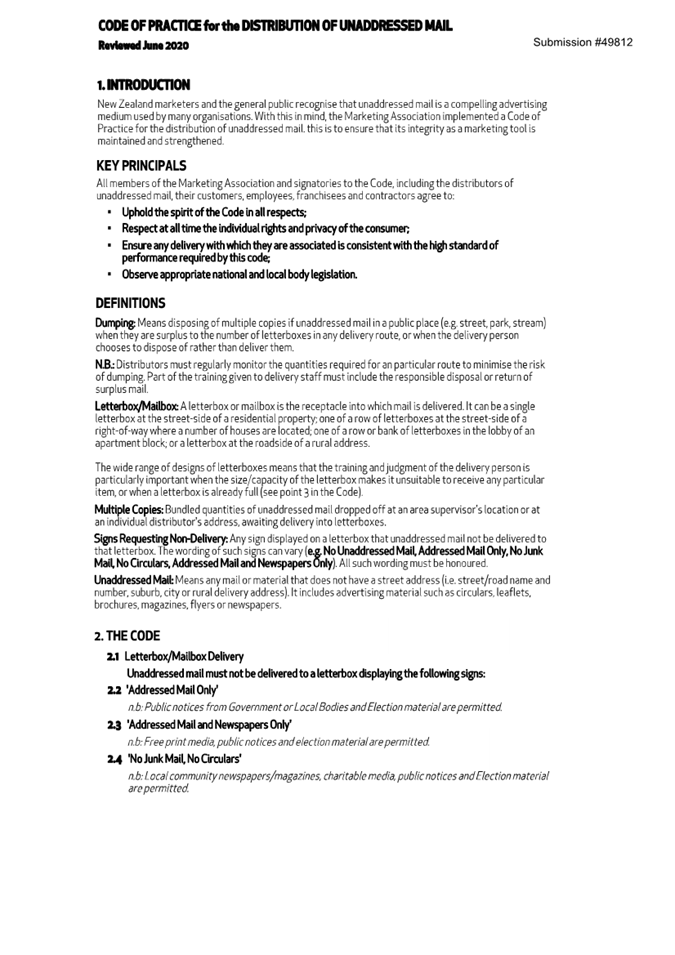
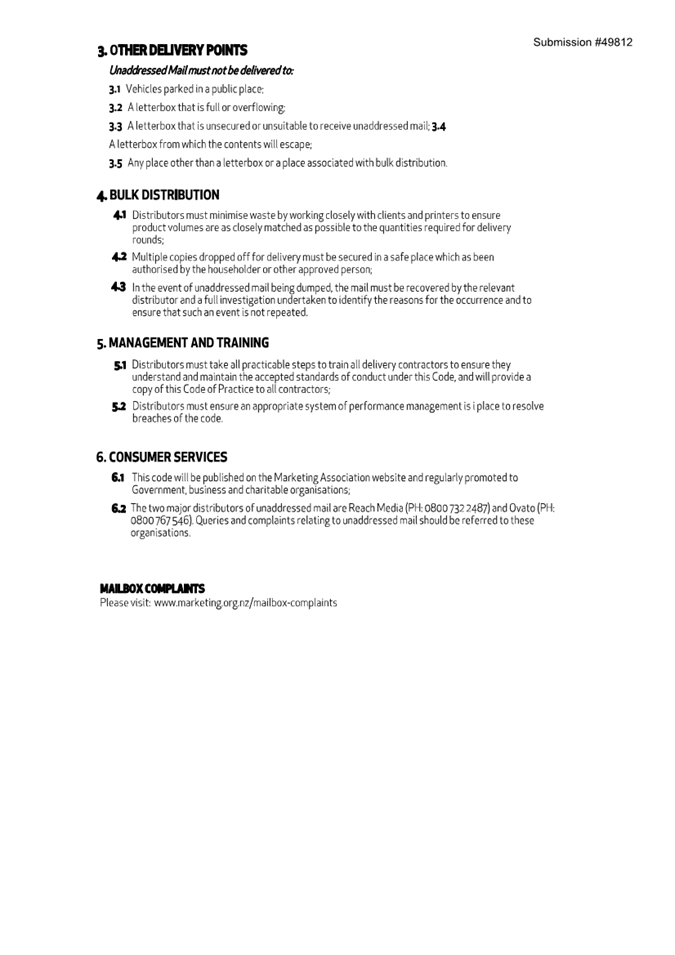
4.23 Ten submissions (from four community boards, three community
organisations, NZ Marketing Association and three
individuals) commented on this proposal, specifically on draft Clause 21, which
currently reads:
“No person may deposit, cause, permit or
authorise the deposit of any unaddressed mail or advertising material in any
letterbox which is clearly marked "no circulars", "no junk
mail", "addressed mail only" or with words of similar
effect”.
4.24 While submissions support the intent of the clause, to reduce waste
from ‘junk mail’ and litter around letterboxes, submitters express
concerns about the (unintended) negative consequences of the current draft
clause. They consider that the draft clause 21 is unduly onerous and will
prevent the delivery of valuable communications including community
newsletters, election material and notices from utility operators. As one
individual submitter (50071) points out, “letter boxes are the only
viable communication channel to reach all households regardless of age,
cultural background, technology and on-line
presence”.
4.25 Staff comment:
Having regard to the concerns in the
submissions on this clause, staff recommend an amendment, new subclause 21(2)
below, for the panel’s consideration:
Sub-clause 21(2)
(2) Except that Clause 21(1) does not apply
to the following materials which are permitted to be deposited in any
letterbox:
(a) material
or public notices from any government department or agency, crown entity, local
authority, or material from a network utility relating to the maintenance,
repair, servicing or administration of that network utility;
(b) communications
or fund-raising material from local community organisations, charities or
charitable institutions;
(c) material
from a political party, political candidate or elected member; or
(d) a community newspaper or newsletter, unless the
letterbox is clearly marked “no community newspapers” or with words
of similar effect.”
Proposal f. Allowing the Council to the set standards
for the collection points for recycling and diverted materials
4.26 One
community board made a submission in support of this proposal. There were no opposing
submissions.
Proposals g. and h. Changes to the rules for waste
operations including landfills and changes to definitions
4.27 Three
submissions were received on these topics from WWB, Teddington Quarry Ltd and
EINZ Ltd. The primary concerns of these businesses relate to a perceived lack
of clarity or inadequacy in some definitions. WWB is concerned that the draft
bylaw ‘captures’ its manufacturing operation as a waste operation,
EINZ queries the definition of Cleanfill while the representative of Teddington
Quarry Ltd is concerned about a lack of clarity in the draft bylaw when
compared with the “Cleanfill and Waste Handling Bylaw 2015”.
4.28 The
staff assessment is that these concerns can be largely addressed by the
addition of explanatory notes under the relevant definitions and by providing
guidance for operators of landfills on the Council website. Further information
on the submissions is in Attachment A.
Other issues
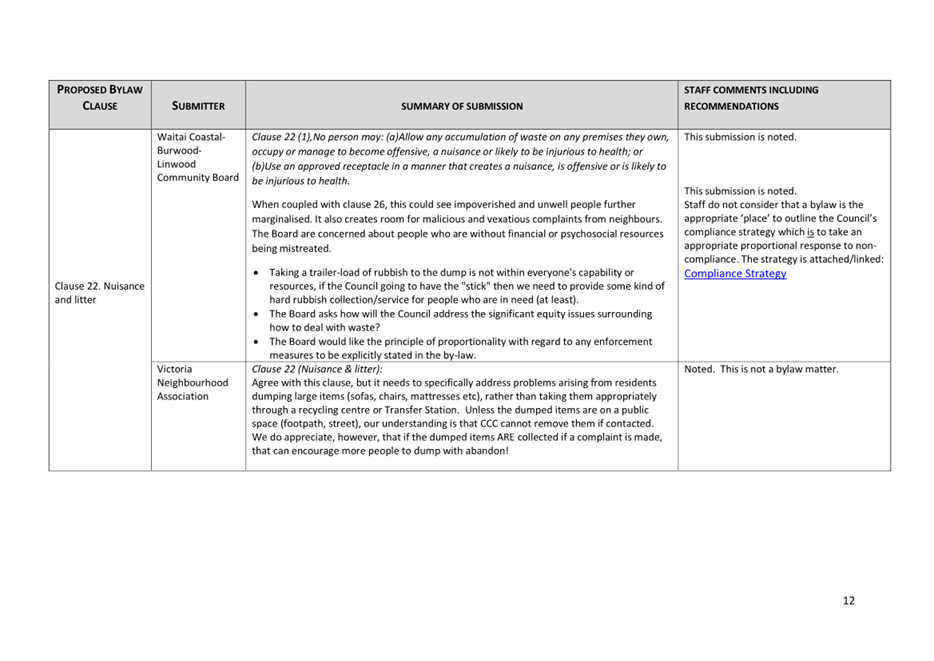
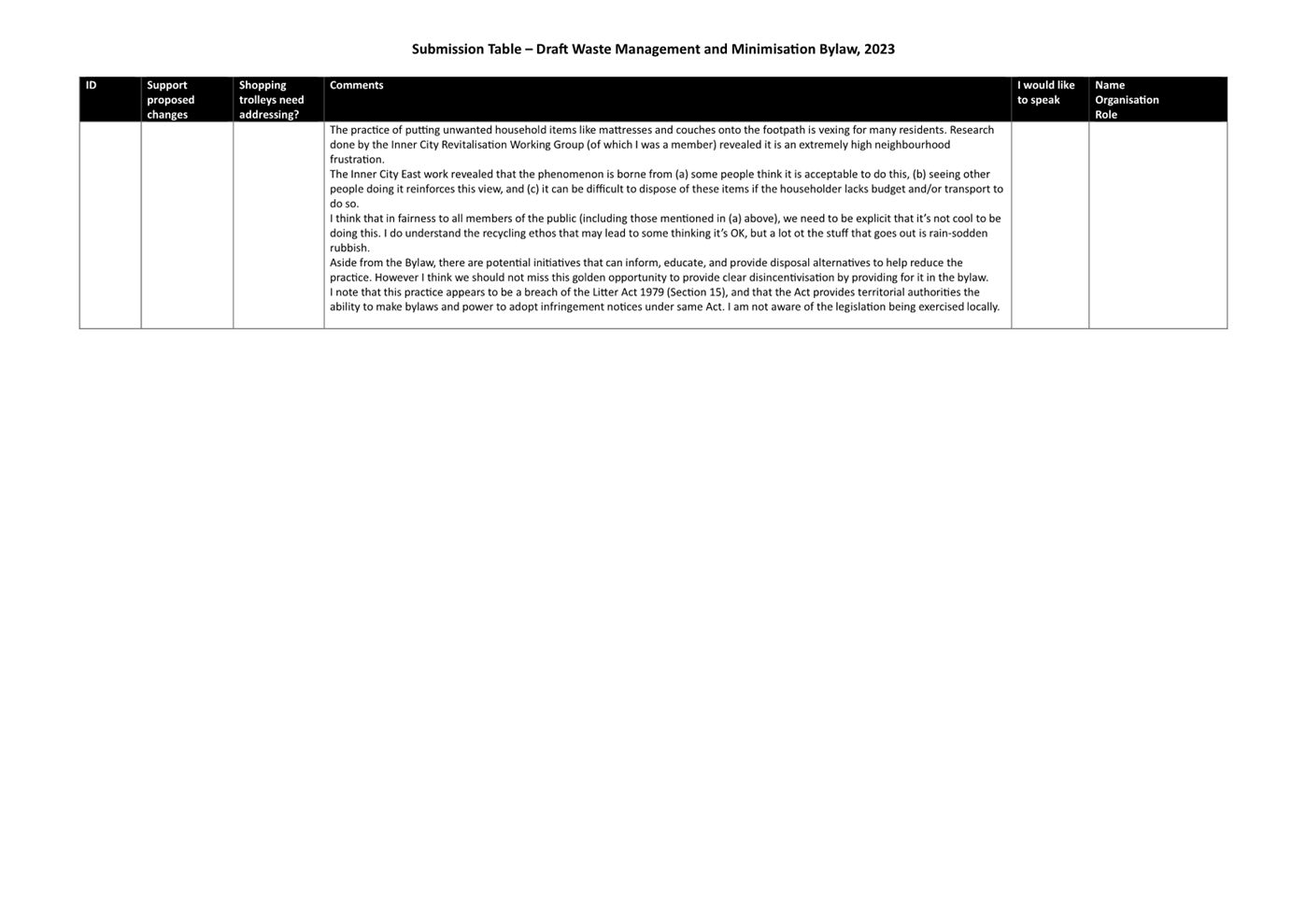
4.29 Submitters raised a number of issues in their submissions which are
not directly related to the content of the draft bylaw or the draft terms and
conditions. These submissions cover a range of topics including the need for
incentives for residents and businesses to manage waste more sustainably, that
provision should be made for the recycling of a wider range of plastics and
submissions (in relation to ‘bin flexibility’) which want the
Council to make improvements to the current levels of service. These submissions
are noted.
Are shopping trolleys on public land an
issue that needs to be further addressed?
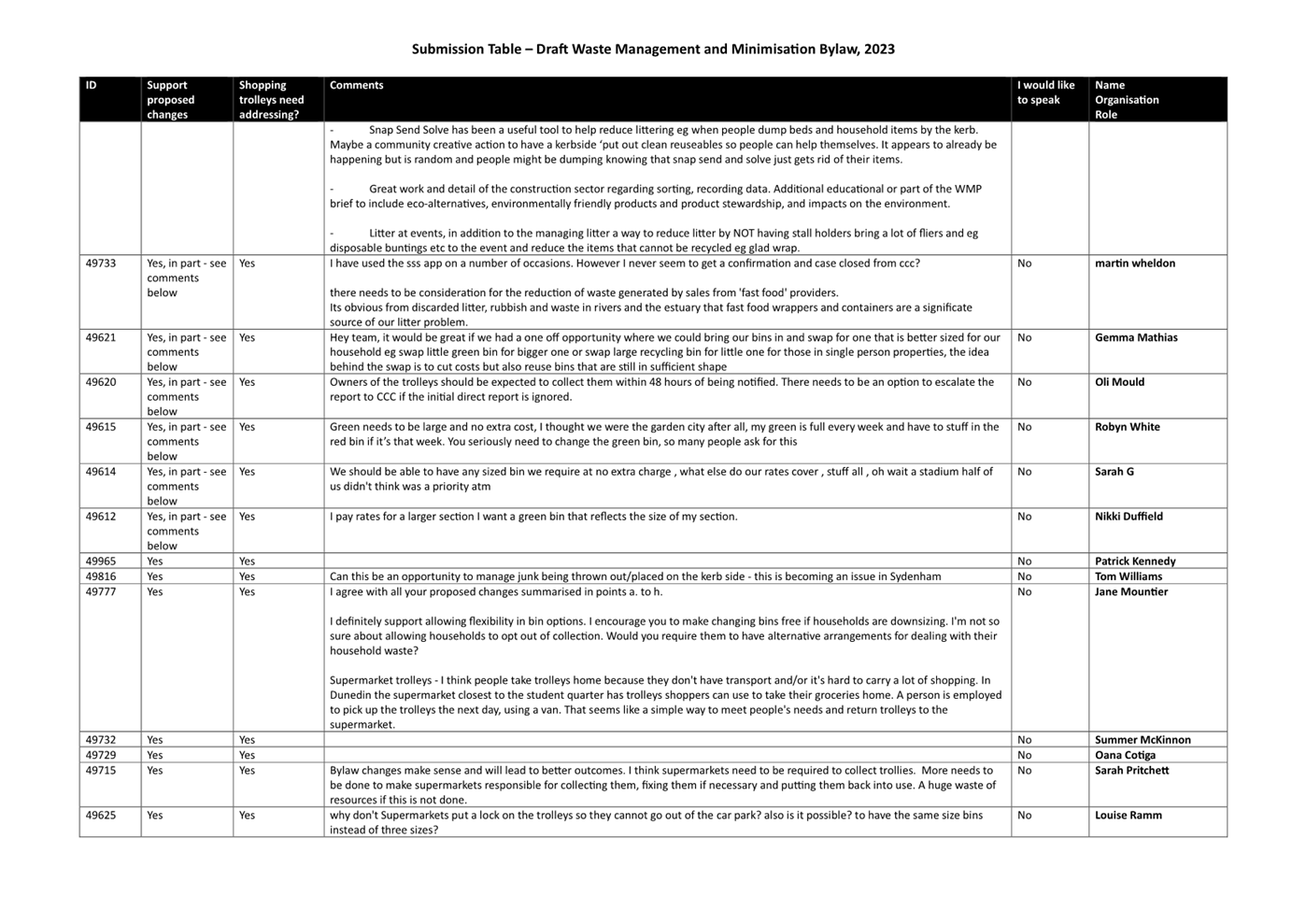
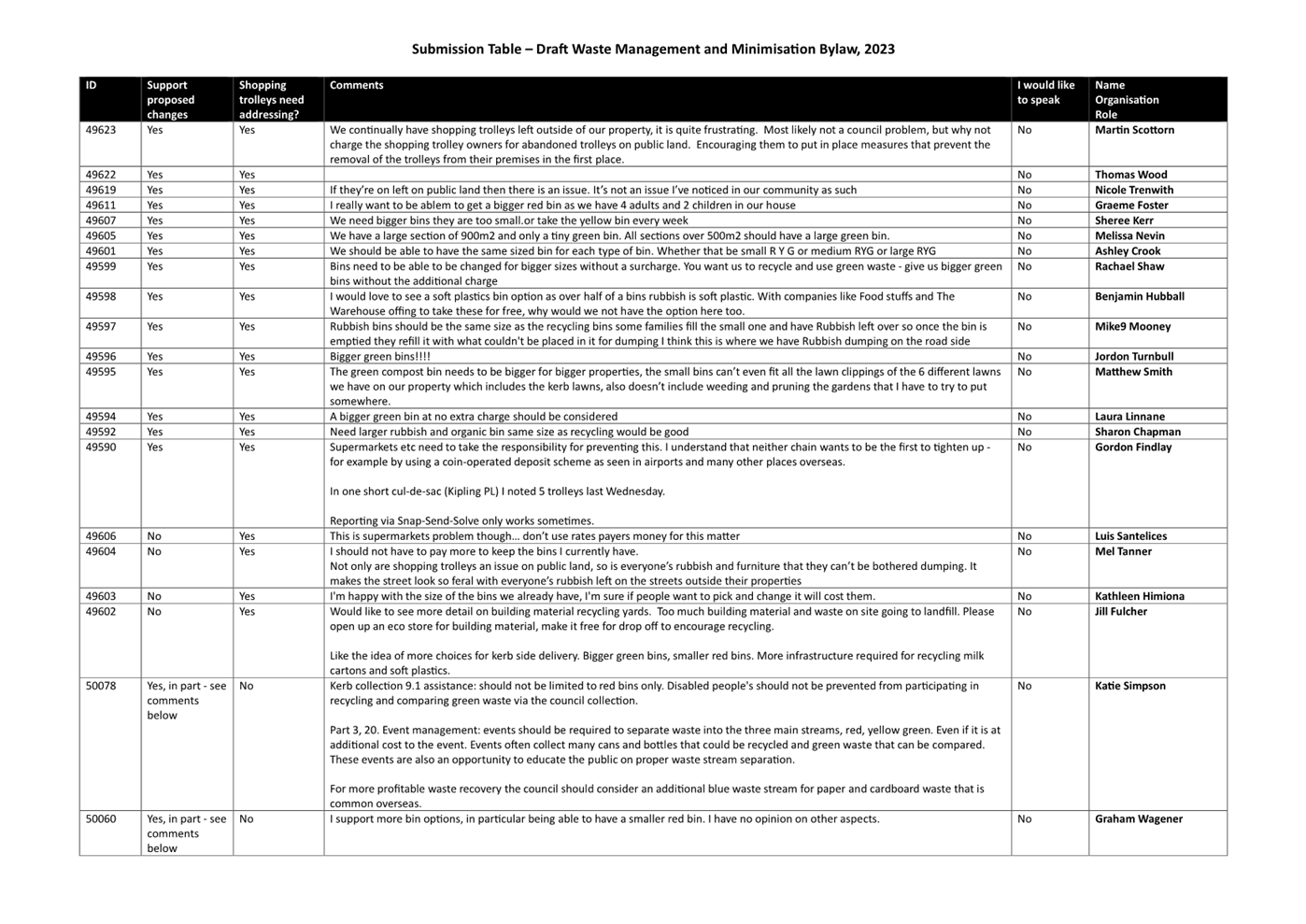
4.30 As
part of the ‘HaveYourSay’ consultation, people were also asked to
provide their views on the issue of shopping trolleys being abandoned on public
land. Of 74 submissions, 69 submitters responded to the question on shopping
trolleys with 43 submitters (63%) agreeing that shopping trolleys in public
places are an issue that needs further addressing while 25 (37%) of submitters
on this topic do not think it is an issue.
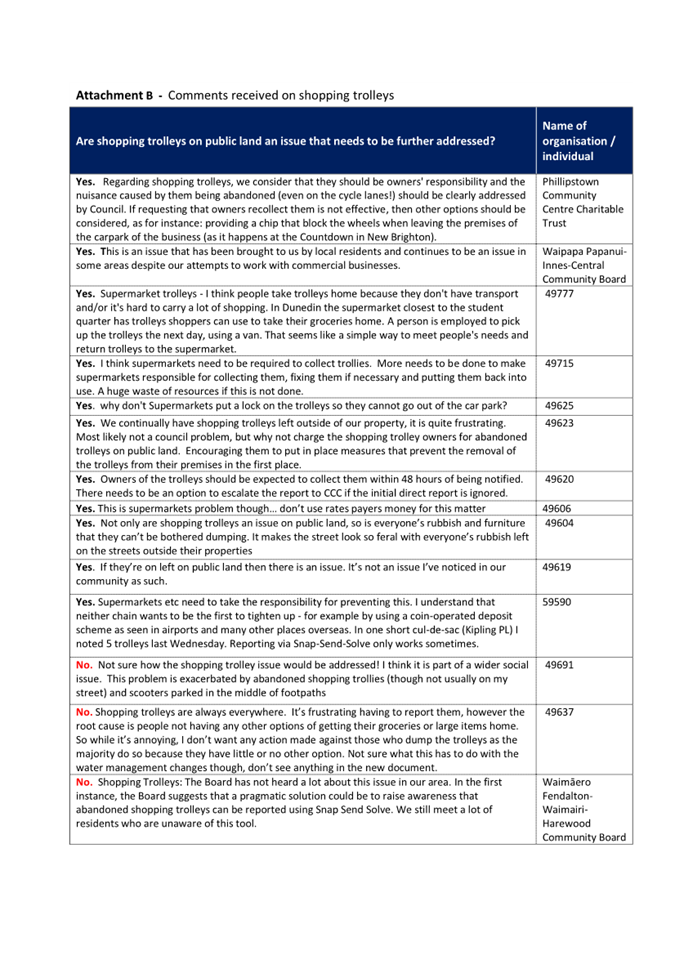
4.31 Of
the 69 submitters who responded to this question, 11 made additional comments
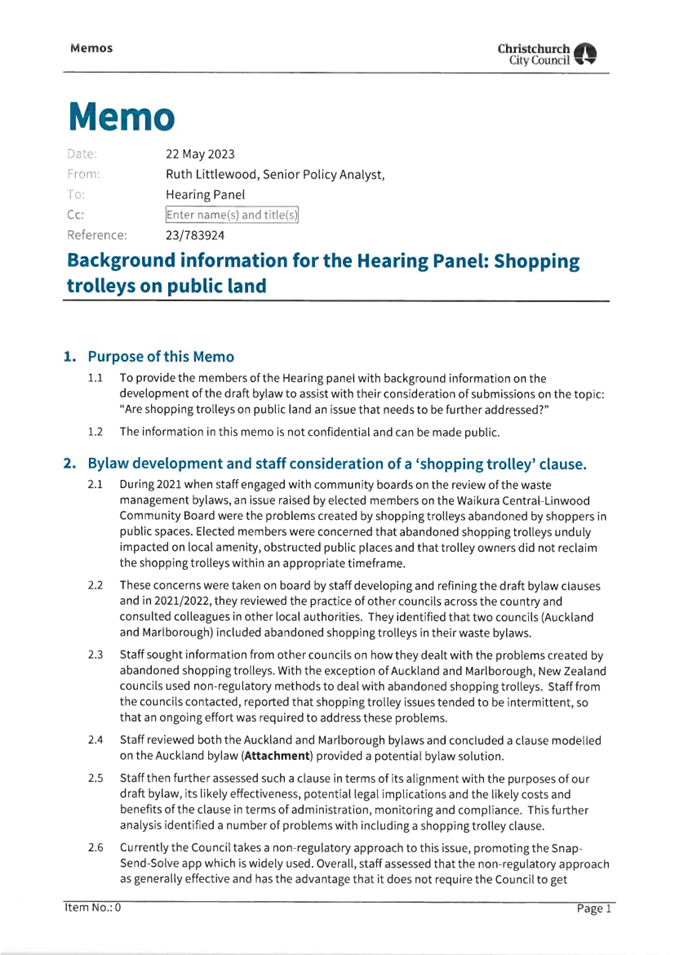
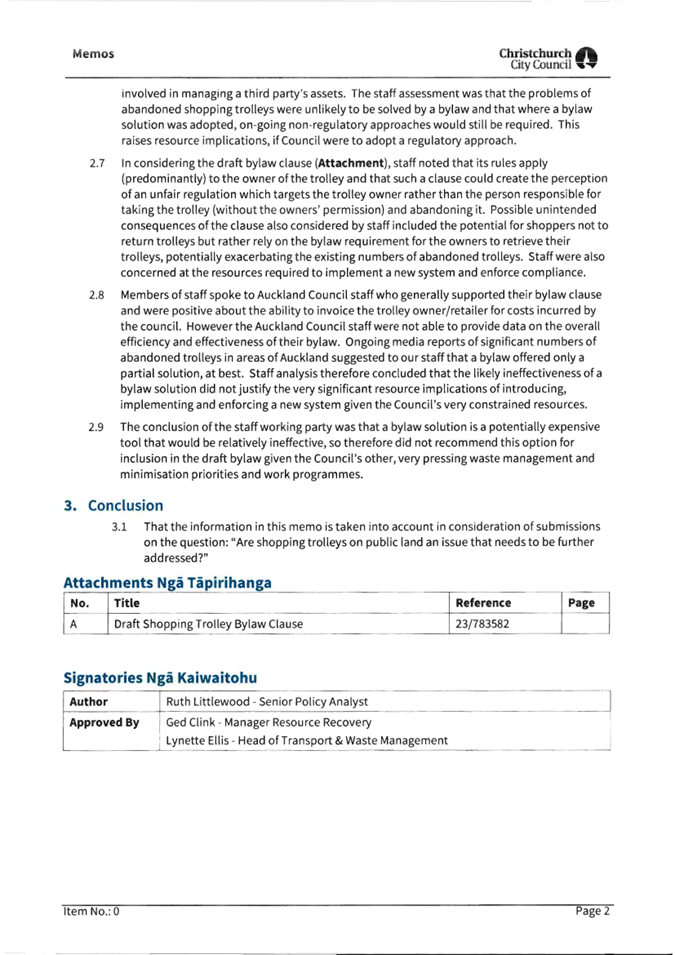
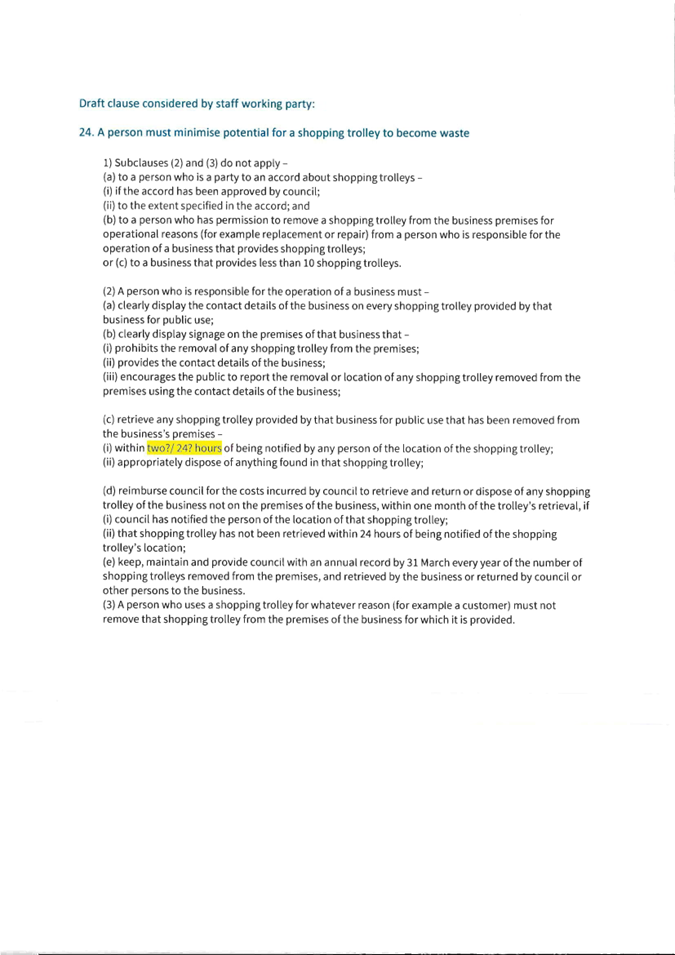
which are tabled in Attachment B to this report. Attachment C
provides background information on the development of the draft bylaw including
the staff evaluation of the effectiveness of a bylaw clause to address the
problems associated with shopping trolleys.
5. Policy Framework Implications Ngā Hīraunga ā- Kaupapa here
Strategic
AlignmentTe Rautaki
Tīaroaro
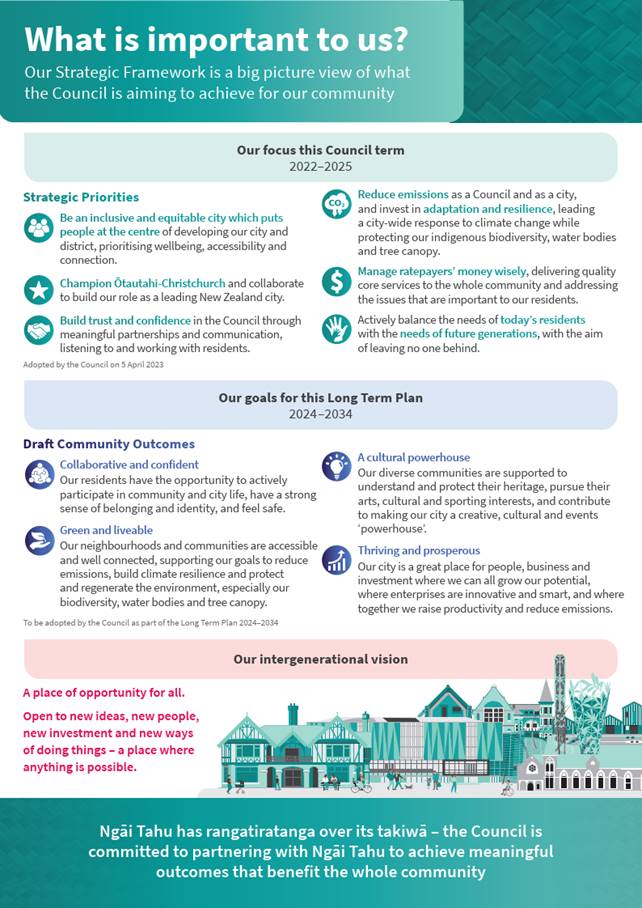
5.1 This report supports the Council's
Long Term Plan (2021 - 2031):
Policy
Consistency Te Whai
Kaupapa here
5.2 The decision is consistent
with Council’s Plans, Policies, and Bylaws - Waste Management Bylaw 2009,
and Cleanfill and Waste Handling Bylaw 2015.
6. Resource Implications Ngā Hīraunga Rauemi
Capex/Opex Ngā Utu Whakahaere
6.1 Not
relevant. This report only provides information of the submissions received on
the Proposed Waste Management and Minimisation Bylaw 2023.
7. Legal Implications Ngā Hīraunga ā-Ture
Statutory power to undertake proposals in the report
Te Manatū Whakahaere Kaupapa
7.1 The
decision-making authority for bylaws sits with the Council and cannot be
delegated to a Committee of Council or other body. The role of the Hearings
Panel is to consider and hear submissions, deliberate on those matters raised,
and make recommendations to the Council on the final form of the bylaw.
Other Legal Implications Ētahi atu
Hīraunga-ā-Ture
7.2 To
this point, the legislative requirements of the local Government Act 2002 have
been met.
7.3 Submissions
made on the proposals should be received by the Hearings Panel with an open
mind and should be given due consideration.
7.4 When
deliberating on submissions, the Hearings Panel should keep in mind the
Council’s bylaw-making powers, and the scope of the consultation
proposals. Significant changes from original proposals may require further
consultation.
8. Risk Management Implications Ngā Hīraunga Tūraru
8.1 With
any bylaw-making process, there is always a risk that members of the public or
organisations may not agree with the proposals finally adopted by the Council
and seek judicial review proceedings. This risk can be managed by careful
compliance with the provisions of the Local Government Act 2002, and common law
relating to bylaws.
9. Next Steps Ngā Mahinga
ā-muri
9.1 The
Hearings Panel will consider the matters raised in submissions, deliberate on
those matters, seek any further advice from staff, and make recommendations to
the Council on the final form of the bylaw.
Attachments Ngā Tāpirihanga
|
No.
|
Title
|
Reference
|
Page
|
|
a ⇩ 
|
FINAL
VERSION-Attachment A Summary of submissions Comments on specific clause
of the draft waste bylaw and staff advice
|
23/812493
|
12
|
|
b ⇩ 
|
Summary of
feedback from submitters on shopping trolleys
|
23/786169
|
27
|
|
c ⇩
|
Memo to
Hearings Panel on shopping trolleys
|
23/820560
|
28
|
In addition to the attached documents, the following background
information is available:
|
Document
Name – Location / File Link
|
|
Not
applicable
|
Confirmation of Statutory
Compliance Te Whakatūturutanga ā-Ture
|
Compliance with Statutory Decision-making
Requirements (ss 76 - 81 Local Government Act 2002).
(a) This report contains:
(i) sufficient information about all reasonably practicable
options identified and assessed in terms of their advantages and
disadvantages; and
(ii) adequate consideration of the views and preferences of
affected and interested persons bearing in mind any proposed or previous
community engagement.
(b) The information reflects the level of significance of the
matters covered by the report, as determined in accordance with the Council's
significance and engagement policy.
|
Signatories Ngā Kaiwaitohu
|
Authors
|
Evangeline
Dispo - Policy Analyst
Ruth
Littlewood - Senior Policy Analyst
Ged Clink -
Manager Resource Recovery
|
|
Approved By
|
Ged Clink -
Manager Resource Recovery
Lynette Ellis
- Head of Transport & Waste Management
|