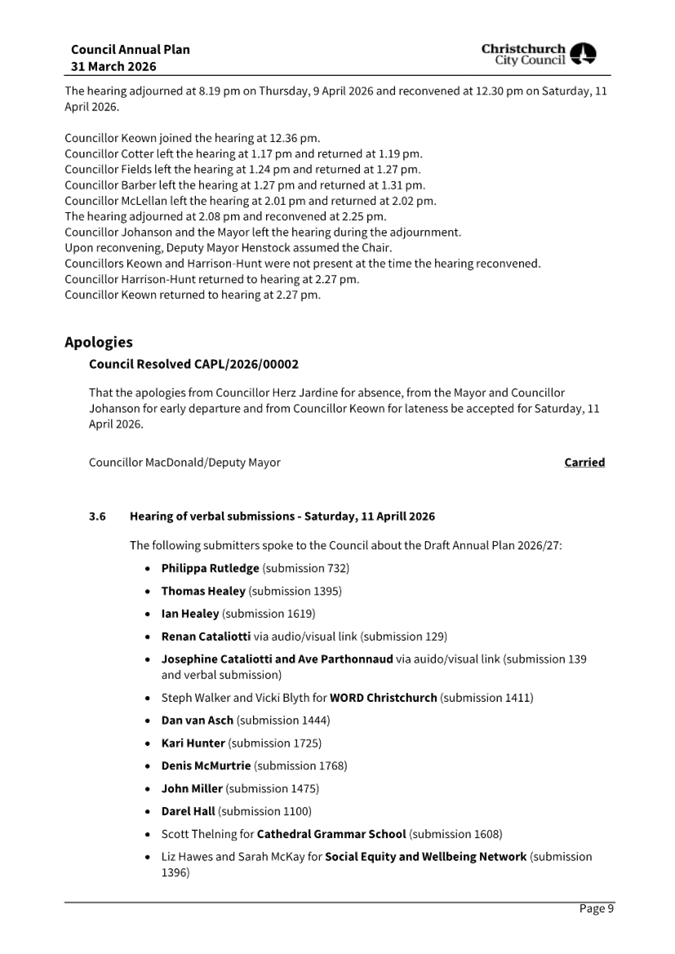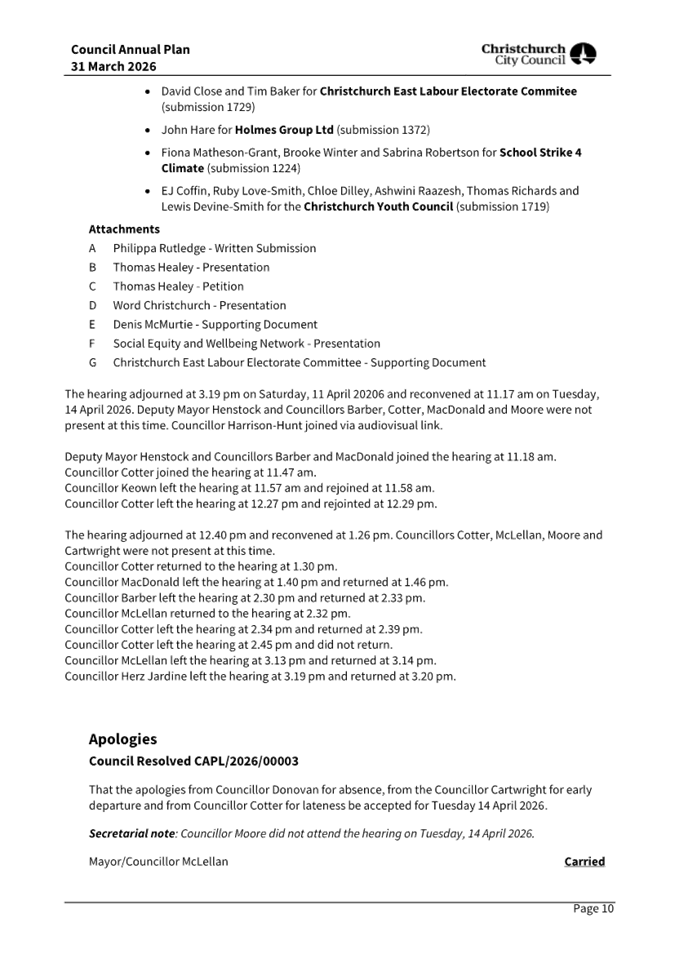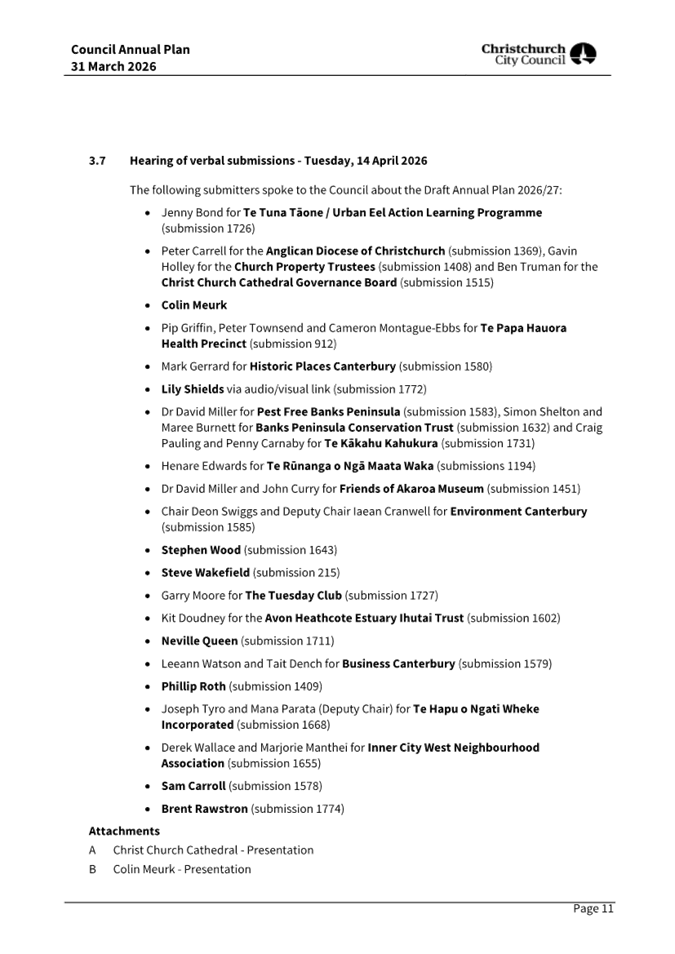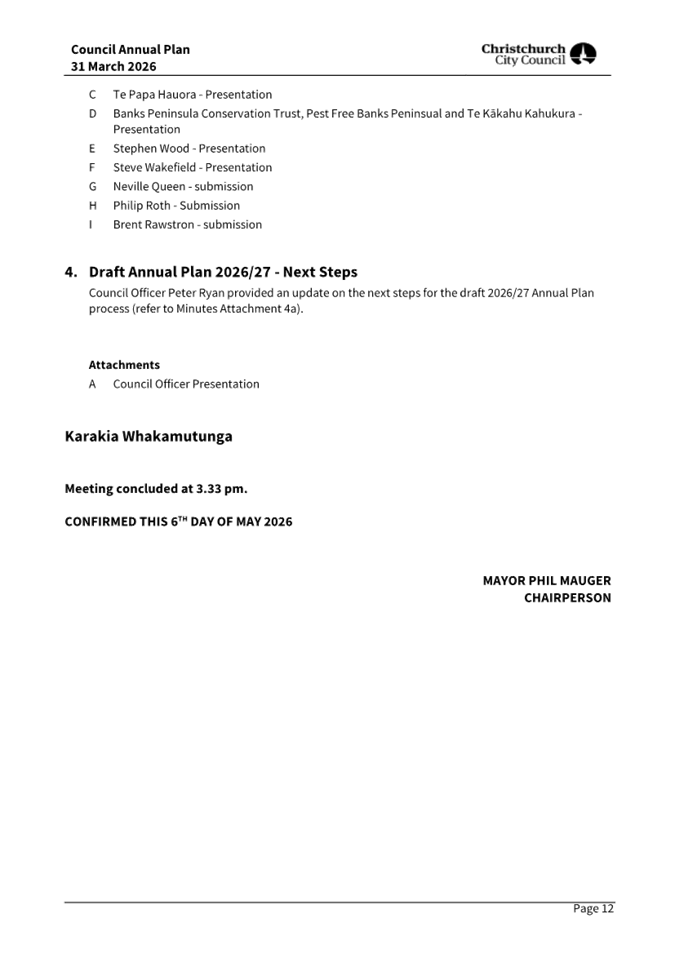
Christchurch City Council
Agenda
Notice of Meeting Te Pānui o te Hui:
An ordinary meeting of the Christchurch
City Council will be held on:
Date: Wednesday 6 May 2026
Time: 9.30 am
Venue: Camellia Chambers, Civic Offices,
53 Hereford Street, Christchurch
Membership
|
Chairperson
Deputy Chairperson
Members
|
Mayor Phil Mauger
Deputy Mayor Victoria Henstock
Councillor Kelly Barber
Councillor David Cartwright
Councillor Melanie Coker
Councillor Pauline Cotter
Councillor Celeste Donovan
Councillor Tyrone Fields
Councillor Tyla Harrison-Hunt
Councillor Nathaniel Herz Jardine
Councillor Yani Johanson
Councillor Aaron Keown
Councillor Sam MacDonald
Councillor Jake McLellan
Councillor Andrei Moore
Councillor Mark Peters
Councillor Tim Scandrett
|
30 April 2026
Website: www.ccc.govt.nz

TABLE OF CONTENTS NGĀ IHIRANGI
Karakia Tīmatanga................................................................................................... 5
1. Apologies Ngā Whakapāha................................................................................. 5
2. Declarations of Interest Ngā Whakapuaki Aronga.................................................. 5
Please note the Monthly
Report from the Community Boards will be considered between 9.30am and 10am.
Public
Participation and Presentation of Petitions will be considered from 10am.
3. Public
Participation Te Huinga
Tūmatanui............................................................ 5
3.1 Public Forum Te Huinga Whānui.......................................................................................... 5
3.2 Deputations by
Appointment Ngā Huinga Whakaritenga...................................................... 5
4. Presentation
of Petitions Ngā
Pākikitanga............................................................ 6
5. Confirmation of Previous Minutes Te Whakaāe o te
hui o mua................................. 6
Council - Annual Plan
6. Council
- Annual Plan Minutes - 31 March 2026..................................................... 27
Committee Minutes Reports
7. Health,
Safety and Wellbeing Committee Minutes - 20 March 2026......................... 41
8. Canterbury
Waste Joint Committee Minutes - 10 April 2026................................... 45
9. Canterbury
Regional Landfill Joint Committee Minutes - 10 April 2026.................... 49
Community Board Monthly
Reports
10. Monthly
Report from the Community Boards - April 2026...................................... 53
Community Board Part A
Reports
11. Land
disposal - NZTA SH76 Brougham St Corridor Improvements......................... 121
12. Sumner
Tennis Club Proposed Lease: Post Consultation Report........................... 135
13. Brighton
Mall Upgrade.................................................................................... 171
Staff Reports
14. Christchurch
Kart Club Relocation................................................................... 197
15. Traffic
calming on collector and arterial roads................................................... 207
16. Application
to Capital Endowment Fund 2025/26 - Te Tahi Youth.......................... 221
17. Environmental
Partnership Fund - Correction to report...................................... 231
18. Toi
Ōtautahi 2026-2036................................................................................... 233
19. 2025
Triennial Elections.................................................................................. 239
20. Notification
of Revocation of Part of previous Council decision............................ 303
Governance Items
21. Notice of
Motion - Ground-based solar generation.............................................. 305
22. Mayor's
Monthly Report................................................................................. 309
23. Resolution
to Exclude the Public...................................................................... 318
Karakia Whakamutunga
Actions
Register Ngā Mahinga Tuwhera
Karakia Tīmatanga
Whakataka te hau ki te uru
Whakataka te hau ki te tonga
Kia mākinakina ki uta
Kia mātaratara ki tai
E hī ake ana te atakura
He tio, he huka, he hau hū
Tihei mauri ora
1. Apologies Ngā Whakapāha
Apologies will
be recorded at the meeting.
2. Declarations of Interest Ngā
Whakapuaki Aronga
Members are
reminded of the need to be vigilant and to stand aside from decision-making
when a conflict arises between their role as an elected representative and any
private or other external interest they might have.
Please note the Monthly Report from the Community Boards will
be considered between 9.30am and 10am.
Public Participation and Presentation of Petitions will be
considered from 10am.
3. Public Participation Te Huinga
Tūmatanui
3.1 Public Forum Te Huinga Whānui
A period of up to 30 minutes is available
for people to speak for up to five minutes on any issue that is not the subject
of a separate hearings process.
|
3.1.1
|
Douglas Williams
Douglas Williams will speak regarding a
proposal to alleviate problems at the wastewater treatment plant.
|
|
3.1.2
|
RiseLink Foundation Charitable Trust
Mohamed Hassan will speak on behalf of RiseLink
Foundation Charitable Trust to introduce the Foundation and share its
kaupapa, the work it does to support young people and families from refugee,
migrant, and ethnic communities in Christchurch.
|
3.2 Deputations by Appointment Ngā
Huinga Whakaritenga
Deputations may be heard on a matter, or
matters, covered by a report on this agenda and approved by the Chairperson.
|
3.2.1
|
Kay Stieller and Peter Dellaca
Kay Stieller and Peter Dellaca will speak
regarding Item 14. Christchurch Kart Club Relocation report.
|
|
3.2.2
|
Shayne McLaren and Matthew Hamilton
Shayne McLaren and Matthew Hamilton will
speak regarding Item 14. Christchurch Kart Club Relocation report.
|
4. Presentation of Petitions Ngā
Pākikitanga
|
4.1
|
Emily
Meisk will present a petition regarding the installation of traffic lights at
the corner of Blenheim Road and Middleton Road.
We, the undersigned residents and
concerned members of the community, urgently request the installation of
traffic lights at corner of Blenheim Rd and Middleton Rd.
This intersection is located very
close to a school, where many students, including young children, must cross
the road daily. The road is a major and busy route connect the north and
south, with heavy traffic and fast-moving vehicles.
There have been multiple near-miss
incidents, and the current situation poses a serious risk to public safety.
We are deeply concerned that without immediate action, it is only a matter of
time before a serious accident occurs.
While we understand that installing
traffic lights requires financial investment, we strongly believe that human
life is priceless. Money can be recovered, but lives cannot.
We respectfully urge the authorities
to prioritise this matter and take immediate action to improve safety at this
location.
|
To present to the Council, refer
to the Participating in decision-making webpage or
contact the meeting advisor listed on the front of this agenda.
5. Confirmation
of Previous Minutes Te Whakaāe o te hui o mua
That the
minutes of the Council meetings held on Wednesday, 1 April 2026 (refer page 7) and on Wednesday, 22 April 2026 be
confirmed (refer page 23) be confirmed.

Christchurch City Council
Minutes
Date: Wednesday 1 April 2026
Time: 9.32 am
Venue: Camellia Chambers, Civic Offices,
53 Hereford Street, Christchurch
Present
|
Chairperson
Deputy Chairperson
Members
|
Mayor Phil Mauger
Deputy Mayor Victoria Henstock
Councillor Kelly Barber
Councillor David Cartwright
Councillor Melanie Coker
Councillor Pauline Cotter
Councillor Celeste Donovan
Councillor Tyrone Fields
Councillor Tyla Harrison-Hunt
Councillor Nathaniel Herz Jardine
Councillor Yani Johanson
Councillor Aaron Keown
Councillor Sam MacDonald
Councillor Jake McLellan
Councillor Andrei Moore
Councillor Mark Peters
Councillor Tim Scandrett
|

Karakia Tīmatanga
The agenda was dealt with in the following
order. Where no voting record is shown, the item was carried unanimously by
those present.
The Mayor acknowledged the recent passing
of former Councillor Newton Dodge and the meeting held a moment’s silence
in recognition of his contributions and achievements during his 27 years of
service.
Secretarial Note: the Chairperson informed the meeting that there would be an
adjournment in the afternoon in order to hold a workshop on Item 9 – Christchurch
Wastewater Treatment Plant Pond Odour. The meeting would reconvene the
following day, Thursday, 2 April to consider the report.
1. Apologies
Ngā Whakapāha
|
Council Decision
There were no apologies received.
|
2. Declarations
of Interest Ngā Whakapuaki Aronga
Councillor Coker declared an interest in Item 10. 2025-26
Sustainability Fund Allocation in relation to the Summit Road Society
application.
Councillor Fields left the meeting at 10.03
am and returned at 10.06 am during consideration of Items 6 and 7.
Councillor Keown left the meeting at 10.07
am and returned at 10.09 am during consideration of Items 6 and 7.
Councillor MacDonald left the meeting at
10.25 am and returned at 10.27 am during consideration of Items 6 and 7.
Councillor Barber left the meeting at 10.27
am and returned at 10.31 am during consideration of Items 6 and 7.
Councillor Cartwright left the meeting at
10.29 am and returned at 10.35 am during consideration of Items 6 and 7.
Councillor Cotter left the meeting at 10.30
am and returned at 10.33 am during consideration of Items 6 and 7.
Councillor MacDonald left the meeting at 10.51
am during consideration of Items 6 and 7.
|
6. Monthly Report from the
Community Boards - March 2026 and
7.
Draft 2026/27 Annual Plan - Community Board Submissions
|
|
|
Council Comment
1. The
Community Boards presented their Monthly Reports (Item 6) and their Annual
Plan submissions (Item 7) to the Council concurrently.
|
|
|
Keir Leslie, Chairperson, and Sophie Bond, Deputy Chair, joined
the meeting for presentation of the Waihoro
Spreydon-Cashmere-Heathcote Community Board area
report.
Jason Middlemiss, Chairperson, and Nicola McCormick, Deputy
Chairperson, joined the meeting for presentation of the Waimāero Fendalton-Waimairi-Harewood Community Board area report.
Marie Pollisco, Chairperson, and Bailey Peterson, Community
Governance Manager, joined the meeting for presentation of the Waipuna Halswell-Hornby-Riccarton Community Board area report.
Paul McMahon, Chairperson, and Jackie Simons, Deputy Chairperson,
joined the meeting for presentation of the Waitai
Coastal-Burwood-Linwood Community Board area
report.
Lyn Leslie, Chairperson, and Nigel Millar, Deputy Chairperson,
joined the meeting for presentation of the Te
Pātaka o Rākaihautū Banks Peninsula Community Board area report.
Sunita Gautam, Chairperson, and Simon Britten, Deputy Chairperson,
joined the meeting for presentation of the Waipapa
Papanui-Innes-Central Community Board area
report.
|
|
|
Council Resolved CNCL/2026/00037
Officer Recommendation accepted without
change
That the Council:
1. Receives the information in the Monthly
Report from the Community Boards - March 2026 Report.
Deputy
Mayor/Councillor Cotter Carried
|
|
|
Attachments
a Waihoro
Spreydon-Cashmere-Heathcote Community Board - Monthly Update and Draft Annual
Plan 2026/27 Submission - Presentation to Council
b Waimāero
Fendalton-Waimairi-Harewood Community Board - Monthly Update and Draft Annual
Plan 2026/27 Submission - Presentation to Council
c Waipuna
Halswell-Hornby-Riccarton Community Board - Monthly Update and Draft Annual
Plan 2026/27 Submission - Presentation to Council
d Waitai
Coastal-Burwood-Linwood Community Board - Monthly Update and Draft Annual
Plan 2026/27 Submission - Presentation to Council
e Te
Pātaka o Rākaihautū Banks Peninsula Community Board - Monthly
Update and Draft Annual Plan 2026/27 Submission - Presentation to
Council
f Waipapa
Papanui-Innes-Central Community Board - Monthly Update and Draft Annual Plan
2026/27 Submission - Presentation to Council
|
The meeting adjourned at 10.59 am and
reconvened at 11.18 am. Deputy Mayor Henstock and Councillors Barber and
MacDonald were not present at this time.
3. Public
Participation Te Huinga Tūmatanui
3.1 Public Forum Te Huinga
Whānui
Councillor MacDonald returned to the
meeting at 11.21 am during consideration of Item 3.1.1.
Deputy Mayor Henstock and Councillor Barber
returned to the meeting at 11.22 am during consideration of Item 3.1.1.
|
3.1.1
|
Laura Fergusson Brain Injury Trust
Kathryn Jones
and Jasmine Harris spoke on behalf of the Laura Fergusson Brain Injury Trust
regarding the major capital housing development being undertaken to provide
fully accessible residential accommodation for 30 people living with brain
injuries and other neurological conditions.
|
|
Attachments
a Laura
Fergusson Brain Injury Trust - Presentation to Council
|
Councillor Cotter left the meeting at 11.26
am and returned at 11.29 am during consideration of Item 3.1.2.
|
3.1.2
|
Zoran Rakovic
Zoran Rakovic
spoke regarding concerns about the Council deliberating on constitutional
questions outside of its jurisdiction and the limit of council authority
under the Local Government Act 2002.
|
|
3.1.3
|
Non-Resident Nepali Association (NRNA)
Dr. Sulav
Paudel spoke on behalf of the Non-Resident Nepali Association (NRNA)
regarding the Nepal Festival (18 April 2026), a multicultural celebration
with a traditional parade, Everest exhibitions, authentic Nepalese cuisine
and cultural performances to celebrate and strengthen community ties.
|
|
Attachments
a Non-Resident
Nepali Association (NRNA) - Presentation to Council
|
|
3.1.4
|
South Island Wildlife Hospital
Jenny Fisher
spoke on behalf of the South Island Wildlife Hospital regarding the
hospital’s work treating sick and injured wildlife and provided an
update on current issues.
|
|
Attachments
a South
Island Wildlife Hospital - Presentation to Council
|
Councillor Donovan left the meeting at
11.48 am and returned at 11.50 am during consideration of Item 3.1.5.
|
3.1.5
|
Jolt Dance Company
Lachlan
Oakes, Joel Foreman, Lyn Cotton and Kate Finnerty spoke on behalf of Jolt
Dance Company regarding what the Company does and its inclusive dance
practice and programmes.
|
|
Attachments
a Jolt
Dance Company - Presentation to Council
|
|
3.1.6
|
AquaPave Permeable Concrete
Adrianna Hess
spoke on behalf of AquaPave Permeable Concrete regarding a stormwater map
used by Council that outlines areas where staff will consent stormwater
discharge to ground and which disallows permeable pavements from being
consented for most of Christchurch.
|
|
Attachments
a AquaPave
Permeable Concrete - Presentation to Council
|
|
3.1.7 Greater Hornby Residents'
Association
|
|
Marc Duff spoke on
behalf of Greater Hornby Residents’ Association regarding Item 15 - Notice
of Motion - Parker / Gilberthorpes / Waterloo Intersection Signalisation.
|
Councillor Coker left the meeting at 12.10
pm during consideration of Item 3.2.1.
3.2 Deputations by Appointment Ngā Huinga Whakaritenga
|
3.2.1 Don Gould
|
|
Secretarial Note: Councillor Cotter raised a Point of Order in accordance
with Standing Order 21.2, citing visually disrespectful presentation
materials. Upon the Chairperson’s ruling in favour of the Point of
Order, a segment of the presentation materials were removed from screen and
the speaker continued.
|
|
Don Gould spoke
regarding Item 9 - Christchurch Wastewater Treatment Plant Pond Odour
Mitigation.
|
|
Attachments
a Don
Gould - Presentation to Council
|
Councillor Coker returned to the meeting at
12.14 pm during consideration of Item 3.2.2.
|
3.2.2 Rebecca Robin
|
|
Secretarial Note: Rebecca Robin presented a petition as part of her deputation
(refer Attachment A).
|
|
Rebecca Robin spoke
regarding Item 9 - Christchurch Wastewater Treatment Plant Pond Odour
Mitigation.
|
|
Attachments
a Rebecca
Robin - Presentation to Council
|
4. Presentation
of Petitions Ngā Pākikitanga
Secretarial Note: As noted in Item 3.2.2, deputation presenter Rebecca Robin
presented a petition to the Council. This was received and is attached (refer
Item 3.2.2, Attachment A).
5. Confirmation
of Previous Minutes Te Whakaāe o te hui o mua
|
Council Resolved CNCL/2026/00038
That the
Council confirms the Open and Public Excluded Minutes (Item 18) from the
Council meeting held 4 March 2026.
Mayor/Councillor
MacDonald Carried
|
|
Report from Waimāero Fendalton-Waimairi-Harewood
Community Board - 16 February 2026
|
|
8. Property
Disposal, Millstead Oaks Subdivision, Casebrook.
|
|
|
Council Resolved CNCL/2026/00039
Waimāero Fendalton-Waimairi-Harewood Community
Board Recommendations to Council accepted without change
That the
Council:
1. Receives the information in the Property
Disposal, Millstead Oaks Subdivision, Casebrook Report.
2. Notes that the decision in this report is assessed as low
significance based on the Christchurch City Council’s Significance and
Engagement Policy.
3. Resolves to transfer:
a. section 2 RPS6694 to the owner of Lot 40 DP 602661 and issue one
amalgamated title and
b. section 3 RPS6694 to the owner of Lot 41 DP 602661 and issue one
amalgamated title and
c. section 4 RPS6694 to the owner of Lot 42 DP 602661 and issue one
amalgamated title and
d. section 5 RPS6694 to the owner of Lot 43 DP 602661 and issue one
amalgamated title
4. Authorises the Manager Property Consultancy to undertake all
actions, negotiate and conclude all the agreements necessary to facilitate
the recommendations above on terms and conditions acceptable to him at his
sole discretion.
Mayor/Deputy
Mayor Carried
|
|
10. 2025-26
Sustainability Fund Allocation
|
|
|
Council Resolved CNCL/2026/00040
Officer Recommendations accepted without
change
That the
Council:
1. Receives the information in the 2025-26
Sustainability Fund Allocation Report.
2. Notes that the decision in this report is assessed as low
significance based on the Christchurch City Council’s Significance and
Engagement Policy.
3. Approves the recommended allocations from the 2025-2026
Sustainability Fund as outlined in the following table:
|
Funding
Request Number
|
Name
|
Name/Subject
|
Amount
Recommended
|
|
27
|
Te Manawa
Ora Trust
|
Pa
Whakaoranga Kaupapa Māori Community Garden
|
$25,000.00
|
|
45
|
Smith
Street Community Farm Trust
|
Water &
Carbon Retention Project
|
$22,000.00
|
|
22
|
The New
Brighton Community Gardens Charitable Trust
|
Young
Propagating Gardeners and Sustainability Hub
|
$20,000.00
|
|
61
|
Food
Resilience Network Inc
|
Roots of
Resilience: Growing Climate‑Ready Soils
|
$20,000.00
|
|
65
|
Hornby
Presbyterian Community Trust (Te Whare Awhero)
|
Grow Hornby
|
$20,000.00
|
|
55
|
Para Kore
Marae
|
Mai i
Kurawaka & Kope Tautaiao 2026
|
$15,525.00
|
|
07
|
Living
Springs
|
Climate
resilience
|
$15,000.00
|
|
42
|
RAD Bikes
Charitable Trust
|
Strengthening
'Find a Bike' 2026-27
|
$15,000.00
|
|
46
|
Christchurch
Envirohub Trust
|
Envirokids
|
$15,000.00
|
|
53
|
G & P
Farm shop Limited (trading as Untamed Earth Organic Farm)
|
Collective
Regenerative Farming Project
|
$15,000.00
|
|
63
|
Terra Nova
Foundation
|
Ōtautahi
Emissions Reduction Project
|
$15,000.00
|
|
40
|
Te
Hapū o Ngāti Wheke Inc
|
Returning
Raupō to Whakaraupō
|
$13,000.00
|
|
06
|
Richmond
Community Garden Trust
|
Riverlution
Precious Plastic
|
$12,500.00
|
|
08
|
Canterbury
Horticultural Society
|
Orchards in
Schools (OIS)
|
$12,500.00
|
|
41
|
Garden to
Table Trust
|
Garden to
Table Christchurch
|
$12,500.00
|
|
43
|
Re-Purpose
Pals
|
Re-thinking
Waste for Wellbeing
|
$12,000.00
|
|
14
|
Wild Game
Recovery Charitable Trust
|
Hunting for
conservation and food security
|
$10,000.00
|
|
15
|
Ao Tawhiti
Unlimited Discovery/Climate Action Campus Ōtautahi
|
Community
Education for Climate Change resilience
|
$10,000.00
|
|
33
|
Sir Peter
Blake Charity Limited
|
BLAKE
NZ-VR: Climate Change
|
$10,000.00
|
|
35
|
Conservation
Volunteers New Zealand
|
CVNZ
Community Nursery
|
$10,000.00
|
|
36
|
Shirley
Community Trust
|
MacFarlane
Park Food Forest
|
$10,000.00
|
|
52
|
Canterbury
Community Gardens Association Inc
|
Community
Orchards
|
$10,000.00
|
|
54
|
Christchurch
Transitional Architecture Trust
|
Christchurch
Conversations 2026
|
$10,000.00
|
|
37
|
Untouched
World Charitable Trust
|
Change
Forward - Rangatahi in action
|
$8,400.00
|
|
16
|
Canterbury
Horticultural Society
|
CHS Avebury
Climate Resilient Garden
|
$8,000.00
|
|
31
|
The Green
Lab
|
Summer back
yard building
|
$8,000.00
|
|
38
|
All Aboard
Transport Decarbonisation Trust
|
Going
Places 2026
|
$8,000.00
|
|
60
|
Kia Kotahi
Ako Charitable Trust
|
Powering
solar education with Te Pā Foundation
|
$8,000.00
|
|
01
|
A Rocha
Aotearoa New Zealand
|
Eco Church:
Children, youth and climate action
|
$5,000.00
|
|
03
|
Cultivate
Christchurch
|
Cultivate
Explore
|
$5,000.00
|
|
10
|
Future
Curious
|
Climate
Futures Summit
|
$5,000.00
|
|
49
|
Styx Living
Laboratory Trust
|
Community
tree canopy project
|
$5,000.00
|
|
21
|
The
Surfboard Library
|
Surfboard
Library & Precious Plastics Programme
|
$3,500.00
|
|
50
|
Stitch O
Mat Charitable Trust
|
Running
Costs - Promoting Sustainable Practice
|
$2,573.00
|
|
29
|
Sustained
Fun Ltd
|
World
Sustainable Toy Day
|
$2,570.00
|
|
32
|
Ki te Tihi
/ The Loft Charitable Trust
|
Carbon
Positive Certification for The Loft
|
$932.00
|
|
04
|
BLOOM
Sustainability Limited T/A &BLOOM
|
BLOOMING
Sustainability newsletter
|
Decline
|
|
05
|
BLOOM
Sustainability Limited T/A &BLOOM
|
The Bloom
Sustainability Sprint
|
Decline
|
|
09
|
Oaklands Te
Kura o Ōwaka School
|
Installation
of Solar Panels
|
Decline
|
|
12
|
Rod Donald
Banks Peninsula Trust
|
Fire Sensor
for new walking track
|
Decline
|
|
13
|
Stepping
Stone Trust
|
Car
Electrification
|
Decline
|
|
17
|
Hiringa
Refuelling New Zealand Ltd.
|
Christchurch
Hydrogen Demonstration Opportunity
|
Decline
|
|
19
|
Brighton
Observatory of Environment & Economics Trust
|
Supporting
Adapting Communities: (Heat).
|
Decline
|
|
20
|
Blue Cradle
Foundation
|
Immersive
Lab for Seaweek 2026
|
Decline
|
|
23
|
Christchurch
Envirohub Trust
|
Environmental
Coworking Space
|
Decline
|
|
24
|
Lakshman
Jayasekara
|
'EUDAIMONIA-
Back to the Future for Happiness'
|
Decline
|
|
34
|
Growing New
Brighton
|
Autumn
planting
|
Decline
|
|
44
|
Summit Road
Society
|
Linda Woods
Reserve Revegetation
|
Decline
|
|
48
|
Dharma
Yodha New Zealand Inc.
|
Community
Sustainability Leaders Workshops
|
Decline
|
|
41
|
The
Wednesday Challenge HQ Limited
|
The Weekday
Challenge Business Programme
|
Decline
|
|
56
|
Ōnuku
Rūnanga
|
Te Kori a
te Kō
|
Decline
|
|
57
|
Summit Road
Society
|
Ōhinetahi
Revegetation
|
Decline
|
|
58
|
Without
Waste Limited
|
SUC Free
Ōtautahi
|
Decline
|
|
62
|
TechCollect
NZ Limited
|
Christchurch
Free Community E-Waste Drop-Off
|
Decline
|
|
64
|
Food
Resilience Network Inc
|
Growing
Futures: Ōtautahi Permaculture Programme
|
Decline
|
|
66
|
The Arts
Centre of Christchurch Trust Board
|
Offset
operating costs by introducing solar energy
|
Decline
|
|
67
|
Big Street
Bikers Limited
|
Activation
Specialist
|
Decline
|
|
68
|
Avon
Ōtākaro Network Inc
|
Ōtākaro
Stormwater Truth (Phase Two)
|
Decline
|
|
11
|
The
Wednesday Challenge HQ Limited
|
The
Wednesday Challenge Schools' Programme 2026
|
Decline
|
|
18
|
Neighbourhood
Trust
|
Solar Panel
Project
|
Decline
|
|
39
|
Predator
free NB/Coastal Kaitiaki
|
Predator
free NB
|
Decline
|
4. Approves the transfer of any unallocated funds from 2025-26
Sustainability Fund to the 2026-27 Sustainability Fund.
Councillor
Harrison-Hunt/Mayor Carried
Councillor Coker
declared an interest in Recommendation 3 in relation to the Summit Road
Society application.
|
For
|
16
|
Councillor Barber, Councillor
Cartwright, Councillor Coker, Councillor Cotter, Councillor Donovan,
Councillor Fields, Councillor Harrison-Hunt, Councillor Herz Jardine,
Councillor Johanson, Councillor MacDonald, Councillor McLellan, Councillor
Moore, Councillor Peters, Councillor Scandrett, Deputy Mayor Henstock,
Mayor Mauger
|
|
Against
|
1
|
Councillor Keown
|
|
Abstain
|
0
|
|
|
TOTAL
|
17
|
|
|
|
11. Hearings
Panel report to the Council on the Future of Lichfield Street Carpark
|
|
|
Council Resolved CNCL/2026/00041
Officer Recommendations accepted without
change
That the
Council:
1. Resolves to retain the Lichfield Street Carpark;
2. Confirms that the primary reason to hold the carpark is to provide
casual, short-stay parking to support the Central City, on a commercial basis
that reduces the burden on ratepayers;
3. Authorises staff to find and implement costs savings where they
will not have material changes to service delivery;
4. Notes that the Council is already consulting on proposed increases
to car parking fees as part of the 2026/27 Annual Plan; and
5. Requests staff to present advice on mechanisms to improve the
financial performance of the Lichfield Street Carpark including, but not
limited to further regular fee changes, dynamic pricing, reviewing the
balance and location of long and short-term parking, costs savings and
changes to the operating model, in time to inform the 2027 to 2037 Long Term
Plan.
Councillor
Cotter/Councillor Peters Carried
|
For
|
10
|
Councillor Coker, Councillor Cotter,
Councillor Donovan, Councillor Fields, Councillor Harrison-Hunt, Councillor
Herz Jardine, Councillor Johanson, Councillor McLellan, Councillor Moore,
Councillor Peters
|
|
Against
|
6
|
Councillor Barber, Councillor
Cartwright, Councillor Keown, Councillor MacDonald, Deputy Mayor, Mayor
|
|
Abstain
|
1
|
Councillor Scandrett
|
|
TOTAL
|
17
|
|
|
The meeting adjourned at 1.03 pm and
reconvened at 2.02 pm. Councillors Fields and Scandrett were not present at
this time.
Councillor Harrison-Hunt did not return to
the meeting nor participate in any further discussion or vote.
Councillor Scandrett returned to the
meeting at 2.03 pm during consideration of Item 12.
Councillor Fields returned to the meeting
at 2.06 pm during consideration of Item 12.
|
12. International
Relations Update
|
|
|
Council Comment
1. Council
Officer Duncan Sandeman presented the Item and answered questions from
elected members.
2. The
Officer Recommendations were Moved by Councillor Keown and Seconded by
Councillor MacDonald.
3. During
questions, and with the agreement of the Mover and Seconder, Recommendation 3
was updated to reflect that approval of Council-funded travel would be
undertaken within existing budgets (refer Resolution 3). Reference to the
document identifying the elected members approved for Council-funded travel
was also updated for clarification.
4. With
the agreement of the Mover and Seconder, a further recommendation was added
to the Motion noting that an expression of interest process would be
undertaken to determine councillor interest in travel to India (refer
Resolution 4).
5. At
the conclusion of debate the updated Motion was voted on and declared
carried.
|
|
|
Officer Recommendations
That the
Council:
1. Receives the information in the
International Relations Update Report.
2. Notes that the decision in this report is assessed as low
significance based on the Christchurch City Council’s Significance and
Engagement Policy.
3. Approves Council funded travel by the Mayor and elected members
identified in Attachment B: Schedule 1 (Elected Member Travel in Support of
the IRPF) through to October 2028 for the joint purposes of:
a. Commemorating significant Sister City anniversaries, and
b. Supporting International Relations Policy Framework engagement.
4. Approves the upgrade of our relationship with Shenzhen,
People’s Republic of China, to a Sister City.
|
|
|
Council Resolved CNCL/2026/00042
That the
Council:
1. Receives the information in the
International Relations Update Report.
2. Notes that the decision in this report is assessed as low
significance based on the Christchurch City Council’s Significance and
Engagement Policy.
3. Approves Council-funded travel within existing budgets
by the Mayor and elected members identified in the International
Relations Update Report of 1 April 2026, through to October 2028 for the
joint purposes of:
a. Commemorating significant Sister City anniversaries, and
b. Supporting International Relations Policy Framework engagement.
4. Approves the upgrade of our relationship with Shenzhen,
People’s Republic of China, to a Sister City.
5.
Notes that the Council will go through a forthcoming Expression of
Interest process to gauge interest for the second Sister City trip to India.
Councillor
Keown/Councillor MacDonald Carried
|
For
|
14
|
Councillor Barber, Councillor
Cartwright, Councillor Cotter, Councillor Donovan, Councillor Fields,
Councillor Herz Jardine, Councillor Keown, Councillor MacDonald, Councillor
McLellan, Councillor Moore, Councillor Peters, Councillor Scandrett, Deputy
Mayor, Mayor
|
|
Against
|
2
|
Councillor Coker, Councillor Johanson
|
|
Abstain
|
0
|
|
|
TOTAL
|
16
|
|
|
Absent
|
1
|
Councillor Harrison-Hunt
|
|
|
13. Hagley Park
& Botanic Gardens - No Stopping & Mobility Park Parking Restrictions
- Update
|
|
|
Council Resolved CNCL/2026/00043
Officer Recommendations accepted without
change
That the
Council:
1. Receives the information in the Hagley
Park & Botanic Gardens - No Stopping & Mobility Park Parking
Restrictions - Update Report.
2. Notes that the decision in this report is assessed as low
significance based on the Christchurch City Council’s Significance and
Engagement Policy.
3. Revokes any previous resolutions in accordance with Clause 6 (2) of the Christchurch City Council Traffic &
Parking Bylaw 2017, within the Hagley Park car parking areas described in
this report, pertaining to parking or stopping
restrictions, made pursuant to any Bylaw, Local Government Act or any Land
Transport Rule, to the extent that they are in conflict with, or recommended
to be removed, in regard to the parking or stopping restrictions described in
Recommendations 4-5 below.
4. Approves, in accordance with clause 7 of the Christchurch City
Council Traffic and Parking Bylaw 2017, that the stopping of vehicles be
prohibited at any time within the Hagley Park Botanic Gardens parking area as
detailed on plan Hagley Park – Riccarton Avenue – Botanic Car
Park, (TG148381 dated 19/01/2026). Attachment A to this report.
5. Approves that in accordance with Clause 7 of the Christchurch City
Council Traffic and Parking Bylaw 2017, and in accordance with section
12.4 of the Land Transport Rule: Traffic Control Devices 2004, that the
parking of vehicles be reserved for vehicles with an approved disabled
person’s parking permit, prominently displayed in the vehicle,
within the Hagley Park Botanic Gardens parking area as detailed on plan
Hagley Park – Armagh Street – Botanic Car Park, (TG148381 dated
19/01/2026). Attachment B to this report. This restriction is to apply at all
times.
6. Approves that the above resolutions take effect when parking
signage and/or road markings that evidence the restrictions described in this
staff report are in place (or removed in the case of revocations).
Deputy
Mayor/Mayor Carried
|
|
14. Biodiversity
Fund Allocation - Correction
|
|
|
Council Resolved CNCL/2026/00044
Officer Recommendations accepted without
change
That the Council:
1. Receives the information in the Biodiversity
Fund Allocation - Correction Report.
2. Notes that the decision in this report are assessed as low
significance based on the Christchurch City Council’s Significance and
Engagement Policy.
3. Alters the 4 March 2026 Council decision (CNCL/2026/00031) only in
relation to the Biodiversity Fund allocation towards Kaituna Community
Weeding to reflect the grant of $60,000 from the 2025/26 Biodiversity Fund to
Banks Peninsula Conservation Trust rather than the application contact, Marie
Neal.
Mayor/Councillor
McLellan Carried
|
|
15. Notice of
Motion - Parker / Gilberthorpes / Waterloo Intersection Signalisation
|
|
|
Council Comment
1. Councillor
Peters introduced his Notice of Motion and stated his support for the
alternative Officer recommendations included in the report on the agenda. He
then Moved the alternative recommendations (refer Resolutions 1 and 2) and
this was Seconded by Councillor MacDonald.
2. At
the conclusion of questions the meeting voted on the Notice of Motion which
was declared carried.
|
|
|
Councillor
Peters’ Notice of Motion:
That the
Council:
1. Pauses any further work on the Parker Street, Gilberthorpes Road,
and Waterloo intersection as part of the South Express MCR and asks staff to
report to Council on options to enhance the safety and effectiveness of the
intersection, including full signalisation, in time for consideration as part
of the 2027-37 Long-Term Plan.
|
|
|
Council Resolved CNCL/2026/00045
Officer
Recommended Alternative:
That the Council:
1. Pauses any further work on the permanent design of the Parker
Street, Gilberthorpes Road, and Waterloo intersection as part of the South
Express MCR and asks staff to report to Council on options to enhance the
safety and effectiveness of the intersection, including full signalisation,
in time for consideration as part of the 2027-37 Long-Term Plan.
2. Requests staff bring interim options to the Council regarding the
safety and usability of the intersection for pedestrians and cyclists, to
allow users of the South Express MCR a safe route ahead of permanent changes.
Councillor
Peters/Councillor MacDonald Carried
|
|
16. Mayor's
Monthly Report
|
|
|
Council Resolved CNCL/2026/00046
Officer Recommendation accepted without
change
That the Council:
1. Receives the information in the Mayor’s Monthly report.
Mayor/Councillor
McLellan Carried
|
|
17. Resolution
to Exclude the Public Te whakataunga kaupare hunga tūmatanui
|
|
|
Council Resolved CNCL/2026/00047
That at 2.36 pm the resolution to exclude the public set out on
pages 258 to 259 of the agenda be adopted.
Councillor
Peters/Mayor Carried
|
The public were re-admitted to the meeting
at 2.45 pm.
The meeting adjourned at 2.45 pm and
reconvened at 2.03 pm on Thursday, 2 April 2026 in the Camellia Chambers.
|
21. Consideration of Additional Public
Excluded Item of Business
|
|
|
Council Resolved CNCL/2026/00051
Officer Recommendations accepted without change
That the
Council:
1. Agrees to consider the Public Excluded
Strategic Property Acquisition Update report at today’s reconvened
Council meeting, 1 April, consistent with Standing Order 6.11, noting the
information regarding the matter only became available late yesterday.
2. Notes that this matter will be dealt with
in the Public Excluded session due to commercial sensitivity and prejudice to
the Council’s negotiating position.
Councillor
Cotter/Councillor Peters Carried
|
The meeting
adjourned at 2.34 pm and reconvened at 2.41 pm during consideration of Item 9.
|
9. Christchurch
Wastewater Treatment Plant Pond Odour Mitigation
|
|
|
Council Comment
1. Council
Officers Gavin Hutchinson, Adam Twose and Brent Pizzey joined the table to
answer questions from elected members.
2. The
Officer Recommendations were Moved by the Mayor and Seconded by Councillor
McLellan with the addition of two further recommendations (refer Resolutions
4 and 5).
3. Councillor
Donovan Moved and Councillor Herz Jardine Seconded a foreshadowed motion to
progress Option 2 in the Officer report, increasing aeration to achieve the
99th percentile Biological Oxygen Demand mitigation.
4. During
questions two further recommendations were raised. After a brief adjournment
to clarify wording, these were incorporated into the Motion with the
agreement of the Mover and Seconder (refer underlined Resolutions 6 and 7).
5. At
the conclusion of debate the meeting voted on Recommendation 3 (the 95th
percentile option) separately. This was declared carried.
6. The
meeting then voted on the remaining Recommendations 1 – 2 and 4 –
7, which were declared carried.
|
|
|
Officer Recommendations
That the
Council:
1. Receives the information in the
Christchurch Wastewater Treatment Plant Pond Odour Mitigation Report.
2. Notes that the decision in this report is assessed as medium
significance based on the Christchurch City Council’s Significance and
Engagement Policy.
3. Agrees to increase aeration of the Christchurch Wastewater
Treatment Plant ponds sufficient to mitigate the 95th percentile
increase in Biological Oxygen Demand (BOD) and requests that this be
implemented urgently.
|
|
|
Motion Moved / Seconded
That the
Council:
1. Receives the information in the
Christchurch Wastewater Treatment Plant Pond Odour Mitigation Report.
2. Notes that the decision in this report is assessed as medium
significance based on the Christchurch City Council’s Significance and
Engagement Policy.
3. Agrees to increase aeration of the Christchurch Wastewater
Treatment Plant ponds sufficient to mitigate
the 95th percentile increase in Biological Oxygen Demand (BOD) and
requests that this be implemented urgently.
4. Notes that, under staff delegation, a
biochemical additive product aimed at reducing odour is currently being
trialled and that staff will either report back to the Council on its
efficacy or, if effective, proceed with application under their delegation.
5. Request monthly reporting to the Finance
and Performance Committee on monitoring of the temporary treatment plant,
noting that updates on the new plant are already provided through the capital
performance report.
6. Delegates to staff to add additional
aerators from within existing budgets if they identify these are required,
noting that this will be reported to the Finance and Performance Committee
via monthly updates.
7. Notes that a separate briefing will be
coming to the Council regarding the psychosocial response and recovery plan.
Mayor/Councillor
McLellan Moved/Seconded
|
|
|
Council Resolved CNCL/2026/00052
3. Agrees to increase aeration of the Christchurch Wastewater
Treatment Plant ponds sufficient to mitigate
the 95th percentile increase in Biological Oxygen Demand (BOD) and
requests that this be implemented urgently.
Mayor/Councillor
McLellan Carried
|
For
|
15
|
Councillor Barber, Councillor
Cartwright, Councillor Coker, Councillor Cotter, Councillor Donovan,
Councillor Fields, Councillor Harrison-Hunt, Councillor Herz Jardine,
Councillor Johanson, Councillor Keown, Councillor MacDonald, Councillor
McLellan, Councillor Scandrett), Deputy Mayor, Mayor
|
|
Against
|
2
|
Councillor Moore, Councillor Peters
|
|
Abstain
|
0
|
|
|
TOTAL
|
17
|
|
|
|
|
Council Resolved CNCL/2026/00053
That the
Council:
1. Receives the information in the
Christchurch Wastewater Treatment Plant Pond Odour Mitigation Report.
2. Notes that the decision in this report is assessed as medium
significance based on the Christchurch City Council’s Significance and
Engagement Policy.
4. Notes that, under staff delegation, a
biochemical additive product aimed at reducing odour is currently being
trialled and that staff will either report back to the Council on its
efficacy or, if effective, proceed with application under their delegation.
5. Request monthly reporting to the Finance
and Performance Committee on monitoring of the temporary treatment plant,
noting that updates on the new plant are already provided through the capital
performance report.
6. Delegates to staff to add additional
aerators from within existing budgets if they identify these are required,
noting that this will be reported to the Finance and Performance Committee
via monthly updates.
7. Notes that a separate briefing will be
coming to the Council regarding the psychosocial response and recovery plan.
Mayor/Councillor
McLellan Carried
|
|
|
Attachments
a Council
Workshop Notes and Officer Presentation - 1 April 2026
|
|
Resolution to Exclude the Public
|
|
|
Council Resolved CNCL/2026/00054
That at 3.02 pm the resolution to exclude
the public to proceed with the additional Public Excluded Item in accordance
with Standing Order 6.11 be adopted.
Mayor/Councillor
Cotter Carried
|
The public were re-admitted to the meeting
at 3.34 pm.
Karakia
Whakamutunga
Meeting
concluded at 3.34 pm.
CONFIRMED THIS 6TH DAY
OF MAY 2026
Mayor Phil Mauger
Chairperson

Christchurch City Council
Minutes
Date: Wednesday 22 April 2026
Time: 2.02pm
Venue: Camellia Chambers, Civic Offices,
53 Hereford Street, Christchurch
Present
|
Chairperson
Deputy
Members
|
Mayor Phil Mauger
Deputy Mayor Victoria Henstock
Councillor Kelly Barber
Councillor David Cartwright
Councillor Melanie Coker
Councillor Pauline Cotter
Councillor Tyrone Fields
Councillor Nathaniel Herz Jardine
Councillor Sam MacDonald
Councillor Jake McLellan
Councillor Andrei Moore
Councillor Mark Peters
Councillor Tim Scandrett
|
The agenda was dealt with in the following
order. Where no voting record is shown, the item was carried unanimously by
those present.
1. Apologies
Ngā Whakapāha
|
Council Resolved CNCL/2026/00055
That the apologies from Councillors
Donovan, Harrison-Hunt, Keown and Johanson for absence be accepted.
Mayor/Councillor
Cotter Carried
|
2. Declarations
of Interest Ngā Whakapuaki Aronga
There were no
declarations of interest recorded.
|
3. Resolution
to Exclude the Public Te whakataunga kaupare hunga tūmatanui
|
|
|
Council Resolved CNCL/2026/00056
That at 2.02pm the resolution to exclude the public set out on
pages 5 to 6 of the agenda be adopted.
Mayor/Deputy
Mayor Carried
|
The public were re-admitted to the meeting
at 2.06pm.
Meeting
concluded at 2.06pm.
CONFIRMED THIS 6th DAY OF MAY 2026
Mayor Phil Mauger
Chairperson
|
6. Council
- Annual Plan Minutes - 31 March 2026
|
|
Reference Te Tohutoro:
|
26/876788
|
|
Responsible Officer(s) Te Pou Matua:
|
Samantha
Kelly - Team Leader Democratic Services Support and Cathy Harlow –
Democratic Services Advisor
|
|
Accountable ELT Member Pouwhakarae:
|
Bede
Carran, General Manager Finance, Risk & Performance / Chief Financial
Officer
|
1. Purpose of Report Te
Pūtake Pūrongo
For the Council
to confirm the minutes from the Council - Annual Plan meeting held 31 March 2026.
2. Recommendation Te Tūtohu Council
That the Council confirms the Minutes from the Council -
Annual Plan meeting held 31 March 2026.
Attachments
Ngā
Tāpirihanga
|
No.
|
Title
|
Reference
|
Page
|
|
A⇩ 
|
Minutes
Council - Annual Plan - 31 March 2026
|
26/662315
|
28
|
Signatories Ngā Kaiwaitohu
|
Author
|
Samantha Kelly
- Team Leader Democratic Services Support
|
|
7. Health,
Safety and Wellbeing Committee Minutes - 20 March 2026
|
|
Reference Te Tohutoro:
|
26/702118
|
|
Responsible Officer(s) Te Pou Matua:
|
Ruth
Close, Democratic Services Advisor
|
|
Accountable ELT Member Pouwhakarae:
|
Anne
Columbus, General Manager Corporate Services/Chief People Officer
|
1. Purpose of Report Te Pūtake
Pūrongo
The Health,
Safety and Wellbeing Committee held a meeting on 20
March 2026 and is circulating the Minutes recorded to the Council for its
information.
2. Recommendation Te Tūtohu Council
That the Council receives the Minutes from the Health,
Safety and Wellbeing Committee meeting held 20 March 2026.
Attachments Ngā Tāpirihanga
|
No.
|
Title
|
Reference
|
Page
|
|
A⇩ 
|
Minutes
Health, Safety and Wellbeing Committee - 20 March 2026
|
26/515436
|
42
|
Signatories Ngā Kaiwaitohu
|
Author
|
Ruth Close -
Democratic Services Advisor
|
|
8. Canterbury
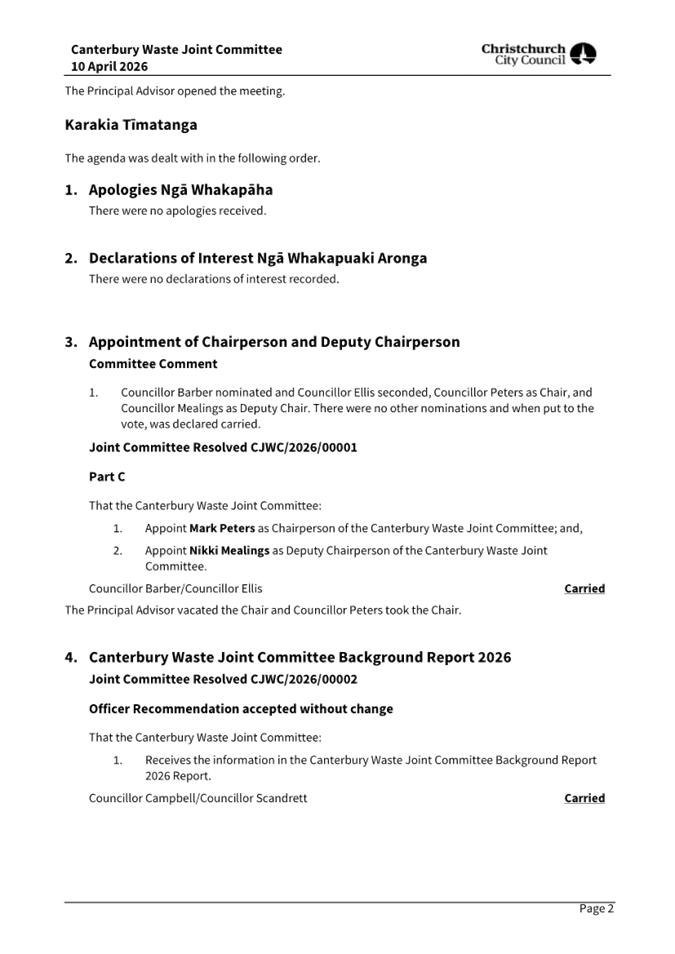
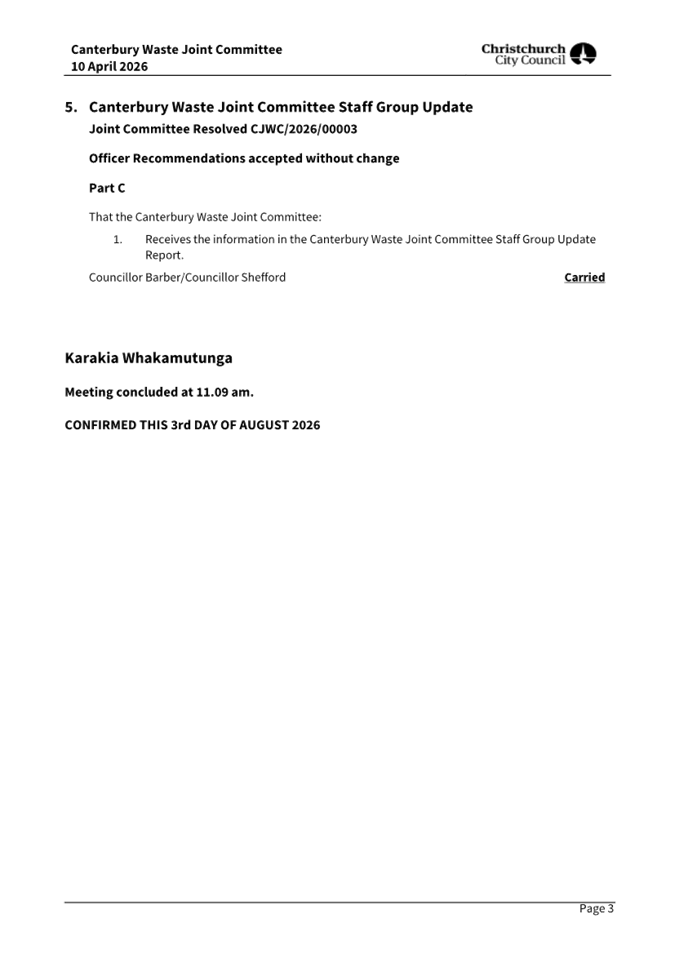
Waste Joint Committee Minutes - 10 April 2026
|
|
Reference Te Tohutoro:
|
26/762684
|
|
Responsible Officer(s) Te Pou Matua:
|
Natasha
McDonnell, Democratic Services Advisor
|
|
Accountable ELT Member Pouwhakarae:
|
Helen
White, General Counsel / Director of Legal & Democratic Services
|
1. Purpose of Report Te Pūtake
Pūrongo
The Canterbury
Waste Joint Committee held a meeting on 10 April 2026 and is circulating the Minutes recorded to the Council for its information.
2. Recommendation Te Tūtohu Council
That the Council receives the Minutes from the Canterbury
Waste Joint Committee meeting held 10 April 2026.
Attachments Ngā Tāpirihanga
|
No.
|
Title
|
Reference
|
Page
|
|
A⇩
|
Minutes Canterbury Waste Joint
Committee - 10 April 2026
|
26/697867
|
46
|
Signatories Ngā Kaiwaitohu
|
Author
|
Natasha
McDonnell - Democratic Services Advisor
|
|
9. Canterbury
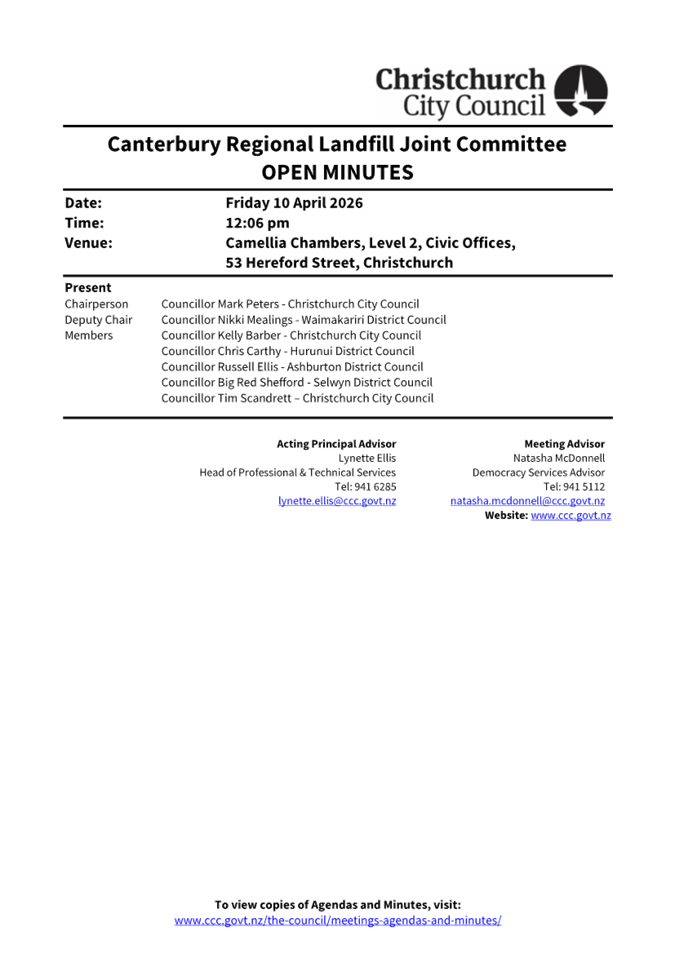
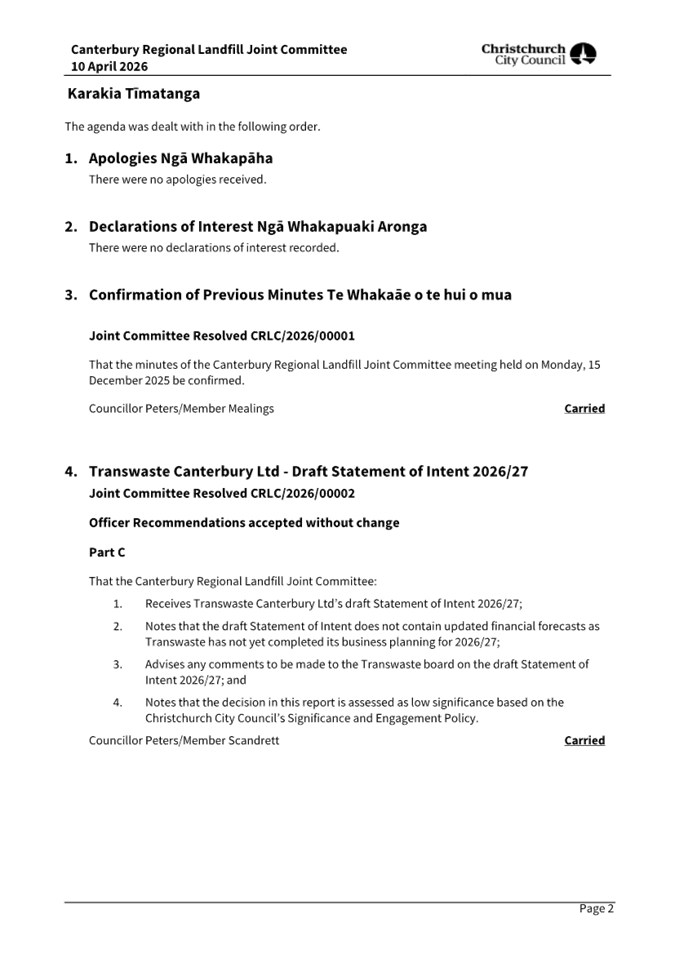
Regional Landfill Joint Committee Minutes - 10 April 2026
|
|
Reference Te Tohutoro:
|
26/762707
|
|
Responsible Officer(s) Te Pou Matua:
|
Natasha
McDonnell, Democratic Services Advisor
|
|
Accountable ELT Member Pouwhakarae:
|
Helen
White, General Counsel / Director of Legal & Democratic Services
|
1. Purpose of Report Te Pūtake
Pūrongo
The Canterbury
Regional Landfill Joint Committee held a meeting on 10
April 2026 and is circulating the Minutes recorded to the Council for its
information.
2. Recommendation Te Tūtohu Council
That the Council receives the Minutes from the Canterbury
Regional Landfill Joint Committee meeting held 10 April 2026.
Attachments Ngā Tāpirihanga
|
No.
|
Title
|
Reference
|
Page
|
|
A⇩
|
Minutes Canterbury Regional Landfill
Joint Committee - 10 April 2026
|
26/697968
|
50
|
Signatories Ngā Kaiwaitohu
|
Author
|
Natasha
McDonnell - Democratic Services Advisor
|
|
10. Monthly
Report from the Community Boards - April 2026
|
|
Reference Te Tohutoro:
|
26/790698
|
|
Report of Te Pou Matua:
|
The
Chairpersons of all Community Boards
|
|
Accountable ELT Member Pouwhakarae:
|
Andrew
Rutledge, General Manager Citizens and Community
|
1. Purpose and Origin of the Report Te
Pūtake Pūrongo
1.1 The
purpose of this report is to provide the Council with an overview of
initiatives and issues recently considered by the Community Boards. This
report attaches the most recent Community Board Area Report included in each
Board's public meeting. Please see the individual agendas for the attachments
to each report.
1.2 Each
Board will present important matters from their respective areas during the
consideration of this report and these presentations will be published with the
Council minutes after the meeting.
2. Community Board Recommendations Ngā Tūtohu a te Poari
Hapori
That the Council:
1. Receives the information in the Monthly Report from the Community Boards -
April 2026 Report.
Attachments Ngā Tāpirihanga
|
No.
|
Title
|
Reference
|
Page
|
|
a ⇩ 
|
Waimāero
Fendalton-Waimairi-Harewood Community Board Area Report April 2026
|
26/791163
|
54
|
|
b ⇩ 
|
Waipapa
Papanui-Innes-Central Community Board Area Report April 2026
|
26/791151
|
61
|
|
c ⇩
|
Waipuna
Halswell-Hornby-Riccarton Community Board Area Report April 2026
|
26/791142
|
80
|
|
d ⇩
|
Waitai
Coastal-Burwood-Linwood Community Board Area Report April 2026
|
26/791181
|
90
|
|
e ⇩
|
Te Pātaka
o Rākaihautū Banks Peninsula Community Board Area Report April 2026
|
26/791177
|
98
|
|
f ⇩
|
Waihoro
Spreydon-Cashmere-Heathcote Community Board Area Report April 2026
|
26/791170
|
106
|
Report from Waihoro Spreydon-Cashmere-Heathcote Community Board – 16
April 2026
|
11. Land
disposal - NZTA SH76 Brougham St Corridor Improvements
|
|
Reference Te Tohutoro:
|
26/808195
|
|
Responsible Officer(s) Te Pou Matua:
|
Angus
Smith - Manager Property Consultancy
|
|
Accountable ELT Member Pouwhakarae:
|
Andrew
Rutledge, General Manager Citizens and Community
|
|
1. Waihoro Spreydon-Cashmere-Heathcote
Community Board
Recommendation to Council
|
|
|
Officer Recommendations accepted without change
Part A
That the Council:
1. Receives the information in the Land disposal - NZTA SH76
Brougham St Corridor Improvements Report.
2. Notes that the decisions in this report are
assessed as low significance based on the Christchurch City Council’s
Significance and Engagement Policy.
3. Dispose of the parcels of land described
below (subject to survey) and identified on the agenda report in Attachment A to the Minister for Land Information
for roading purposes as transfers of existing public works under Section 50
of the Public Works Act 1981.
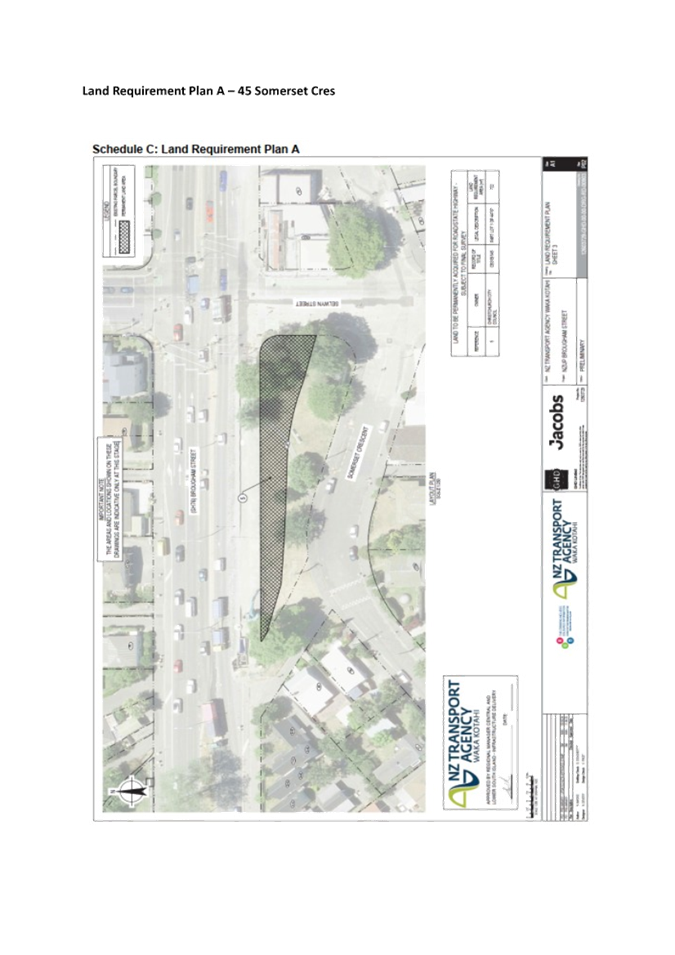
a. Part Lot 1 Deposited Plan 44707, held in
title CB31B/145, shown hatched black on “Land Requirement Plan Area
A” on the agenda report in Attachment A, located at 45 Somerset
Cres;
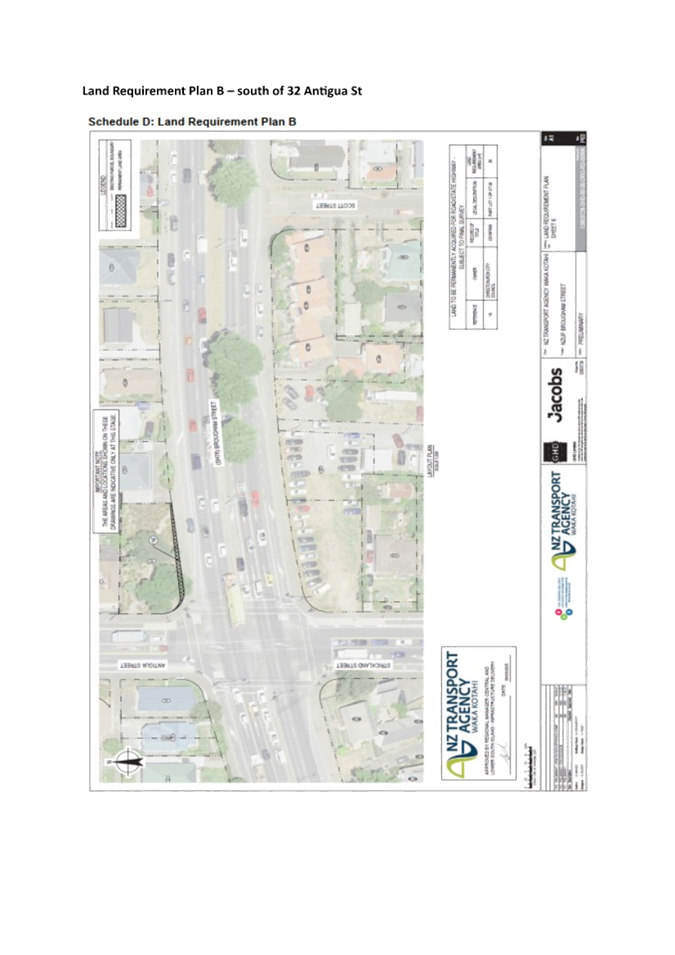
b. Part Lot 1 Deposited Plan 37130, held in
title CB16F/906, shown hatched black on “Land Requirement Plan Area
B” on the agenda report in Attachment A, located south of 32
Antigua St, and
c. Part RS 17, held in title CB 9A/1278
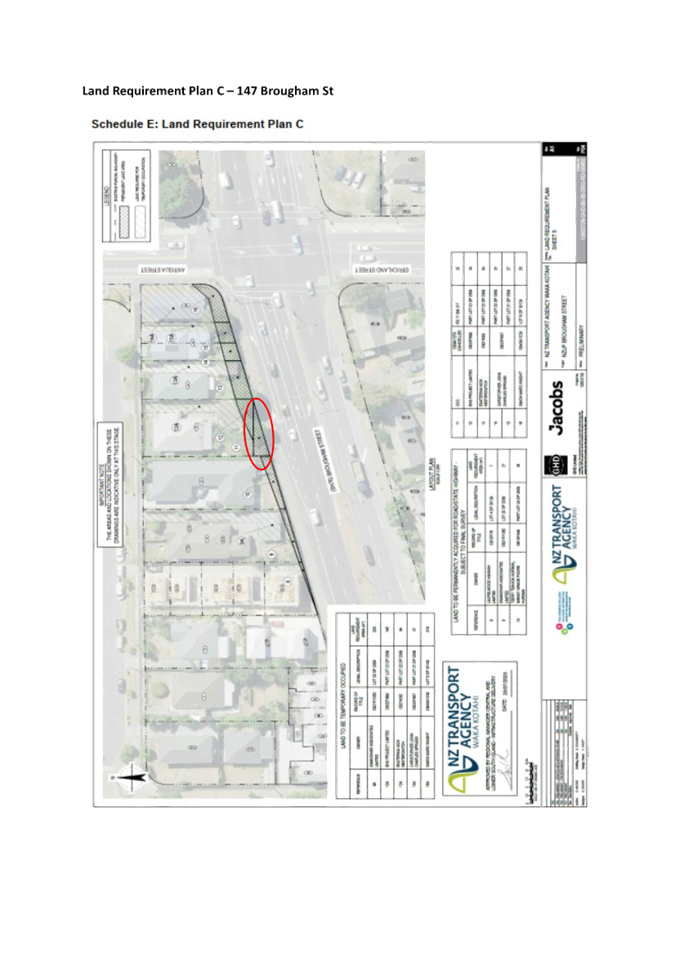
(cancelled) shown hatched black and circled red on Land Requirement Plan Area
C on the agenda report in Attachment A, located at 147 Brougham
St, Christchurch.
4. Delegate authority to the Property
Consultancy Manager to do all things necessary at his sole discretion to give
effect to this resolution and transactions.
|
|
2. Waihoro
Spreydon-Cashmere-Heathcote Community Board Decisions Under Delegation Ngā Mana kua Tukuna
|
|
|
Officer Recommendations accepted without change
Part C
That the
Waihoro Spreydon-Cashmere-Heathcote Community Board:
5. Receives the information in the Land
disposal - NZTA SH76 Brougham St Corridor Improvements Report.
6. Notes that the decisions in this report are assessed as low
significance based on the Christchurch City Council’s Significance and
Engagement Policy.
|
In addition to the attached documents, the following background
information is available:
|
Document
Name – Location / File Link
|
|
Not
applicable
|
Attachments Ngā Tāpirihanga
|
No.
|
Report Title
|
Reference
|
Page
|
|
1
|
Land disposal - NZTA SH76 Brougham St
Corridor Improvements
|
26/516912
|
123
|
|
No.
|
Title
|
Reference
|
Page
|
|
a ⇩
|
NZTA Land Requirement Plans
|
26/677529
|
131
|
|
b ⇩ 
|
Photos of required land
|
26/677246
|
134
|
|
Land disposal - NZTA SH76 Brougham St Corridor Improvements
|
|
Reference Te Tohutoro:
|
26/516912
|
|
Responsible Officer(s) Te Pou Matua:
|
Sarah
Stuart, Property Consultant
Daisy-Bea Scrase - Engagement Advisor
|
|
Accountable ELT Member Pouwhakarae:
|
Andrew
Rutledge, General Manager Citizens and Community
|
1. Purpose and Origin of the Report Te Pūtake Pūrongo
1.1 The
purpose of this report is to seek a recommendation from the Waihoro
Spreydon-Cashmere-Heathcote Community Board that Council resolve to:
Dispose of three parcels of land totalling 787m2 to the
Minister of Land Information as transfers of existing public works under
Section 50 of the Public Works Act 1981 (PWA).
1.2 The
report is initiated by staff after a request from The Property Group (TPG) on
behalf of the New Zealand Transport Agency (NZTA) to enter into a Memorandum of
Agreement (Agreement) pursuant to the PWA. The affected land is required
by the Crown for roading purposes for the SH76 Brougham Street Corridor
Improvements project (“the Project”).
1.3 There is no general delegation to staff to make a decision to
dispose of property, including in this context.
1.4 Public consultation was required for two affected parcels that are
part of Council parks at Selwyn St and Antigua St, in accordance with s138
Local Government Act 2002 (LGA).
2. Officer Recommendations Ngā Tūtohu
That the Waihoro Spreydon-Cashmere-Heathcote Community Board
recommends that the Council:
1. Receives the information in the Land
disposal - NZTA SH76 Brougham St Corridor Improvements Report.
2. Notes that the decisions in this report are assessed as low significance
based on the Christchurch City Council’s Significance and Engagement
Policy.
3. Dispose of the parcels of land described below (subject to survey)
and identified in Attachment A to the Minister for Land Information for roading
purposes as transfers of existing public works under Section 50 of the Public
Works Act 1981.
a. Part Lot 1 Deposited Plan 44707, held in title CB31B/145, shown
hatched black on “Land Requirement Plan Area A” in Attachment A,
located at 45 Somerset Cres;
b. Part Lot 1 Deposited Plan 37130, held in title CB16F/906, shown
hatched black on “Land Requirement Plan Area B” in Attachment A,
located south of 32 Antigua St, and
c. Part RS 17, held in title CB 9A/1278 (cancelled) shown hatched black
and circled red on Land Requirement Plan Area C in Attachment A, located at 147
Brougham St, Christchurch.
4. Delegate authority to the Property Consultancy Manager to do all
things necessary at his sole discretion to give effect to this resolution and
transactions.
That the Waihoro Spreydon-Cashmere-Heathcote Community Board:
5. Receives the information in the Land
disposal - NZTA SH76 Brougham St Corridor Improvements Report.
6. Notes that the decisions in this report are assessed as low significance
based on the Christchurch City Council’s Significance and Engagement
Policy.
3. Executive Summary Te Whakarāpopoto Matua
3.1 The
Crown requires a total of 787m2 of land from the Council for the
SH76 Brougham St Improvements project, as a disposal of land for another public
work under section 50 PWA.
3.2 The
land comes from three separate parcels, two of which are small Council parks at
Selwyn St, and Antigua St. The third is a remnant parcel resulting from
subdivision over time.
3.3 Section
138 of the Local Government Act 2002 required public consultation prior to the
disposal of any Council parks (or part of).
3.4 Consultation
ran from 20 March 2026 to 6 April 2026 with 10 submissions received. 50%
were generally supportive of the sale of part of Somerset Reserve for the
project, and 70% generally supportive of the sale of part of Antigua Reserve.
3.5 Supporters
considered the amount of land required to be minimal relative to the wider
benefits to the community including improved cycling safety. They noted
positively the proposed two-for-one tree replacement.
3.6 Opposers
emphasised the importance of retaining green space and raised concerns about
the loss of park amenity at Somerset Reserve. They anticipated a negative
impact from the project on pedestrians at the Antigua and Selwyn St
intersections and questioned the need for change given existing right-turn
facilities at Selwyn St.
3.7 Notwithstanding
the submissions in opposition, the recommendation in this report is to proceed
with the transfer as on balance the benefits of this project outweigh the
disadvantages. It also needs to be considered that this is a significant
infrastructure project to be delivered by NZTA which is an acquiring authority.
3.8 This
consultation and decision are about disposal not NZTA’s design. The
design aspects of this project have previously been through NZTA’s
consultation process and are well developed taking into consideration traffic
and pedestrian safety considerations. Concerns related to green space have been
considered by the Parks Planners who advise that this project does not have a
significant impact. Through the Agreement the Council has input into the
project’s landscaping plans.
3.9 The
Crown will pay compensation of $122,000 (plus GST if any) to the Council for
the required land (subject to survey), reasonable valuation and legal fees
incurred, and $9,300 (plus GST if any) to cover staff costs.
4. Background/Context Te Horopaki
Land required by the Crown
4.1 The
Crown requires three parcels of Council-owned land (Required Land) at 45
Somerset Cres, 32 Antigua St (south of), and 147 Brougham St for the SH76
Brougham St Corridor Improvements project. The Somerset and Antigua St
parcels of the land are part of community parks, the third is a remnant parcel
from subdivision. The three parcels required are shown hatched black on
the NZTA Land Requirement Plans for Areas A, B & C (Attachment A), with
photos provided in Attachment B.
4.2 The
required land is not subject to the Reserves Act 1977. Two parcels
are held as park and required consultation before disposal per Section 138
Local Government Act 2002. Consultation ran from 20 March 2026 to 6 April
2026.
4.3 Feedback
from consultation was mixed. A total of 10 submissions were received,
comprising one recognised organisation and nine individual
submitters. A summary of submissions is provided in Points 6.10
– 6.16 in this report.
Compensation
4.4 Compensation
under the PWA is based on the valuation obtained jointly by the parties.
This assessed total compensation payable to the Council of $122,000 plus GST
(if any). The compensation for the individual parcels of land is
below. No injurious affection applied.
Area A –
45 Somerset Crescent $105,000
Area B -
32 Antigua St (south of) $
5,000
Area C –
147 Brougham St $
12,000
Required
Process
4.5 The
Agreement is entered into by the parties acting pursuant to Section 50
PWA. This enables a local authority to dispose of an existing public work
to another Minister or local authority for an alternative public work.
4.6 The
resolution of the Council to dispose of the Required Land will provide the
authority for the Council to sign the Agreement pursuant to the PWA.
4.7 The
Council, in the signed Agreement, consents to the Required Land being declared
road for the purposes of section 114 PWA. The relevant documents are then
provided by the Crown to the Minister for Land Information for his approval to
publish a gazette under s20 PWA declaring the land to be set apart for another
public work and then declared to be a road. This will happen upon
completion of the works and survey.
4.8 Because
the Required Land is being acquired for another public work, the provisions of
the PWA under the normal regime for the disposal of land held for a public work
e.g. offer back obligations or any other disposal obligations do not apply
(section 50(3) PWA).
4.9 The
Crown will obtain all ministerial consents required, attend to the legalisation
processes, and reimburse the Council’s reasonable valuation and legal
fees including a contribution towards the cost of staff time.
4.10 The following related memos/information were circulated to the
meeting members:
|
Date
|
Subject
|
|
18.03.2026
|
Note to Board - Land disposal for SH76
Brougham St improvements
|
|
19.03.2026
|
Antigua: Note to Board - Land disposal
for SH76 Brougham St improvements
|
|
20.03.2026
|
Consultation now live for proposed land
disposal
|
4.11 The following related information session/workshops have taken place
for the members of the meeting:
Options Considered Ngā
Kōwhiringa Whaiwhakaaro
4.12 The following
reasonably practicable options were considered and are assessed in this report:
4.12.1 Dispose of the Required
Land.
4.12.2 Retain the Required Land.
4.13 No other options
were considered.
Options Descriptions Ngā
Kōwhiringa
4.14 Preferred
Option: Dispose of Required Land
4.14.1 Option Description: Dispose
of Required Land to the Crown for another public work.
4.14.2 Option Advantages
· Facilitates the Crown’s SH76 Brougham St Corridor improvement
project.
· Traffic congestion on Brougham St will be improved because of the
project.
· Improved shared and active transportation
4.14.3 Option Disadvantages
· Diminished areas of the Selwyn and Antigua St parks.
· Recent upgrade to Selwyn Street Park impacted
· Some tree removal required
4.15 Whilst there are
some negative impacts at a local level, the decision to dispose of the land
will facilitate a project expected to help reduce traffic congestion, support
reliable freight movement, encourage more people to choose active and shared
transport options, and create long-term benefits for the community, economy and
environment.
4.15.1 Option Description: Retain
the required land.
4.15.2 Option Advantages
· Temporarily maintains the status quo.
4.15.3 Option Disadvantages
· Impedes progress of the SH76 Brougham St Corridor improvement works.
· Forces the Crown’s hand to consider their options such as
political escalation or exercising PWA compulsory acquisition powers.
· Extends the period of traffic congestion.
Analysis Criteria Ngā Paearu
Wetekina
4.16 The criteria for
the options above were analysed by comparing the benefits of retaining the land
against those of disposing of it at local and wider community levels.
5. Financial Implications Ngā Hīraunga Rauemi
Capex/Opex Ngā Utu Whakahaere
|
|
Recommended Option
|
Option 2 – Retain required land
|
|
Cost to Implement
|
Costs reimbursed by NZTA.
|
Nil
|
|
Maintenance/Ongoing Costs
|
Nil
|
Council continues to maintain site at
existing level.
|
|
Funding Source
|
N/A
|
N/A
|
|
Funding Availability
|
N/A
|
N/A
|
|
Impact on Rates
|
N/A
|
N/A
|
5.1 NZTA
is required to meet the Council’s legal and valuation costs and has
agreed on an additional payment for staff costs incurred. Compensation
will be paid for the land required.
6. Considerations Ngā Whai Whakaaro
Risks and Mitigations Ngā
Mōrearea me ngā Whakamātautau
6.1 There
is a high risk of delays to the NZTA project if the land transfer is not
approved.
6.2 NZTA
requires certainty on land acquisition before tenders for construction are
sought in May 2026. If the acquisition of land is not certain at this
time, there is a probable risk that NZTA will escalate the matter to ensure
project timeframes are not compromised.
6.3 Whilst
possible, it would be highly unusual for the Crown to need to use its
compulsory powers under the Public Works Act. The Minister would expect
the respective roading authorities to reach agreement on the transfer of land
required for a major project that will benefit the area’s overall
transport network.
Legal Considerations Ngā
Hīraunga ā-Ture
6.4 Statutory
and/or delegated authority to undertake proposals in the report:
6.4.1 The Council
has full capacity to carry on or undertake any activity as prescribed in s12 of
the Local Government Act 2002. There is however no staff delegation to
dispose of land.
6.5 Other Legal Implications:
6.5.1 Section 138 of
the Local Government Act 2002 requires the Council to consult on the disposal
of any part of a park owned by the Council before it disposes of it.
6.5.2 Section 50 of
the Public Works Act 1981 provides for the disposal of any existing public work
(or part of) to another Minister or local authority for an alternative public
work.
Strategy and Policy Considerations Te Whai
Kaupapa here
6.6 The
required decision:
6.6.1 Aligns with
the Christchurch
City Council’s Strategic Framework. Strategic
priority to balance the needs of today and the future.
6.6.2 Is assessed as
Low significance based on the Christchurch
City Council’s Significance and Engagement Policy. The level of
significance was determined by considering the impact of the decision on users
of the local parks, the benefits to ratepayers, and the degree of reversibility
of the decision.
6.6.3 Is consistent with Council’s Plans and Policies. It complies with the
Disposal of Council Property Policy (2000).
6.6.4 The
Council’s Disposal of Council Property Policy 2000 requires that
properties be publicly tendered unless there is a clear reason for doing
otherwise. The policy also recognises that where there is only one logical
purchaser, this constitutes a legitimate and defensible reason for not
undertaking a public tender process.
6.6.5 In
the case of this transaction, the proposed disposal is reactive to an
unsolicited proposal from NZTA for the transfer of the land to the Crown for
another public work. The PWA land acquisition by NZTA is required for its
$100-$150m project to improve the SH76 Brougham St corridor. The Transport Unit
is aware and supportive of the NZTA project.
6.6.6 Accordingly, the proposed direct sale to the Crown for
another public work meets the policy requirement that a public tender may be
bypassed where there is a clear rationale for doing so. This transaction
therefore complies with the Council’s Disposal of Council Property Policy
2000, and approval is sought from the Council as required for all disposals of
Council land.
6.7 This
report supports the Council's
Long Term Plan (2024 - 2034):
6.8 Transport
6.8.1 Activity: Transport
· Level of Service: 10.5.42 Increase the
infrastructure provision for active and public modes - >= 635 kilometres
(total combined length)
6.9 Disposal of the affected properties
under s50 PWA allows the improvement and increased infrastructure provision of
Brougham St, including for active and public modes of transport.
Community Impacts and Views Ngā Mariu
ā-Hāpori
6.10 Consultation
started on 20 March and ran until 6 April 2026.
6.11 Project
details including links to the Kōrero
mai | Let’s Talk webpage were advertised
via:
· An email sent to Kōrero Mai subscribers, Addington Te Kura
Taumatua and Addington Methodist Church
· Flyers dropped to residents surrounding both reserves
· A sign at Somerset Reserve.
6.12 The Kōrero mai |
Let’s Talk page had 206 views throughout the consultation period.
Summary of Submissions Ngā
Tāpaetanga
6.13 Submissions were
made by one recognised organisation, and nine individuals. All submissions are
available on our Kōrero
mai | Let’s Talk webpage.
6.14 Spokes
Canterbury requested that as part of the land acquisition, Council ask NZTA
for additional safety funding for cyclists and pedestrians in this area as
compensation. They were in support of the sale of Antigua Reserve.
6.15 Submitters
supported the sales for the following reasons:
· Providing cycling facilities on Brougham Street will make cycling
safer and benefit the community (3)
· Replacing the trees lost two for one is a positive (2)
· The amount of land lost is minimal for high benefit (2)
6.16 Submitters
opposed the sales for the following reasons:
· Green space is important (3)
· There are already right turn lanes for Selwyn Street (2)
· Losing park space at Somerset Reserve will make it less enjoyable
(2)
· Widening Brougham Street will make it less safe for pedestrians and
cyclists (2)
6.17 The decision
affects the following wards/Community Board areas:
6.17.1 Spreydon, Cashmere and Heathcote wards and the Waihoro
Spreydon-Cashmere-Heathcote Community Board.
6.18 The Community Board’s view has not been canvassed ahead of this report.
Impact on Mana Whenua Ngā Whai Take
Mana Whenua
6.19 The decision does not involve a significant
decision in relation to ancestral land, a body of water or other elements of
intrinsic value, therefore this decision does not
specifically impact Mana Whenua, their culture, and traditions.
6.20 The decision does not involve a
matter of interest to Mana Whenua and will not impact
on our agreed partnership priorities with Ngā Papatipu
Rūnanga.
6.21 The land has no
customary uses or ongoing Mana Whenua activities and does not impact Mana
Whenua.
Climate Change Impact Considerations Ngā
Whai Whakaaro mā te Āhuarangi
6.22 The decisions in
this report are likely to:
6.22.1 Contribute positively to
adaptation to the impacts of climate change.
6.22.2 Contribute positively to emissions reductions.
6.23 The decision to
dispose of the land will facilitate the SH76 Brougham St Corridor improvements
which aim to reduce emissions through the introduction of T2 lanes, improved
active transport options and transportation efficiency.
7. Next Steps Ngā Mahinga ā-muri
7.1 Proceed
with disposal. This involves the signing of the Memorandum of Agreement,
settlement and the transfer of the land parcels to the Crown. NZTA will
arrange the necessary survey and legalisation once the project is constructed
and complete.
Attachments Ngā Tāpirihanga
|
No.
|
Title
|
Reference
|
Page
|
|
a
|
NZTA Land
Requirement Plans
|
26/677529
|
|
|
b
|
Photos of
required land
|
26/677246
|
|
In addition to the attached documents, the following background
information is available:
|
Document
Name – Location / File Link
|
|
Not
applicable
|
Signatories Ngā Kaiwaitohu
|
Authors
|
Sarah Stuart -
Property Consultant
Daisy-Bea
Scrase - Engagement Advisor
|
|
Approved By
|
Angus Smith -
Manager Property Consultancy
Kelly Hansen -
Manager Parks Planning & Asset Management
Rupert Bool -
Head of Parks
|
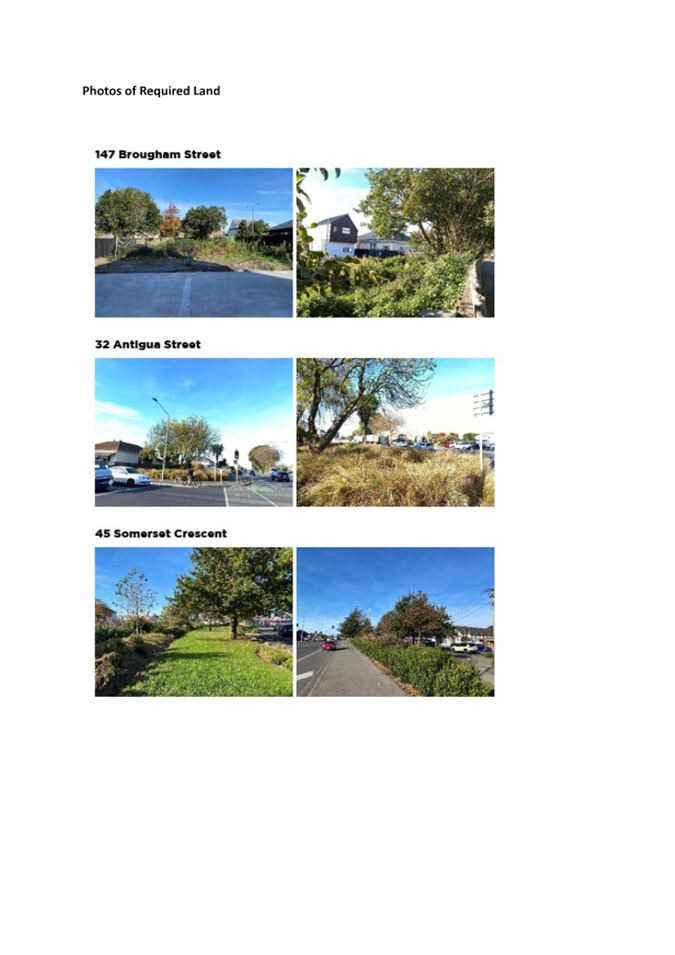
Report from Waihoro
Spreydon-Cashmere-Heathcote Community Board – 16 April 2026
|
12. Sumner
Tennis Club Proposed Lease: Post Consultation Report
|
|
Reference Te Tohutoro:
|
26/810154
|
|
Responsible Officer(s) Te Pou Matua:
|
David
Little, Manager Residential Red Zone and Rupert Bool, Head of Parks
|
|
Accountable ELT Member Pouwhakarae:
|
Andrew
Rutledge, General Manager Citizens and Community
|
|
1. Consideration Te
Whaiwhakaarotanga
|
|
|
1. The Board
considered the deputations (Items 5.1 and 5.2) before deciding its
recommendations.
2. The
Board agreed the officer recommendations with additions at Part C resolution
9 and Part A 4 (a), (d) and (h).
|
|
2. Recommendation
to Council
|
|
|
Part A
That the Council:
1. Receives the information in the Sumner
Tennis Club Proposed Lease: Post-Consultation Report.
2. Notes that the decision in this report is
assessed as low significance based on the Christchurch City Council’s
Significance and Engagement Policy.
3. Notes that public consultation was carried
out in accordance with the Local Government Act 2002 as authorised by the
Community Board's resolution of 11 May 2023.
4. Approve a lease of up to 35 years less one
day to Sumner Tennis and Squash Club Incorporated over the land at 8–14
Heberden Avenue and 140 Nayland Street, as shown on the agenda report in
Attachment B, with the annual rental set in accordance with the Council's
Sports Lease Charges Policy, and subject to the following conditions:
a. The permitted use is restricted to tennis
courts and associated activity only, unless approved by the Council;
b. Hours of operation to be determined through
the Resource Consent process, with the Club required to implement access
controls to enforce approved hours;
c. Low-noise court surfaces and sound-dampening
curtains on court fencing to be installed;
d. That within consented hours of use, and when
not in active use for club activity, the courts remain accessible without
costs to members of the public;
e. Cycle parking to be provided on site;
f. The Club to maintain the berm on the leased
frontages;
g. Planting on boundaries adjacent to
residential properties to be maintained at a maximum height of 2 metres, to
be confirmed through the Resource Consent process;
h. That the
courts be moved as close as safely as possible to the cliff end of the park
to reduce impact on neighbours. Requests
the Manager Property Consultancy take all steps necessary to give effect to
the above resolutions, including completing negotiations and finalising and
administering the lease documentation, and making any minor amendments
required to give effect to these resolutions.
5. Requests the Manager Property Consultancy
take all steps necessary to give effect to the above resolutions, including
completing negotiations and finalising and administering the lease
documentation, and making any minor amendments required to give effect to
these resolutions.
|
|
3. Officer Recommendations Ngā Tūtohu
|
|
|
That the
Waihoro Spreydon-Cashmere-Heathcote Community Board recommends that the
Council:
1. Receives
the information in the Sumner Tennis Club Proposed Lease: Post-Consultation
Report.
2. Notes
that the decision in this report is assessed as low significance based on the
Christchurch City Council’s Significance and Engagement Policy.
3. Notes
that public consultation was carried out in accordance with the Local
Government Act 2002 as authorised by the Community Board's resolution of 11
May 2023.
4. Approve
a lease of up to 35 years less one day to Sumner Tennis and Squash Club
Incorporated over the land at 8–14 Heberden Avenue and 140 Nayland
Street, as shown in Attachment B, with the annual rental set in accordance
with the Council's Sports Lease Charges Policy, and subject to the following
conditions:
a. The
permitted use is restricted to tennis courts and associated activity only;
b. Hours
of operation to be determined through the Resource Consent process, with the
Club required to implement access controls to enforce approved hours;
c. Low-noise
court surfaces and sound-dampening curtains on court fencing to be installed;
d. Signage
to be installed on both street frontages advising courts are available for
public use subject to club activities;
e. Cycle
parking to be provided on site;
f. The
Club to maintain the berm on the leased frontages;
g. Planting
on boundaries adjacent to residential properties to be maintained at a
maximum height of 2 metres, to be confirmed through the Resource Consent
process.
7. Requests
the Manager Property Consultancy take all steps necessary to give effect to
the above resolutions, including completing negotiations and finalising and
administering the lease documentation, and making any minor amendments
required to give effect to these resolutions.
That the Waihoro Spreydon-Cashmere-Heathcote Community
Board:
8. Receives
the information in the Sumner Tennis Club Proposed Lease: Post-Consultation
Report.
9. Notes
that the decision in this report is assessed as low significance based on the
Christchurch City Council’s Significance and Engagement Policy.
10. Notes
that public consultation was carried out in accordance with the Local
Government Act 2002 as authorised by the Community Board's resolution of 11
May 2023.
|
|
4. Decisions Under Delegation Ngā Mana kua Tukuna
|
|
|
Part C
That the
Waihoro Spreydon-Cashmere-Heathcote Community Board:
6. Receives the information in the Sumner
Tennis Club Proposed Lease: Post-Consultation Report.
7. Notes that the decision in this report is assessed as low
significance based on the Christchurch City Council’s Significance and
Engagement Policy.
8. Notes that public consultation was carried out in accordance with
the Local Government Act 2002 as authorised by the Community Board's
resolution of 11 May 2023.
9. Asks
staff to investigate parking ticks on Naylan Street and Wiggins Street to
help mitigate parking concerns.
|
In addition to the attached documents, the following background
information is available:
|
Document
Name – Location / File Link
|
|
Not
applicable
|
Attachments Ngā Tāpirihanga
|
No.
|
Title
|
Reference
|
Page
|
|
a ⇩
|
Sumner Tennis Club Proposed Lease:
Post-Consultation Report
|
26/809983
|
138
|
|
b ⇩
|
Sumner Tennis Lease Concept Plan
|
2026/0810274
|
147
|
|
c ⇩
|
Sumner Tennis Proposed Lease Area
|
2026/0810257
|
162
|
|
d ⇩
|
Sumner Tennis and Squash Court Lease
- Opposing Views - STSC reply
|
2026/0810295
|
163
|
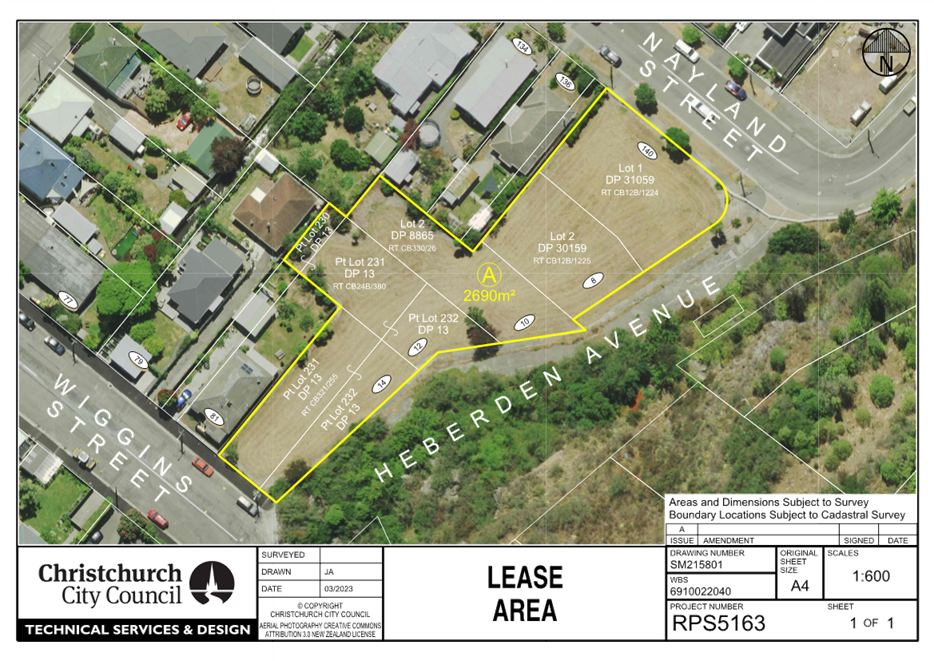
Report from Waitai Coastal-Burwood-Linwood Community Board – 7 April
2026
|
13. Brighton
Mall Upgrade
|
|
Reference Te Tohutoro:
|
26/717746
|
|
Responsible Officer(s) Te Pou Matua:
|
Marcy
McCallum, Project Manager, Transport and Waste Unit
|
|
Accountable ELT Member Pouwhakarae:
|
Brent
Smith, General Manager City Infrastructure
|
|
1. Waitai Coastal-Burwood-Linwood Community Board Recommendation to Council
|
|
|
Original Officer
Recommendations accepted without change
Part A
That the Council:
1. Declares that pursuant to Section 336 (8) of
the Local Government Act 1974, the 16 February 1981 Special Order of Council
and subsequent amendments of conditions to that Special Order, that created
the Pedestrian Mall (known as Brighton Mall) on Brighton Mall, from its
intersection with Marine Parade to its intersection with the Brighton Mall
slow road (between 2 Brighton Mall and 56 Brighton Mall), be revoked.
2. Approves that, in accordance with Clause 20
of the Christchurch City Council Traffic & Parking Bylaw 2017, that
Brighton Mall commencing at a point approximately 65 metres north of its
intersection with Beresford Street, and extending in a easterly direction to
its intersection with Marine Parade, be declared a Shared Zone as detailed on
plan TP366001, dated 10/03/2026 and attached to the agenda report as Attachment
A.
3. Approves, pursuant to Clause 20 (2) of the
Christchurch City Council Traffic and Parking Bylaw 2017, that the use of
vehicles is restricted at any time on Brighton Mall (between 2 Brighton Mall
and 56 Brighton Mall). This restriction does not apply to the following:
a. Cycles at any time.
b. Emergency vehicles at any time.
c. Street cleaning vehicles, rubbish collection
vehicles and street maintenance vehicles operated by the Christchurch City
Council or its nominated contractor, at any time.
d. Goods vehicles, for the purposes of
deliveries for a maximum period of 10 minutes between the hours of
5:00am and 11:00am, on any day.
4. Approves, in accordance with Clause 16 (1)
of the Christchurch City Council Traffic and Parking Bylaw 2017, that
Brighton Mall, commencing at a point approximately 65 metres north of its
intersection with Beresford Street, and extending in an easterly direction to
its intersection with Marine Parade, be a one-way street, where vehicles must
travel in an easterly direction only. This restriction does not apply to
cyclists or emergency vehicles requiring access in an emergency situation.
Pursuant to
Section 2.6 of the Land Transport Rule: Setting of Speed Limits 2024, and
subject to the approval of the Director of Land Transport:
5. In relation to the speed limit on Brighton
Mall commencing at a point 65 metres north of its intersection with Beresford
Street and extending in an easterly direction to Marine Parade
a. Revokes the existing permanent speed limit
of 30 km/h.
b. Sets a permanent speed limit of 10 km/h.
|
|
2. Waitai
Coastal-Burwood-Linwood Community Board Decisions Under Delegation Ngā Mana kua Tukuna
|
|
|
Original
Officer Recommendations accepted without change
Part C
That the
Waitai Coastal-Burwood-Linwood Community Board:
6. Receives the information in the Brighton
Mall Upgrade Report.
7. Notes that the decision in this report is assessed as medium
significance based on the Christchurch City Council’s Significance and
Engagement Policy.
8. Approves the Brighton Mall Upgrade Landscape Plan, as shown in
agenda Attachment B to progress to detailed design and construction.
9. Revokes any previous resolutions pertaining to kerb lines, traffic
calming devices, traffic controls, parking, and stopping restrictions made
pursuant to any bylaw to the extent that they are in conflict with the
traffic calming, parking and stopping restrictions described in the
recommendations below.
10. Approves all kerb alignments, road surface treatments, traffic
calming devices, signage and road markings on Brighton Mall, commencing at a
point approximately 65 metres north of its intersection with Beresford
Street, and extending in an easterly direction to its intersection with
Marine Parade, as detailed on plan TP366001, dated 10/03/2026 and attached to
the agenda report as Attachment A.
11. Approves that stopping or parking in any part of the Shared Zone,
if approved in recommendation 2 above, be prohibited in accordance with
Clause 7 of the Christchurch City Council Traffic & Parking Bylaw 2017
except for:
a. Cycles.
b. Emergency vehicles.
c. Street cleaning vehicles, rubbish collection vehicles and street
maintenance vehicles operated by the Christchurch City Council or its
nominated contractor, at any time.
d. Trade and other vehicles (including those operated by service
authorities) of any class, at specified times if authorised to do so by the
Council officer who holds the position of Head of Transport at that time.
e. Goods vehicles, for the purposes of deliveries for a maximum
period of 10 minutes between the hours of 5:00am and 11:00am, on any day.
12. Approves that in accordance with Clause 17(3) of the Christchurch
City Council Traffic and Parking Bylaw 2017 that a No Entry control be placed
against westbound motor vehicles using the roadway on Brighton Mall at its
intersection with Marine Parade.
13. Approves that in accordance with Clause 17(1) (a) of the
Christchurch City Council Traffic and Parking Bylaw 2017, the Brighton Mall
easterly approach, right turn into Marine Parade, be prohibited.
14. Approves that in accordance with Clause 17(1) (a) of the
Christchurch City Council Traffic and Parking Bylaw 2017 that the Marine
Parade northerly approach, left turn into Brighton Mall be prohibited.
15. Approves that in accordance with Clause 17(1) (a) of the
Christchurch City Council Traffic and Parking Bylaw 2017 that the Marine
Parade southerly approach, right turn into Brighton Mall be prohibited.
General approval
16. Approve that these resolutions take effect when parking signage
and/or road marking that evidence the restrictions described in the staff
report are in place (or removed in the case of revocations).
Trees
17. Approves the removal of two of the Pheonix Palm trees in Brighton
Mall as detailed in agenda Attachment C. A decision on the viability
of relocating these two trees will be made by Council Arborists once the
surfacing around the trees has been removed to allow assessment of the root
structure. If relocation is possible, Parks staff have expressed a willingness
to have the palms transports to a suitable local park location. A possible
location that is being considered is Broad Park.
a. Tree 43694 (27 Brighton Mall). This is a Phoenix Palm and is in
fair condition.
b. Tree 43695 (34 Brighton Mall). This is a Phoenix Palm and is in
fair condition.
|
In addition to the attached documents, the following background
information is available:
|
Document
Name – Location / File Link
|
|
Not
applicable
|
Attachments Ngā Tāpirihanga
|
No.
|
Report Title
|
Reference
|
Page
|
|
1
|
Brighton Mall Upgrade
|
25/2658876
|
174
|
|
No.
|
Title
|
Reference
|
Page
|
|
a ⇩
|
Brighton Mall Upgrade - Signage Plan
for Approval
|
26/490686
|
193
|
|
b ⇩
|
Brighton Mall Upgrade - Landscape
Plan for Board Approval
|
26/490659
|
194
|
|
c ⇩
|
Brighton Mall Upgrade - Tree Plan for
Board Approval
|
26/490671
|
195
|
|
d ⇩
|
Brighton Mall Upgrade - Submission
breakdown
|
26/434840
|
196
|
|
Brighton Mall Upgrade
|
|
Reference Te Tohutoro:
|
25/2658876
|
|
Responsible Officer(s) Te Pou Matua:
|
Marcy
McCallum, Project Manager, Transport and Waste Unit
Kiran Skelton, Engagement Advisor
|
|
Accountable ELT Member Pouwhakarae:
|
Brent
Smith, General Manager City Infrastructure
|
1. Purpose and Origin of the Report Te Pūtake Pūrongo
1.1 The
purpose of this report is for the Waitai Coastal-Burwood-Linwood Community
Board to approve the Brighton Mall Upgrade Landscape Plan following community
consultation.
1.1.1 It is also for
the Waitai Coastal-Burwood-Linwood Community Board to make recommendations to
Council for the items within the proposed design that rest with Council for
decision making.
1.2 The
report has been written to enable the project to proceed into detailed design
and then construction.
1.3 The
report has been written to address action A4 of the New Brighton Centre
Masterplan 2015.
1.4 This
is a staff generated report.
2. Officer Recommendations Ngā Tūtohu
That the Waitai
Coastal-Burwood-Linwood Community Board recommends that the Council:
1. Declares that pursuant to Section 336 (8) of the Local Government
Act 1974, the 16 February 1981 Special Order of Council and subsequent
amendments of conditions to that Special Order, that created the Pedestrian
Mall (known as Brighton Mall) on Brighton Mall, from its intersection with
Marine Parade to its intersection with the Brighton Mall slow road (between 2
Brighton Mall and 56 Brighton Mall), be revoked.
2. Approves that, in accordance with Clause 20 of the Christchurch City
Council Traffic & Parking Bylaw 2017, that Brighton Mall commencing at a
point approximately 65 metres north of its intersection with Beresford Street,
and extending in a easterly direction to its intersection with Marine Parade,
be declared a Shared Zone as detailed on plan TP366001, dated 10/03/2026 and
attached to the agenda report as Attachment A.
3. Approves, pursuant to Clause 20 (2) of the Christchurch City Council
Traffic and Parking Bylaw 2017, that the use of vehicles is restricted at any
time on Brighton Mall (between 2 Brighton Mall and 56 Brighton Mall). This
restriction does not apply to the following:
a. Cycles at any time.
b. Emergency vehicles at any time.
c. Street cleaning vehicles, rubbish collection vehicles and street
maintenance vehicles operated by the Christchurch City Council or its nominated
contractor, at any time.
d. Goods vehicles, for the purposes of deliveries for a maximum
period of 10 minutes between the hours of 5:00am and 11:00am, on any day.
4. Approves, in accordance with Clause 16 (1) of the Christchurch City
Council Traffic and Parking Bylaw 2017, that Brighton Mall, commencing at a
point approximately 65 metres north of its intersection with Beresford Street,
and extending in an easterly direction to its intersection with Marine Parade,
be a one-way street, where vehicles must travel in an easterly direction only.
This restriction does not apply to cyclists or emergency vehicles requiring
access in an emergency situation.
Pursuant to Section
2.6 of the Land Transport Rule: Setting of Speed Limits 2024, and subject to
the approval of the Director of Land Transport:
5. In relation to the speed limit on Brighton Mall commencing at a
point 65 metres north of its intersection with Beresford Street and extending
in an easterly direction to Marine Parade
a. Revokes the existing permanent speed limit of 30 km/h.
b. Sets a permanent speed limit of 10 km/h.
That the Waitai
Coastal-Burwood-Linwood Community Board:
6. Receives the information in the Brighton
Mall Upgrade Report.
7. Notes that the decision in this report is assessed as medium
significance based on the Christchurch City Council’s Significance and
Engagement Policy.
8. Approves the Brighton Mall Upgrade Landscape Plan, as shown in agenda
Attachment B to progress to detailed design and construction.
9. Revokes any previous resolutions pertaining to kerb lines, traffic
calming devices, traffic controls, parking, and stopping restrictions made
pursuant to any bylaw to the extent that they are in conflict with the traffic
calming, parking and stopping restrictions described in the recommendations
below.
10. Approves all kerb alignments, road surface treatments, traffic
calming devices, signage and road markings on Brighton Mall, commencing at a
point approximately 65 metres north of its intersection with Beresford Street,
and extending in an easterly direction to its intersection with Marine Parade,
as detailed on plan TP366001, dated 10/03/2026 and attached to the agenda
report as Attachment A.
11. Approves that stopping or parking in any part of the Shared Zone, if
approved in recommendation 2 above, be prohibited in accordance with Clause 7
of the Christchurch City Council Traffic & Parking Bylaw 2017 except for:
a. Cycles.
b. Emergency vehicles.
c. Street cleaning vehicles, rubbish collection vehicles and street
maintenance vehicles operated by the Christchurch City Council or its nominated
contractor, at any time.
d. Trade and other vehicles (including those operated by service
authorities) of any class, at specified times if authorised to do so by the
Council officer who holds the position of Head of Transport at that time.
e. Goods vehicles, for the purposes of deliveries for a maximum
period of 10 minutes between the hours of 5:00am and 11:00am, on any day.
12. Approves that in accordance with Clause 17(3) of the Christchurch
City Council Traffic and Parking Bylaw 2017 that a No Entry control be placed
against westbound motor vehicles using the roadway on Brighton Mall at its
intersection with Marine Parade.
13. Approves that in accordance with Clause 17(1) (a) of the
Christchurch City Council Traffic and Parking Bylaw 2017, the Brighton Mall
easterly approach, right turn into Marine Parade, be prohibited.
14. Approves that in accordance with Clause 17(1) (a) of the
Christchurch City Council Traffic and Parking Bylaw 2017 that the Marine Parade
northerly approach, left turn into Brighton Mall be prohibited.
15. Approves that in accordance with Clause 17(1) (a) of the
Christchurch City Council Traffic and Parking Bylaw 2017 that the Marine Parade
southerly approach, right turn into Brighton Mall be prohibited.
General approval
16. Approve that these resolutions take effect when parking signage
and/or road marking that evidence the restrictions described in the staff
report are in place (or removed in the case of revocations).
Trees
17. Approves the removal of two of the Pheonix Palm trees in Brighton
Mall as detailed in agenda Attachment C. A decision on the viability of
relocating these two trees will be made by Council Arborists once the surfacing
around the trees has been removed to allow assessment of the root structure. If
relocation is possible, Parks staff have expressed a willingness to have the
palms transports to a suitable local park location. A possible location that is
being considered is Broad Park.
a. Tree 43694 (27 Brighton Mall). This is a Phoenix Palm and is in fair
condition.
b. Tree 43695 (34 Brighton Mall). This is a Phoenix Palm and is in fair
condition.
3. Executive Summary Te Whakarāpopoto Matua
3.1 The
New Brighton Centre Masterplan identified the pedestrian mall (located between
2 Brighton Mall and 56 Brighton Mall) as a priority area for renewal to support
the regeneration of the town centre and encourage private development. Funding
for this project has been allocated through the Long-Term Plan.
3.2 Staff
worked closely with key stakeholders through the Better for Brighton meetings
facilitated by ChristchurchNZ. A significant amount of early engagement was
undertaken with stakeholders prior to the formal consultation period which ran
between 2 December 2025 and 1 February 2026.
3.3 Three
main options have been considered:
· Upgrade of Brighton Mall including the creation of a central
gathering area (noting this option involves the removal of two Phoenix Palm
trees) (Attachment B).
· Upgrade of Brighton Mall excluding the central gathering area
(noting this option will retain the two Phoenix Palm trees, but will not
include the central gathering area, cultural artwork and will require changes
to the paving design).
· Do nothing.
3.3.2 Staff have
also provided options to change this to a Shared Zone, and/or to reduce the
speed limit to 10km/h.
3.4 Staff
are recommending the option that includes the central gathering area because it
meets the community’s current and future needs for a high-quality public
realm, including flexible space for events and markets. It aligns with the
outcomes of the New Brighton Centre Masterplan, supports and encourages private
development, and provides adaptability should needs change in the future (for
example, if the Village Green needs to vacate at the end of its lease period).
3.4.1 Staff are
recommending options to change the designation from a pedestrian mall to a
shared zone, the reduction of the speed limit from 30km/hr to 10km/hr and the
relevant traffic resolutions that support the mall upgrade works and the
changes to designation and speed.
4. Background/Context Te Horopaki
Background
4.1 The New Brighton Centre Masterplan identified the
pedestrian mall as a priority area for renewal to support the regeneration of
the town centre and encourage private development. Funding for this project has
been allocated through the Long-Term Plan.
4.2 In 2019, the section of Marine Parade between Beresford
Street and Hawke Street was upgraded. During consultation for that project
(37865 Marine Parade Streetscape Enhancements), the community provided
feedback on the adjacent pedestrian mall, with key themes emerging around
seating, safety, lighting, and rubbish management. This feedback has helped to
inform the current landscape plan.
4.3 The primary objectives of the project are to renew existing
assets and create a welcoming, safe, and vibrant public space that aligns with
Crime Prevention Through Environmental Design (CPTED) principles. The upgraded
mall is intended to attract both the local community and visitors, contributing
to the revitalisation of the area.
Stakeholder Engagement
4.4 Pre-engagement was undertaken with key stakeholders through
the Better for Brighton group, chaired by ChristchurchNZ. This group included
representatives from the Greater New Brighton Trust (who have developed the
Village Green adjacent to the mall), Martini Investments (owners of over 12+
properties bordering the mall), the Coastal Ward Councillor and Community Board
member, ChristchurchNZ staff, and project representatives. The concept plan
received the group’s support.
4.5 Engagement with key stakeholders and general observations
identified that skateboarders and cyclists are currently using the space,
largely in a positive manner. However, under the existing ‘pedestrian
mall’ designation, these modes of transport are not permitted. To better
support active transport and the regeneration of the mall area, a change in
designation to a ‘shared zone’ was proposed to permit bicycles,
skateboards, and scooters to use the space. All users (motor vehicles,
bicycles, scooters, skateboards) would be required to adhere to the new posted
speed limit of 10km/hr.
4.6 During the investigation and design phase, potential issues
were identified with the existing legal speed limit through the pedestrian
mall. As a result, consultation was undertaken with the community to seek
feedback on reducing the speed limit from 30 km/h to 10 km/h. This change would
align with the proposed change to a shared zone and minimise the risks for all
users within this space.
4.7 The following related memos/information were circulated to the
meeting members:
|
Date
|
Subject
|
|
1.12.2025
|
Memo - Brighton Mall Upgrade –
update to elected members
|
4.8 The following related information
session/workshops have taken place for the members of the meeting:
Available Options
4.9 In
the options section below, there are options provided in 3 different
categories. These are:
· The layout of the mall upgrade
· Change to a shared zone
· Reductions to the speed limit
4.9.2 The shared
zone and speed limit changes are significantly lower cost than the layout
changes, as the only physical differences are signage. These can be
incorporated into the layout changes for minimal additional cost, so a separate
cost has not been supplied.
4.9.3 Should the
Shared Zone and/or Speed Limit changes be selected without changes to the
layout, there would be an additional cost, which has been supplied.
Brighton Mall Upgrade - Options Considered Ngā Kōwhiringa Whaiwhakaaro
4.10 The
following reasonably practicable options were considered and are assessed in
this report:
4.10.1 Option 1 (Preferred
option) – Upgrade of Brighton Mall (between 2 Brighton Mall and 56
Brighton Mall), including creation of a central gathering area and removal of
two Phoenix Palm trees (as shown in Attachment B).
4.10.2 Option 2 – Upgrade
of the mall without the central gathering area (retains the two Phoenix Palm
trees, removes the cultural artwork, and adjusts the paving pattern).
4.10.3 Option 3 –
Do nothing
4.11 The
following options were considered but ruled out:
4.11.1 Option 4 – Removal
of all twelve Phoenix Palm trees. This was not considered viable due to the
loss of large tree cover, the significance of the trees to the community, the
fact that the trees were donated by local residents in 2000, and the
significant change it would create to the view along the mall toward the clock
tower/library.
4.11.2 Option 5 –
removal of the four central Phoenix Palm trees to retain four trees at either
end of the pedestrian section of the mall – this was not considered a
viable option as it would make the central area too big/empty for day to day
use, reduce shade and seating areas, community desire to minimise the number of
trees removed and recognising the significance of the trees to the community.
Brighton Mall Upgrade - Options Descriptions Ngā Kōwhiringa
4.12 Preferred
Option: Upgrade of Brighton Mall (between 2 Brighton Mall and 56
Brighton Mall) including creation of a central gathering area and removal of
two Phoenix Palm Trees
4.12.1 Option Description
(Option 1): Upgrade of Brighton Mall, including establishment of a
central gathering area adjacent to the Village Green as shown in Attachment
B. Key features of this option are:
· Replace the existing asphalt surface with unit pavers to connect the
pedestrian area to Marine Parade and the foreshore area, following the agreed
paving pattern endorsed by Whitiora Centre Ltd.
· Install
new bespoke concrete planters with seating around the remaining ten Phoenix
Palm trees (including irrigation to support tree health and additional
planting).
· Install
new wastewater infrastructure along the centre of the mall to provide
connections to support and encourage future development/regeneration.
· New
street light poles and lights to increase the lighting level, enable feature
lighting of the trees and Police crime prevention cameras.
· Remove
two of the twelve Phoenix Palm trees (as identified in Attachment C).
· Create
a central gathering area in the centre of the mall to support community events
and markets. This will be a multipurpose space that can be utilised for a
variety of activities and will be a connection point for the community.
· Install
cultural artwork in the centre of the central gathering area. Including paving
that references the gifted name Te Ara Kuaka. Note that the official street
name will remain Brighton Mall.
· Replace
rubbish bins, cycle stands, drinking fountain and signage.
· Upgrade
the grated stormwater drain to provide additional capacity.
· Change
from a ‘pedestrian mall’ designation to a ‘shared zone’
to formalise the way the mall is currently being used and to support future
regeneration of the area.
· Reduction
of speed limit from 30km/hr to 10km/hr.
4.12.2 Option Advantages
· Aligns
with the outcomes of the New Brighton Centre Masterplan 2015.
· Creates
a dedicated and flexible space to support community events.
· Enhances
the attractiveness and functionality of the mall, supporting surrounding
private development and encouraging further investment and quality tenants. The
inclusion of new wastewater infrastructure further supports private investment
in the area.
· Future proofing by establishing a
community gathering space capable of accommodating a stage and additional
seating if the Village Green vacates their current site at the conclusion of
their lease, minimising future Council costs.
· Upgrades
seating with bespoke planters, including irrigation, to improve the health of
the remaining ten Phoenix Palm trees.
· Incorporates
cultural artwork vapour‑blasted into the surfacing within the central
gathering area. This artwork will reference the name Te Ara Kuaka (the
pathway of the Godwit), reinforcing local identity and acknowledging the
area’s heritage.
· Increases
available space for market stalls, supporting local businesses by drawing more
visitors to the mall on Saturday mornings - a recognised contributor to local
regeneration.
· Community
and stakeholder feedback supported the plan and the creation of the central
gathering area (83% support for question 2 ‘Do you support the creation
of a central gathering area?’).
4.12.3 Option Disadvantages
· Removal or relocation of two Phoenix Palm trees.
· High capital cost.
4.13 Option
2: Upgrade of Brighton Mall (between 2 Brighton Mall and 56 Brighton
Mall) without the central gathering area and retaining the two Phoenix Palm
trees.
4.13.1 Option Description: Upgrade
of the mall without the central gathering area. This is broadly similar to
Option 1, but retains all existing Phoenix Palm trees. There are also changes
to the paving design to remove the central gathering area and cultural artwork
– paving will be consistent with the design proposed through the other
sections of the mall.
4.13.2 Option Advantages
· Retains all Phoenix Palm trees.
· General mall upgrades (rubbish bins, lighting, cycle stands, signage
etc) can still proceed (including the inclusion of a new wastewater pipe to
support future development).
4.13.3 Option Disadvantages
· Removes
the central gathering area, as there is insufficient space to create this
around the trees and planter/seating layouts.
· Adds
cost for two additional bespoke concrete planters/seating units and extra
feature lighting for the two trees. The additional cost is offset by tree
removal/relocation costs and the cost of the central gathering area (including
the cultural artwork).
· Removes
the opportunity for cultural artwork; this would require reconsideration and
further consultation with Whitiora Centre Ltd and the artist to determine
whether designs could be adapted to work with the revised layout. Installing
the artwork onto the unit pavers is unlikely to create the desired effect and
may be diluted by the paving design.
· Increases
future adaptation costs if a gathering space needs to be created later, should
the Village Green vacate their site at the end of their lease period.
· Provides
less space for market stalls. The market is considered an important element of the
regeneration, drawing significant foot traffic to the mall each Saturday.
· Requires
amendments to the paving design through the central section of the mall;
however, it would remain consistent with the design proposed for the other mall
areas.
· The
creation of the central gathering area was widely supported by stakeholders and
the community, removing it from the plan would not align with the feedback
received. (83% support for question 2 ‘Do you support the creation of a
central gathering area?’).
4.14 Option
3: Do nothing
4.14.1 Option Description: Brighton
Mall will remain as it currently is with no safety or condition improvements.
4.14.2 Option Advantages
· Project funding can be reallocated elsewhere.
4.14.3 Option Disadvantages
· Does not address Action A4 in the New Brighton Centre Masterplan
2015.
· Does not encourage private development or support the regeneration
of the commercial core.
· Does not address the condition of the pavement surface, including
trip hazards caused by tree roots.
· Does not improve safety (lighting levels remain low, and no
Police CCTV is provided).
· Does not improve the condition of the street furniture that is at
the end of its useful life and requires significant maintenance or replacement.
· Does
not address issues with water ponding where the surface is uneven or where the
existing grated drain is damaged and does not provide additional stormwater
capacity.
· Does
not allow for the installation of new wastewater infrastructure to support
future developments adjacent to the mall.
· Does
not align with stakeholder and community feedback which was generally in
support of the project.
Shared Zone Designation - Options Considered Ngā Kōwhiringa Whaiwhakaaro
4.15 The
following reasonably practicable options were considered and are assessed in
this report:
4.15.1 Option 1 (Preferred
option) – change the pedestrian section of Brighton Mall (between 2
Brighton Mall and 56 Brighton Mall) from a ‘Pedestrian Mall’ to a
‘Shared Zone’ as per the proposed resolutions outlined in the
Officer Recommendations section in this report. As shown on Attachment A.
4.15.2 Option 2 –
Do nothing – retain ‘Pedestrian Mall’ designation of the
above site.
Shared Zone Designation - Options Descriptions Ngā Kōwhiringa
4.16 Preferred
Option (Option 1):
4.16.1 Option Description: Change
the pedestrian section of Brighton Mall (between 2 Brighton Mall and 56
Brighton Mall) from a ‘Pedestrian Mall’ designation to a
‘Shared Zone’ as per the proposed resolutions outlined in the
Officer Recommendations section in this report and shown on Attachment A.
4.16.2 Option Advantages
· Formalises
how the mall is currently being used by the public
· Encourages active modes
of transport and opportunities to connect to other infrastructure like the City
to Sea Pathway, shared paths along Marine Parade and future routes.
· Provides the Community
Board with a more agile process to make any changes to vehicle access times,
parking and other operational matters in the future and as the regeneration
progresses and needs change.
· Removes the need to
follow the full Special Consultative Procedure that comes with the Pedestrian
Mall designation under the Local Government Act for future changes to the
space. Changes can be made by following standard processes such as consulting
with affected parties and a Community Board Decision Report.
· Supports
regeneration of the commercial area of New Brighton.
· Aligns with feedback received from the community during the
consultation period. (71% support for question 5 ‘Do you support changing
Brighton Mall from a pedestrian mall to shared zone?’).
4.16.3 Option Disadvantages
· Potential/perceived conflict between users, particularly
cycles/scooters/skateboards and pedestrians (however we are aware that these
modes are regularly using the mall without issue).
4.17 Option
2: Do nothing
4.17.1 Option Description: Do
nothing – retain ‘Pedestrian Mall’ designation of Brighton
Mall (between 2 Brighton Mall and 56 Brighton Mall).
4.17.2 Option Advantages
· No cycles/scooters/skateboards will reduce the potential/perceived
conflict between users (particularly pedestrians).
4.17.3 Option Disadvantages
· Making changes to access times or other operational aspects will be
more onerous under the Pedestrian Mall designation as any changes will need to
follow the Special Consultative Procedure as outlined in section 336 of the
Local Government Act, which is overly burdensome for small changes.
· Enforcement of the no cycles/scooters/skateboards rule is unlikely
to happen (based on observations over the last few years when these modes were
prohibited in the pedestrian mall. Staff are not aware of any instances where
this rule has been enforced by Council or Police).
· Does not align with Council’s efforts to increase the rates of
active transport around the city and connections to other infrastructure like
the City to Sea pathway and new and proposed connections along Marine Parade.
· Does not align with feedback received from stakeholders and he
community. (71% support for question 5 ‘Do you support changing
Brighton Mall from a pedestrian mall to shared zone?’).
Speed Limit
- Options Considered Ngā Kōwhiringa Whaiwhakaaro
4.18 The
following reasonably practicable options were considered and are assessed in
this report:
4.18.1 Option 1 (Preferred
option) – change the speed limit of Brighton Mall (between 2 Brighton
Mall and 56 Brighton Mall) from 30km/hr to 10km/hr.
4.18.2 Option 2 –
Do nothing – retain the current legal speed limit of 30km/hr –
existing resolutions would apply.
Speed Limit
- Options Descriptions Ngā Kōwhiringa
4.19 Preferred
Option:
4.19.1 Option Description: change
the speed limit of Brighton Mall (between 2 Brighton Mall and 56 Brighton Mall)
from 30km/hr to 10km/hr, as shown on Attachment A.
4.19.2 Option Advantages
· Makes
the area safer for all users regardless of how they are travelling.
· Reduces the harm/damage
of any impacts – both human and assets (seats, street light poles,
rubbish bins etc).
· Vehicle access will
remain restricted to delivery/service vehicles and emergency services so the
change will have minimal impact on general traffic flow/travel times.
· Encourages
foot traffic through the space.
· Best alignment with the
recommendation to change the designation from a ‘Pedestrian Mall’
to a ‘Shared Zone’.
· Aligns with
feedback support for the speed limit change received during the consultation
period. (79% support of the proposed reduction in speed limit from
30km/hr to 10km/hr).
4.19.3 Option Disadvantages
· Increases individual travel times for vehicles using this
space by 11 seconds. The estimated impact on collective travel times based on
annual average daily traffic volumes is an increase of 23 hours per year (based
on 20 daily vehicle movements).
4.20 Option
2: Do nothing
4.20.1 Option Description: Do
nothing – retain the current legal speed limit of 30km/hr –
existing resolutions would apply.
4.20.2 Option Advantages
· The relatively low number of vehicles using the space will help
minimise impacts (less than 20 vehicle movements per day on average).
· The new planter/seats around the trees will narrow the space and
make it less desirable/appropriate for vehicles to travel at speed through the
mall.
· The estimated impact on individual travel times will reduce by an
approximately 11 seconds. Annually, users will save a collective 23 hours
(based on 20 daily vehicle movements).
4.20.3 Option Disadvantages
· Potential for higher level of harm to humans and damage to assets if
impact occurs.
· Potential for conflict with other users if Shared Zone designation
is approved.
· Does not align with feedback received during the consultation
period. (79% support of the proposed reduction in speed limit from
30km/hr to 10km/hr).
Analysis Criteria Ngā Paearu
Wetekina
4.21 The
options for the mall upgrade, shared zone, and reduced speed limit were
considered both collectively and individually. The primary assessment criterion
was ‘Better for Brighton’—identifying which combination of
options would deliver the strongest outcomes for revitalising the commercial
core of New Brighton.
4.22 Staff
have made their recommendation as the suggested layout provides the placemaking
benefits sought by the project. The change to a 10km/h Shared Zone further
reinforces the intended village centre feel, while also providing operational
flexibility and providing minimal impact to the delivery vehicles travelling
through the space.
4.22.1 These changes have
been well supported by submitters during consultation.
Speed
Limit Analysis
4.23 Staff
have assessed the proposed for speed limit changes against the requirements in
the Setting of Speed Limits (2024) Rule.
4.23.1 The
cost benefit disclosure statement completed for Brighton Mall as follows:
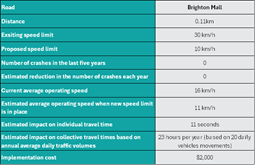
4.23.2 The estimated impacts in
the cost benefit disclosure statement assume of no growth in daily traffic
volumes and are based on the NZTA Optional Cost Impact Analysis Tool.
5. Financial Implications Ngā Hīraunga Rauemi
Capex/Opex Ngā Utu Whakahaere
|
|
Option 1 (Recommended)
Full upgrade with central
gathering area and removing two trees
|
Option 2
Upgrade without central
gathering area – retaining all trees
|
Option 3
Do nothing
|
|
Cost to Implement
|
$4.2m
|
$4.2m
|
Nil
(see 5.2)
|
|
Maintenance/Ongoing Costs
|
Covered
by existing maintenance contract
|
Covered
by existing maintenance contract
|
Covered
by existing maintenance contract
|
|
Funding Source
|
LTP:
CPMS 63360 Brighton Mall Upgrade $4.2m
|
LTP:
CPMS 63360 Brighton Mall Upgrade $4.2m
|
CCC
Street Maintenance Contract
|
|
Funding Availability
|
$4.2m
|
$4.2m
|
N/A
|
|
Impact on Rates
|
Nil
|
Nil
|
Nil
|
5.1 The
cost to implement shows the estimated costs to complete the project, with a 20%
contingency on construction items. This is considered appropriate given the
stage of design.
5.2 Should
the selected option be to Do Nothing with the layout, but change to a Shared
Zone and/or reduce the Speed Limit to 10km/h, the cost is expected to be in the
range of $10-20k for additional signage.
6. Considerations Ngā Whai Whakaaro
Risks and Mitigations Ngā
Mōrearea me ngā Whakamātautau
6.1 The
risk is that the new assets in the mall are damaged during construction
on adjacent sites (due to the mall upgrade works occurring ahead of
developments). Additional cost to Council.
The mitigation is
that this will be addressed with developers as part of the consenting process
and there will be an expectation that any damage needs to be repaired or paid
for prior to them leaving the site. Council’s Case Manager will work
closely with developers to support this mitigation measure.
6.2 The
risk is that surrounding developments may not happen, or may proceed
more slowly than anticipated, leaving buildings derelict or sites
empty/undeveloped. This would impact the project’s objective to support
regeneration of the commercial core.
The
mitigation is that Council staff will continue to work closely with
developers and provide support wherever possible. However, as the land is
privately owned, Council has limited legislative tools to enforce progress.
Tools like the Vacant Land Differential Rate will be helpful.
6.3 The
risk is that the New North-South Corridor (Oram Ave) does not proceed or
is delayed.
The mitigation
is that the mall upgrade works have been designed in a way that they can be
completed independently. We have ensured that the mall upgrade paving does not
encroach into the proposed new corridor to avoid costly rework or changes if
the new corridor goes ahead or if it is put on hold.
6.4 The
risk is that construction will cause disruption to surrounding
businesses and the New Brighton Seaside Market at a vulnerable time when foot
traffic is typically lower than peak times of the year.
The mitigation
is that the importance of minimising disruption is included in the tender
information provided to prospective tenderers and is a component of the tender
evaluation.
Staff and the
contractor (once the contract has been awarded) will work closely with affected
businesses and the New Brighton Seaside Market team to minimise disruption as
much as possible.
Legal Considerations Ngā
Hīraunga ā-Ture
6.5
Statutory and/or delegated authority to undertake proposals in the report:
6.6 The
Community Board has the delegated authority from Council to exercise the
delegations as set out in the Register of Delegations. The list of delegations
for the Community Boards include the resolution of stopping and traffic control
devices, approval of landscape plans and the removal of trees.
6.7 It
is acknowledged that the Community Board holds the delegated authority to
specify any road or part of a road to be a shared zone (under the Christchurch
City Council Traffic and Parking Bylaw 2017, clause 20). However, as the
delegation to revoke a Pedestrian Mall designation sits with Council, we are
recommending that the decision to make the change to a shared zone is put
forward to Council to resolve at the same time as the revocation of the
pedestrian mall.
Setting
of Speed Limits Rule (2024)
6.8 The Land Transport Rule: Setting of Speed Limits 2024 requires Road
Controlling Authorities (such as the Council) to set speed limits for roads
under their control and sets out requirements that must be complied with when
setting speed limits.
6.9 The Council is proposing the new speed limits in line with the
method set out in Section 2.6 of the Land Transport Rule: Setting of Speed
Limits 2024.
6.9.1 Where the alternative method outlined in Clause 2.6 is used, the
Council must:
· Demonstrate compliance with Section 2.6(2), including documenting
the process followed and the evidence base for the proposed speed limit.
· Complete a cost–benefit disclosure statement that assesses the
safety, economic, and network implications of the proposed change.
· Consult on the proposed speed limit in accordance with Clause 3.8 of
the Rule, and consider all submissions received.
· Seek approval from the Director of Land Transport before confirming
and setting the new speed limit.
· Register and implement the approved speed limit in accordance with
the Rule’s requirements, including appropriate signage and creating the
required Land Transport Record.
6.10 As per Clause 2.6 of the Rule, Staff have completed cost/benefit
disclosure statements for each option, which are included in 0 of this report.
Staff have also completed consultation on the proposed speed limit in
accordance with clause 3.8 of the Rule, and have considered any submissions
received during that consultation, which is included in Section 6 of this
report.
6.11 The Rule requires that speed limits are entered into the National
Speed Limit Register. Once the speed limit is migrated into the Register, the
land transport record will become the legal instrument for the speed limits.
6.12 The decision-making authority for speed limit changes sits with the
Council and cannot be delegated to a Committee of Council or other body.
6.13 The
installation of any signs and/or marking associated with traffic control
devices must comply with the Land Transport Rule: Traffic Control Devices
2004.
Strategy and Policy Considerations Te Whai
Kaupapa here
6.14 The
required decisions:
6.14.1 Align with the Christchurch
City Council’s Strategic Framework.
6.14.2 Are of medium
significance in relation to the Christchurch
City Council’s Significance and Engagement Policy 2019. The level of
significance was determined by the number of people affected, the level of
impact on those affected and the high level of community interest in the
project.
6.14.3 Is consistent with Council’s Plans and Policies.
6.15 This
report supports the Council's
Long Term Plan (2024 - 2034):
6.16 Transport
6.16.1 Activity:
Transport
· Level of Service: 10.5.41 Increase access within
15 minutes to key destination types by walking (to at least four of the five
basic services: food shopping, education, employment, health, and open spaces)
- >=50% of residential addresses with a 15- minute walking access.
· Level of Service: 10.5.3 More people are
choosing to travel by cycling - >=13,000 average daily cyclist detections.
· Level of Service: 10.5.42 Increase the
infrastructure provision for active and public modes - >= 635 kilometres
(total combined length).
· Level of Service: 10.4.1 More people are
choosing to travel by public transport - >=14 million trips per year.
· Level of Service: 10.5.2 Improve the perception
(resident satisfaction) that Christchurch is a cycling friendly city - >=67%.
· Level of Service: 16.0.3 Improve resident
satisfaction with road condition - >=30%.
· Level of Service: 16.0.8 Maintain the condition
of footpaths(on a scale of 1-5, 1 is excellent condition and 5 is very poor
condition) (DIA 4) - >=82% footpaths rated 1,2 or 3.
· Level of Service: 16.0.10 Maintain the
perception (resident satisfaction) that Christchurch is a walking friendly city
- >=85% resident satisfaction.
6.17 Strategic Planning and Policy
6.17.1 Activity:
City Growth and Property
· Level of Service: 13.4.10.1 Deliver projects
that will lead to positive community outcomes: -Increasing the supply of
community housing; or -Increase employment opportunities; or -Improves Mana
Whenua relationships; or -Allows for community "ownership" of service
delivery; or -Reduces the impacts of natural or human induced (including
climate change) hazards - At least one new project commenced annually.
Community Impacts and Views Ngā Mariu
ā-Hāpori
Te Ara Kuaka Brighton Mall upgrades
6.18 Early
engagement with key stakeholders occurred through the Better for Brighton
Group. This group included representatives from ChristchurchNZ, Martini
Investments (the Pierside developer), the Greater New Brighton Charitable
Trust, Life in Vacant Spaces, and Council staff. The group met monthly over a
two‑year period, starting in early 2024, with meetings facilitated by
ChristchurchNZ. Feedback gathered through this group informed the design
process at multiple stages, drawing on members’ knowledge, experience, and
future plans for the mall and wider commercial core.
6.19 Early
engagement with community organisations including TIDE (New Brighton Business
Association), The New Brighton Project/New Brighton Seaside Market and the
Greater New Brighton Charitable Trust started in July 2025. Staff met with
organisations and discussed the initial concept including the project scope and
direction.
6.20 Draft
concept and design options were shared at early meetings and stakeholder
feedback influenced aspects like plant choices, location and number of rubbish
bins, bike stands and drinking fountains and the inclusion of irrigation.
6.21 Consultation
started on 2 December 2025 and ran until 1 February 2026.
6.22 Project
details including links to the Kōrero mai | Let’s
Talk webpage were advertised via:
· An email sent to 121 key stakeholders, including emergency services,
advocacy groups and local community organisations and businesses.
· The Council and local community group Facebook pages.
· Signs, posters, decals and digital brightsigns installed along and
near the mall and in He Puna Taimoana Hot Pools.
· Leaflets sent to Community organisations and businesses in New
Brighton and along the mall including New Brighton Project, Grace Vineyard
Church New Brighton and the Greater New Brighton Charitable Trust with
information about the consultation and instructions on how to give feedback.
· An engagement pop-up at the New Brighton Library active from 2
December 2025 to 1 February 2026, with submission drop-off box for physical
submissions.
6.23 The
Kōrero mai |
Let’s Talk page had 5541 views throughout the consultation period.
6.24 Three
drop-in sessions were held at New Brighton Seaside Market throughout the
consultation period, to share information about the project and answer
questions.
6.25 Businesses
along Brighton Mall were doorknocked to discuss the project. If they were
unavailable, a leaflet was left inviting them to get in touch.
Summary of Submissions Ngā Tāpaetanga
6.26 Submissions
were made by six recognised organisations / businesses (Spokes Canterbury, The
Village Green Te Hiato Kuaka, New Brighton Project, TIDE New Brighton Business
Association, New Brighton Residents Association and Almora Beyond the Horizon)
and 372 individuals. All
submissions are available on our Kōrero mai webpage.
6.27 Submitters
were asked whether they support:
· the new paving along the mall
· the creation of a central gathering area
· the new seating around the existing palms
· the new streetlights, feature lights and other enhancements
· changing Brighton Mall from a pedestrian mall to a shared zone
6.28 All
organisations were in support of the proposed changes except New Brighton
Residents’ Association, who were unsure about the rationale for security
cameras. TIDE New Brighton Business Association and New Brighton Project, who
wanted bikes, skateboards and scooters prohibited during the New Brighton
Seaside Market or during all events respectively. Amora Beyond the Horizon did
not support changing the mall into a shared zone due to concerns about
conflicts between pedestrians, cyclists and skateboards.
6.29 Out
of the 378 submitters, 175 were from residents in New Brighton, North New
Brighton, South New Brighton and Southshore, 193 were from residents in wider
Christchurch and 10 were from those living outside of Christchurch.
6.30 The
majority of submitters supported all of the proposed changes regardless of
where they lived. A breakdown of submitter preference overall and by area can
be found in Attachment D.
6.31 Submitters
comments on the proposals included:
· General positive comments ranging from compliments about the project
to excitement that development was taking place on the mall (45)
· General concerns about current empty / derelict buildings in the
mall (24)
· Requests for protection from wind, rain and sun (22)
· Requests to include more natural aspects, such as more planting (13)
· Requests to keep the two palm trees proposed for removal (13)
· Requests for rubbish bins (11)
· Requests for drinking fountains (9)
· Requests for bike parking (7)
· Requests for a children’s play area (6)
6.32 Out
of scope feedback included comments about attracting more businesses to the
area, using the budget to improve safety, increase cleaning and maintenance and
revitalising the wider area and emptying rubbish bins more frequently.
6.33 Submitter
comments on the proposal to change the mall to a shared zone included:
· Mixing travel modes will make the mall less safe for pedestrians
(37)
· General positive comments ranging from compliments about the project
to excitement that this change was happening on the mall (20)
· Requests to create a dedicated space for other vehicles (bikes,
skateboards and scooters) (14)
· Introduce speed restrictions and traffic calming (8)
6.34 Some
submitters also commented that bikes and skateboards are already using the area
and cars should continue to be prohibited in the area.
6.35 All
comments can be read in the submission report.
Brighton Mall speed limit changes
Community Impacts and Views
Ngā Mariu ā-Hāpori
6.36 Consultation
started on 16 December 2025 and ran until 1 February 2026.
6.37 Project
details including links to the Kōrero
mai | Let’s Talk webpage were advertised via:
· An email sent to 121 key stakeholders, including emergency services,
advocacy groups and local community organisations and businesses.
· An email sent to all previous submitters on the Te Ara Kuaka Brighton Mall
upgrades consultation.
· An advertisement on the Te Ara Kuaka Brighton Mall
upgrades consultation page.
6.38 The
Kōrero
mai | Let’s Talk page had 127 views throughout the consultation
period.
Summary of
Submissions Ngā Tāpaetanga
6.39 Submissions
were made by South New Brighton School, Spokes Canterbury and New Brighton
Residents Association and 45 individuals. All
submissions are available in the submission report online.
6.40 South
New Brighton School, Spokes Canterbury, New Brighton Residents Association and
35 individuals supported Brighton Mall having a speed limit of 10km/h. Nine
individuals did not support the speed limit change. One individual didn’t
know.
6.41 Spokes
Canterbury explained that as a mixed-use zone, the area would be safer for
everyone. All other organisations did not provide comments.
6.42 Submitters
provided comments about the speed limit changes, the following key themes /
requests were identified:
· General positive comments ranging from compliments about the project
to approval that lower speeds would be enforced by signs (9)
· [Lowering the speed limit] makes the area safer (5)
· Project is a waste of money (4)
· Remove the road along Brighton Mall (3)
· Do not allow cars along the pedestrian section (3)
· 30km/h is a good compromise (2)
6.43 All
comments can be read in the submission report.
Changes
to the Design based on Feedback
6.44 The
following changes have been made following analysis of the feedback received
during the consultation period:
· Cycle
stand locations at the western end of the mall have been adjusted. The
stands that were proposed next to the light poles have been removed, as they
conflicted with market activities.
Moveable cycle stands will now
be provided in two locations:
· At the mall
end of the 56 Brighton Mall site (this site is Council owned)
· Within the
One Fish Playground area
· Using
moveable stands allows flexibility to refine both the number and placement of
the stands as regeneration progresses. It also ensures that cycle parking can
be easily relocated as the New North–South Corridor (Oram Ave) project
advances. During construction of the new corridor, the stands can be shifted to
alternative locations without difficulty.
· Permanent
stands are planned to be installed as part of the New North-South Corridor (Oram
Ave) project. Installing permanent stands in this location now would likely
result in them needing to be removed and relocated later, which is often
challenging to do without causing damage. This option will minimise costs to
Council in the future.
· An additional rubbish bin has been included in the final
plan. Bin locations have been refined to ensure the central gathering area is
well serviced. The proposed bins will have double the capacity of the existing
ones, meaning overall bin capacity along the mall will increase even though the
overall number of bins will be reduced.
For larger events, extra wheeled bins can be brought in to provide
additional capacity. These can be positioned next to the proposed bins as
needed.
The proposed bins are the same as the bins used at the Beachside
playground and are seagull and rodent proof.
· New wastewater
infrastructure will be installed through the centre of the mall. This
upgrade replaces ageing pipes that are currently accessed through easements on
private land, including some located beneath buildings. These existing pipes
are in relatively poor condition and present a risk to Council in terms of
potential cost, time delays, and reputational impacts if they fail or require
urgent access.
Installing new
infrastructure within the mall will reduce these risks and strengthen the
overall resilience of the wastewater network. The new wastewater infrastructure
will provide greater confidence to developers that reliable and future‑proofed
services are in place to support ongoing redevelopment in the area.
Integrating
this installation into the Brighton Mall Upgrade will minimise the likelihood
of further excavation in the near future, reducing potential disruption and
avoiding unnecessary impacts on new paving and cultural artwork, while
providing a cost effective solution.
Note that the
new wastewater infrastructure will be funded by the 3 Waters Unit.
6.45 The decision affects the following wards/Community Board areas:
6.45.1 Waitai Coastal-Burwood-Linwood
Community Board, Coastal Ward
Impact on Mana Whenua Ngā Whai Take
Mana Whenua
6.46 The decision involves a significant decision in relation to
ancestral land, a body of water or other elements of intrinsic value, therefore
this decision does specifically impact Mana Whenua,
their culture, and traditions.
6.47 The
decision involves a matter of interest to Mana Whenua
and could impact on our agreed partnership priorities with Ngā Papatipu Rūnanga.
6.48 The
decision impacts Mana Whenua as it is acknowledged the New Brighton portion of
Te Tai o Mahaanui coastline and coastal marine area is of immense significance
to mana whenua/Ngāi Tūāhuriri. Engagement via Whitiora has found
no major concerns with the proposal, subject to any further engagement required
should the proposed design change, and the ongoing facilitation of the proposed
cultural artwork in the central gathering area.
Climate Change Impact Considerations Ngā
Whai Whakaaro mā te Āhuarangi
6.49 The decisions in this report are likely to:
6.49.1 Contribute positively to
adaptation to the impacts of climate change.
6.49.2 Contribute positively to emissions reductions.
6.50 The
increased capacity in the stormwater infrastructure will assist with the
impacts of climate change by better managing the flow of stormwater during
higher intensity rain events. The mall upgrade will further encourage active
modes of transport which will aid in reductions to emissions.
7. Next Steps Ngā Mahinga ā-muri
7.1 If
approved, staff will progress the scheme to detailed design, followed by tender
and construction.
Attachments Ngā Tāpirihanga
|
No.
|
Title
|
Reference
|
Page
|
|
a
|
Brighton Mall
Upgrade - Signage Plan for Approval
|
26/490686
|
|
|
b
|
Brighton Mall
Upgrade - Landscape Plan for Board Approval
|
26/490659
|
|
|
c
|
Brighton Mall
Upgrade - Tree Plan for Board Approval
|
26/490671
|
|
|
d
|
Brighton Mall
Upgrade - Submission breakdown
|
26/434840
|
|
In addition to the attached documents, the following background
information is available:
|
Document
Name – Location / File Link
|
|
Not
applicable
|
Signatories Ngā Kaiwaitohu
|
Authors
|
Marcy McCallum
- Project Manager
Kiran Skelton
- Engagement Advisor
Tom Williams -
Senior Traffic engineer
David
McCormick - Senior Network Planner
|
|
Approved By
|
Jacob Bradbury
- Manager Planning & Delivery Transport
Stephen Wright
- Head of Transport & Waste Management
|
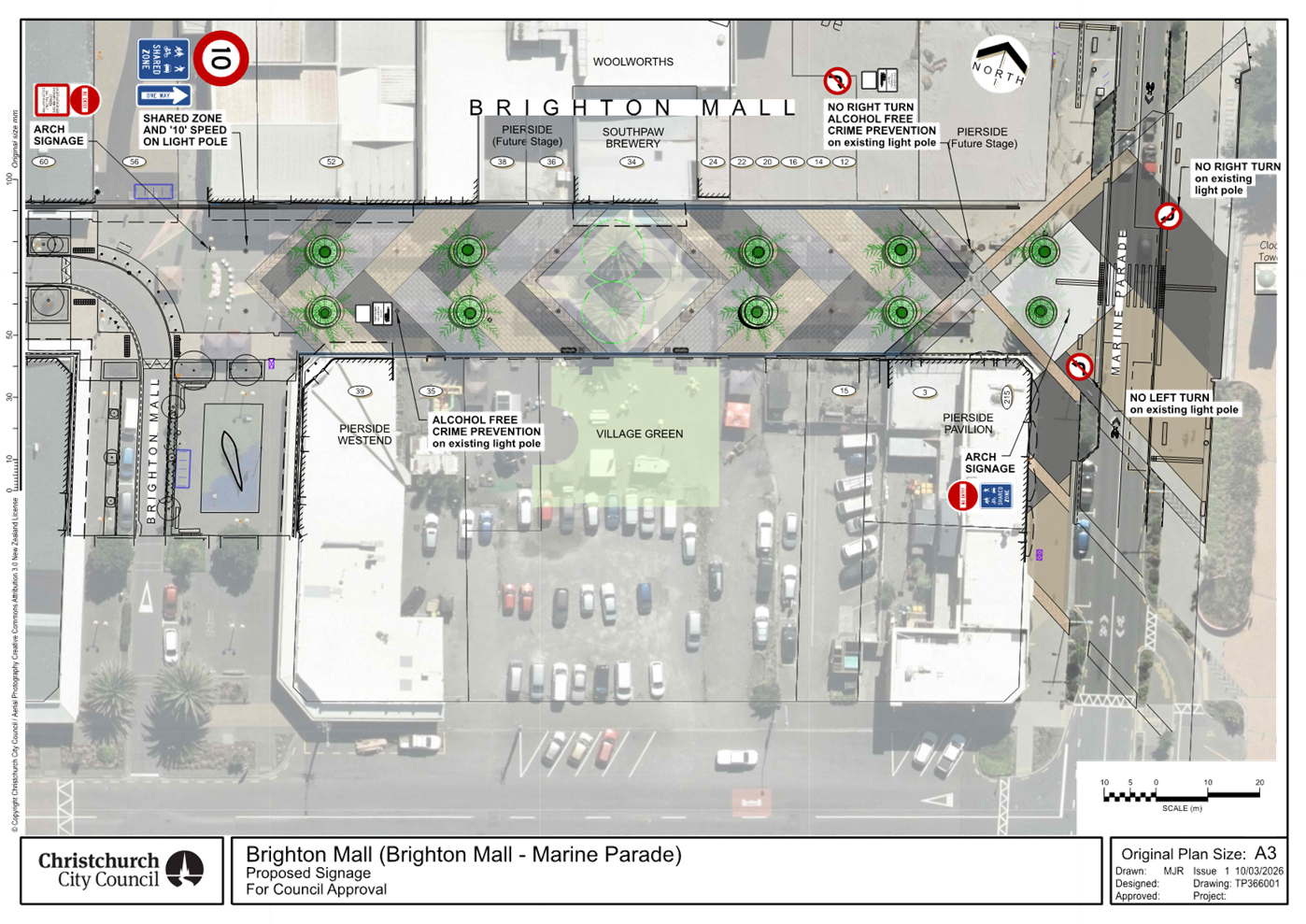
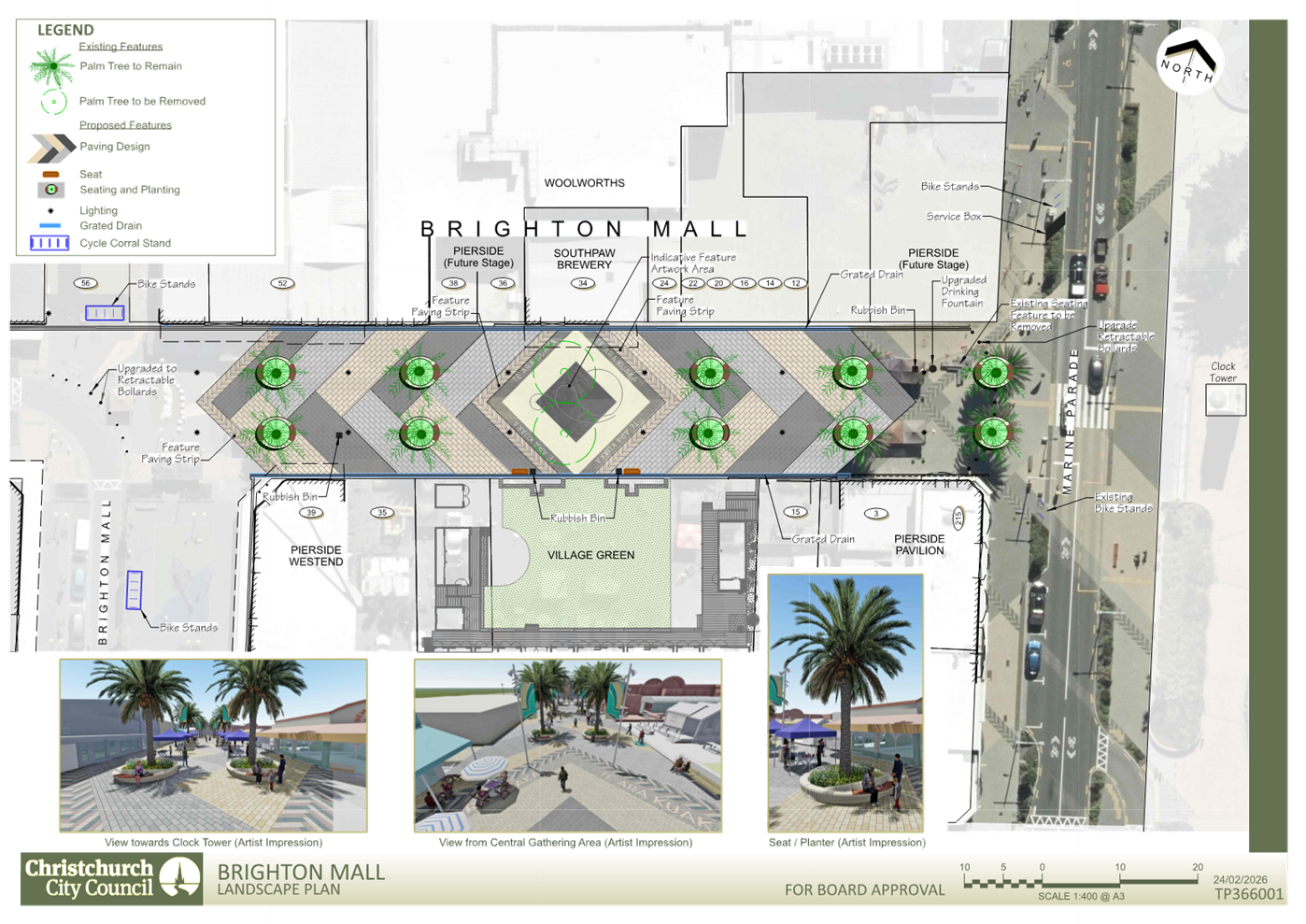
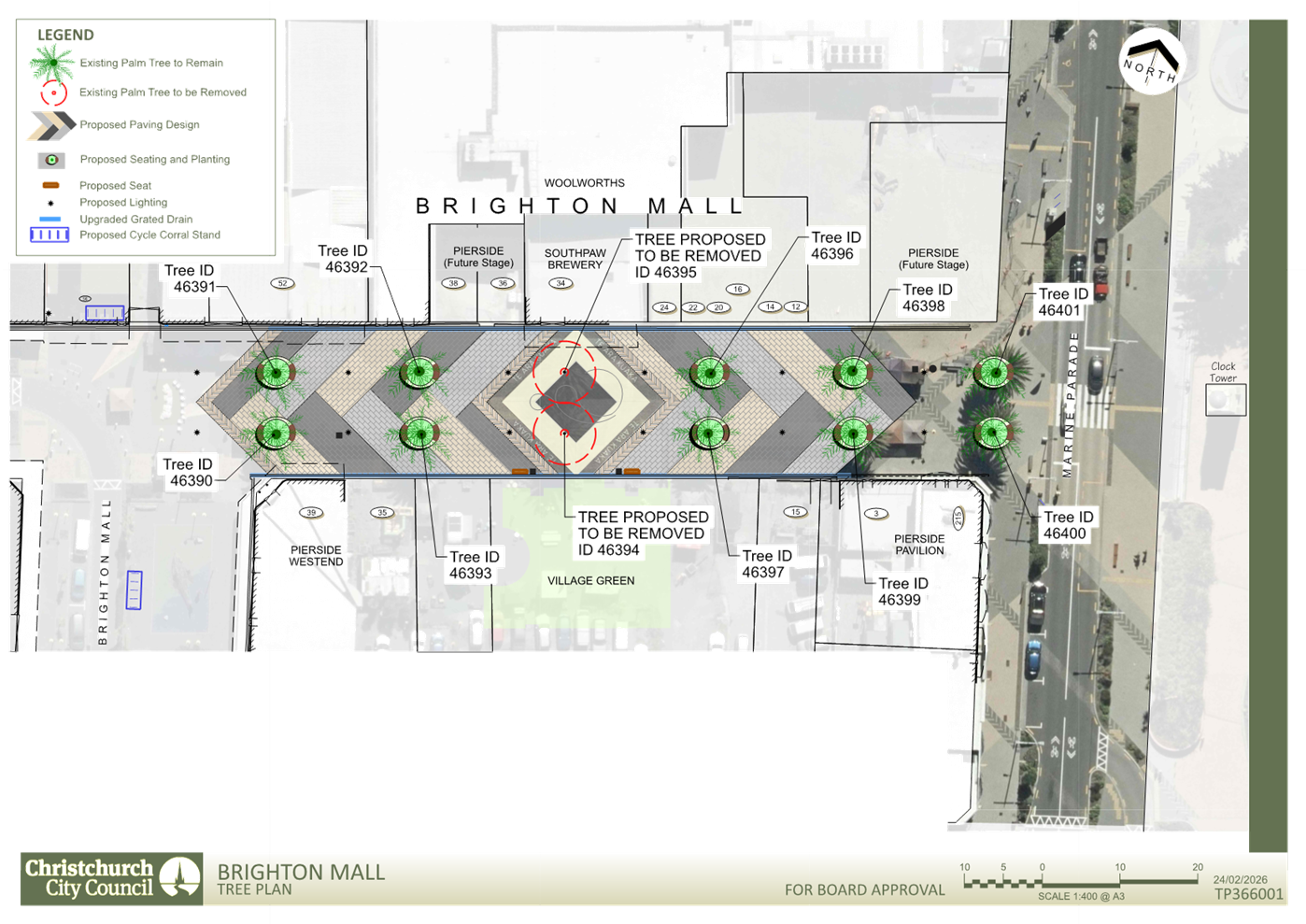
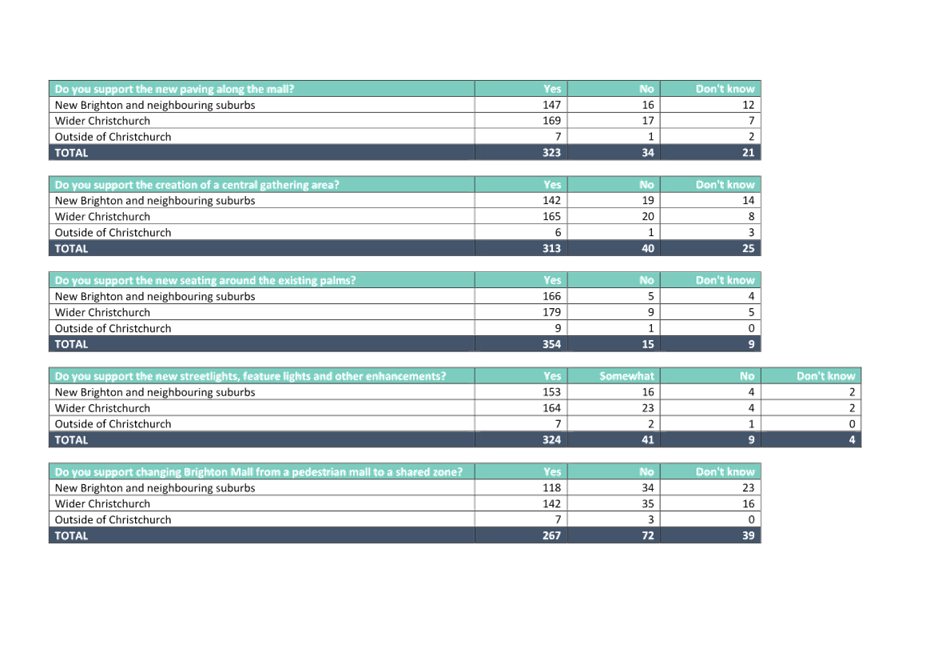
|
14. Christchurch Kart Club Relocation
|
|
Reference Te Tohutoro:
|
26/588692
|
|
Responsible Officer(s) Te Pou Matua:
|
Kelly
Hansen, Manager Parks Planning and Asset Management
Sarah Oliver, Team Leader City Planning
|
|
Accountable ELT Member Pouwhakarae:
|
Andrew
Rutledge, General Manager Citizens and Community
|
1. Purpose and Origin of the Report Te Pūtake Pūrongo
1.1 The
purpose of this report is to seek a Council decision on whether to proceed with
investigating the feasibility of relocating the Christchurch Kart Club from
Carrs Reserve to an identified privately owned property (confidential).
1.2 A
tied vote on the matter in November 2024 resulted in the status quo position
being maintained with no clear pathway forward. Staff were requested to report
back to the Council regarding the previous related decisions and next steps
associated with the project.
2. Officer Recommendations Ngā
Tūtohu
That the Council:
1. Receives the information in the Christchurch Kart Club
Relocation Report.
2. Notes that the decision in this report is
assessed as medium significance based on the Christchurch City Council’s
Significance and Engagement Policy.
3. Approves continued investigation of the
feasibility of relocating the Christchurch Kart Club from Carrs Reserve to a
private property identified in the Public Excluded Attachments of the 20
November 2024 report.
4. Notes that staff will report back on the
outcome of these investigations before seeking a final decision on whether to
proceed with the relocation of the Christchurch Kart Club,
5. Notes the public excluded information in
Attachments A to D of this report will be reviewed for release at the
conclusion of investigation work and negotiations with the private property
owner.
3. Executive Summary Te Whakarāpopoto Matua
3.1 The
Council identified Halswell-Wigram as a city preferred growth area in 1995 and
has planned to relocate the Christchurch Kart Club from Carrs Reserve since
that time to address noise issues and to allow Carrs Reserve to be redeveloped
as a community park. In 2011[1],
surrounding land was rezoned to enable residential development, subject to
acceptable noise environment levels being achieved for those future residents.
The expectation was that the Kart Club would be relocated out of the area.
3.2 Capital
funding for the relocation has been included in the Long-Term Plan since 2013,
fully funded through Development Contributions. Council resolutions in 2013,
2015, and 2018 reaffirmed the Council’s commitment to continue pursuing
relocation. However, despite extensive investigations, no suitable relocation
site has been secured.
3.3 Meanwhile,
substantial residential development around Carrs Reserve has been enabled
through noise attenuation measures, including house specifications, fencing,
and bunding. But significant constraints remain. Approximately 50 residential
sections remain undevelopable, high bunds and fences separate housing from the
reserve, and redevelopment of Carrs Reserve is limited while the Kart Club
remains on site.
3.4 The
Club itself is constrained by an undersized track, noise limits, and restricted
operating hours.
3.5 The
original strategic drivers for relocation remain relevant and unresolved,
including:
3.5.1 Addressing
ongoing noise impacts on residents;
3.5.2 Enabling
planned residential development; and
3.5.3 Allowing
Carrs Reserve to be redeveloped as a community park.
3.6 One
final privately owned site has been identified as a potential relocation option
and staff are seeking a decision on whether to further investigate feasibility
of the site. This would involve investigating and reporting back on:
· A negotiated land acquisition of the alternative site through a
conditional land swap;
· Consenting and/or rezoning options for the alternative
site; and
· The Kart Club’s willingness to accept
a buy‑out of its current lease, informed by an updated assessment of
relocation costs and available funding.
3.7 Relocation
would enable the removal of existing noise mitigation bunds and fences from
private land, allow adjoining properties to be fully developed in line with
their zoning, and support a more integrated and connected open space network.
3.8 Financial
analysis indicates a marginal financial benefit to the Council if the Club is
not relocated. However, no wider economic assessment has been undertaken to
quantify the potential economic benefits associated with the agglomeration of
motorsport activities.
3.9 If
the Kart Club remains at Carrs Reserve, Development Contributions collected for
the relocation would need to be refunded, estimated at $487,000 to date. This
involves assessing approximately 2,500 consents (around 11,000 HUEs) for a
refund.
3.10 Staff
will report back to the Council on the outcomes
of the proposed investigation, including any financial or technical challenges,
to inform a subsequent decision on whether to proceed with the relocation. If
the investigation finds the relocation to be unviable, the project can be
discontinued at that point.
4. Background/Context Te Horopaki
History
4.1 The
Council identified Halswell Wigram as the City’s preferred growth area in
1995. As a transitional measure ahead of future urban development, the Special
Purpose (Awatea) Zone was introduced into the Christchurch City Plan in 1999.
At the same time, the operating hours for the Christchurch Kart Club were
restricted to manage effects during this transition. While the Council approved
an extension of the Club’s track at that time, it also directed staff to
investigate options for the Club’s long-term relocation.
4.2 Since
then, the Council’s consistent intention has been to relocate the
Christchurch Kart Club from Carrs Reserve to reduce ongoing noise impacts on
residents, enable planned residential development, and allow Carrs Reserve to
be redeveloped as a community park. This intent was confirmed when the Awatea
area was rezoned for residential development in 2011.
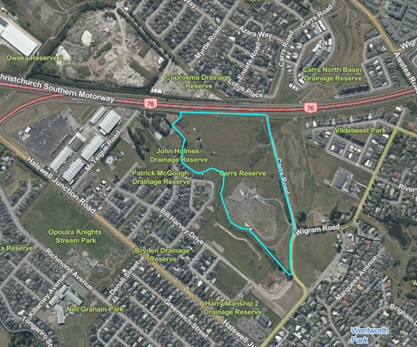
Fig.
1. Aerial photo of Carrs Reserve and surrounds showing the Kart Club in the
southern half of the reserve.
4.3 By
2012, a site at McLeans Island was being pursued for relocation of the Kart
Club.
4.4 In
2013, the Council resolved to fund the relocation of the Kart Club at its
estimated cost of $3.5 million.
4.5 In
2015, when increased cost estimates were reported, the Council resolved to cap
capital expenditure for the Kart Club relocation at $3.5 million and provided
additional operational funding for consenting costs of $100,000.
4.6 In
2018, staff reported a shortfall in funding for the resource consent process.
The Council resolved to continue with the Kart Club relocation process and
agreed to provide additional operational funds of up to $70,000 for the consent
process.
4.7 The
relocation option at that time ultimately did not proceed. However, capital
funding has remained on the budget, and the project was added to the
Development Contributions Policy in 2021 to be fully funded by Development
Contributions.
4.8 Despite
the Kart Club remaining on site at Carrs Reserve, substantial residential
development has occurred in the surrounding area, enabled through a range of
noise mitigation measures such as house specifications, fencing, and high
bunds.
4.9 Numerous
alternative sites have been investigated over many years but have proven
unsuitable for a range of reasons. On 20 November 2024, staff reported on what
is considered the final alternative site located on privately owned land. The
site (hereafter referred to as the “alternative site”), was
outlined in the public excluded section of the November 2024 report (refer to
Attachment 1).
4.10 A
tied Council vote on continued investigation of the alternative site resulted
in no change to the status quo and no clear pathway forward. Staff were
subsequently directed to report back on the history of the Council’s
previous decisions and to outline the next steps for the project.
Kart Club Requirements
4.11 Increasing
minimum kart weights for safety and performance, along with evolving
competition requirements, are placing additional pressure on the Club’s
ageing track layout and supporting infrastructure. The Club’s operations
and its ability to invest in upgrading facilities at Carrs Reserve — such
as extending the track to meet national A-grade standards — are
constrained by District Plan rules and would likely face considerable
consenting challenges and potential community opposition.
4.12 Remaining
at Carrs Reserve offers no certainty of a future lease, discourages meaningful
investment, and leaves the Club in a prolonged state of uncertainty. In doing
so, there is a risk to the long-term viability of karting in Christchurch and
the ability of the sport to continue contributing to the city’s
recreational and community landscape beyond the expiry of the Club’s
current lease in 2054.
Current Situation
4.13 Noise
effects from the Kart Club continue to impact residents and approximately 50
residential sections remain unable to be consented and/or developed.
4.14 Visual
and physical separation between housing and the reserve persists due to noise
mitigation barriers, and redevelopment of Carrs Reserve as a community park is
constrained while the Club remains on site.
4.15 Further
work undertaken since the 2024 report has increased confidence in consenting of
the alternative site. Additional technical assessment indicates that acceptable
noise levels can be achieved at neighbouring properties, and that traffic
generated by the facility can be accommodated within the surrounding network.
Furthermore, it could potentially be included in proposed Plan Change 20 which
would ease consenting requirements.
4.16 Updated
legal advice has clarified that if the Kart Club is not relocated, the
Development Contributions collected for the relocation project, approximately
$487,000 so far, would need to be refunded. This would involve assessing around
2,500 consents (approximately 11,000 HUEs) and contacting current property
owners to process refunds.
4.17 A
clear decision is now required to provide direction and certainty. The Council
must determine how it wishes to proceed so it can:
4.17.1 Decide
whether continued budget provision for relocation is required.
4.17.2 Determine
whether to continue charging Development Contributions or refund those already
collected.
4.17.3 Provide
long term clarity for the Awatea and wider community regarding land use,
recreation opportunities, and open space provision.
4.17.4 Potentially
resolve land-use limitations on residentially zoned land, including possible
rezoning if development cannot reasonably proceed.
4.17.5 Provide
certainty for the Kart Club. The Club’s activities are currently
constrained by District Plan rules. If they are to remain at Carrs Reserve,
they intend to seek Council approval and support for expansion of their
facilities and activities.
4.17.6 Plan
for the future development of Carrs Reserve as a community park with or without
the Kart Club occupying half of the site.
4.18 The
following related information session/workshops have taken place for the
members of the meeting:
Options Considered Ngā Kōwhiringa Whaiwhakaaro
4.19 The
following reasonably practicable options were considered and are assessed in
this report:
4.19.1 Approve
detailed investigation into the feasibility of the alternative site.
4.19.2 Discontinue
the Kart Club relocation project.
4.20 The
following options were considered but ruled out:
4.20.1 Discontinue
investigation of the alternative site but retain budget and continue to search
for another alternative option. This option has been ruled out as, having
conducted an exhaustive search over many years, it is highly unlikely a
feasible alternative relocation site will be found.
Options Descriptions Ngā Kōwhiringa
4.21 Preferred
Option: Approve detailed investigation into the feasibility of the
alternative site.
4.22 Option
Description: This option involves staff undertaking further investigation
and reporting back to the Council on the technical and financial implications
of relocating the Christchurch Kart Club to the privately owned alternative
site. This investigation would include consideration of:
· A negotiated land acquisition through a conditional land swap,
· The
ability to consent and/or rezoning of the alternative site,
and
· The Kart Club’s willingness to accept
a buy‑out of its current lease, informed by an updated assessment of
relocation costs and available funding. This may also include options for
partnerships, sponsorship, and additional funding.
4.22.2 Option
Advantages
· Upholds
previous Council resolutions to continue pursuing relocation of the
Christchurch Kart Club.
· Provides a
clear signal to the community, the Kart Club, and developers regarding the
Council’s intended direction, subject to satisfactory investigation
outcomes.
· Ends the
current holding pattern by establishing a defined pathway forward.
· Enables the
required information to be gathered to support a fully informed future decision
on whether to proceed with relocation.
· Retains
flexibility by allowing the project to be discontinued should the investigation
demonstrate that relocation is not viable.
4.22.3 Option
Disadvantages
· Cost
associated with staff time, property valuations, and the preparation of updated
construction cost estimates.
4.23 Option
2: Discontinue the Kart Club relocation project.
4.23.1 Option
Description: This option involves discontinuing the Kart Club relocation
project, removing the associated budget from the Long-Term Plan, and refunding
the Development Contributions collected for the Kart Club relocation.
4.23.2 Option
Advantages
· Provides a
small financial benefit to the Council, resulting in an estimated 0.01%
reduction in rates between 2027-2034.
· Provides
clarity for the community, the Kart Club, developers, and the administration of
Development Contributions.
4.23.3 Option
Disadvantages
· Awatea’s
planned development outcomes would not be fully achieved, resulting in an urban
form that retains undevelopable land and permanent acoustic fencing and bunds
creating a poor visual environment, weakened park connections, and compromised
open space outcomes.
· Approximately
50 residential sections would remain undevelopable, inconsistent with the
purpose and expectations of the residential zone.
· Developer and
community expectations would not be met, creating reputational risk for the
Council.
· Increased
likelihood of noise complaints as nearby residential development continues to
occur around the existing karting operations.
· Long-term
uncertainty for the Christchurch Kart Club, with no clear pathway beyond the
expiry of the current lease in 2054 and potential opposition to any future
lease renewal.
· Ongoing
constraints on the Club’s operations and its ability to invest in,
expand, or modernise facilities.
· Constrained
redevelopment of Carrs Reserve as a community park and ability to open the
reserve to residential areas.
· Lost
opportunity to co-locate all motorsport activities in one part of the city,
with potential shared facilities, efficiencies, and event-attraction benefits.
· Requirement
for the Council to refund Development Contributions collected for the
relocation project. Approximately 2,500 consents (11,000 HUEs) have paid
Development Contributions for the Club relocation. Identifying, contacting, and
refunding current property owners would involve a significant administrative
burden, requiring substantial staff time.
Analysis Criteria Ngā Paearu Wetekina
4.24 Advantages
and disadvantages of both options and strategic impacts.
4.25 No
contribution to emissions reductions.
5. Financial Implications Ngā Hīraunga Rauemi
Capex/Opex Ngā Utu Whakahaere
|
|
Continue investigating relocation project
|
Option 2 – Discontinue relocation
project and budget
|
|
Cost to Implement
|
· Estimated 150 hours of staff time
· Property valuation costs of approx. $15,000 - $20,000
· Update design work and construction cost estimates –
approx. $30,000
· Planning checks – approx. $30,000
· Economic assessment of benefits – costs TBC
|
Refund of approx. $487,000 of Development
Contributions.
Staff time and legal fees involved in
refunding Development Contributions are estimated at $50,000 and can be
deducted from the amount refunded.
|
|
Maintenance/Ongoing Costs
|
N/A
|
N/A
|
|
Funding Source
|
Parks planning opex budget or relevant
staff budgets
|
Development Contributions
|
|
Funding Availability
|
Yes
|
Yes
|
|
Impact on Rates
|
No new impact as already in opex budgets
|
No
|
5.1 The
existing relocation capital budget is considered sufficient to deliver a basic
fit-for-purpose track at the alternative location. Buildings and other
facilities would be an additional cost.
5.2 Financial
analysis has been undertaken on the basis of the relocation cost to the
Council, being the budgeted capital amount of $3.5m (uninflated). This was the
capped payment approved by the Council in 2015 to be paid to the Christchurch
Kart Club as a buy-out of their lease.
5.3 Cancelling
the relocation of the Christchurch Kart Club from Carrs Reserve offers existing
ratepayers a marginally better financial position of approximately 0.01% impact
on rates compared to relocating the Christchurch Kart Club. While relocating
the Club offers additional development opportunities which will result in the
Council collecting a higher amount of Development Contributions, the additional
revenue does not offset the cost of borrowing incurred in relocating the
Christchurch Kart Club.
5.4 Investigations
will confirm the full cost of construction and relocation and whether the Club
will accept a lease, buy-out or request additional funding. No wider economic
impact assessment has been prepared.
6. Considerations Ngā Whai Whakaaro
Risks and Mitigations Ngā Mōrearea me
ngā Whakamātautau
6.1 There
is some risk associated with land acquisition, consenting, new lease approval,
and buy out of existing lease. It is likely that the capped budget of $3.5m
(uninflated) will be insufficient to cover the full cost of relocation and
could be unacceptable to the Kart Club. Staff will work with the Club to
explore opportunities for partnerships, sponsorship, and cost savings and
report back on any financial implications.
6.2 Should
any of these steps prove unfeasible, the Council may decide to discontinue the
project.
Legal Considerations Ngā Hīraunga
ā-Ture
6.3 Statutory
and/or delegated authority to undertake proposals in the report:
6.3.1 The
Council has the relevant delegation to decide whether to proceed with the
relocation (i.e. only the Council can determine to cease the relocation
project).
6.4 Other
Legal Implications:
6.4.1 Cancellation
of the relocation project would require refunding the relevant Development
Contribution funds already received under the Development Contributions Policy.
The Local Government Act 2002 requires the Council to refund Development
Contributions collected for a specific project if that project does not provide
the reserve that the Development Contributions were collected for (LGA,
s 209(1)(d)), or if Reserve Development Contributions are not applied to a
reserve purpose within 10 years (LGA, s 210(1)).
Strategy
and Policy Considerations Te
Whai Kaupapa here
6.5 The
required decision:
6.5.1 Aligns
with the Christchurch
City Council’s Strategic Framework. It contributes to the community
outcome of Thriving and Prosperous.
6.5.2 Is
assessed as medium significance based on the Christchurch City Council’s
Significance and Engagement Policy. The level of significance was
determined by the project being of localised interest with significant impact
on affected developers and residents, and significant costs.
6.5.3 Is consistent with Council’s Plans and
Policies. The District Plan anticipates relocation of the Kart Club.
6.6 This
report supports the Council's
Long Term Plan (2024 - 2034):
6.7 Strategic Planning and Policy
6.7.1 Activity: Strategic Planning and Resource Consents
· Level
of Service: 17.0.1.8 Develop and guide the implementation of spatial plans at a
district and local area level to achieve higher order policy direction and
Council's community outcomes - Implementation of OCP (2024) including local
area planning at an area or corridor level
Community
Impacts and Views Ngā Mariu ā-Hāpori
Kart Club Position
6.8 Karting
plays an important role in the motorsport participation and development
pathway, supporting youth engagement, high-performance progression, and broader
community involvement.
6.9 The
Club seeks long-term certainty to enable responsible planning and investment in
its facilities. While the current site is conveniently located, operational
constraints — including noise limits, restricted operating days, and an
undersized track — limit the Club’s ability to meet modern facility
standards and demand.
6.10 The
Club’s facilities also support other clubs and community activities.
Relocation would allow these uses to continue within a purpose-designed
facility, with opportunities for improved layout, shared infrastructure, and
enhanced amenities. Potential co-location with other motorsport activities
could deliver operational efficiencies and support the attraction of larger
events, generating wider economic and community benefits.
6.11 The
Kart Club considers relocation essential to securing its long-term future and
enabling growth in both participation and facilities. The Club asks that the
Council honour its longstanding commitments to the project, cover all the costs
of relocation, and ensure it is treated equitably alongside other sporting
codes that receive Council-supported facilities.
6.12 Should
relocation not occur, the Club intends to seek Council support to improve its
existing facilities at Carrs Reserve and increase the permitted hours of
operation.
Community
6.13 Community
consultation on land use options for land surrounding Carrs Reserve (including
provisions for the relocation of the Kart Club) was undertaken through the
development of the South-West Christchurch Area Plan and changes to the
Christchurch District Plan (Awatea Plan Change).
6.14 There
is pressure from neighbouring developers and landowners around Carrs Reserve to
proceed with the relocation or to relax noise mitigation requirements to enable
development.
6.15 No
community consultation has taken place yet regarding the proposed relocation
and details of the alternative private property are to remain confidential at
this stage.
6.16 The
decision affects the following wards/Community Board areas:
6.16.1 Waipuna
Halswell Hornby Riccarton Community Board. The existing track is in Halswell
ward, and the private property under consideration is in Hornby ward.
6.17 Community
Board views have not been sought on the current proposal.
Impact
on Mana Whenua Ngā
Whai Take Mana Whenua
6.18 The
decision does not involve a significant decision in relation to ancestral land,
a body of water or other elements of intrinsic value, therefore this decision
does not specifically impact Mana Whenua, their culture, and traditions.
6.19 The
decision does not involve a matter of interest to Mana Whenua and will not
impact on our agreed partnership priorities with Ngā Papatipu
Rūnanga.
6.20 The
Council would consult with Ngāi Tūāhuriri Runanga on the
project, but no offer back is required as part of the proposed land swap.
Climate
Change Impact Considerations Ngā Whai Whakaaro mā te Āhuarangi
6.21 The
decisions in this report are not likely to:
6.21.1 Contribute to adaptation to the impacts of climate change or
emissions reductions.
6.22 Motorsport
is inherently a high-emission activity, and any expansion of their activities
and development of a new facility, could lead to increased emissions. By
supporting the development of a larger track with potentially expanded use, the
Council may be perceived as endorsing the continuation and potential growth of
this high-emission activity. This may change in the longer term with improved
technology.
6.23 The
carbon footprint of the new facility could be minimised by incorporating green
technologies and sustainable products wherever possible. Further, redevelopment
of Carrs Reserve may provide opportunities for tree planting to offset some
carbon emissions.
7. Next Steps Ngā Mahinga ā-muri
7.1 The
outcomes of any detailed investigation will be reported back to the Council to
inform a subsequent decision on whether to proceed with the relocation. This
will be in time for the next Long-Term Plan.
7.2 Detailed
investigative work will not proceed if investigation is not supported and the
project is cancelled.
Attachments Ngā Tāpirihanga
|
No.
|
Title
|
Reference
|
Page
|
|
a
|
Relocation
Option Description - Public Excluded (Under Separate Cover) - Confidential
|
24/2039134
|
|
|
b
|
Proposed track
Layout - Public Excluded (Under Separate Cover) - Confidential
|
24/1380368
|
|
|
c
|
Indicative
Track Cost Estimate - Public Excluded (Under Separate Cover) - Confidential
|
24/1631051
|
|
|
d
|
Building
Estimate for Kartsport Canterbury - Public Excluded (Under Separate Cover)
- Confidential
|
24/1683470
|
|
In addition to the attached documents, the following background
information is available:
|
Document
Name – Location / File Link
|
|
Not
applicable
|
Signatories Ngā Kaiwaitohu
|
Authors
|
Kelly Hansen -
Manager Parks Planning & Asset Management
Sarah Oliver -
Team Leader City Planning
Mitchell Shaw
- Principal Advisor - Finance
|
|
Approved By
|
Rupert Bool -
Head of Parks
Mark Stevenson
- Head of Planning & Consents
John Higgins -
General Manager Strategy, Planning & Regulatory Services
Andrew
Rutledge - General Manager Citizens and Community
|
|
15. Traffic calming on collector and arterial
roads
|
|
Reference Te Tohutoro:
|
26/325516
|
|
Responsible Officer(s) Te Pou Matua:
|
Gemma
Dioni, Principal Advisor Transport
|
|
Accountable ELT Member Pouwhakarae:
|
Brent
Smith, General Manager City Infrastructure
|
1. Purpose and Origin of the Report Te Pūtake Pūrongo
1.1 The
purpose of this report is to provide a clear direction on the use of vertical
traffic calming on collector and arterial roads within the Christchurch City
Council (CCC) network.
1.2 This
report originates from the need to ensure consistency in decision-making
following increased implementation of raised traffic calming devices across the
city, feedback from elected members and the community, and alignment with Safe
System principles.
1.3 This
report excludes traffic calming on neighbourhood and local streets, which are
managed through existing Christchurch City Council (CCC) street design
standards.
2. Officer Recommendations Ngā
Tūtohu
That the Council:
1. Receives the information in the Traffic calming on collector
and arterial roads Report.
2. Notes that the decision in this report is
assessed as medium significance based on the Christchurch City Council’s
Significance and Engagement Policy.
3. Directs that, except at high-risk
intersections and defined formal priority controlled pedestrian crossings,
vertical traffic calming is not permitted on major arterial roads.
Alternative Safe System and speed management interventions must be assessed and
demonstrated to be insufficient prior to any proposal for raised devices.
4. Directs that vertical traffic calming on minor
arterial roads is to be used in targeted locations only, including:
a. Intersections that have an assessed safety
risk, where alternative safety improvement tools are not deemed viable in
addressing the crash risk.
b. Central City within the Four Avenues, key
activity centres, where there are high numbers of people walking, cycling,
scooting.
c. Formal priority controlled pedestrian
crossings, outside marae,
educational facilities and major transport hubs.
5. Directs that vertical traffic calming is not
to be implemented as a corridor-wide treatment on minor arterial roads,
and that alternative Safe System and speed management interventions must be
assessed and demonstrated to be insufficient before any raised devices are
proposed.
6. Directs that vertical traffic calming on collector
roads is to be used in targeted locations only, including:
a. Intersections that have an assessed safety
risk, to address the crash risk.
b. Central City within the Four Avenues, key
activity centres, where there are high numbers of people walking, cycling,
scooting.
c. Formal priority controlled pedestrian
crossings, outside marae,
educational facilities and major transport hubs.
7. Notes that, where referred to in
Recommendations 3 to 6 above regarding the use of vertical traffic calming:
a. intersections include traffic
signal-controlled intersections including any slip lanes, roundabouts, priority
intersections (give-way and stop).
b. local and neighbourhood streets are excluded.
8. Notes that where a significant risk is
identified through a Post Construction Stage Safety Audit, the implementation
of intervention(s) recommended to mitigate that risk is not constrained by
Recommendations 3 to 6 above.
3. Executive Summary Te Whakarāpopoto Matua
3.1 This
report seeks to provide direction for the consistent use of vertical traffic
calming on collector and arterial roads within the CCC network.
3.2 Raised
safety platforms and vertical traffic calming features are recognised as an
effective Safe System tool for reducing impact speeds at defined conflict
points, particularly at intersections and pedestrian crossings. Evidence from
national guidance (Waka Kotahi Safe System Toolkit and Speed Management Guide),
Austroads guidance, and international practice supports their use in targeted
high-risk locations.
3.3 Arterial
roads perform a strategic movement function. Vertical traffic calming should
therefore be applied selectively and in response to identified safety risk,
rather than as general feature in projects. This report also covers collector
roads, which have a movement function but to a lesser extent than arterial
roads.
3.4 The
report clarifies that vertical traffic calming, except at high-risk
intersections and defined formal priority controlled pedestrian crossings, is
not permitted on major arterial roads. Designers must consider all other
available options in the safe system toolkit to reduce the risk and improve
safety.
3.5 For
minor arterial and collector roads, the report clarifies that raised devices
can be considered at the following locations:
3.5.1 Intersections
that have an assessed safety risk, where alternative safety improvement tools
are not deemed viable in addressing the crash risk;
3.5.2 Central
City, key activity centres, where there are high numbers of people walking,
cycling, scooting;
3.5.3 Formal
pedestrian crossings, outside marae, educational facilities and major transport
hubs.
3.6 Vertical
traffic calming features are generally not supported as part of uncontrolled
crossing points, or for general traffic calming of traffic along minor arterial
and collector corridors.
4. Background/Context Te Horopaki
4.1 Improving
safety on local roads in Christchurch is a priority for the Christchurch City
Council. Providing safe infrastructure is key to ensure people get to
where they are going safely irrespective of the mode of travel. Council
has a Level of Service to reduce the number of deaths or serious injuries from
all crashes by 40% in 2030. This is also a goal in the Road Safety Action Plan,
which is a collaborative plan between Christchurch City Council, Waka Kotahi,
ACC, FENZ and New Zealand Police.
4.2 No one expects a crash, but people make mistakes – including
those who are careful and responsible drivers. We need to build a safe
road system that is designed for people. This means doing our best to reduce
crashes but acknowledging that crashes will continue to happen. We can prevent
serious injury or harm through a safe system approach, which incorporates safer
road users, safe vehicles, safe speeds and safer infrastructure.
4.3 Under
the Safe System, infrastructure must manage impact speeds at conflict points,
particularly where pedestrians and cyclists interact with motor vehicles. The tolerable limit (survivable speed) for pedestrians and cyclists
is 30 km/h.This shifts the focus from compliance alone to designing
roads that achieve survivable operating speeds.
4.4 Waka
Kotahi NZ Transport Agency’s Safe System Toolkit provides a structured
set of infrastructure and speed management interventions aligned to crash types
and risk contexts. The toolkit promotes selecting the most effective treatment
for the specific risk, rather than applying a single solution across all
locations.
4.5 Christchurch
arterial and collector roads perform defined functions within the Christchurch
District Plan and the One Network Framework (ONF). Under the Christchurch
District Plan:
· Arterial
Roads are roads whose primary function is to provide for the efficient
movement of people and goods between key parts of the city and region. They
typically carry higher traffic volumes, including freight and public transport,
and connect major destinations and activity centres. There are two types of
arterial corridors, major arterial corridors, and minor arterial corridors.
· Collector
Roads provide a link between local roads and the arterial network. Their
function is to collect and distribute traffic within suburbs and connect
neighbourhoods to the wider arterial network, while also accommodating property
access and local movement. These provide movement at a more neighbourhood
level.
4.6 Major
arterial roads therefore serve multiple strategic roles, including freight
movement, public transport corridors, emergency access, and access to key
destinations. Collector roads balance movement and access functions and may
also carry significant traffic volumes.
4.7 At
the same time, many arterial and collector roads pass through areas of high
pedestrian activity, schools, and activity centres, where there is elevated
exposure of vulnerable road users and a higher risk of serious injury crashes.
4.8 The Council has implemented raised safety platforms at a number of
high‑risk intersections and crossings as part of its Safe System
approach. The purpose of these devices is to reduce both the likelihood and
severity of crashes by managing a safe speed at locations with conflicts
between different road users or on streets where a lower speed is desired for
overall community safety.
4.9 The
Safe System Toolkit and related Austroads guidance identify a range of
available tools, including:
|
Intervention Category
|
Examples of Tools
|
|
Vertical Deflection (Primary safe system treatment)
|
Raised safety platforms, raised intersections, raised
crossing tables
|
|
Speed Management (Supporting safe system treatment)
|
Speed limit changes, gateway treatments
|
|
Intersection Safety (Supporting safe system treatment)
|
Roundabout upgrades, protected turn phases, movement bans
|
|
Corridor Reallocation (Supporting safe system treatment)
|
Lane reallocation, cycle facilities, median treatments,
visual narrowing
|
|
Surface, marking and signs (Supporting safe system
treatment)
|
High-friction surfacing, vehicle activated signs, line
marking and delineation
|
|
Compliance (Supporting safe system treatment)
|
Red-light and speed cameras. NZ Transport
Agency are responsible for these. Staff continue to advocate for increased
deployment at high-risk sites.
|
4.10 In terms of effectiveness for speed management, self-enforcing
physical measures produce the most reliable and sustained reductions in
operating speeds. Infrastructure such as vertical deflection, horizontal
alignment changes, and lane narrowing physically constrain vehicle movement and
reduce speeds regardless of driver intent. By contrast, measures that rely
primarily on information or visual cues such as signs, pavement markings, and
gateway treatments, typically achieve smaller reductions, often in the order of
only a few kilometres per hour, and are less effective in higher-speed
environments.
4.11 Measures that rely on signage or markings are dependent on driver
awareness and voluntary compliance, resulting in more variable and less
predictable speed outcomes. Physical measures, by comparison, provide a
consistent operating speed that aligns more closely with Safe System
requirements at high-risk locations.
4.12 Vertical traffic calming devices have been installed at a number of
intersections across Christchurch. These are described below, with initial
evaluation of effectiveness.
Traffic signals
4.13 Traffic signals are not typically identified
and promoted as a Safe System solution, primarily due to the angle and impact
speed of crashes at signalised intersections. Safe Speed Platforms (Raised
Safety Platforms) have been used to reduce the maximum comfortable operating
speed for vehicles to Safe System collision speeds. The tolerable limit
(survivable speed) for pedestrians and cyclists is 30 km/h.
4.14 Vertical
traffic calming either through a full platform or approach only platforms have
been installed at eight intersections, as shown in the table below.
|
Intersection
|
Treatment Type
|
Location/context
|
|
Barrington/Lincoln/Whiteleigh
|
Full platform
|
Entrance to
shopping centre and stadium
|
|
Briggs/Lake
Terrace/Marshland
|
Approach-only
platforms
|
Big box retail
centre / High Risk Intersection
|
|
Hills/Shirley/Warrington
|
Full platform
|
Shopping Centre
/ High Risk Intersection
|
|
New
Brighton/North Parade/Marshland/Shirley
|
Approach-only
platforms
|
Shopping Centre,
Intermediate school / High Risk Intersection
|
|
Aldwins/Buckleys/Linwood
|
Approach-only
platforms
|
Shopping Centre
/ High Risk Intersection
|
|
Aldwins/Ferry/Ensors
|
Approach-only
platforms
|
Adjacent to Te
Aratai High School / High Risk Intersection
|
|
Hansons/Riccarton/Waimairi
|
Approach-only
platforms
|
Shopping Centre
/ High Risk Intersection
|
|
Main
South/Riccarton/Yaldhurst
|
Approach-only
platforms + new signals
|
Shopping Centre
/ High Risk Intersection
|
4.15 Preliminary
monitoring results from the Crash Analysis System below indicate encouraging
reductions in injury crashes following the installation of safe speed
platforms. Given that less than two years of post-implementation data are
available for most sites, these results should be viewed as indicative only. No
other major network changes, speed limit adjustments, or signal phasing
modifications were implemented at these locations during the evaluation period.
|
|
Crash period before
|
Number of crashes (excluding
non-injury)
|
Crash period after
|
Post-implementation crashes
(excluding non-injury)
|
|
|
|
F
|
S
|
M
|
|
F
|
S
|
M
|
|
Barrington/Lincoln/
Whiteleigh
|
2017-2022
|
0
|
3
|
4
|
2023-2025
|
0
|
0
|
0
|
|
Briggs/Lake
Terrace/Marshland
|
2018-2023
|
1
|
3
|
8
|
2024-2025
|
0
|
0
|
0
|
|
Hills/Shirley/
Warrington
|
2019-2024
|
0
|
2
|
6
|
Mid-2024-2025
|
0
|
0
|
2
|
|
New
Brighton/North Parade/Marshland/ Shirley
|
2019-2024
|
0
|
0
|
8
|
Mid-2024-2025
|
0
|
0
|
1
|
|
Aldwins/Buckleys/
Linwood
|
2019-2024
|
0
|
2
|
11
|
Mid-2024-2025
|
0
|
1
|
2
|
|
Aldwins/Ensors/Ferry
|
2019-2024
|
0
|
2
|
5
|
These were constructed in 2025.
|
|
Hansons/Riccarton/Waimairi
|
2019-2024
|
1
|
1
|
6
|
|
Main
South/Riccarton/ Yaldhurst
|
2019-2024
|
0
|
1
|
2
|
4.16 Having
raised traffic calming features in the toolkit for these high-risk locations,
will provide a safety benefit to the community.
Roundabouts
4.17 Roundabouts
are one of the safest intersection forms for vehicle occupants. However, many
urban roundabouts in New Zealand do not provide safe access for people walking
and cycling despite their proximity to schools, shops, and other destinations.
Retrofitting, rather than replacing, these roundabouts offer a resilient and
cost-effective approach, making the most of existing infrastructure while
meeting evolving community needs. The Council has made low-cost improvements at
a number of roundabouts using physical speed management measures, such as Watts
profile speed humps and raised platforms, instead of relying solely on
regulatory signage or enforcement.
4.18 In
addition to speed management measures, the upgrades filled gaps in the
pedestrian network, for example, by providing refuge crossings by enlarging the
splitter islands or upgrading pedestrian refuges to raised zebra or dual
crossings. Sharrows were applied on approaches to guide cyclists into the
traffic lane and alert drivers to their presence, while coloured surfacing (red
or green) was added around central islands and exit lanes to improve visual
cues and reinforce slower-speed behaviour.
|
Location
|
Treatment
|
Project driver
|
|
Wilsons
/ Centaurus / Albert
|
Approach
speed humps, pedestrian refuge improvements, sharrows and green cycle lanes
on exits, central island hatching and red surfacing
|
School
safety
|
|
Merrin
/ Withells
|
Approach
speed humps, enlarged splitter islands, sharrows, central island coloured
surfacing
|
School
safety
|
|
Merrin
/ Avonhead
|
Approach
speed humps, enlarged splitter islands, sharrows, central island red
surfacing, kerb extensions on approaches
|
School
safety
|
|
Clyde
/ Ilam
|
Approach
speed humps, enlarged splitter islands, kerb extensions, removal of two-lane
approach sharrows, central island coloured surfacing
|
School
safety
|
|
Bower
/ Travis / Rookwood
|
Approach
and departure speed humps, enlarged and lengthened splitter islands, kerb
extensions, sharrows, central island hatching and red surfacing
|
School
safety
|
|
Colombo
/ Cashmere / Dyers Pass
|
Raised
dual crossings on two approaches, approach and departure speed humps,
enlarged splitter islands, sharrows, enlarged central island
|
School
safety/High risk intersection
|
|
Bridge
Street / Estuary Road
|
Speed
humps on each approach/departure, sharrows
|
Community
requests/visibility issue
|
|
Richmond
Ave / Caulfield Ave
|
Speed
humps on each approach/departure, sharrows
|
School
safety/Fatality
|
|
Stanmore
Road/Cashel Street
|
Speed
humps on each approach/departure, sharrows
|
Streetscape
upgrade
|
4.19 Vehicle
speed data was obtained from TomTom Traffic Analytics, which provides
aggregated GPS-based travel speed data for defined road segments. For each of
the top six sites, 85th-percentile speeds were analysed over a three-month
period before and after construction to identify changes in approach,
circulating and departure speeds through the roundabouts.
4.20 The
data shows that the upgraded roundabouts achieved reductions in approach and
circulating speeds, particularly where physical devices such as Watts profile
humps or raised platforms were installed. Across all sites with approach speed
humps, the average reduction in 85th percentile approach speeds was 4 km/h,
with several of the approaches achieving 85th percentile speeds of 30 km/h or
lower, a critical Safe System threshold. Approaches with raised dual crossings
installed achieved an average 8km/h reduction in 85th percentile approach
speeds.
4.21 Crash data from CAS for the first six Christchurch roundabouts were
analysed to assess early outcomes following the installation of targeted safety
treatments between February 2023 and July 2024. Across all sites, the total
number of reported injury crashes in the five years prior to treatment ranged
from five to twenty, with the majority being non-injury or minor crashes.
|
Site
|
Crash period before
|
Reported crashes
pre-implementation
|
Crash period after
|
Reported crashes
post-implementation
|
|
|
|
F
|
S
|
M
|
NI
|
Total
|
|
F
|
S
|
M
|
NI
|
Total
|
|
Wilsons
/ Centaurus / Albert
|
2018-22
|
0
|
1
|
3
|
3
|
7
|
2024-25
|
0
|
0
|
0
|
1
|
1
|
|
Merrin
/ Withells
|
2018-22
|
0
|
1
|
3
|
1
|
5
|
2024-25
|
0
|
0
|
0
|
0
|
0
|
|
Merrin
/ Avonhead
|
2018-22
|
0
|
0
|
3
|
4
|
7
|
2024-25
|
0
|
0
|
1
|
0
|
1
|
|
Clyde
/ Ilam
|
2019-23
|
0
|
0
|
4
|
4
|
8
|
2025
|
0
|
0
|
1
|
0
|
1
|
|
Bower
/ Travis / Rookwood
|
2019-23
|
0
|
4
|
5
|
11
|
20
|
2025
|
0
|
0
|
0
|
0
|
0
|
|
Cashmere
/ Colombo / Dyers Pass
|
2019-23
|
0
|
3
|
3
|
7
|
13
|
2025
|
0
|
0
|
1
|
0
|
1
|
4.22 Preliminary
analysis indicates a consistent reduction in crash frequency at all sites
following treatment installation. While the post-treatment observation period
is relatively short, ranging from one to two years, early indications are
positive. Several sites show a complete absence of reported crashes since
installation, while others have seen noticeable declines in minor injury and
non-injury crashes.
4.23
Having raised traffic calming features in the toolkit for these locations, will
provide a safety benefit to the community.
Mid-block crossings
4.24 Mid-block
crossings on arterial roads present a different risk profile to intersections.
While they can provide important connectivity for people walking, they can
introduce new conflict points along corridors that are primarily designed to
move traffic more efficiently.
4.25 On major arterial
roads, uncontrolled or non-priority mid-block crossings combined with vertical
traffic calming (such as speed humps or raised tables) are generally not
supported. These treatments can create inconsistency in driver and pedestrian
expectation and interrupt the strategic movement function of the corridor.
4.26 Examples
of locations where mid-block crossings have been installed with vertical
traffic calming, or where traffic calming has subsequently been retrofitted,
are provided below. These installations were delivered through individual
projects responding to site-specific safety issues or community needs.
4.27 The
examples illustrate the range of contexts in which treatments have been applied
historically and do not necessarily reflect the proposed future direction
outlined in this report (for example the Deans Avenue crossing treatment).
|
Location / Project
|
Treatment
|
Road hierarchy
|
Project driver
|
|
Waimairi Road at Bush Inn
Mall
|
Raised signalised crossing
|
Collector
|
Shopping centre / customer
requests
|
|
Stanmore Road
|
Raised signal crossing
|
Collector
|
Avon River Park
|
|
Opawa Road
|
Raised zebra crossing
|
Collector
|
School Safety (Opawa
School)
|
|
Athol/Waimairi
|
Raised zebra crossing
|
Collector
|
School Safety (UoC)
|
|
Gayhurst Road
|
Raised zebra crossing
|
Collector
|
Avon River Park
|
|
Swanns Road
|
Raised zebra crossing
|
Collector
|
Avon River Park
|
|
Waterloo Road
|
Non priority crossings /
Speed humps
|
Collector
|
School Safety (Hornby High
School and Hornby Primary)
|
|
Tennyson Street
|
Non priority crossings /
Speed cushions
|
Collector
|
School Safety (Beckenham
School)
|
|
Deans Avenue (Moorhouse
Avenue - Harper Avenue)
|
Non priority crossing /
Speed hump
|
Major arterial
|
Establishing new crossing
point
|
|
Cranford Street (Innes Road
- Northern Arterial Extension)
|
Signalised crossing with
platform in advance
|
Major arterial
|
Red light running and
customer requests for improved safety at the pedestrian crossing
|
|
Heaton Street
|
Raised signalised crossing
|
Minor arterial
|
School Safety (Heaton
Intermediate)
|
|
Ferry Road
(Aldwins Road - Humphreys Drive)
|
Raised signalised crossing
|
Minor arterial
|
Woolston Town Centre
|
|
Innes Road
(Papanui Road - Queen Elizabeth II Drive)
|
Raised zebra crossing
|
Minor arterial
|
School Safety (Mairehau
Primary School and St Francis of Assisi School)
|
|
Waltham Road
(Riverlaw Terrace - Brougham Street)
|
Raised zebra crossing
|
Minor arterial
|
School safety (Waltham
School)
|
|
Woodham Road
(Avonside Drive - Pages Road)
|
Raised zebra crossing
|
Minor arterial
|
School safety (Whitau
School)
|
4.28 Where improved
pedestrian connectivity is required on arterial roads, priority should be given
to:
· Rationalising
crossings to signalised or priority-controlled facilities at appropriate
spacings;
· Speed
management tools that align with the surrounding speed environment and land-use
context.
4.29 Raised platforms
may be considered at mid-block locations only where:
· A
formal priority-controlled crossing is provided (signalised or zebra);
· A
Safe System assessment identifies elevated risk or high pedestrian demand;
· Alternative
treatments have been assessed and demonstrated to be insufficient; and
· The
location is consistent with a Central City or key activity centre context, or
outside a marae or educational establishment.
4.30 Experience
from recent projects has demonstrated that mid-block vertical traffic calming
on major arterial corridors can generate significant public concern where the
treatment is not clearly linked to a defined conflict point,
priority-controlled crossing, or activity centre context.
4.31 Non-priority
crossings with mid-block speed humps on arterial corridors are generally not
supported. While vertical traffic calming may encourage some
drivers to slow and yield as a courtesy, this behaviour may not be consistent
across both traffic streams. Drivers on the opposing approach may not
anticipate or replicate this response, creating uncertainty and increasing risk
for people crossing who may expect vehicles to stop.
Options Considered Ngā Kōwhiringa Whaiwhakaaro
4.32 The
following reasonably practicable options were considered and are assessed in
this report:
4.32.1 Option
1 – Provide Clear Operational Direction (Preferred). Develop and endorse
a formal direction outlining where vertical traffic calming is appropriate on
arterial roads.
4.32.2 Option
2 - Continue Case-by-Case Decisions Without Formal Direction. Rely solely on
project-level Safe System assessments without additional Council direction.
4.33 The
following options were considered but ruled out:
4.33.1 Complete
Prohibition – Ruled out due to inconsistency with Safe System evidence
and improving safety on the Christchurch Transport network.
Options Descriptions Ngā Kōwhiringa
4.34 Preferred
Option: Preferred Option: Clear Direction for Targeted Application.
4.34.1 Option Description: Endorse guidance that raised safety
platforms on arterial roads are appropriate when:
· Located
at high-risk intersections;
· Integrated
with formal pedestrian crossings;
· Located
in the Central City and within key activity centres; or
· Located
outside schools on arterial roads where a formal pedestrian crossing exists and
a Safe System assessment demonstrates elevated risk.
4.34.2 Mid-block
speed humps at non-priority crossings or corridor-wide vertical deflection on
major and minor arterials are not generally supported.
4.34.3 Option
Advantages
· Provides
clarity and consistency.
· Aligns with
Safe System evidence.
· Supports
Central City and activity centre place outcomes.
· Maintains
arterial movement function.
4.34.4 Option
Disadvantages
· May limit
flexibility in unusual site-specific situations.
4.35 Option
2: Case-by-Case Without Direction
4.35.1 Option
Description: Continue current practice without formal endorsement of
consistent application principles.
4.35.2 Option
Advantages
· Maximum
flexibility.
4.35.3 Option
Disadvantages
· Risk of
inconsistency.
· Increased
political and community debate on individual projects.
· Over-use of
treatment on the network.
Analysis Criteria Ngā Paearu Wetekina
4.36 Options were
assessed against:
· Alignment
with Safe System principles;
· Effectiveness
in reducing death and serious injury risk;
· Consistency
with arterial road function; and
· Deliverability
and clarity for staff and stakeholders.
4.37 To ensure
consistency in application, officers will apply a staged Safe System
intervention framework when considering vertical traffic calming on major
arterial roads.
4.38 This framework
reflects the structured escalation approach embedded within Council’s
safety intervention toolkit and aligns with Waka Kotahi Safe System guidance
and Austroads infrastructure principles.
4.39 Step 1 –
Confirm Risk Context
· Confirm
the location is an arterial road.
· Identify
documented death and serious injury (DSI) history, speed-related crash
patterns, or high exposure of vulnerable road users.
· Determine
the Safe System survivable speed required at the specific conflict point.
4.40 Step 2 –
Apply Supporting Safety Interventions (Level 1) Before considering vertical
deflection, staff must assess lower-order treatments, such as:
· Signal
timing optimisation;
· Intersection
simplification;
· Pedestrian
priority treatments; and
· Speed
management tools.
4.41 Step 3 –
Targeted Vertical Intervention (Level 2) If target operating speeds cannot
be reliably achieved through Level 1 measures, vertical traffic calming may be
considered.
5. Financial Implications Ngā Hīraunga Rauemi
Capex/Opex Ngā Utu Whakahaere
5.1 This
report does not commit the Council to additional capital expenditure.
Individual projects remain subject to separate funding approval.
6. Considerations Ngā Whai Whakaaro
Risks and Mitigations Ngā Mōrearea me
ngā Whakamātautau
6.1 Risk
1 – Inconsistent application across projects
Without clear operational direction, vertical traffic calming treatments may be
applied inconsistently across arterial corridors, leading to uncertainty for
elected members, project teams and the community.
6.2 Risk
2 – Over-application on arterial corridors
There is a risk that raised devices could be implemented as corridor-wide
treatments or at isolated mid-block locations not aligned with arterial
movement function or the place function. This may create network inefficiencies
and generate community concern.
6.3 Risk
3 – Failure to achieve Safe System speed outcomes
If vertical traffic calming is not available as part of the intervention
toolkit, some high-risk intersections or pedestrian crossings may not achieve
survivable operating speeds (30 km/h for pedestrian conflict).
6.4 Risk
4 – Community perception and acceptance
Previous arterial projects involving vertical traffic calming have generated
mixed community feedback. There is a risk that future proposals may attract
opposition if not clearly justified. Staff need to apply an evidence-based
framework grounded in Safe System principles, risk assessment and crash data.
Clear policy direction improves predictability and supports better
communication at project level.
6.5 Risk
5 – Misalignment with arterial function under the District Plan and One
Network Framework
Arterial roads serve a strategic movement function. Overuse of vertical traffic
calming could undermine this role. Differentiating between major arterial,
minor arterial and collector roads, reinforces that treatments are to align
with corridor function. Vertical deflection is restricted to defined conflict
points and activity centre contexts.
6.6 Risk
6 – Legal and duty-of-care exposure
The Council has a statutory responsibility under the Land Transport Act 1998
and Local Government Act 2002 to manage the local road network safely. Failure
to address known safety risks may expose the Council to reputational or legal
risk. The staged Safe System framework supports good
decision-making by ensuring interventions are proportionate, evidence-based and
appropriately documented.
Legal Considerations Ngā Hīraunga
ā-Ture
6.7 Statutory
and/or delegated authority to undertake proposals in the report:
6.7.1 Christchurch
City Council has statutory responsibility for the management and control of the
local road network under the Local Government Act 1974 (including section 334
relating to council powers in respect of works undertaken on roads, which
places an obligation on Council to consider the effects of vehicular traffic
flows), the Local Government Act 2002, and the Land Transport Act 1998. These
Acts provide Council with the authority to plan, design and implement road
safety and traffic management measures on roads under its control.
6.7.2 Raised
platforms and vertical traffic calming devices are expected to moderate vehicle
speeds while maintaining through-movement, lane capacity, and property access
on the corridor; any delay is limited to vehicles slowing to traverse the
platforms and is expected to be minor (typically only a few seconds per device
under free-flow conditions), and therefore is not anticipated to unduly impede
vehicular traffic using the road.
6.7.3 The
adoption of a directional framework in relation to traffic calming measures
also addresses the Council’s responsibilities under the Local Government
Act 2002. Such a framework provides a clear structure against which decisions
in relation to traffic calming measures is made, this promoting transparent and
consistent decision making by both the Council and Community Boards.
6.8 Other Legal Implications:
6.8.1 There
are no specific legal implications arising from the recommendations in this
report. Any future infrastructure changes or traffic management measures will
be delivered in accordance with relevant legislation and regulatory
requirements.
Strategy
and Policy Considerations Te
Whai Kaupapa here
6.9 The
required decision:
6.9.1 Aligns
with the Christchurch
City Council’s Strategic Framework. Improving the safety of
Christchurch’s road network supports the Christchurch City Council
Strategic Framework, including the strategic priority to be an inclusive and
equitable city and to build trust and confidence by working with our communities.
It also contributes to the community outcomes of a collaborative confident
city, where people feel safe and connected, and a green, liveable city, where
neighbourhoods are accessible and well-connected.
6.9.2 Is
assessed as medium significance based on the Christchurch City Council’s
Significance and Engagement Policy.
6.9.3 Are consistent with Council’s Plans and Policies.
· LTP Activity Plan - Level of Service target to reduce the number of
deaths or serious injuries (DSI) from all crashes by 40% in 2030.
· Alignment with safety goals in
Ōtautahi Christchurch Future Transport Strategy.
· Improving safety on local roads is a priority for the Council.
· Central City and our Key Activity Centres are poised to be some of
the bigger growth areas in the city in coming years and is identified as a
priority development area in the Greater Christchurch Spatial Plan. The areas
are likely be upzoned to allow high density residential development within a
walkable catchment of these centres. This would lead to an increase in the
number of people wanting to walk and cross the road to access local services.
6.10 This
report supports the Council's
Long Term Plan (2024 - 2034):
6.11 Transport
6.11.1 Activity: Transport
· Level of Service: 10.0.6.1 Reduce the number of death and
serious injury crashes on the local road network (DIA 1) - 4 less than previous
FY
· Level of Service: 10.0.6.2 Reduce the number of death and
serious injury crashes on the local road network - Five year rolling average
<95 crashes per year
· Level of Service: 10.5.1 Limit deaths and serious injury
crashes per capita for cyclists and pedestrians - <=12 crashes per 100,000
residents
Community
Impacts and Views Ngā Mariu ā-Hāpori
6.12 From
all previous consultation regarding proposed transport safety improvements, we
know that in general, motorists are much less supportive of vertical traffic
calming, and vulnerable road users are more supportive. Motorists generally do
not support vertical traffic calming for reasons including impact on travel
time, impact on themselves / their vehicle and the perception that the cost of
implementation is not justified. Counter to this, vulnerable road users
generally support vertical traffic calming for the increase in safety.
6.13 As
the decision in this report aims to maintain the safety outcomes for all road
users there should be broad community support.
Impact
on Mana Whenua Ngā
Whai Take Mana Whenua
6.14 The decision does not involve a significant decision
in relation to ancestral land or a body of water or other elements of intrinsic
value, therefore this decision does not specifically
impact Mana Whenua, their culture, and traditions.
6.15 The
decision does not involve a matter of
interest to Mana Whenua and will not impact
on our agreed partnership priorities with Ngā
Papatipu Rūnanga.
Climate
Change Impact Considerations Ngā Whai Whakaaro mā te Āhuarangi
6.16 The
proposals in this report are unlikely to contribute significantly to adaptation
to the impacts of climate change or emissions reductions.
6.17 Improving
the ability for people to walk, cycle, scoot and catch the bus are a key part
of the Council’s emissions reduction efforts by providing a safe, low
emission way for residents to move around the city.
6.18 Improving
safety and making the intersection feel safer would address some of the
barriers to people making sustainable travel choices. Removing these barriers
will lead to reductions in vehicle kilometres travelled and consequently
emissions from transport.
7. Next Steps Ngā Mahinga ā-muri
7.1 The
direction provided will form part of the Council’s design standards when
assessing the appropriate Safe System Tools.
Attachments Ngā Tāpirihanga
There are no
attachments to this report.
In addition to the attached documents, the following background
information is available:
|
Document
Name – Location / File Link
|
|
Not
applicable
|
Signatories Ngā Kaiwaitohu
|
Authors
|
Gemma Dioni -
Principal Advisor Transportation Safety
Cory Shaw -
Legal Counsel
|
|
Approved By
|
Kathy Graham -
Team Leader Traffic Operations
Stephen Wright
- Head of Transport & Waste Management
Brent Smith -
General Manager City Infrastructure
|
|
16. Application to Capital Endowment Fund 2025/26
- Te Tahi Youth
|
|
Reference Te Tohutoro:
|
26/303016
|
|
Responsible Officer(s) Te Pou Matua:
|
John
Filsell, Head of Community Support and Partnerships; Danielle Endacott,
Community Development Advisor - Youth
|
|
Accountable ELT Member Pouwhakarae:
|
Andrew
Rutledge, General Manager Citizens and Community
|
1. Purpose and Origin of the Report Te Pūtake Pūrongo
1.1 The
purpose of this report is for the Council to consider an application of
$200,000 to its 2025/26 Capital Endowment Fund (CEF) from Te Tahi Youth Board toward
the tailored fit‑out of their new primary service-delivery base.
1.2 This
is a staff generated report as a result of an application to the CEF.
2. Officer Recommendations Ngā
Tūtohu
That the Council:
1. Receives the information in the Application to Capital
Endowment Fund 2025/26 - Te Tahi Youth Report.
2. Notes that the decision in this report is
assessed as low significance based on the Christchurch City Council’s
Significance and Engagement Policy.
3. Approves a grant of $200,000 from the 2025/26
Capital Endowment Fund to the Te Tahi Youth Board towards the fit-out of their
new primary delivery site, conditional
on the applicant demonstrating they have sufficient resources to complete the
project and the production of a
robust project plan demonstrating how the project will be delivered before funds are drawdown.
3. Executive Summary Te Whakarāpopoto Matua
3.1 Te
Tahi Youth (TTY) Board has applied to the 2025/26 CEF for support toward the
tailored fit‑out of their new primary service-delivery base within The
Loft at Eastgate Mall.
· Following a thorough
assessment this report will recommend that the Council approve a grant of
$200,000.
· This report also presents alternative
options for Councillors, enabling them to consider the staff recommendation
alongside other courses of action.
3.2 TTY
is a long‑established provider of holistic, community‑based support
to rangatahi aged 10–24 and is relocating its primary delivery site
following the planned demolition of its former premises.
3.3 TTY
delivers frontline services to young people facing complex and interconnected
challenges, including mental health vulnerabilities, housing insecurity, family
and social stress, and disengagement from education, employment.
3.4 Effective
delivery of these services requires purpose‑designed, youth‑friendly
environments that provide safety, privacy, and accessibility.
3.5 To
date, TTY has leased desk space within The Loft for back‑of‑house
functions; however, this arrangement does not support delivery of its full
range of client‑facing services.
3.6 The
project involves fitting out an additional area within The Loft to enable
delivery of TTY’s core client‑facing services. The space will
support youth engagement, facilitate coordinated referrals within The
Loft’s integrated service environment, and ensure privacy and safety.
3.7 The
proposed fit‑out includes upgrades such as ventilation, partitioning,
lighting, and electrical and plumbing works, creating spaces tailored to
TTY’s service delivery needs.
3.8 The
area to be fitted out is sub‑leased from The Loft, which holds a six‑year
lease with Eastgate Mall and a further six‑year right of renewal,
providing medium‑ to long‑term tenure and operational stability.
3.9 Council
investment would support community infrastructure that enables early,
preventative support for rangatahi and strengthen the city’s youth
support ecosystem.
4. Background/Context Te Horopaki
4.1 TTY
(formerly 298 Youth Health) is a free “one‑stop shop”
providing holistic support to rangatahi aged 10–24. The service
recognises rangatahi as complex and “whole” people and delivers
integrated health, vocational, wellbeing and mentoring services, alongside
referrals where appropriate.
4.2 TTY
was required to relocate its primary delivery site after vacating its former
premises at Amuri Park, Churchill Street, which was scheduled for demolition.
This prompted the organisation to identify a new location capable of supporting
its full range of frontline services.
4.3 TTY
is establishing The Loft as its primary delivery base. To date, TTY has leased
desk space within The Loft to support back‑of‑house functions;
however, effective delivery of its frontline services requires purpose‑designed,
youth‑friendly environments where rangatahi can engage safely,
comfortably and with dignity.
4.4 The
proposed fit‑out of an additional area within The Loft will enable TTY to
deliver its client‑facing services on site, including the provision of
appropriate spaces for confidential conversations, holistic support, and
coordinated referrals within a co‑located service environment.
4.5 TTY
identified several benefits of co‑location within The Loft, including
enhanced collaboration with other social service providers and supports warmer
and more timely referrals, improved information‑sharing, and greater
continuity of care for rangatahi.
4.6 TTY
identified East Christchurch as the most appropriate location for its new base,
with service data showing that as of March 2025, 42% of the young people it
supports live in the Eastern Suburbs, supporting equitable access to services
where demand is highest.
4.7 Many
rangatahi who engage with TTY face complex and interconnected challenges,
including mental health vulnerabilities, housing insecurity, family stress, and
disengagement from education or employment. Youth‑friendly spaces that
prioritise safety, accessibility, privacy, and cultural responsiveness help
reduce barriers to engagement, build trust, and support positive outcomes.
Without fit‑for‑purpose spaces, the ability of services such as TTY
to reach and retain young people—particularly those most at risk—is
significantly reduced.
4.8 The
proposed fit‑out includes upgrades such as ventilation, partitioning,
lighting, and electrical and plumbing works to meet safety and accessibility
standards, while creating dedicated spaces tailored to TTY’s service
delivery needs.
4.9 The
area to be fitted out is sub‑leased from The Loft, which holds a six‑year
lease with Eastgate Mall and a further six‑year right of renewal. While
TTY does not hold the head lease, this arrangement provides a level of medium‑
to long‑term security and enables co‑location within a well‑established,
integrated service environment.
4.10 Council support
for the development of youth‑friendly service environments demonstrates a
commitment to early intervention and preventative, community‑based
responses that strengthen wellbeing outcomes for rangatahi.
Capital Endowment Fund
Background
4.11 The project recommended for funding has
undergone significant collaboration with relevant advisors to ensure alignment
with the fund objectives and broader Council strategic direction, with a
detailed assessment matrix (included as Attachment A) examining the
broader community benefit.
Eligibility & Assessment
4.12 The allocations from the CEF are split 40% to ‘Civic and
Community’, and 60% to ‘Innovation, Economic Development and
Environment’. This application fits into the Civic and Community
category due to the outcomes sought from the grant.
4.13 To confirm eligibility Council requires:
· Evidence that the
application is for a specific project or activity projects. – The
application is for a specific project, the TTY tailored fit‑out
of their new primary service-delivery base.
· Evidence that the project
demonstrates a benefit for the city of Christchurch, or its citizens, or for a
community of people living in Christchurch. – Clear benefits are
demonstrated for youth and for the capacity of community organisations helping
youth.
· Evidence that the benefits
will be experienced now and into the future. – Benefits will exist for
a minimum of six years.
4.14 In
addition to a recommended amount, the application has been graded by assessors
as Priority 1. The grading criteria used by staff is as follows:
4.14.1 Priority
1 - Meets all eligibility criteria and contributes significantly to
funding outcomes and priorities. Highly recommended for funding.
4.14.2 Priority
2 - Meets all eligibility criteria and contributes to funding outcomes and
priorities. Recommended for funding.
4.14.3 Priority
3 - Meets eligibility criteria and contributes to funding outcomes and
priorities but to a lesser extent than Priority 2 applications. If
funding was available, then would likely support. Not recommended for
funding.
4.14.4 Priority
4 - Has a low contribution to funding outcomes and priorities and/or
insufficient information provided by applicant and/or other sources of funding
are more appropriate. Not recommended for funding.
Options Considered Ngā Kōwhiringa Whaiwhakaaro
4.15 The
following reasonably practicable options are available to councillors
considering this report:
4.15.1 Option 1 (preferred option):
Grant the recommended amount of $200,000.
4.15.2 Option
2: Decline the application.
4.15.3 Option
3: Fund the application at a lower amount than recommended.
4.15.4 Option
4: Request that the application is left on the table or withdrawn and
re-presented.
Options Descriptions Ngā Kōwhiringa
4.16 Option
1 - Preferred Option: Grant the recommended amount of $200,000.
4.16.1 Option
Description: Approve a grant of $200,000 from the 2025/26 Capital Endowment
Fund to the Te Tahi Youth Board towards the tailored fit-out of their new
primary delivery site, conditional on the applicant demonstrating that
they have sufficient resources to complete the project and providing a robust
project plan outlining how the project will be delivered.
4.16.2 Option
Advantages
· The
recommendation reflects the results of the assessment of the application
against the criteria of the CEF, the Council’s strategic goals and
discussion/moderation with experts in the field.
· A grant will
help the group progress toward their fundraising target and support the
continued delivery of their core public‑facing services at their new
central site.
4.16.3 Option
Disadvantages
· The area proposed for fit‑out
is located within a commercial building (Eastgate Mall) and is being sub‑leased
from The Loft rather than owned by TTY. While this arrangement means TTY does
not hold the primary lease, it is supported by The Loft’s secure six‑year
lease with Eastgate and an additional six‑year right of renewal.
· There would be
$200,000 less in the 25/26 CEF fund to support other projects or to re-invest
into the capital of the fund.
4.17 Option
2: Decline the application from Te Tahi Youth
Board.
4.17.1 Option
Description: Decline the application and ask the staff to work with the Te
Tahi Youth Board to manage the effects of this decision.
4.17.2 Option
Advantages
· This option
would retain funds in the Capital Endowment Fund, potentially to be utilised
for other purposes.
4.17.3 Option
Disadvantages
· The applicant
would need to rescope and potentially delay the project.
4.18 Option
3: Fund the application at a lower amount than
recommended.
4.18.1 Option
Description: Under this option, the Council makes a partial grant towards
the tailored fit-out of their new primary delivery site, conditional on
the applicant demonstrating that they have sufficient resources to complete the
project and providing a robust project plan outlining how the project will be
delivered.
4.18.2 Option
Advantages
· Councillor
scrutiny is an important element of the grant allocation process often
providing a wide-angle community lens over recommendations and a city-wide
perspective.
· Reducing the
amount allocated can be used to better target grant funding.
4.18.3 Option
Disadvantages
· The applicant
would need to rescope and potentially delay the project.
4.19 Option
4: Request that the application is left on the
table or withdrawn and re-presented.
4.19.1 Option
Advantages
· This allows
Councillors to request further information and/or staff analysis to inform
their decision making, avoiding the need to reject an application outright or
make insufficiently informed changes.
4.19.2 Option
Disadvantages
· Delaying the
decision will extend the timeframe before the group can plan next steps,
potentially impacting project timelines and costs.
· Staff have
sufficient information to provide robust advice to Council.
Analysis Criteria Ngā Paearu Wetekina
4.20 Analysis
criteria include but are not limited to an assessment of the application
against the criteria of the CEF, the Council’s strategic goals and the
availability of funds. There is often specialist or expert opinion sought, and
the provisional recommendations are moderated. A summary of the
assessment is attached to this report as attachment A. Generic assessment
criteria are summarised below:
· The value of
the application is greater than $50,000. – The application is for
$200,000
· The project is
not otherwise provided for through rates revenue or other funding sources
available to the Council. - Confirmed
· This discrete
project has not received partial funding or has been refused under the SCF or
Events and Festivals Fund. - Confirmed
· The project is
not already underway but has run out of funding. - Confirmed
· The
application is for something specific and new. – This is a specific
new project
· There will not
be ongoing Council operational investment required. – No ongoing OPEX
required
· The project is
a one-off with no expectation of future Council funding. - Confirmed
· Benefits will
be experienced now and in the future. – There is a minimum 6-year
timeframe with a right of renewal for a further six years
· Demonstrates a
benefit for the City of Christchurch, its citizens, or for a community of
people living in Christchurch. – Benefits are city wide, the main
focus is the East, benefits are primarily for the youth of Christchurch
5. Financial Implications Ngā Hīraunga Rauemi
Capex/Opex Ngā Utu Whakahaere
|
Organisation
|
Project Name
|
Amount Requested
|
Amount Recommended
|
|
Te Tahi Youth Board
|
Fit-out of new primary delivery site
|
$200,000
|
$200,000
|
|
|
Total
|
$200,000
|
$200,000
|
5.1 After
accounting for all current commitments to the CEF, the unallocated portion for
FY2025/26 is $ 1,421,289. If the recommendations in this report
are accepted, the remaining available balance for this financial year will be $1,221,289.
5.2 Anticipated
applications to the CEF include; Dogwatch Sanctuary Trust, Halswell Tennis
Charitable Trust, Sumner Sports Pavillion Incorporated.
6. Considerations Ngā Whai Whakaaro
Risks and Mitigations Ngā Mōrearea me
ngā Whakamātautau
6.1 Project
Delivery Delays:
· This risk is mitigated by
the fact that project plans have been reviewed; and that funding drawdown is
conditional on sufficient resources and capability to deliver being
demonstrated. Council staff keep regular communication with the applicant
to monitor project progress.
6.2 Cost
Overruns:
· This is mitigated by the
one-off nature of CEF grants limiting any future financial liability to the
Council. The applicant is expected to have contingency plans and secure
co-funding for the project as appropriate.
6.3 Underspend
of Funding:
· This risk is mitigated by
the condition in the funding agreement that any unspent funds should be
returned to the Council.
6.4 Reputational
Risk:
· This risk is mitigated
with the application having been assessed transparently against
Council-approved criteria, with a detailed staff assessment available at Attachment
A.
Legal Considerations Ngā Hīraunga
ā-Ture
6.5 Statutory
and/or delegated authority to undertake proposals in the report:
6.5.1 The
authority to make decisions relating to the allocation of the CEF sits with the
Council.
Strategy
and Policy Considerations Te
Whai Kaupapa here
6.6 The
required decision:
6.6.1 Aligns
with the Christchurch
City Council’s Strategic Framework. Particularly the Strategic
Priority to manage ratepayers’ money wisely.
6.6.2 Is
assessed as low significance based on the Christchurch City Council’s
Significance and Engagement Policy. The level of significance was
determined by considering the fact that the CEF is a recently consulted level
of service in the 2024/34 LTP.
6.6.3 Is
consistent with the Council’s Plans and Policies. Specifically, the
Strengthening Communities Together Strategy and the strategic pillar of People.
6.7 This
report supports the Council's
Long Term Plan (2024 - 2034):
6.8 Citizens and communities
6.8.1 Activity: Community Development and Facilities
· Level of Service: 2.3.1.1 Provide funding for projects and
initiatives that build partnerships; resilient, engaged and stronger
communities, empowered at a local or community of interest level - 100% of
funding assessments detail rationale and demonstrate benefits aligned to
Council's strategic priorities, and where appropriate, Community Board Plans
Community
Impacts and Views Ngā Mariu ā-Hāpori
6.9 The
CEF is a recently consulted level of service in the 2024/34 LTP.
6.10 The
decisions affect the following wards/Community Board areas:
· Waitai
Coastal-Burwood-Linwood (Te Tahi Youth application)
6.11 The
Community Board viewpoint has not been sought, as the
delegation to consider CEF sits with the
Council.
Impact
on Mana Whenua Ngā
Whai Take Mana Whenua
6.12 The decisions in this report do not involve a significant
decision in relation to ancestral land, a body of water or other elements of
intrinsic value, therefore these decisions do not specifically impact Mana
Whenua, their culture, and traditions.
6.13 The decisions do not involve a matter of interest to Mana Whenua
and will not impact on our agreed partnership priorities with
Ngā Papatipu Rūnanga. This is because the subject matter of the
report and decision involves the administration of an existing funding scheme
provided for in the 2024/34 LTP.
Climate
Change Impact Considerations Ngā Whai Whakaaro mā te Āhuarangi
6.14 The
proposals in this report are unlikely to contribute significantly to adaptation
to the impacts of climate change or emissions reductions.
7. Next Steps Ngā Mahinga ā-muri
7.1 The
applicant will be contacted shortly after the minutes of this decision are
published. Any approved grant funding will be distributed thereafter in
accordance with the final allocation agreed by the Council.
7.2 The
drawdown of funding is conditional on the applicant demonstrating that they
have sufficient resources to complete the project and providing a robust
project plan outlining how the project will be delivered.
7.3 If
the Council resolves to fund the project, the applicant will be required to
submit an accountability report to the Council detailing the success of the
project and how the granted funds were spent.
Attachments Ngā Tāpirihanga
|
No.
|
Title
|
Reference
|
Page
|
|
a ⇩
|
Te Tahi Youth
Board_CEF Staff Assessment Matrix
|
26/717984
|
229
|
In addition to the attached documents, the following background
information is available:
|
Document
Name – Location / File Link
|
|
Not
applicable
|
Signatories Ngā Kaiwaitohu
|
Authors
|
Danielle
Endacott - Community Development Advisor
Jacqui Jeffrey
- Community Funding Advisor
John Filsell -
Head of Community Support and Partnerships
|
|
Approved By
|
John Filsell -
Head of Community Support and Partnerships
Peter Langbein
- Finance Business Partner
Andrew
Rutledge - General Manager Citizens and Community
|
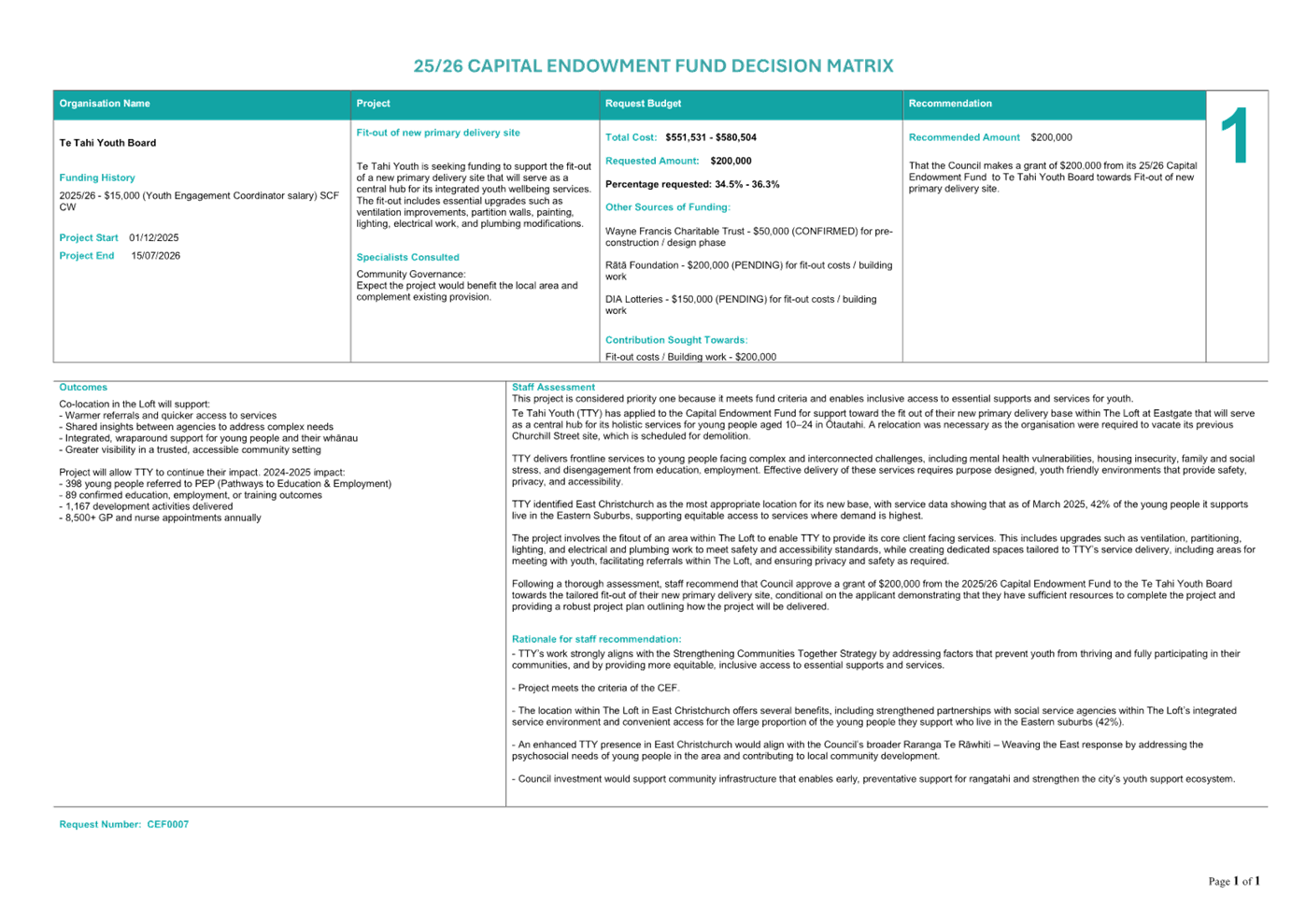
|
17. Environmental Partnership Fund - Correction to
report
|
|
Reference Te Tohutoro:
|
26/551653
|
|
Responsible Officer(s) Te Pou Matua:
|
Julie
Pearce – Community Funding Advisor
|
|
Accountable ELT Member Pouwhakarae:
|
Andrew
Rutledge, General Manager Citizens and Community
|
1. Purpose and Origin of the Report Te Pūtake Pūrongo
1.1 The
purpose of this report is to correct the previous resolution made by the
Council due to a change of umbrella organisation as requested by the applicant.
1.2 This
correction relates to the Council decision made at its meeting on 4 February
2026, (CNCL/2026/00015) only in relation to the Environmental Partnership Fund
allocation to Predator Free NB/Coastal Kaitiaki for project Predator Free
NB/Coastal Kaitiaki. The application for funding should now read –
The Gift Collective as the fund holder on behalf of Predator Free NB/Coastal
Kaitiaki.
1.2.1 The
link to the decision in the meeting minutes CNCL/2026/00015, Item 13,
resolution 9 can be found here:
https://christchurch.infocouncil.biz/Open/2026/02/CNCL_20260204_MIN_10809_AT.PDF
1.3 The
organisation has agreed to accept this funding and to deliver the
project. It has also agreed to report back on this project and accept all
conditions of the grant funding.
2. Officer Recommendations Ngā Tūtohu
That the Council:
1. Receives the information in the Environmental
Partnership Fund allocation - Correction Report.
2. Notes that the decision in this report are
assessed as low significance based on the Christchurch City Council’s
Significance and Engagement Policy.
3. Alters the 4 February 2026 Council decision (CNCL/2026/00015) only in relation to the allocation towards Predator
Free NB/Coastal Kaitiaki to reflect the grant of $10,000 from the 2025/26
Environmental Partnership Fund, as
follows (underlining being the addition):
4. Approves the
recommended allocations from the 2025/26 Environmental Partnership Fund
amounting to $443,033 as detailed below:
|
Organisation
|
Project Name
|
Amount
Recommended
|
|
The Gift Collective as the fund holder on behalf of Predator Free NB/Coastal Kaitiaki
|
Predator Free
NB/Coastal Kaitiaki
|
$10,000
|
3. Background/Context Te Horopaki
3.1 The
original decision report to the Council can be accessed via this link:
https://christchurch.infocouncil.biz/Open/2026/02/CNCL_20260204_MIN_10809_AT.PDF
Attachments Ngā Tāpirihanga
There are no
attachments to this report.
In addition to the attached documents, the following background
information is available:
|
Document
Name – Location / File Link
|
|
Not
applicable
|
Signatories Ngā Kaiwaitohu
|
Author
|
Julie Pearce -
Community Funding Advisor
|
|
Approved By
|
Paul Devlin -
Manager Regional Parks
Rupert Bool -
Head of Parks
Andrew
Rutledge - General Manager Citizens and Community
|
|
18. Toi Ōtautahi 2026-2036
|
|
Reference Te Tohutoro:
|
26/86534
|
|
Responsible Officer(s) Te Pou Matua:
|
Kiri
Jarden, Principal Advisor Community Arts
|
|
Accountable ELT Member Pouwhakarae:
|
Andrew
Rutledge, General Manager Citizens and Community
|
1. Purpose and Origin of the Report Te Pūtake Pūrongo
1.1 The
purpose of this report is to present the final draft of Toi Ōtautahi
2026-2036 for consideration by the Council.
1.2 The
draft strategy has been developed in consultation with partners, the local
community and arts sector to shape and prioritise activities and programmes
supporting the sector and reducing barriers to arts and creativity
opportunities.
2. Officer Recommendations Ngā
Tūtohu
That the Council:
1. Receives the information in the Toi Ōtautahi 2026-2036
Report.
2. Notes that the decision in this report is
assessed as low significance based on the Christchurch City Council’s
Significance and Engagement Policy.
3. Approves the adoption of the Toi Ōtautahi
2026-2036 Strategy Attachment A of this report.
3. Executive Summary Te Whakarāpopoto Matua
3.1 Toi
Ōtautahi, a strategy for arts and creativity is a partnered strategy with
Rātā Foundation, Creative New Zealand, mana whenua and ChristchurchNZ
continuing to support implementation through their own programmes, direct
funding of Council activity and or in-kind contributions.
3.2 Toi
Ōtautahi 2026-2036 reconfirms a focus on:
3.2.1 Support
for local artists, arts and creative organisations,
3.2.2 Recognition
of the Treaty of Waitangi and relationship with mana whenua, and contribution
to our city identity,
3.2.3 Recognition
of the value art and creativity for a vibrant, prosperous and connected city,
and
3.2.4 Understanding
that access to and participation in arts and creativity brings tangible health
and wellbeing benefits.
3.3 Toi
Ōtautahi is proposed to have a life of ten years noting that delivery can
be nuanced and responsive as required by changing priorities and as
opportunities allow.
3.4 No
additional investment from the Council is sought.
4. Background/Context Te Horopaki
4.1 Extensive
engagement with community and the creative sector was undertaken in the
development of Toi Ōtautahi 2019-2024.
4.2 In
2020 New Zealand’s borders closed and delivery of the strategy went
online with Rātā Foundation and Creative New Zealand supporting
development of digital platforms and projects; www.toiotautahi.org.nz . In January
2026 the Toi Ōtautahi Instagram was registering around 100,000 views for
the month while the Toi Ōtautahi newsletter has high open rates.
4.3 Manatū
Taonga Ministry for Culture and Heritage (MCH) funding investment enabled the
Council’s community arts team to develop artists development programmes
and contributed towards the opening of Toi Auaha, a community arts space in the
central city. Toi Auaha is now home to over 20 artists while there are several
regular community arts organisations using the shared spaces.
4.4 The
2021 Council Life in Christchurch Arts, Culture and Heritage survey results
showed that arts and creativity remain an important reason why over half
of respondents enjoy living in Christchurch. Street art in particular is highly
valued by 80% of respondents, who think that it helps to improve the appearance
of public spaces. The survey results showed that there was more scope for
developing access to and support for ngā toi Māori.
4.5 In
2023 ChristchurchNZ undertook a survey of the creative sector. It found that
the Christchurch arts and creative sector employed at least 5690 people and
generated approximately $718 million in economic output in 2022, growing at
almost double the rate of the city’s overall GDP since 2017.
4.6 MCH
research found that the New Zealand creative sector is a major economic driver,
contributing $17.5 billion (4.2%) to national GDP as of March 2024,
employing roughly 117,912 people. Creative exports were valued at $3.6 billion
in 2023, making it the country's fourth-largest export industry, following
dairy, meat, and forestry, while outperforming sectors like seafood and wine.
4.7 The
Council’s increased investment through multi-year commitments to The Arts
Centre and Watch This Space, and with the opening of a new theatre, home to The
Court Theatre, movement and circus arts studios at Parakiore and significant
performance space at One New Zealand Stadium at Te Kaha, all making a
significant contribution to the Council’s aspiration of becoming a
Cultural Powerhouse.
4.8 The following related memos/information were circulated to the
meeting members:
|
Date
|
Subject
|
|
12/03/2026
|
Toi Ōtautahi Strategy Delivery
Report 2025
|
4.9 The following related information session/workshops have taken place
for the members of the meeting:
Options Considered Ngā Kōwhiringa Whaiwhakaaro
4.10 The
following reasonably practicable options were considered and are assessed in
this report:
4.10.1 Option
one: Endorse Toi Ōtautahi 2026-2036.
4.10.2 Option
two: Leave Toi Ōtautahi 2019-2024 in place noting that no significant
change, leaving Toi Ōtautahi 2026-2036 on the table for future
consideration.
Options Descriptions Ngā Kōwhiringa
4.11 Preferred
Option: Endorse Toi Ōtautahi 2026-2036.
4.11.1 Option
advantages:
· This option
considers feedback from community and sector, noting particular interest in
supporting sustainable arts careers, access to opportunities by children and
young people, promoting sustainable practices in the sector and ensuring access
to diverse spaces.
4.11.2 Option
disadvantages:
· No increase in
operational funding is proposed which may affect delivery timeframes for any
new work streams.
4.12 Option
two: Leave Toi Ōtautahi 2026-2036 on the table till a later date.
4.12.1 Option
advantages:
· Toi
Ōtautahi 2019-2024 continues to provide guidance on delivery despite the
delay in review without impacting Council delivery.
4.12.2 Option
disadvantages:
· A review of
the Artworks in Public Places Policy is underway and delivery of this would be
guided by Toi Ōtautahi. Ensuring the two strategies were consistent in
approach would be advantageous to consistent delivery and engagement with
artists, sectors and communities. Of note is the reference in Toi Ōtautahi
2026-2036 to sustainable practices (mindfulness of waste in the production of
artworks), sustainable careers for artists and organisations, and importantly,
support for capability building and commission
opportunities for ringatoi Ngāi Tahu recognising the important
contribution of Mana Whenua in enabling unique stories, history, experiences
and language to be woven throughout our events, public spaces and reserves.
5. Financial Implications Ngā Hīraunga Rauemi
Capex/Opex Ngā Utu Whakahaere
|
|
Recommended Option
|
Option 2 - <enter text>
|
Option 3 - <enter text>
|
|
Cost to Implement
|
$0
|
$0
|
N/A
|
|
Maintenance/Ongoing Costs
|
$30,000 (on budget)
|
$30,000 (on budget)
|
|
|
Funding Source
|
Rates
|
Rates
|
|
|
Funding Availability
|
Operational funds
|
Operational funds
|
|
|
Impact on Rates
|
Nil
|
Nil
|
|
5.1 The
strategy requires no further commitment of funds from annual or long-term
plans.
5.2 Strategy
partners support delivery through in-kind support and through grants to support
delivery led by Council Community Arts Advisors.
6. Considerations Ngā Whai Whakaaro
Risks and Mitigations Ngā Mōrearea me
ngā Whakamātautau
6.1 There
are no risks to delivery identified. Toi Ōtautahi remains a partnered
strategy with investment directly to Council to support a range of activities
as well as ongoing grant making from partners into the local arts and creative
sector.
Legal Considerations Ngā Hīraunga
ā-Ture
6.2 Statutory
and/or delegated authority to undertake proposals in the report:
6.2.1 As
conferred through the Local Government Act 2002.
6.3 Other Legal Implications:
6.3.1 There
is no legal context, issue, or implication relevant to this decision.
Strategy
and Policy Considerations Te
Whai Kaupapa here
6.4 The
required decision:
6.4.1 Aligns
with the Christchurch
City Council’s Strategic Framework and aspiration to become a
Cultural Powerhouse.
6.4.2 Is
assessed as low significance based on the Christchurch City Council’s
Significance and Engagement Policy. The level of significance was
determined by the number of affected parties and limited impact on rates.
6.4.3 Is
consistent with Council’s Plans and Policies, including the Our Heritage,
Our Taonga-Heritage Strategy, Strengthening Communities Together Strategy,
Multicultural Strategy, Urban Development Strategy and the Community Events
Implementation Plan.
6.5 This
report supports the Council's
Long Term Plan (2024 - 2034):
6.6 Citizens and communities
6.6.1 Activity: Recreation, Sports, Community Arts and Events
· Level of Service: 2.8.6.1 Support community-based
organisations to develop, promote and deliver community events and arts in
Christchurch - 15,000 hours of staff support per annum
6.7 Recreation,
Sports, Events and Arts plan for more people, more active, more often.
Community
Impacts and Views Ngā Mariu ā-Hāpori
6.8 Through
review of Toi Ōtautahi the community and sector were able to share their
views. These have been generally encouraging of Council delivery and support
for arts, creative and cultural activity with an expectation of support,
leadership and responsible stewardship.
Impact
on Mana Whenua Ngā
Whai Take Mana Whenua
6.9 The
decision does not involve a significant decision in
relation to ancestral land, a body of water or other elements of intrinsic
value, therefore this decision does not specifically
impact Mana Whenua, their culture, and traditions.
6.10 The decision does
not involve a matter of interest to Mana Whenua and will not
impact on our agreed partnership priorities with Ngā
Papatipu Rūnanga.
6.11 Toi
Ōtautahi prioritises ngā toi Māori and engagement with Mana
Whenua to ensure creative opportunities and access to creative traditions are
nurtured and expression of identity through arts and creativity is supported.
Climate
Change Impact Considerations Ngā Whai Whakaaro mā te Āhuarangi
6.12 The proposals in
this report are unlikely to contribute significantly to adaptation to the
impacts of climate change or emissions reductions.
6.13 While
encouraging more sustainable practices in the creation of artworks is proposed
in Toi Ōtautahi 2026-2036 the scope of work implemented through the
strategy will be limited in relation to physical outputs. More consideration
would very likely be given through the implementation of a new public art
policy.
7. Next Steps Ngā Mahinga ā-muri
7.1 Following
a decision from the Council, staff will be in touch with strategy partners.
Community and sector will be informed through various Toi Ōtautahi
communication media.
Attachments Ngā Tāpirihanga
|
No.
|
Title
|
Reference
|
Page
|
|
a 
|
Toi
Ōtautahi 2026-2036 DRAFT (Under Separate Cover)
|
26/78362
|
|
|
b
|
Toi
Ōtautahi Strategy Delivery Report 2025 (Under Separate Cover)
|
26/57483
|
|
In addition to the attached documents, the following background
information is available:
|
Document
Name – Location / File Link
|
|
|
Signatories Ngā Kaiwaitohu
|
Authors
|
Kiri Jarden -
Principal Advisor Community Arts
Lucy Blackmore
- Manager Events and Arts
|
|
Approved By
|
Nigel Cox -
Head of Recreation, Sports & Events
Andrew
Rutledge - General Manager Citizens and Community
|
|
19. 2025 Triennial Elections
|
|
Reference Te Tohutoro:
|
26/456689
|
|
Responsible Officer(s) Te Pou Matua:
|
Jo
Daly, Council Governance Advisor / Deputy Electoral Officer
|
|
Accountable ELT Member Pouwhakarae:
|
Helen
White, General Counsel / Director of Legal & Democratic Services
|
1. Purpose and Origin of the Report Te Pūtake Pūrongo
1.1 The
purpose of this report is to provide information to the Council on the 2025
triennial elections.
1.2 A
similar report has been prepared for past triennial elections, collating
information into one document.
1.3 The
report is provided for information only, no decisions are required.
2. Officer Recommendations Ngā Tūtohu
That the Council:
1. Receives the information in the 2025 Triennial Elections Report.
3. Background/Context Te Horopaki
3.1 The
2025 local elections were held on Saturday 11 October 2025.
3.2 The
report on the local elections (Attachment A) provides statistical information
from the Council’s elections, election related promotion and
communication activities and information relating to local government elections
in New Zealand.
3.3 The
Council’s Monitoring & Research Team has prepared the report Voter
turnout statistics and resident perspectives on participation and barriers to
voting (Attachment B). This report brings together voter turnout data,
demographic information about electors from the electoral roll, and feedback
from residents about their voting experiences, collected through the
Council’s Life in Christchurch survey series.
3.4 The
information and findings from these reports will help inform and support future
activity for Christchurch elections, including opportunities focussed on
participation.
3.5 The
information in these reports has also helped, and will continue to inform the
Council’s submissions and contributions to Central Government regarding
local government elections, and legislative and regulatory reviews.
3.6 The
local government sector, including Local Government New Zealand and
Taitaurā, is advocating to Central Government and government departments
for changes to legislation and regulations that enable changes to the way local
government elections are delivered.
Attachments Ngā Tāpirihanga
|
No.
|
Title
|
Reference
|
Page
|
|
a ⇩
|
2025 Triennial
Elections Report - April 2026
|
26/888840
|
241
|
|
b ⇩ 
|
2025
Christchurch Local Election - Voter turnout statistics and resident
perspectives report - April 2026
|
26/784900
|
276
|
In addition to the attached documents, the following background
information is available:
Signatories Ngā Kaiwaitohu
|
Author
|
Jo Daly -
Council Governance Advisor
|
|
Approved By
|
Megan Pearce -
Manager Democratic Services
Helen White -
General Counsel / Director of Legal & Democratic Services
|
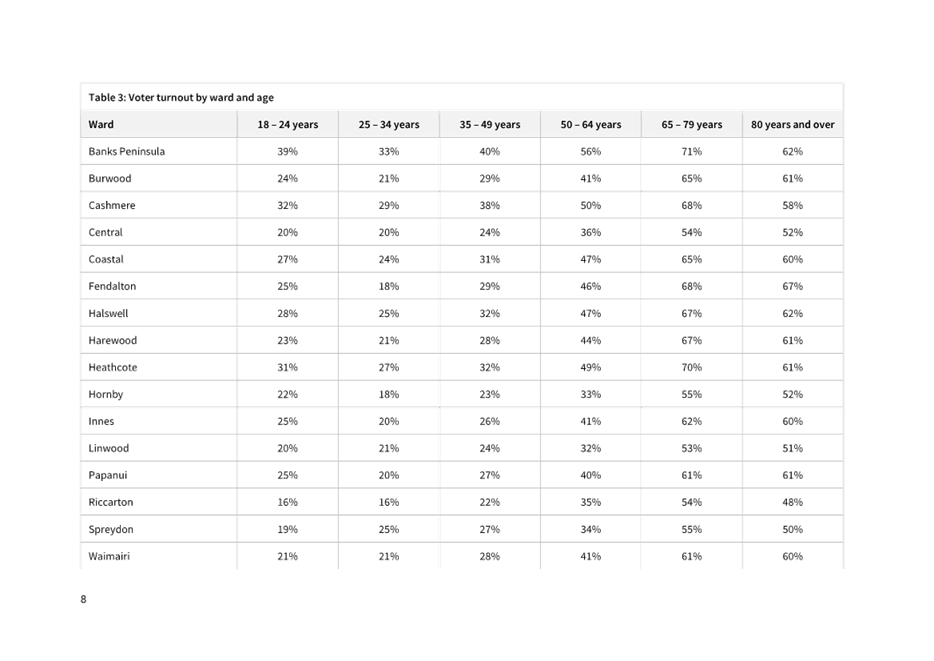
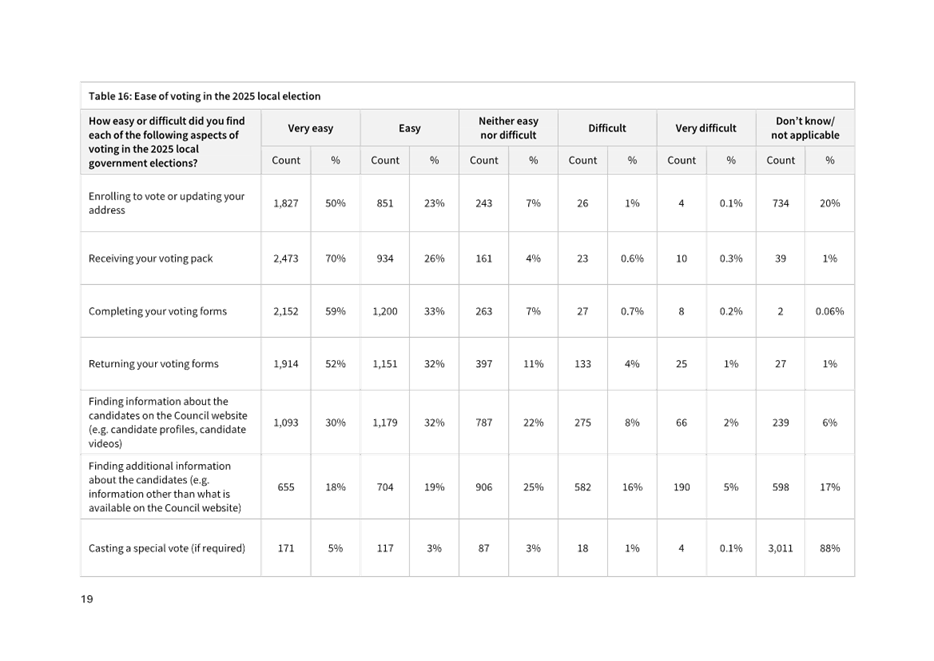
|
20. Notification
of Revocation of Part of previous Council decision
|
|
Reference Te Tohutoro:
|
26/869416
|
|
Responsible Officer(s) Te Pou Matua:
|
David
Corlett, Democratic Services Advisor
|
|
Accountable ELT Member Pouwhakarae:
|
Helen
White, General Counsel / Director of Legal & Democratic Services
|
1. Purpose and Origin of the Report Te Pūtake Pūrongo
1.1 The
purpose of this procedural report is for the Council to confirm the partial
revocation of a previous Council decision, consistent with a decision made by
the Finance and Performance Committee on Wednesday 22 April 2026 relating to
the Duvauchelle and Akaroa Wastewater treatment plants.
1.2 The
partial revocation of the previous 2022 Council decision relates to the upgrade
of the Duvauchelle Wastewater Treatment Plant, which is no longer feasible due
to geotechnical issues at that site.
2. Officer Recommendations Ngā Tūtohu
That the Council:
1. Receives the information in the Notification of Revocation of Part of previous
Council decision Report.
2. Confirms the following decision made by the
Finance and Performance Committee on 22 April 2026 in relation to the
Duvauchelle Wastewater Treatment Plant (FPCO/2026/00001):
Revokes
the following resolutions 2, 3, 5, 6 and 7 in the 2022 decision CNCL/2022/00114
to upgrade the Duvauchelle WWTP and irrigate that treated wastewater to land
that is part of the Duvauchelle Recreational Reserve.
2. Approves the
adoption of Option 1: spray and drip irrigate treated wastewater to the Akaroa
Golf Course.
3. Requests
Officers incorporate provision for future non-potable reuse.
5.Makes provision
in the Long Term Plan for increased operational costs for the Akaroa Golf Club
associated with the needs of the scheme.
6.Requests that
Officers work closely with the Ōnuku Rūnanga, Akaroa Golf Club,
Duvauchelle Primary School and Banks Peninsula Early Learning Incorporated and
Trust during the design development and resource consent process.
7.Requests as a
minimum that the resource consent application is limited notified to affected
parties.
3. Background/Context Te Horopaki
3.1 On
22 April 2026 the Finance and Performance Committee considered a staff report
entitled Akaroa Wastewater Cost Reduction Opportunities.
3.2 The
report related to a project with significant capital and operational cost
implications. The Finance and Performance Committee has delegated
responsibility from the Council for monitoring the Council’s Capital
Programme and associated operational expenditure, and approving amendments to
the Capital Programme.
3.3 The
revocation of part of a previous Council decision CNCL/2022/00114 to upgrade the Duvauchelle WWTP and irrigate that treated
wastewater to land that is part of the Duvauchelle Recreational Reserve, was required to give effect to the Committee’s decision.
3.4 Efficient
upgrade of the Duvauchelle WWTP is now not feasible because of geotechnical
issues at that site. The Duvauchelle wastewater needs to be treated at the
consented Akaroa WWTP.
3.5 The
parts of the previous Council 2022 decision to be revoked are:
2- Approves
the adoption of Option 1: spray and drip irrigate treated wastewater to the
Akaroa Golf Course.
3- Requests
Officers incorporate provision for future non-potable reuse.
5- Makes
provision in the Long Term Plan for increased operational costs for the Akaroa
Golf Club associated with the needs of the scheme.
6- Requests
that Officers work closely with the Ōnuku Rūnanga, Akaroa Golf Club,
Duvauchelle Primary School and Banks Peninsula Early Learning Incorporated and
Trust during the design development and resource consent process.
7- Requests
as a minimum that the resource consent application is limited notified to
affected parties.
4. Considerations Ngā Whai Whakaaro
4.1 Although
the Finance and Committee of the Whole has delegation over the options to save
costs on disposal of treated wastewater, it is considered good practice for the
Council to formally confirm the revocation of a previous council decision.
Attachments Ngā Tāpirihanga
There are no
attachments to this report.
In addition to the attached documents, the following background
information is available:
|
Document
Name – Location / File Link
|
|
Not
applicable
|
Signatories Ngā Kaiwaitohu
|
Author
|
David Corlett
- Democratic Services Advisor
|
|
Approved By
|
Megan Pearce -
Manager Democratic Services
Helen White -
General Counsel / Director of Legal & Democratic Services
|
|
21. Notice of
Motion - Ground-based solar generation
|
|
Reference Te Tohutoro:
|
26/714092
|
|
Elected Member Te Mema Pōti:
|
The
Mayor
|
|
Accountable ELT Member Pouwhakarae:
|
Mary
Richardson – Chief Executive
|
1. Purpose and Origin Te Pūtake Pūrongo
1.1 Pursuant to Standing Order 22 of Christchurch City Council’s Standing
Orders the Mayor provided a
Notice of Motion outlined below which is accompanied by the associated Officer
advice.
The Mayor Notice of Motion:
That the Council:
1. Requests staff to undertake a city-wide
assessment of Council-owned land that may be suitable for medium-term
(25–30 years) or long-term (greater than 30 years) lease for ground-based
solar generation, including solar farms and other non-roof-mounted solar
arrays.
2. Requests
staff to report back to the Council on feasible options, opportunities, and
considerations arising from the assessment of Council owned land for ground
based solar electricity generation, for potential inclusion and consideration
as part of the 2027–2037 Long Term Plan.
2. Resource Impact of the Notice of Motion
2.1 The
Property and Facilities Unit can lead the requested work as part of
business-as-usual activities. The request relates to the preparation of an
assessment and associated advice, rather than delivery of physical works, and
does not require commissioning a separate report at this stage.
2.2 The
total resource requirement is estimated at no more than 80 staff hours across
all units, with most effort in Property and Facilities. Expected contributions
are as follows:
2.2.1 Property
and Facilities: primary lead and coordination effort.
2.2.2 Planning,
Parks, and Three Waters: input limited to site constraints and strategic /
operational considerations, estimated at no more than five hours per unit.
2.2.3 Legal
and Procurement: targeted advice as required, estimated at no more than five
hours per function.
2.3 The
work would be accommodated through re-prioritisation within existing work
programmes. Given the relatively small scale and time-bound nature of the task,
any impacts on other scheduled activities are expected to be minor and
manageable within current resourcing.
2.4 No additional financial resources are required to undertake this
work.
3. Background/Context Te Horopaki
3.1 The
Notice of Motion requests that staff undertake a city-wide assessment of
Council-owned land suitable for medium- or long-term lease for ground-based
solar generation, and to report back on feasible options for potential
inclusion in the 2027–2037 Long Term Plan (LTP).
3.2 The proposed work aligns with Council’s broader energy
transition programme and climate objectives. While it is not currently part of
the work programme, it is complementary to existing initiatives and can be
delivered within the proposed timeframe.
4. Officer Advice
Any Current Related Work Underway / Achievability of
the Notice of Motion
4.1 The
Council is actively progressing several solar and energy resilience
initiatives, which provide a strong foundation for the proposed assessment:
4.1.1 Emergency
Hubs (Banks Peninsula): The Council is installing solar and battery systems at
six Emergency Hubs, funded through an Energy Efficiency and Conservation
Authority (EECA) grant. This programme will provide lighting, emergency
communications, and basic cooking capability during power outages. Procurement
and engagement is about to commence.
4.1.2 Christchurch
Art Gallery: The Council is installing solar arrays as part of the transition
from landfill gas to electricity at this site. Procurement has been completed
and the project has entered the design phase under a design-and-build contract.
4.1.3 Solar
Farm - Sleeved Power Purchase Agreement: Staff are progressing procurement
planning for a sleeved power purchase agreement (PPA) for electricity generated
from local solar farms. A procurement plan will be presented to the Council
shortly. This approach offers lower electricity costs, reduced grid emissions,
and support for a local renewable energy project.
4.1.4 Strategy
and Forward Programme: Staff are finalising the draft strategy, workshopped
with Councillors in 2025, and developing project plans for the 2027/28 funding
programme, including preparation for future LTP bids.
4.1.5 Te
Hononga: Staff are exploring solar and battery options at Te Hononga as part of
the transition away from landfill gas.
4.2 The
proposed assessment of Council-owned land for ground-based solar generation is
not included in the current work programme. However, it is achievable within
existing capacity and timeframes and can be delivered alongside the above
initiatives.
4.3 The
Property and Facilities Unit given its responsibility for both corporate
property transactions and energy management, can deliver this work. Delivery
would require coordinated input from Parks, Three Waters, and Planning teams.
4.4 It
is recommended that the following points be clearly articulated if the
resolution proceeds:
4.4.1 Commercial
basis: The assessment and any resulting arrangements will be undertaken on a
commercial basis, including an open market tender process.
4.4.2 Council
role: The Council's primary role would be to provide land through lease
arrangements.
4.4.3 No
Council-owned solar farms: The Council would not develop or operate its own
utility-scale solar farms. Others are better placed to design, finance, build,
and operate these assets.
4.4.4 Partnership
opportunities: The Council may enter into partnerships that include purchasing
electricity from the provider, particularly where there are opportunities for
"behind-the-meter" supply to council facilities.
4.4.5 Revenue
potential: Lease arrangements may provide a modest but ongoing operating
revenue stream.
Financial Implications / Capex and Opex Funding
Sources
4.5 The
proposed assessment can be completed within existing operational budgets. No
additional capital or operating funding is required to undertake the assessment
itself.
4.6 Any
potential future development would be structured on a commercial basis, with
Council’s primary role being the provision of land rather than direct
investment in, or operation of, solar farms. This approach avoids capital
exposure and operational risk for the Council.
4.7 Where
appropriate, internal costs would be managed through existing internal charging
mechanisms and offset by energy savings or commercial returns.
4.8 There is potential for ongoing operating revenue through lease
income if suitable sites are identified and leased to third-party developers.
Other Considerations (e.g. Risks, impacts on Mana
Whenua, climate change, accessibility, Annual Plan/Long Term Plan implications)
4.9 Mana
Whenua: Any assessment and subsequent site selection will require early
engagement with Mana Whenua, particularly where land has cultural, ancestral,
or environmental significance.
4.10 Climate
Change: The proposed work supports the Council’s climate objectives by
enabling additional renewable energy generation and potentially reducing
reliance on grid electricity with higher emissions intensity.
4.11 Accessibility:
Accessibility impacts are not anticipated at the assessment stage. Any
identified sites would be evaluated to assess impacts on public access and
service provision.
5. Legal Advice
5.1 The
Council has the legal authority to undertake an assessment of its land holdings
and to lease land for commercial purposes, including renewable energy
generation, subject to statutory requirements and decision-making processes.
5.2 Key
legal considerations include:
5.2.1 Compliance
with the Local Government Act decision-making framework
5.2.2 Public
transparency where required
5.2.3 Appropriate
procurement and commercial terms
5.2.4 Alignment
with property, reserves, and planning legislation (where applicable)
5.3 Further
detailed legal advice will be sought as the assessment identifies specific
sites and delivery models
Signatories Ngā Kaiwaitohu
|
Officer
Advice Provided by
|
Bruce
Rendall - Head of Facilities
and Property
|
|
Approved
By
|
Mary
Richardson – Chief Executive
|
Attachments Ngā Tāpirihanga
There are no
attachments to this report.
|
22. Mayor's
Monthly Report
|
|
Reference Te Tohutoro:
|
26/724152
|
|
Report of Te Pou Matua:
|
Phil
Mauger, Mayor
|
1. Purpose of Report Te Pūtake
Pūrongo
1.1 The
purpose of this report is for the Mayor to report on external activities he
undertakes in his city and community leadership role; and to report on outcomes
and key decisions of the external bodies he attends on behalf of the Council.
1.2 This
report is compiled by the Mayor’s office.
2. Mayors Recommendations Ngā
Tūtohu o Te Koromatua
That the Council:
1. Receives the information in the Mayor’s
Monthly report.
Attachments Ngā Tāpirihanga
|
No.
|
Title
|
Reference
|
Page
|
|
a ⇩ 
|
Mayor's
Monthly Report April 2026
|
26/724200
|
310
|
|
23. Resolution to Exclude the Public
|
Section
48, Local Government Official Information and Meetings Act 1987.
Note: The
grounds for exclusion are summarised in the following table. The full wording from
the Act can be found in section
6 or section
7, depending on the context.
I move that the public be excluded from the
following parts of the proceedings of this meeting, namely the items
listed overleaf.
Reason for passing this resolution: a good
reason to withhold exists under section 7.
Specific grounds under section 48(1) for
the passing of this resolution: Section 48(1)(a)
Note
Section 48(4) of the Local Government
Official Information and Meetings Act 1987 provides as follows:
“(4) Every resolution to exclude the
public shall be put at a time when the meeting is open to the public, and the
text of that resolution (or copies thereof):
(a) Shall
be available to any member of the public who is present; and
(b) Shall
form part of the minutes of the local authority.”
This resolution is made in reliance on
Section 48(1)(a) of the Local Government Official Information and Meetings Act
1987 and the particular interest or interests protected by Section 6 or Section
7 of that Act which would be prejudiced by the holding of the whole or relevant
part of the proceedings of the meeting in public are as follows:
|
ITEM NO.
|
GENERAL SUBJECT OF EACH MATTER TO BE CONSIDERED
|
SECTION
|
SUBCLAUSE AND REASON UNDER THE ACT
|
PUBLIC INTEREST CONSIDERATION
|
Potential Release Review Date and
Conditions
|
|
14.
|
Christchurch Kart Club Relocation
|
|
|
|
|
|
|
Attachment a - Relocation Option Description
- Public Excluded
|
s7(2)(b)(ii)
|
Prejudice Commercial Position
|
The Council acknowledges the public interest in this long-standing
issue. However, it does not consider this outweighs the commercial interests
involved and the potential commercial prejudice if this were disclosed
publicly.
|
6 May 2027
At the conclusion of investigation work and any negotiations with
the private property owner.
|
|
|
Attachment b - Proposed track Layout -
Public Excluded
|
s7(2)(b)(ii)
|
Prejudice Commercial Position
|
The Council acknowledges the public interest in this long-standing
issue. However, it does not consider this outweighs the commercial interests
involved and the potential commercial prejudice if this were disclosed
publicly.
Review Date: 6/05/2027
Review Event: At the conclusion of investigation work and any negotiations
with the private property owner.
|
6 May 2027
At the conclusion of investigation works and any negotiations with
the private property owner.
|
|
|
Attachment c - Indicative Track Cost
Estimate - Public Excluded
|
s7(2)(b)(ii)
|
Prejudice Commercial Position
|
The Council acknowledges the public interest in this long-standing
issue. However, it does not consider this outweighs the commercial interests
involved and the potential commercial prejudice if this were disclosed
publicly.
Review Date: 6/05/2027
Review Event: At the conclusion of investigation work and any negotiations
with the private property owner.
|
6 May 2027
At the conclusion of investigation works and any negtiations with
the private property owner.
|
|
|
Attachment d - Building Estimate for
Kartsport Canterbury - Public Excluded
|
s7(2)(b)(ii)
|
Prejudice Commercial Position
|
The Council acknowledges the public interest in this long-standing
issue. However, it does not consider this outweighs the commercial interests
involved and the potential commercial prejudice if this were disclosed
publicly.
|
6 May 2027
At the conclusion of investigation work and any negotiations with
the private property owner.
|
|
24.
|
Public Excluded Council Minutes - 1 April and
22 april 2026
|
|
|
Refer to the previous public excluded reason in the agendas for
these meetings.
|
|
|
25.
|
Public Excluded Health, Safety and Wellbeing
Committee Minutes - 20 March 2026
|
|
|
Refer to the previous public excluded reason in the agendas for
these meetings.
|
|
|
26.
|
Public Excluded Canterbury Regional Landfill
Joint Committee Minutes - 10 April 2026
|
|
|
Refer to the previous public excluded reason in the agendas for
these meetings.
|
|
Karakia Whakamutunga
Kia whakairia te tapu
Kia wātea ai te ara
Kia turuki whakataha ai
Kia turuki whakataha ai
Haumi e. Hui e. Tāiki e
Actions Register Ngā Mahinga
When decisions are made at meetings, these
are assigned to staff as actions to implement. The following lists
detail any actions from this meeting that were:
·
Open at the time the agenda was generated.
·
Closed since the last ordinary meeting agenda
was generated.
Open Actions Ngā Mahinga Tuwhera
|
REPORT TITLE/AGENDA SECTION
|
MEETING DATE
|
ACTION DUE DATE
|
UNIT
|
TEAM
|
|
Amendments to the Register of
Delegations
|
17 September 2025
|
30 April 2026
|
Legal & Democratic Services
|
Legal Services
|
|
Annual Plan 2025/26
|
24 June 2025
|
30 April 2026
|
Transport & Waste
|
Asset Planning
|
|
Annual Plan 2025/26
|
24 June 2025
|
30 April 2026
|
Transport & Waste
|
Management
|
|
Manchester Street Bus Gate
Trial
|
20 August 2025
|
30 April 2026
|
Transport & Waste
|
Management
|
|
Environmental Partnership
Fund
|
4 February 2026
|
6 May 2026
|
Parks
|
Management
|
|
Notice of Motion -
Investigation into the viability of a clearway on Memorial Avenue
|
4 February 2026
|
6 May 2026
|
Transport & Waste
|
Asset Planning
|
|
Notice of Motion -
Investigation into the viability of a clearway on Memorial Avenue
|
4 February 2026
|
6 May 2026
|
Transport & Waste
|
Management
|
|
Hearings Panel Report to the
Council on the Dog Control Policy and Dog Control Bylaw 2025
|
3 September 2025
|
9 May 2026
|
Parks
|
Parks & Recreation Planning
|
|
Hearings Panel report on the
Gloucester Street "Streets for People" Trial
|
2 October 2024
|
15 May 2026
|
Transport & Waste
|
Project Management
|
|
Annual Plan 2025/26
|
24 June 2025
|
18 May 2026
|
Corporate Services Management
|
Corporate Services Management
|
|
Notice of Motion -
Feasibility of free overnight parking at Parakiore Recreation and Sport
Centre
|
16 July 2025
|
18 May 2026
|
RS&E
|
Management
|
|
New Footpaths Programme
|
17 September 2025
|
20 May 2026
|
Transport & Waste
|
Management
|
|
Beach Hospitality Limited -
Landlord Consent to Improvements and Request for Further Lease
|
2 April 2025
|
29 May 2026
|
F&P Unit
|
Property Consultancy
|
|
Ōtākaro-Avon
Stormwater Management Plan
|
19 June 2024
|
29 May 2026
|
TW
|
Asset Planning Water & Wastewater
|
|
Tsunami Alerting System
Review
|
18 June 2025
|
29 May 2026
|
CS&P
|
CDEM
|
|
2025/2026 Biodiversity Fund
Allocation
|
4 March 2026
|
3 June 2026
|
CS&P
|
Partnerships & Planning
|
|
2025/26 Capital Endowment
Fund - March 2026
|
4 March 2026
|
3 June 2026
|
CS&P
|
Partnerships & Planning
|
|
Cashmere - Penruddock
Roundabout
|
4 March 2026
|
3 June 2026
|
Transport & Waste
|
Asset Planning
|
|
Discretionary Response Fund
March 2026
|
4 March 2026
|
3 June 2026
|
CS&P
|
Partnerships & Planning
|
|
Environmental Partnership
Fund - Correction to report
|
4 March 2026
|
3 June 2026
|
CS&P
|
Partnerships & Planning
|
|
Ōtākaro Avon River
Corridor Regeneration Committee - draft Terms of Reference
|
4 March 2026
|
3 June 2026
|
Citizens & Community Management
|
Citizens & Community Management
|
|
Pihipihi Lane: Name
Correction
|
4 March 2026
|
3 June 2026
|
Transport & Waste
|
Traffic Operations
|
|
Walking Access Act 2008 -
Request to be a Controlling Authority
|
4 March 2026
|
3 June 2026
|
Legal & Democratic Services
|
Legal Services
|
|
Acquisition of Land 657 Pages
Road Christchurch, Pages Road Bridge Renewal Project
|
5 March 2025
|
4 June 2026
|
F&P Unit
|
Property Consultancy
|
|
Climate Change Portfolio Lead
Report
|
3 July 2024
|
5 June 2026
|
SP&R
|
Coastal Hazards
|
|
Spreydon, Somerfield,
Waltham, Beckenham CRAF - Lyttelton Street safety improvements
|
6 August 2025
|
26 June 2026
|
Transport & Waste
|
Project Management
|
|
Spreydon, Somerfield,
Waltham, Beckenham CRAF - Selwyn Street pedestrian and cycle safety
improvements
|
6 August 2025
|
26 June 2026
|
Transport & Waste
|
Project Management
|
|
Spreydon, Somerfield,
Waltham, Beckenham CRAF - Strickland Street/Somerfield Street safety
improvements
|
10 September 2025
|
26 June 2026
|
Transport & Waste
|
Project Management
|
|
66E Hills Rd - Sale of Land
|
16 July 2025
|
30 June 2026
|
F&P Unit
|
Property Consultancy
|
|
Annual Plan 2025/26
|
24 June 2025
|
30 June 2026
|
Parks
|
Planning & Policy
|
|
Infrastructure Amendments -
Parks
|
25 June 2024
|
30 June 2026
|
Parks
|
Parks & Recreation Planning
|
|
Other Amendments - Planning,
Property and Miscellaneous
|
25 June 2024
|
30 June 2026
|
F&P Unit
|
Management
|
|
Southshore South New Brighton
Earthquake Legacy Project
|
29 August 2019
|
30 June 2026
|
TW
|
Asset Planning Water & Wastewater
|
|
Welles Street Temporary
Improvements
|
17 September 2025
|
30 June 2026
|
Professional & Technical Services
|
Project Management
|
|
Yaldhurst Memorial Hall
|
25 June 2024
|
30 June 2026
|
F&P Unit
|
Property Consultancy
|
|
2025-26 Sustainability Fund
Allocation
|
1 April 2026
|
1 July 2026
|
SP&R
|
Coastal Hazards
|
|
Christchurch Wastewater
Treatment Plant Pond Odour Mitigation
|
1 April 2026
|
1 July 2026
|
CS&P
|
Partnerships & Planning
|
|
Christchurch Wastewater
Treatment Plant Pond Odour Mitigation
|
1 April 2026
|
1 July 2026
|
TW
|
Management
|
|
Hagley Park & Botanic
Gardens - No Stopping & Mobility Park Parking Restrictions - Update
|
1 April 2026
|
1 July 2026
|
Transport & Waste
|
Traffic Operations
|
|
Hearings Panel report to the
Council on the Future of Lichfield Street Carpark
|
1 April 2026
|
1 July 2026
|
F&P Unit
|
Management
|
|
International Relations
Update
|
1 April 2026
|
1 July 2026
|
OM&CS
|
Management
|
|
Notice of Motion - Parker /
Gilberthorpes / Waterloo Intersection Signalisation
|
1 April 2026
|
1 July 2026
|
Transport & Waste
|
Management
|
|
Property Disposal, Millstead
Oaks Subdivision, Casebrook.
|
1 April 2026
|
1 July 2026
|
F&P Unit
|
Property Consultancy
|
|
Grant an Easement for
Utilities Over a Council Reserve
|
10 April 2024
|
8 July 2026
|
F&P Unit
|
Property Consultancy
|
|
Annual Plan 2025/26
|
24 June 2025
|
31 July 2026
|
TW
|
Asset Planning Water & Wastewater
|
|
Acquisition of Deeds Land
Along with Road Stopping and Amalgamation - Corner Harmans and Voelas Roads
Lyttelton
|
5 February 2025
|
30 September 2026
|
F&P Unit
|
Property Consultancy
|
|
Report Requests
|
25 June 2024
|
31 October 2026
|
Transport & Waste
|
Asset Planning
|
|
27 Hunters Road & 43
Whero Avenue, Diamond Harbour – FENZ and Te Pā o
Rākaihautū Unsolicited Proposals
|
5 June 2024
|
31 December 2026
|
F&P Unit
|
Property Consultancy
|
|
Dedication of Local Purpose
Reserve (Road) 3 R Tulett Park Drive Casebrook
|
4 February 2026
|
31 December 2026
|
F&P Unit
|
Property Consultancy
|
|
Koukourarata Port Levy - Bach
on Public Land ( Road Reserve)
|
16 April 2025
|
31 December 2026
|
F&P Unit
|
Property Consultancy
|
|
Hearings Panel Report on
Lincoln Road Peak Hour Bus Lane Proposal
|
7 July 2022
|
1 June 2027
|
Transport & Waste
|
Project Management
|
|
Cathedral Square Roading
Network- Worcester Boulevard from Oxford Terrace to Cathedral Square (Area
9B)
|
4 March 2026
|
31 July 2027
|
Transport & Waste
|
Project Management
|
Actions Closed Since the Last Meeting Ngā
Mahinga kua Tutuki nō Tērā Hui
|
REPORT TITLE/AGENDA SECTION
|
MEETING DATE
|
DUE DATE
|
ACTION CLOSURE DATE
|
UNIT
|
TEAM
|
|
Councillors' proposed
amendments - Infrastructure and Regulation
|
14 February 2024
|
1 April 2026
|
1 April 2026
|
TW
|
Asset Planning Water & Wastewater
|
|
Annual Plan 2025/26
|
24 June 2025
|
31 May 2026
|
30 March 2026
|
Planning & Consents
|
Management
|
|
Heathcote Express Major
Cycleway - Truscotts Road Detailed Traffic Resolutions
|
20 August 2025
|
30 March 2026
|
30 March 2026
|
Transport & Waste
|
Traffic Operations
|
|
Hearings Panel Report to the
Council on the Dog Control Policy and Dog Control Bylaw 2025
|
3 September 2025
|
30 April 2026
|
4 April 2026
|
Regulatory Compliance
|
Regulatory Compliance
|
|
South-East Central
Neighbourhood - Speed Limit Change
|
10 December 2025
|
11 March 2026
|
25 March 2026
|
Transport & Waste
|
Project Management
|
|
District Licensing Committee
(DLC) Recruitment
|
21 January 2026
|
22 April 2026
|
2 April 2026
|
Legal & Democratic Services
|
Democratic Services
|
|
Burwood & Mairehau
intersection improvements
|
4 February 2026
|
6 May 2026
|
25 March 2026
|
Transport & Waste
|
Project Management
|
|
Waipuna Halswell Hornby
Riccarton Community Board: Representation on Committees and External
Organisations, 2025–2028
|
4 February 2026
|
6 May 2026
|
15 April 2026
|
CS&P
|
CS&P - Governance (Hal-Hor-Ric)
|
|
Bus stop upgrades on
Gloucester and St Asaph Streets
|
4 March 2026
|
3 June 2026
|
15 April 2026
|
Transport & Waste
|
Traffic Operations
|