Christchurch City Council
Agenda
Notice of Meeting:
An ordinary meeting of the Christchurch
City Council will be held on:
Date: Wednesday 21 February 2024
Time: 9.30 am
Venue: Council Chambers, Civic Offices,
53 Hereford Street, Christchurch
Membership
|
Chairperson
Deputy Chairperson
Members
|
Mayor Phil Mauger
Deputy Mayor Pauline Cotter
Councillor Kelly Barber
Councillor Melanie Coker
Councillor Celeste Donovan
Councillor Tyrone Fields
Councillor James Gough
Councillor Tyla Harrison-Hunt
Councillor Victoria Henstock
Councillor Yani Johanson
Councillor Aaron Keown
Councillor Sam MacDonald
Councillor Jake McLellan
Councillor Andrei Moore
Councillor Mark Peters
Councillor Tim Scandrett
Councillor Sara Templeton
|
15 February 2024
|
|
|
Principal Advisor
Mary Richardson
Interim Chief Executive
Tel: 941 8999
|
|
Katie Matheis
Democratic Services Advisor
941 5643
Katie.Matheis@ccc.govt.nz
www.ccc.govt.nz
|
Council
21 February 2024
|
|
|
Council
21 February 2024
|
|
TABLE OF CONTENTS NGĀ IHIRANGI
Karakia Tīmatanga................................................................................................... 4
1. Apologies Ngā Whakapāha................................................................................. 4
2. Declarations of Interest Ngā Whakapuaki Aronga.................................................. 4
3. Public
Participation Te Huinga
Tūmatanui............................................................ 4
3.1 Public Forum Te Huinga Whānui.......................................................................................... 4
3.2 Deputations by
Appointment Ngā Huinga Whakaritenga...................................................... 4
4. Presentation
of Petitions Ngā
Pākikitanga............................................................ 4
Staff Reports
5. Response
to Notice of Motion - Open Briefings and Workshops................................ 5
6. Committee
Structure Review............................................................................ 13
7. Better
Off Funding Citywide Safety.................................................................... 23
8. Metropolitan
Discretionary Response Fund - The New Zealand Symphony Orchestra Foundation..................................................................................................... 35
9. Resolution
to Exclude the Public........................................................................ 40
Karakia Whakamutunga
Whakataka te
hau ki te uru
Whakataka te
hau ki te tonga
Kia makinakina
ki uta
Kia mataratara
ki tai
E hi ake ana te
atakura
He tio, he
huka, he hau hu
Tihei mauri ora
1. Apologies Ngā Whakapāha
At the close of
the agenda no apologies had been received.
2. Declarations of Interest Ngā
Whakapuaki Aronga
Members are
reminded of the need to be vigilant and to stand aside from decision making
when a conflict arises between their role as an elected representative and any
private or other external interest they might have.
3. Public Participation Te Huinga
Tūmatanui
3.1 Public Forum Te Huinga Whānui
A period of up to 30 minutes is available
for people to speak for up to five minutes on any issue that is not the subject
of a separate hearings process.
|
3.1.1
|
Grant MacKinnon
Grant MacKinnon will speak to thank the
Council and its staff for their work and the cooperation he’s
experienced as a Central City residential developer over the last 30 years.
|
3.2 Deputations by Appointment Ngā
Huinga Whakaritenga
Deputations may be heard on a matter or
matters covered by a report on this agenda and approved by the Chairperson.
|
3.2.1
|
Canterbury Agricultural and Pastoral Association
Stewart Mitchell, Board Chair, and Steve
Barry will speak on behalf of the Canterbury Agricultural and Pastoral
Association regarding PX Item 10: the 141 Wigram Road Canterbury Agricultural
and Pastoral Association Lease.
|
4. Presentation of Petitions Ngā
Pākikitanga
There were no Presentation
of Petitions at the time the agenda was prepared.
|
Council
21 February 2024
|
|
|
5. Response
to Notice of Motion - Open Briefings and Workshops
|
|
Reference / Te Tohutoro:
|
24/62265
|
|
Report of / Te Pou Matua:
|
Helen
White, Head of Legal and Democratic Services, helen.white@ccc.govt.nz
|
|
Senior Manager / Pouwhakarae:
|
Lynn
McClelland, Assistant Chief Executive Strategic Policy and Performance
(lynn.mcclelland@ccc.govt.nz)
|
1. Purpose and Origin of Report Te Pūtake Pūrongo
1.1 The purpose of this report is to address the
recommendations made by the Chief Ombudsman in their "Open for
business" paper (October 2023).
1.2 The Council requested, at its meeting of 15 November 2023,
a report on the resource and practice implications to change the default
setting for Council and Community Board briefings and workshops to open from
closed (CNCL/2023/00150).
1.3 The
decisions in this report are of low significance in relation to the
Christchurch City Council’s Significance and Engagement Policy.
This level is set due to the subject of this report being limited to council
processes.
2. Officer Recommendations Ngā
Tūtohu
That the Council:
1. Agrees that informal meetings with the Council
and Community Boards linked to a proposed decision are held in public by
default, including but not limited to:
a. Briefings
b. Workshops
c. Seminars
2. Notes that informal meetings for Community
Boards will be held in public by default after a full meeting round and no
later than 1 April 2024.
3. Notes that pre-meeting informals remain as
non-public session as they are for administrative or logistic purposes for the
meeting they refer to.
4. Notes that agenda setting meetings remain as
non-public sessions as they are for administrative or logistic purposes.
5. Notes that there is a process that reviews
public excluded briefings and releases information when appropriate.
6. Notes that the process will be reviewed in six
months.
3. Reason for Report Recommendations Ngā Take mō te
Whakatau
3.1 In October 2023, the Ombudsman released Open for business: A
report on the Chief Ombudsman’s investigation into local council meetings
and workshops (the report). This reviewed the workshop/briefing practices
of eight Councils and provided a number of recommendations that are relevant to
the local government sector as a whole. This Council was not one of the
eight and adoption of the recommendations is voluntary. The recommendations
include:
3.1.1 Adopt
a principle of openness by default for all workshops (and briefings, forums
etc), including a commitment to record a clear basis for closure where
justified, on a case-by-case basis.
3.1.2 Make
sure the time, dates, venues, and subject matter, of all workshops are
publicised in advance, along with the rationale for closing them where
applicable.
3.1.3 Review
practice and internal guidance for keeping of records of workshop proceedings,
ensuring they contribute to a clear audit trail of the workshop (including
details of information presented, relevant debate and consideration of
options). Councils may wish to consider consulting with Archives NZ to
determine good practice in this respect.
3.1.4 Publish
workshop records on the council’s website as soon as reasonably
practicable after the event.
3.1.5 Formalise
a process for considering release of information from closed workshops.
3.1.6 Consider adding a message on a relevant section of council websites
stating that members of the public can make a complaint to me in relation to
the administration of workshops.
3.2 On
15 December 2023, following a Notice of Motion from Councillor Johanson, the
Council resolved:
Request a report no later than February
2024 on the resource and practice implications to change the default setting
for Council and Community Board briefings and workshops to open from closed.
4. Alternative Options Considered Ētahi atu Kōwhiringa
4.1 It
is an option for the Council not to hold informal information sessions in
public.
4.2 The
implications of maintaining the current approach would likely include an
investigation by the Ombudsman into the Council’s practices. The
Ombudsman also considers that holding informal meetings behind closed doors may
contribute to a public perception of secrecy.
5. Detail Te Whakamahuki
5.1 Informal
meetings, such as briefings or workshops are used to prepare elected members
with the necessary background and information to make good decisions.
These sessions can be educational and enable discussion between staff and the
elected members. Final decisions cannot be made outside of a formal meeting,
but these informal meetings form part of the decision-making process.
5.2 The
current Council practice is for informal meetings to be closed to the public.
This is not consistent with the Ombudsman’s recommended approach which is
to hold informal meetings in an open manner and only hold them in private when
it is reasonable to do so. In the view of the Chief Ombudsman, grounds to
withhold under the Local Government Official Information and Meetings Act 1987
(LGOIMA) must be applied and a rigorous assessment of the public interest must
be undertaken.
5.3 The
LGOIMA does not define or regulate workshops or other informal meetings. As
briefings/workshops cannot lawfully be used to make actual and effective
decisions, they are not conducted under the meeting requirements in LGOIMA.
This means that usually briefings/workshops are not notified to the public, the
agenda is not published publicly and no minutes are taken.
5.4 Some
informal meetings are held publicly. These relate to matters of high interest,
for example, the Council holds some open briefings/workshops on the Long-Term
Plan or Annual Plan. The Council ensures briefing topics, attendance and notes
are recorded as part of the Council’s response to the 2019
Ombudsman’s investigation into the Council’s LGOIMA compliance.
Generally, the Community Boards hold workshops in public.
5.5 The report describes various ways that informal meetings
are undertaken. For example, Timaru, Rangitīkei and Clutha
District Councils hold public briefings by default. Other Councils have a range
of practices including advertising and publishing briefing information.
Wellington City Council have open Councillor information sessions with all
information and live streaming available on line: https://wellington.govt.nz/your-council/meetings/councillor-information-sessions
Proposed Approach
5.6 The table addresses Council and Community Board informal meetings
and the proposed high-level approach:
|
Meeting Type
|
Definition
|
Recommended Approach
|
|
1. Agenda
Setting
|
· A meeting of the Chair
and Deputy Chair with staff to confirm agenda items prior to publication.
|
· Administrative/logistic meetings remain closed to the
public.
|
|
2. Informals
|
· These are for elected
members to meet and discuss topical matters and exchange information
proximate and related to a particular formal meeting.
|
· Subjects to be limited to administrative/logistic meetings remain
closed to the public.
· If there are to be discussions that relate to a decision, then
this should be at a public session.
|
|
3. Briefings
(sharing/clarifying information with members in advance of a decision)
|
· These are opportunities for staff, and sometimes representatives
from external agencies / strategic partners, to brief elected members about a
wide range of matters in an informal setting. Subjects may include:
o Matters
that are under consideration, to ensure that all elected members understand
the wider context.
o Topics,
which elected members need to understand prior to a decision-making process
or prior to the information becoming public.
· The key purpose of a briefing is to ensure that elected members
are well informed.
· Staff who also need to stay informed on the topic under discussion
may attend in an observation role if invited.
· Briefings are not for decision-making.
· They also provide an opportunity for community groups to present
ideas or proposals to elected members outside of the Annual Plan or
deputation process.
· Current examples include Council Tuesday Briefings and the monthly
combined Board briefings.
|
· Renamed Councillor/Member Information Sessions
· Open to the public by default.
· Advertised on website in advance of meeting.
· Live streamed via Zoom and/or recorded (where practicable)
· Presentation and notes published on website.
· PX briefing would require a specific reason in the LGOIMA that was
assessed against the public interest test.
|
|
4. Workshops
(this is for the purpose of seeking guidance and input into the development
of staff advice)
|
· Workshops could be open to the public and will often be held
either before or following a scheduled Committee, Sub-Committee or Community
Board meeting.
· Their purpose is for members to receive and discuss information
and identify, guide and process options for further consideration and staff
advice.
· Following a community presentation, staff may be required to write
a report for the Committee/Sub-Committee/Community Board, recommending some
action or decision by Council.
· The topics covered in workshops are limited to subject matter that
is within the Terms of Reference and the work plan of the meeting.
· Workshops are not for decision-making, but rather to provide
elected members an opportunity to ask questions, to discuss policy options,
to hear from the community if appropriate. They tend to be more
interactive and allow elected members to give guidance to staff about matters
that they would like to see included in a decision-making report.
|
· Open to the public by default.
· Advertised on website in advance
· Live streamed via Zoom and/or recorded (where practicable)
· Presentation and notes published on website.
· PX workshop would require a specific reason in the LGOIMA that was
assessed against the public interest test.
· Certain workshops to be held in non-public session if they are not
specifically linked to a decision (such as risk or governance matters)
without a PX reason.
· There may be occasions where a workshop is considered sensitive as
its publication would inhibit the future exchange of
free and frank opinions (LGOIMA section 7(2)(f)(i). The free and frank
withholding ground is not applicable to formal LGOIMA meetings but could be
considered for some workshops on a case-by-case basis. The public interest
test and the other LGOIMA withholding grounds will also need consideration.
|
|
5. Seminars
|
· This Council does not often use seminars as a meeting type but may
do so in the future.
· These are “one-off” events, scheduled either by the
Mayor, a Community Board Chair or by staff, in response to the availability
of a specialist or expert visiting Christchurch, where the topic is seen to
be of value to the day-to-day operations of Council or to the rebuild and
recovery of Christchurch (e.g. Rockefeller resilience
“workshop”).
· Attendance is by invitation only, and the invitation list can
include internal and external participants.
|
· Open to the public by default.
· Advertised on website in advance.
· Presentation and notes published on website.
· PX Seminar would require a specific reason in the LGOIMA that was
assessed against the public interest test.
|
6. Policy Framework Implications Ngā Hīraunga ā- Kaupapa here
Impact of Change
6.1 The
following implications may occur should briefings/workshops be held in public:
6.1.1 Councillor/Member
Information Sessions on topics that are going to a decision-making body will
reduce in number. It is expected that now most matters will go straight
to Committee or Council. It is anticipated that information
sessions will be mainly used only when there is a highly technical matter that
takes significant time to ensure members have sufficient knowledge.
6.1.2 Any
information sessions or workshops will be publicised in advance, with the date,
time, topic and any supporting documents will also be available.
6.1.3 Council/Community
Board meetings may take longer due to members asking more questions and/or more
debate at formal meetings. To support the effective running of the
meeting, members are reminded that it is a requirement of Standing Order 17.3
for questions to be submitted in advance when possible. Members are
requested to submit questions to the Office of the Chief Executive/Community
Governance Manager by 9 am on the preceding working day so that answers may be
circulated to the meeting.
6.1.4 Council
workshops will be held in either the Mayor’s Lounge or Committee Rooms to
support effective two-way dialogue. Members of the public
will not be able to physically attend due to the size of the rooms. They will
be able to observe, but not participate online. The livestream/recording
will be published on the website.
6.1.5 Increased
public engagement and awareness on key issues at earlier stages.
6.1.6 Potential
for information to be made public that has not been adequately presented and
communicated.
6.1.7 Possible
reduction in number of LGOIMA requests as increased information will be in the
public realm at an earlier time.
6.1.8 Increased
administrative work to run meetings and manage supporting processes (such as
reviewing closed briefing information for potential release).
6.1.9 Increased
administrative work to support enquiries and requests for information from the
community.
6.1.10 It is expected
that any technical changes in the short term will be absorbed within existing
resources.
6.1.11 May require an
update to process/staff training on minute taking.
6.1.12 At the start of
the current triennium Community Board ordinary meetings were moved from twice
monthly to monthly. As a result, the number of support officers was
reduced, and savings made. Across the city, Board meetings now have large
agendas, they are at capacity. There may be a need to schedule
extraordinary meetings from time to time, to manage peak demand or return to
two Board meetings a month.
6.1.13 The decrease in
ordinary meetings at Community Boards was supported (made possible) by a range
of briefings, workshops and informal meetings to ensure elected members have
sufficient information to make robust decisions. In 2023 there were 180
ordinary meetings and formal scheduled briefings, there were roughly an
equivalent number of informal meetings, briefings and workshops.
6.2 The
implementation will be reviewed by staff in six months.
Strategic
AlignmentTe Rautaki
Tīaroaro
6.3 This report supports the Council's
Long Term Plan (2021 - 2031):
6.4 Governance
6.4.1 Activity: Governance and decision-making
· Level of Service: 4.1.18 Participation in and
contribution to Council decision-making - Percentage of respondents who
understand how Council makes decisions: At least 34%
Policy
Consistency Te Whai
Kaupapa here
6.5 The
decision is consistent with Council’s Plans and
Policies.
Impact
on Mana Whenua Ngā
Whai Take Mana Whenua
6.6 The
decision does not involve a significant decision in
relation to ancestral land or a body of water or other elements of intrinsic
value, therefore this decision does not specifically
impact Mana Whenua, their culture and traditions.
6.7 The
decision does not involve a matter of interest to Mana
Whenua and will not impact on our agreed partnership priorities with Ngā Papatipu Rūnanga.
Climate
Change Impact Considerations Ngā Whai Whakaaro mā te Āhuarangi
6.8 The
proposals in this report are unlikely to contribute significantly to adaptation
to the impacts of climate change or emissions reductions.
Accessibility
Considerations Ngā
Whai Whakaaro mā te Hunga Hauā
6.9 The public will be able to physically attend information sessions
held in the Council Chamber and a recording of these sessions will be posted
online. Workshops will be able to be viewed live online by
following a published link and the recording will be published online.
7. Resource Implications Ngā Hīraunga Rauemi
Capex/Opex Ngā Utu Whakahaere
7.1 The
proposed approach requires changes in practice by staff and are expected to be
able to be absorbed within existing resources although this may require some
redistribution within teams. Any financial and staffing implications will
be reviewed as and when they materialise. For example, if there are fewer
information sessions and longer council meetings this may lead to some shifts
in staffing resources as they are supported by different units. This will
be reviewed over the course of the first six months as it may be that there is
no longer a demand to provide a briefing in advance of a decision.
7.2 Holding
information sessions or workshops open to the public is not anticipated to
require additional financial resource. The online offer will be the
‘lower quality’ recordings like the joint development sessions for
the long-term plan.
7.3 Higher
profile briefings or workshops may be live streamed at higher quality
recordings as for Finance & Performance Committee and Council. This
service is provided externally by audio-visual technical specialists. It
is not currently intended to extend this professional service to information
sessions or workshops. This can be reviewed if there are
significant numbers of members of the public who choose to view the information
sessions and workshops.
7.4 There
are no significant changes to InfoCouncil that would require additional
financial resource.
7.5 If
during the course of implementation additional financial resource is required,
then this will be considered by the Executive Leadership Team.
8. Legal Implications Ngā Hīraunga ā-Ture
Statutory power to undertake proposals in the report
Te Manatū Whakahaere Kaupapa
8.1 Not
applicable.
Other Legal Implications Ētahi atu
Hīraunga-ā-Ture
8.2 Non-compliance
with Ombudsman best practice carries legal and reputational risk. The Council
operates under the principle of availability and openness emphasised by the
LGOIMA. By continuing current practices for informal meetings, the Council
could receive greater numbers of complaints under the LGOIMA and Ombudsmen Act.
If the Council failed to hold briefings in public by default, this would place
the Council at risk of a systemic practice investigation by the
Ombudsman. This would involve a significant amount of staff resource and
would likely result in adverse recommendations by the Ombudsman. This
would have a reputational impact.
9. Risk Management Implications Ngā Hīraunga Tūraru
9.1 As
contained within the report.
10. Next Steps Ngā Mahinga ā-muri
10.1 The
recommendation is that briefings default to open with immediate effect should
the Council adopt the staff recommendations.
10.2 Should
there be matters that in the view of the presenter cannot be considered in
public, legal advice must be sought to ensure that the requirements of LGOIMA
can be satisfied. The decision to hold a matter in a confidential session
will rest for the General Manager and/or Chief Executive taking into account
the legal advice. This process will remain until suitable guidance can be
prepared and a sustainable practice can be put in place.
Attachments Ngā Tāpirihanga
There are no
attachments to this report.
In addition to the attached documents, the following background
information is available:
|
Document
Name – Location / File Link
|
|
Not
applicable
|
Confirmation of Statutory
Compliance Te Whakatūturutanga ā-Ture
|
Compliance with Statutory Decision-making
Requirements (ss 76 - 81 Local Government Act 2002).
(a) This report contains:
(i) sufficient information about all reasonably practicable
options identified and assessed in terms of their advantages and
disadvantages; and
(ii) adequate consideration of the views and preferences of
affected and interested persons bearing in mind any proposed or previous
community engagement.
(b) The information reflects the level of significance of the
matters covered by the report, as determined in accordance with the Council's
significance and engagement policy.
|
Signatories Ngā Kaiwaitohu
|
Authors
|
Helen White -
Head of Legal & Democratic Services
Megan Pearce -
Manager Hearings and Council Support
Sean Rainey -
Manager Official Information
|
|
Approved By
|
John Filsell -
Head of Community Support and Partnerships
Lynn
McClelland - Assistant Chief Executive Strategic Policy and Performance
|
|
Council
21 February 2024
|
|
|
6. Committee Structure Review
|
|
Reference / Te Tohutoro:
|
23/2071714
|
|
Report of / Te Pou Matua:
|
Megan
Pearce, Manager Hearings and Council Support, (Megan.Pearce@ccc.govt.nz)
|
|
Senior Manager / Pouwhakarae:
|
Mary
Richardson, Interim Chief Executive (Mary.Richardson@ccc.govt.nz)
|
1. Purpose and Origin of Report Te Pūtake Pūrongo
1.1 The purpose of this report is to provide staff advice on
whether or not to establish a different committee structure.
1.2 The Council requested the committee structure be reviewed
at its meeting of 15 November 2023 (CNCL/2023/00148):
Noting the strong support for the
re-establishment of committees in the Portfolio Review, that staff bring a
report to Council at the start of 2024 with advice to enable Council to make a
decision on whether to reinstate a committee structure and options for a
committee structure.
1.3 The
decision in this report is of low significance in relation to the Christchurch
City Council’s Significance and Engagement Policy. The level of
significance was determined on the basis that this report evaluates the current
committee structure and has minimal impact on the
wider community.
2. Officer Recommendations Ngā
Tūtohu
That the Council:
1. Agree to retain the current committee
structure,
2. Agree to receive six monthly forward work
programme reports at Council,
3. Agree to receive regular, six monthly
information update reports from operational service delivery units,
4. Agree that Committee Chairs will be
responsible for updating the Council on the work of the Committee when the
committee minutes are received by the Council.
3. Reason for Report Recommendations Ngā Take mō te
Whakatau
3.1 The
Mayor, using his powers under section 41A of the Local Government Act 2002 (the
Act), proposed a committee structure for the triennium which was adopted by the
Council at its meeting of 2 November 2022. Since that time, a number of
additional committees, working groups and portfolios have been added. The
Council at its meeting of 15 November 2023 asked for the committee structure to
be reviewed.
3.2 At
its meeting of 14 December 2022, the Council agreed to allow nine months for
portfolios to bed in and for other proposals to be received (CNCL/2022/00215
refers).
3.3 15
November 2023, the Council received a review of portfolios that reported back
stating that there was strong support for a more extensive committee structure.
This strong support came from a small subset of those who gave feedback which
fell into two main areas of interest:
3.3.1 The
need for greater governance oversight, and
3.3.2 A
vehicle for specific interest groups to gain an audience with
“Council”.
3.4 When
Council considered the review of portfolio and adopted an updated terms of
reference for portfolio holders (CNCL/2023/00149 refers), additional staff
advice was requested on whether or not to establish a different committee
structure that was similar to the structure adopted during the previous Council
triennium (CNCL/2023/00148 refers).
4. Alternative Options Considered Ētahi atu Kōwhiringa
4.1 This
report considers alternative committee structures to the one adopted by Council
following the 2022 Local Government election, namely a committee structure that
is either:
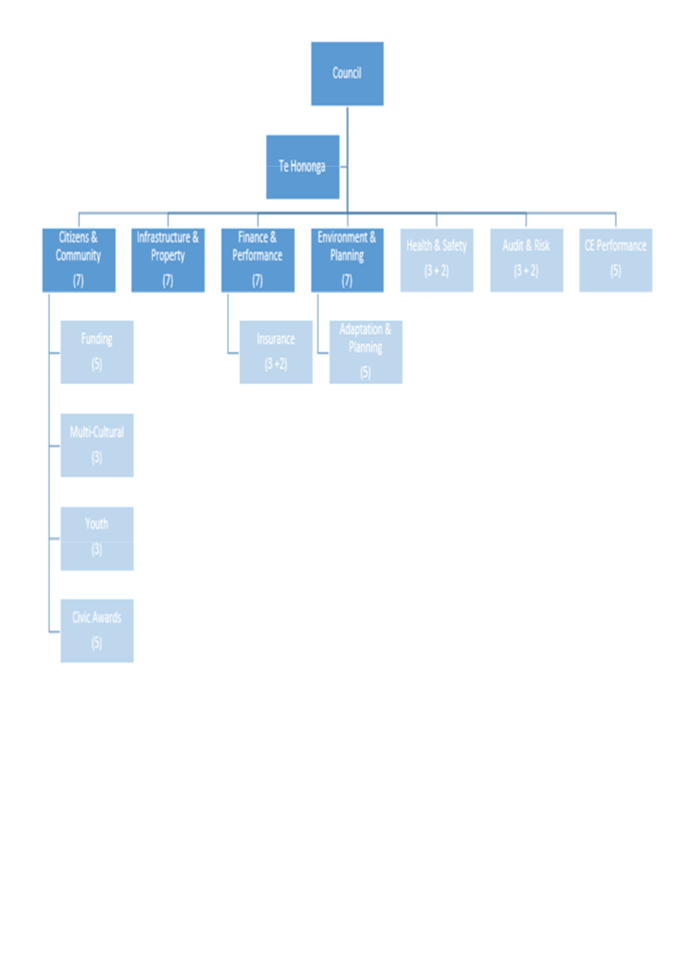
4.1.1 Delegated
Committees – Establish four standing committees of between seven to
nine Councillors, based on the four group areas of Council, with some
sub-committees for specific areas. These committees would have full
delegated decision-making authority to enhance efficiency and to prevent
relitigation when the item reported to Council. This model also retains some
special committees separate to the four primary committees.
4.1.2 Committees
of the Whole - Establish four standing committees of all Councillors and
the Mayor based on the four group areas of Council, with some sub-committees
for specific areas and without delegated decision-making power. This model also
retains some special committees separate to the four primary committees.
Committees of the Whole would have full delegated decision-making authority.
4.2 This
report has not considered removing portfolios as this was outside of the scope
of the request.
4.3 An
organisational chart setting out how this committee structure could look is
included in Attachment 1, noting that the two options differ on
membership and decision-making powers under this proposal.
4.4 For
clarity, the four group areas proposed are:
4.4.1 Citizens
& Community
4.4.2 Infrastructure
4.4.3 Regulatory
& Planning
4.4.4 Finance
& Performance
5. Detail Te Whakamahuki
5.1 Staff
have considered both options based on the following points:
5.1.1 Resourcing
Implications
5.1.2 Efficiency
and Effectiveness
5.1.3 Governance
Oversight
5.1.4 Upcoming
Organisational Changes
Resourcing
Implications
5.2 Any
change to the committee structure will have organisational resourcing
implications.
5.3 The
Council is focused on delivering the 2024-2034 Long Term Plan and any change to
the committee structure before this is completed in June 2024 will have an
impact on existing Council resources. This is because staff resourcing is
currently geared towards supporting Council through this process under the
existing structure.
5.4 When
committees are established, they require staff to:
5.4.1 Provide
secretarial support, including coordinating members, reports and agendas,
deputations and other business;
5.4.2 Develop
additional reporting systems, gathering information from across the
organisation and establishing new reporting lines; and
5.4.3 Connecting
committee decisions into the Council’s central governing body.
5.5 With
more committees, the number of reports is spread over a larger number of
committees which can often result in meetings with very few reports to consider
but still require resourcing to set up and run. This subsequently results in
the requirement for more resources to cover each meeting. For example, the
number of agendas would increase, and there would be more preparation meetings
(such as agenda setting) increasing the staff resources for each meeting,
including that for the committee’s Principal Advisors.
5.6 Adding
these additional tasks will have an adverse impact on the current staff
workload, by diverting the focus of the staff involved in the Long Term Plan to
what would be non-urgent changes. This will extend the current workload to a
level that staff believe will lead to other work being delayed.
5.7 The
current committee structure also has a forward plan of meetings through to the
end of the Council triennium in 2025. As elected members’ diaries are
already at high capacity, any further committee meetings could have many
scheduling issues and clashes. Any change will require amended schedules which
may not be able to meet the requirements of all members.
5.8 Both
alternative options considered will have this impact on the current workload.
If either option is adopted, current resource in the Secretariat will need to
be reviewed and may need to be increased to support the increased number of
committees. This could be considered as an increase in spending under the
2024-2034 Long Term Plan, but any additional resourcing is unable to be
established until the next financial year.
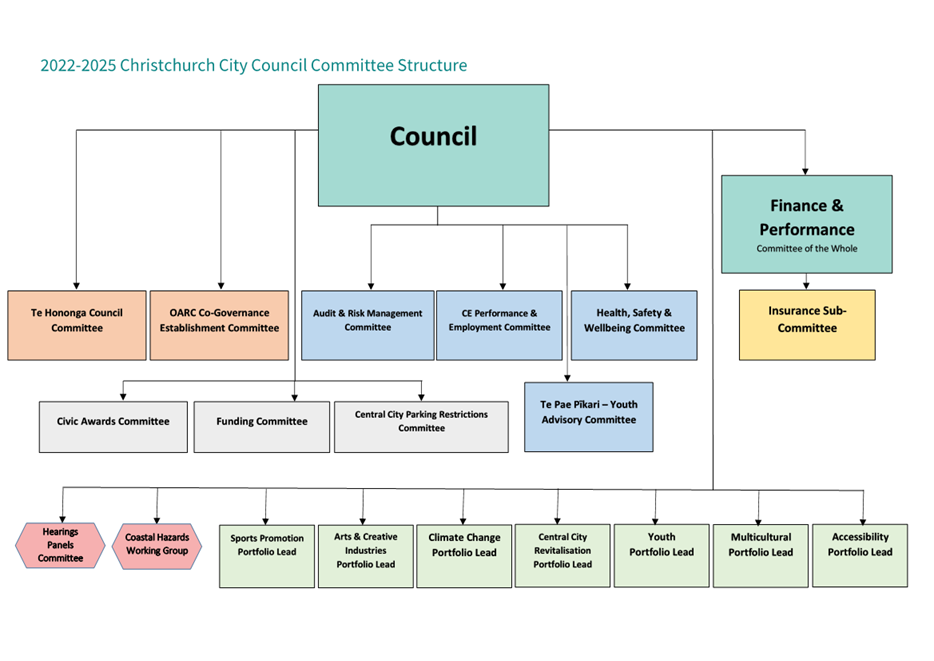
5.9 For
reference, Attachment 2 outlines the existing meetings, committees, sub
committees and other groups that receive Secretariat support from Council as at
31 January 2024.
Efficiency and Effectiveness
5.10 There
is unlikely to be a change in the efficiency and effectiveness of committees
unless Council is prepared to consider greater delegation of decision-making to
committees, reducing the number of councillors required to attend a meeting,
and reducing the number of meetings of the main governing body.
5.11 Under
the previous Committee of the Whole structure, some committees at times had so
few agenda items times that running of some meetings was not efficient, for
example:
5.11.1 Just
under 50% of reports to the Sustainability and Community Resilience Committee
were requesting a decision. For the other ceased Committees, agendas were
filled up with information sharing and administration reports ranging from 62%
(the Urban Development and Transport Committee) to 96% (the Multicultural
Committee) of agenda items considered at the meeting. Regardless of the content
type, these meetings all required staff and Members’ time to prepare
content for, attend and run.
5.11.2 Of
the 173 meetings held for ceased Committees and Working Groups under the
previous structure, 57 (33%) were held with only one report on the agenda.
5.12 Another
impact is that additional committees of any type reduce efficiency of process.
This is because there are times when there is no clear indication of which
committee is best placed to deal with a particular report, leading to confusion
and duplication. A report may cross the boundaries of multiple committees and
could be interpreted as being within the terms of reference of more than one
committee. At this point, there would need to be a robust process to identify
reporting lines. As there has been such a process previously, this issue
isn’t insurmountable but is does reduce the efficiency of decision-making
processes.
5.13 To
accommodate the additional committee meetings, it would be proposed to reduce
the number of Council meetings per month to one. The committees would need to
be half-day meetings and would be scheduled for the additional days currently
occupied by Council and the Finance and Performance Committee meetings.
Additional subcommittee meetings would need to be scheduled to fit around
existing time commitments.
5.14 On
balance, there is unlikely to be efficiency and effectiveness improvements
under a change to a new committee structure for the above reasons.
Governance Oversight
5.15 The
primary concern of Council was the reduced opportunities for governance
oversight of forward work programmes within operational units under the
existing structure.
5.16 Previously,
committees received and reviewed forward work programmes for operational units
to identify risks, key projects and level of service delivery. Council has
expressed a desire to increase this type of work.
5.17 Both
alternative options would allow for this, with Committees of the Whole offering
the best opportunity for all members to review this information as all
Councillors would be in attendance. Committees with smaller membership would
mean that not all Councillors would be members of all committees and therefore
not privy to the same level of information.
5.18 It
should be noted that under the Local Government Act 2002, elected members are
entitled to attend any meeting of a committee whether they are a member or not.
If they are not a member of the committee, with the leave of the Chair they may
take part in the discussion at the meeting but are not entitled to debate or
vote on any matter.
5.19 There
are opportunities under the existing structure to provide greater governance
oversight opportunities through regular reports and forward work programmes to
the main governing body (Council). The Council could receive regular updates
from operational service delivery units such as Parks, Libraries and Transport
etc. This would balance the pressures on resourcing reports against
Council’s expectation for greater oversight of operational work
programmes. It is noted that governance oversight does already exist in the
form of performance reporting to the Finance and Performance Committee (of the
Whole).
5.20 During
the review of portfolios, concern was raised by some respondents that portfolio
holders were less able to receive and reflect the community viewpoints
previously expressed in specific committees. While more committees may resolve
this, members of the public and specific interest groups are welcome to make
public forum presentations or deputations at any current meeting. Portfolio
holders are empowered to table, in their Portfolio Lead Reports to Council,
issues which bring attention to specific community concerns. A change to either
alternative option is unlikely to make a substantive impact on this concern.
5.21 Either
alternative option would provide a greater number of forums for Council to
provide increased governance oversight. Although there remain opportunities to
increase governance oversight under the existing structure if Council wanted to
consider those.
Upcoming Changes
5.22 The
Council currently has a meeting structure that meets the needs of the
organisation and allows for robust decision-making and information sharing
within existing resourcing. Staff have adapted to this structure and processes
are geared to operate under this model.
5.23 There
are three upcoming changes which are likely to impact on the ability of Council
to change the structure at this point in the triennium:
5.23.1
2024-2034 Long Term Plan starting on 1 July 2024;
5.23.2
New Chief Executive likely appointed in mid to late 2024; and
5.23.3
The 2025 Local Government Election in October 2025
5.24 If
the Council were to decide to amend the committee structure, it is recommended
that this be implemented to commence in July 2024, after the adoption of the
Long Term Plan. The reasoning for this is the lack of capacity of the
Secretariat to support a more extensive committee structure and running the
submissions/hearings function of the Long Term Plan concurrently. Historically,
meetings in May are limited to Council, and Finance and Performance Committee
(of the whole) to provide adequate time for LTP hearings to occur.
5.25 If
this was the case, there would only be one year left of the triennium before
the 2025 Local Government election. Given this short remaining timeframe,
Council would need to carefully consider the merits of changing the structure
for the final twelve months of the term.
5.26 Additionally,
the Council is in the process of recruiting a new Chief Executive who may wish
to review systems and processes upon their arrival, meaning that there is a
risk that any change now may be superseded within twelve months. Any
reconsideration of the Committee structure would therefore be best completed
following the appointment of the new Chief Executive, once their views are
known, and to avoid repeating the process within a short period of time.
5.27 These
upcoming changes in the final year of the triennium make the resourcing,
efficiency, and effectiveness implications of any significant changes to the
existing structure unlikely to generate a greater benefit of governance
oversight. There are simpler ways to increase oversight opportunities, for
example, through regular work programme reports to Council.
6. Summary
6.1 Based on assessment of the above areas, it is recommended
that Council:
6.1.1 Maintain
the existing committee structure; and
6.1.2 Request
regular forward work programme updates to the governing body.
6.2 Returning
to the previous committee structure with four Committees of the Whole, in
addition to Council, whilst is an option, is not recommended. This structure proved to be an inefficient use of staff and
Members’ resources as detailed in section 5 above.
6.3 If Council does want to change the committee structure, of
the alternative options evaluated, the option of delegated decision-making of
smaller committees is the most in line with the areas assessed in section 5
above. Providing the committees with full delegations would mean that matters
are dealt with once and not subsequently relitigated at Council, where the
committee recommendation(s) could be overturned. This should not be implemented
until the new financial year due to the impact on resourcing.
7. Policy Framework Implications Ngā Hīraunga ā- Kaupapa here
Strategic
AlignmentTe Rautaki
Tīaroaro
7.1 This report supports the Council's
Long Term Plan (2021 - 2031):
7.2 Governance
7.2.1 Activity: Governance and decision-making
· Level of Service: 4.1.28.1 Schedule, support and
record governance meetings. - Between 500 and 650 governance meetings are
supported, unless committee structure provides otherwise
Policy
Consistency Te Whai
Kaupapa here
7.3 The
decision is consistent with Council’s Plans and Policies
by assisting in decision-making on such matters.
Impact
on Mana Whenua Ngā
Whai Take Mana Whenua
7.4 The
decision does not involve a significant decision in
relation to ancestral land or a body of water or other elements of intrinsic
value, therefore this decision does not specifically
impact Mana Whenua, their culture, and traditions.
7.5 The
decision does not involve a matter of interest to Mana
Whenua and will not impact our agreed partnership priorities with Ngā Papatipu Rūnanga.
Climate
Change Impact Considerations Ngā Whai Whakaaro mā te Āhuarangi
7.6 The
proposals in this report are unlikely to contribute significantly to adaptation
to the impacts of climate change or emissions reductions.
Accessibility
Considerations Ngā
Whai Whakaaro mā te Hunga Hauā
7.7 There are no direct accessibility implications
associated with the decision to review the committee structure.
8. Resource Implications Ngā Hīraunga Rauemi
Capex/Opex Ngā Utu Whakahaere
8.1 Cost
to Implement – The cost to implement a new committee structure would be
negligible and could be covered by existing budgets. Committee report/agenda
templates can be developed internally within existing resource. Additional
advertising, assuming meetings are advertised in the monthly (existing) advert
would result in a negligible increase in cost.
8.2 Maintenance/Ongoing
costs - There may be the need for additional Secretariat resource to cover a
more extensive structure. Additional meetings require additional agendas and
meeting sessions, requiring more staff resource to service. If a new committee
structure was implemented, a review would be required once embedded to identify
adequate resourcing needs.
8.3 Additional
meetings may result in increased costs to livestream. If livestreaming
was required, depending on the length of the meeting, would incur an additional
cost of approximately $40,000 to $80,000 per year. The cost of livestreaming
per meeting is dependent on meeting length.
9. Legal Implications Ngā Hīraunga ā-Ture
Statutory power to undertake proposals in the report
Te Manatū Whakahaere Kaupapa
9.1 The
Council has the power under the LGA to amend the current committee structure.
Other Legal Implications Ētahi atu
Hīraunga-ā-Ture
9.2 There
is no legal context, issue, or implication relevant to this decision. Any
change in the committee structure that would impact on delegated decision
making will be brought back to Council for adoption via committee terms of
reference.
10. Risk Management Implications Ngā Hīraunga Tūraru
10.1 There
is the risk that should a structure of committees with delegations be adopted,
the full Council will not have governance oversight of all matters as is the
required outcome. There could also be the risk of relitigation and the
overturning of committee recommendations at Council.
10.2 A
backlog of decisions to be made may occur due to infrequent meetings. The
Council currently meets twice a month, but the alternative committee structure
would have Council and committees meeting once.
11. Next Steps Ngā Mahinga ā-muri
11.1 Should
the Council decide to amend the committee structure, a future report will be
provided to the Council to consider and adopt the desired structure and
subsequent terms of reference.
Attachments Ngā Tāpirihanga
|
No.
|
Title
|
Reference
|
Page
|
|
a ⇩
|
Alternative
committee structure
|
24/150275
|
21
|
|
b ⇩
|
Current
committee structure
|
24/163895
|
22
|
In addition to the attached documents, the following background
information is available:
|
Document
Name – Location / File Link
|
|
Not
applicable
|
Confirmation of Statutory
Compliance Te Whakatūturutanga ā-Ture
|
Compliance with Statutory Decision-making
Requirements (ss 76 - 81 Local Government Act 2002).
(a) This report contains:
(i) sufficient information about all reasonably practicable
options identified and assessed in terms of their advantages and
disadvantages; and
(ii) adequate consideration of the views and preferences of
affected and interested persons bearing in mind any proposed or previous
community engagement.
(b) The information reflects the level of significance of the
matters covered by the report, as determined in accordance with the Council's
significance and engagement policy.
|
Signatories Ngā Kaiwaitohu
|
Authors
|
Megan Pearce -
Manager Hearings and Council Support
Boyd Becker -
Principal Mayoral Advisor
|
|
Approved By
|
Helen White -
Head of Legal & Democratic Services
Lynn
McClelland - Assistant Chief Executive Strategic Policy and Performance
Mary
Richardson - Interim Chief Executive
|
|
Council
21 February 2024
|
|
|
Council
21 February 2024
|
|
|
Council
21 February 2024
|
|
|
7. Better Off Funding Citywide Safety
|
|
Reference / Te Tohutoro:
|
23/1976232
|
|
Report of / Te Pou Matua:
|
Gary
Watson Community Partnerships Manager
|
|
Senior Manager / Pouwhakarae:
|
Andrew
Rutledge, Acting General Manager Citizens and Community
(Andrew.Rutledge@ccc.govt.nz)
|
1. Purpose and Origin of Report Te Pūtake Pūrongo
1.1 The purpose of this report is to seek a decision from the
Council on the proposed allocation of Better Off funding set aside by the
Council for citywide safety related initiatives.
1.2 In December 2022, the Council resolved to apply for
$1,970,000, to support citywide safety related initiatives as part of the
Better Off funding programme (CNCL2022/00196). This staff-generated report aims
to inform the Council's allocation of this fund.
1.3 The
decisions in this report are of medium significance in relation to the
Christchurch City Council’s Significance and Engagement Policy. The
level of significance was determined by the number of people affected and with
an interest, also the level of community interest in the issue. Safety
issues and youth offending have been well documented and raised in numerous
forums over the last 12 months. The proposals considered in this report
are consistent with the Council’s direction to date and have been discussed
with community stakeholders, relevant agencies, and staff.
2. Officer Recommendations Ngā
Tūtohu
That the Council:
1. Grant the Christchurch City Mission a total
sum of $560,000 over three years to deliver two outreach positions working
across the city to support, and promote housing options for,
Christchurch’s Street community.
2. Grant Youth and Cultural Development a total
sum of $750,000 over three years to deliver a Mobile Youth Work project to
address youth issues city wide and respond to hot spots as they arise.
3. Grant a total sum of $100,000 to provide three
smart poles in priority areas namely New Brighton, Hornby, and Papanui.
4. Set aside a total sum of $200,000 to
coordinate and deliver community safety, development, and cohesion initiatives
across the East of the city.
5. Establish a funding pool using the remaining
funds previously set aside by the Council for City-wide safety initiatives, a
total of $116,000, to allow the Council to deliver future initiatives
responding to issues as they arise.
6. Note the Council’s previous grant to the
Christchurch Central City Business Association of $244,000 to deliver inner
city safety patrols over three years.
7. Delegate authority to the Head of Community
Support and Partnerships to make the necessary arrangements to implement the
Council’s decision.
3. Reason for Report Recommendations Ngā Take mō te
Whakatau
3.1 Council
staff have engaged with partner organisations, including Police, the Ministry
of Social Development (MSD), Business, and social services providers.
From these discussions and staff consideration, the initiatives detailed in
this report have emerged as priorities.
3.2 The
recommended initiatives represent an immediate response to identified issues
over a wider area across the city. This is consistent with the Council’s
intended use of the Fund.
3.3 Youth
and city safety concerns have been consistently raised at the Council and
community level across the city. The identified initiatives are designed
to respond to need and deliver in wider areas across the city. Each
Community Board has also received Better Off Funding to put towards local
responses to similar issues bespoke to local communities.
3.4 There
is consensus amongst partner organisations and staff that the initiatives
recommended are the most effective at this time.
4. Alternative Options Considered Ētahi atu Kōwhiringa
4.1 Alternative
Options. Staff investigated alternative options such as employment
programmes and ways of supporting housing providers.
4.1.1 These
options were considered to have a long term rather than an immediate
impact/response to the current need and were not progressed.
4.2 Support
Selected Projects. The Council can support or decline any number of
the projects recommended, the details of which are in Attachment B.
4.2.1 It
is recommended that the Council consider each project on its merits.
4.3 To
decline to award any part of the Better Off Funding at this time.
4.3.1 This
option is not recommended as the projects are designed to address current need
as identified in partnership with agencies across the city and are prioritised
accordingly.
5. Detail Te Whakamahuki
5.1 Following the
Council’s initial resolution on 12 December 2022, staff worked with
partners to identify initiatives, agree funding terms, and key
milestones. Community views have been incorporated via discussions with
partners and, to a certain extent, media coverage. Consensus was reached with
most partners with a strong endorsement to proceed. In part the
initiatives represent a response to:
5.1.1 Ram
raid numbers increasing and the reported increase in the frequency of
antisocial youth behaviour.
5.1.2 Issues
arising from homelessness particularly in the city centre.
5.1.3 Contributing
to the delivery of the Council’s commitment to build relationships with
effected communities in the East including affected by the wastewater plant
fire and Organics Processing Plant.
5.1.4 The
perception of safety by the public.
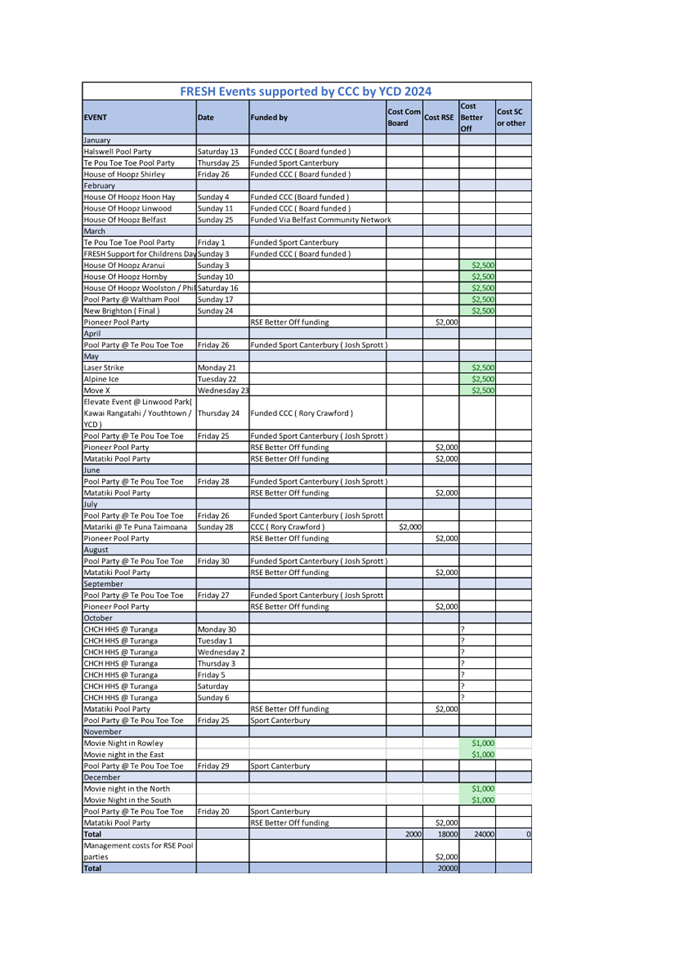
5.2 Initiatives
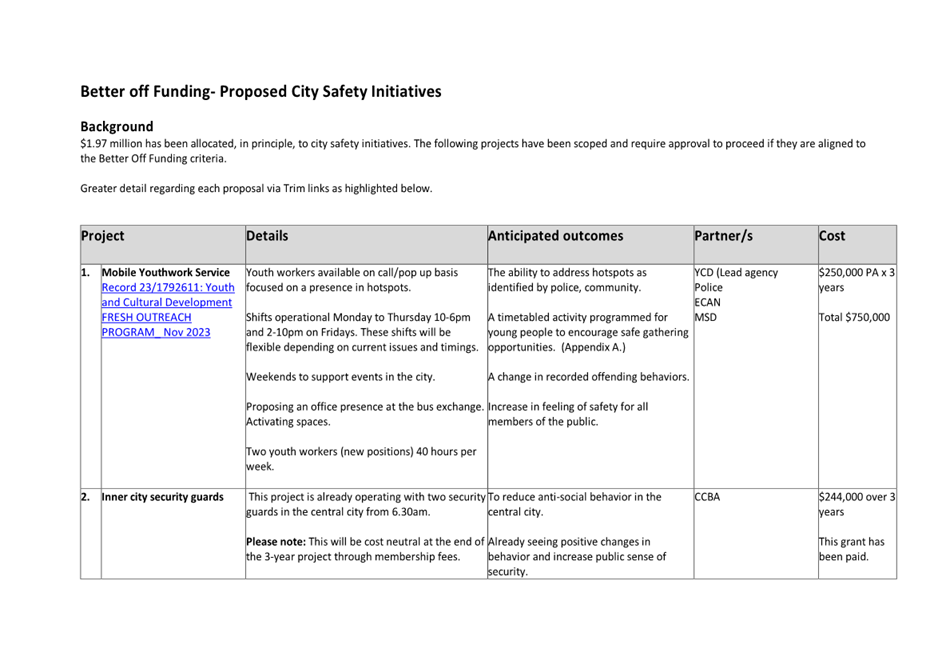
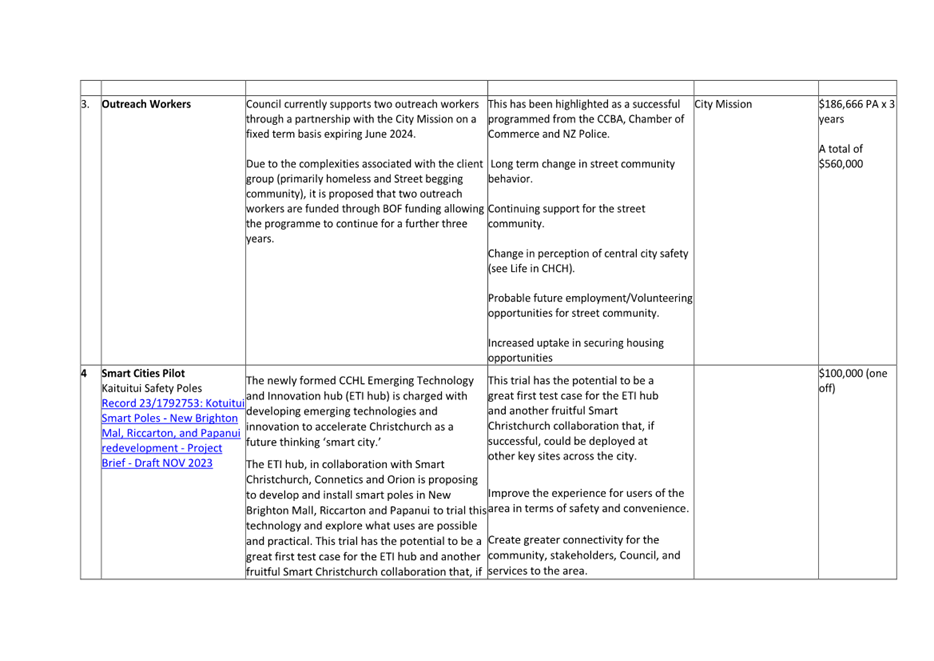
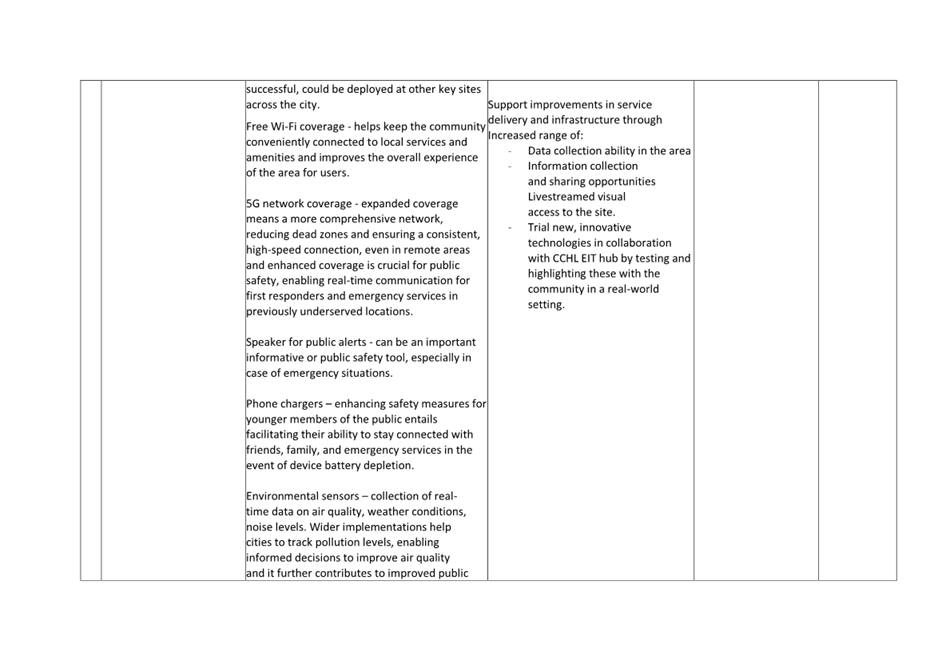
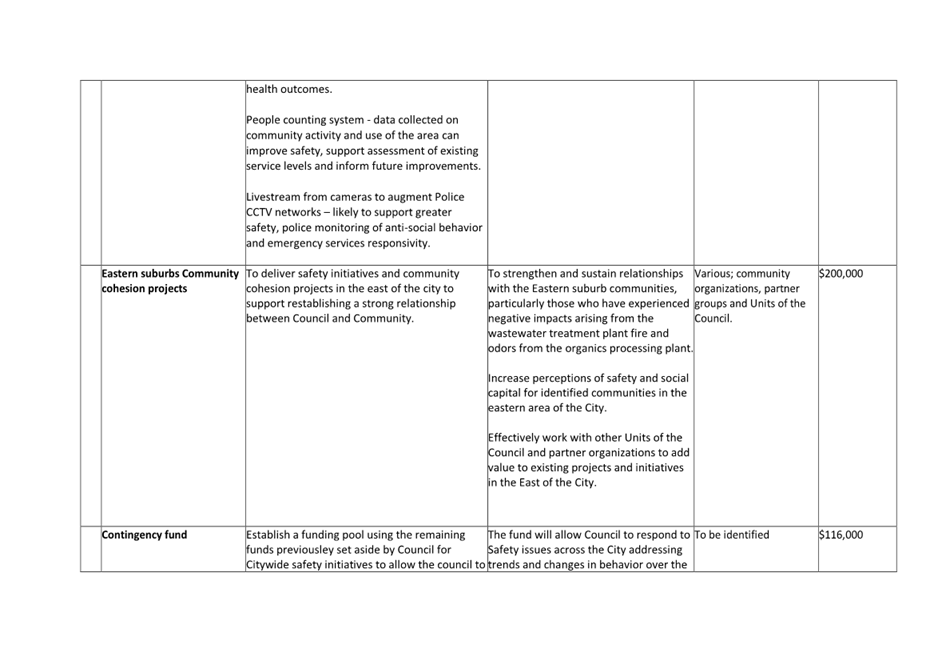
are detailed in Attachment B and summarised below:
5.2.1 Grant
Christchurch City Mission $560,000 over three years to deliver 2 outreach
positions working across the city to support our street community and to
promote housing options.
5.2.2 The
Council has already allocated $244,000 to the Christchurch Central City
Business Association to deliver inner city safety patrols over 3 years.
5.2.3 Grant
Youth and Cultural Development $750,000 over three years to deliver a mobile
Youth Work project to address youth issues and respond to hot spots as they
arise.
5.2.4 Grant
$100,000 to provide three smart poles, one in New Brighton, one in Hornby and
one in Papanui. The poles are equipped with a range of smart features including
a free Wi-Fi network, CCTV cameras linked to the police network, advanced
lighting fixtures, pedestrian and vehicle counters, and speakers for public
alerts.
5.2.5 The
review of the Wastewater Treatment Plant fire raised issues of credibility and
trust with the communities of the east of the city. There is currently a cross
Council project being developed to respond to this and therefore a contribution
of $200,000 to deliver safety, community development and cohesion initiatives
in the east of the city is proposed.
5.2.6 Establish
a funding pool using the remaining funds previously set aside by the Council
for City-wide safety initiatives, $116,000, to allow the Council to deliver
future initiatives responding to issues as they arise.
5.3 Initiatives were considered from a city-wide perspective responding
to need in different areas in a co-ordinated manner and maintaining flexibility
to adapt as circumstances change.
6. Policy Framework Implications Ngā Hīraunga ā- Kaupapa here
Strategic
AlignmentTe Rautaki
Tīaroaro
6.1 This report supports the Te Haumako, Te Whitingia - Strengthening
Communities Together Strategy:
6.1.1 Actively
promote a culture of equity by valuing diversity and fostering inclusion across
communities and generations
6.1.2 People
feel safe in their communities and neighbourhoods and work together to
understand, adapt, and thrive in the context of change and disruption.
6.2 This report supports the Council's
Long Term Plan (2021 - 2031):
6.3 Citizens and communities
6.3.1 Activity: Community Development and Facilities
· Level of Service: 2.2.5.1 Community partner
relationships are prioritised, improves and supported by robust information. -
130 Partner Organisations' relationship with Council is health-checked and
reported
· Level of Service: 2.0.1.1 Support the
development of strong, connected and resilient communities by supporting the
provision of a sustainable network of community facilities. - 80 - 84
Facilities
· Level of Service: 2.3.1.1 Provide funding for
projects and initiatives that build partnerships; resilient, engaged and
stronger communities, empowered at a local or community of interest
level. - 95% or more of reports presented demonstrate benefits that
align to CCC community outcomes, Council's strategic priorities and, where
appropriate Community Board plans
· Strengthening
Communities Together Strategy
· Pillar
2: Place: Support and help build connections between communities to
foster a sense of local identity, shared experience, and stewardship.
· Objective
2.1 Encourage Communities to create and sustain a sense of local identity and
ownership.
· Objective
2.3 Support the Community activation and kaitiakitanga of public places and
spaces.
· Pillar
4: Preparedness: People feel safe in their communities and neighbourhoods
and work together to understand, adapt, and thrive in the context of change and
disruption.
6.4 The
decision is consistent with the Council’s Plans and
Policies.
Impact
on Mana Whenua Ngā
Whai Take Mana Whenua
6.5 The
decision has no significant impact in relation to
ancestral land or a body of water or other elements of intrinsic value,
therefore this decision does not specifically impact
Mana Whenua, their culture and traditions.
6.6 The
decision is not a matter of interest to Mana Whenua and
will not impact on our agreed partnership priorities with
Ngā Papatipu Rūnanga. This is because the decision concerns the
allocation of pre-approved community funding.
Climate
Change Impact Considerations Ngā Whai Whakaaro mā te Āhuarangi
6.7 The
proposals in this report are unlikely to contribute significantly to adaptation
to the impacts of climate change or emissions reductions.
Accessibility
Considerations Ngā
Whai Whakaaro mā te Hunga Hauā
6.8 The decision does not have accessibility
considerations because the decision primarily concerns the allocation of
pre-approved community funding.
7. Resource Implications Ngā Hīraunga Rauemi
Capex/Opex Ngā Utu Whakahaere
7.1 Cost
to Implement - The cost of implementing the decision will be met within
existing operational budgets.
7.2 Maintenance/Ongoing
costs - As above
7.3 Funding
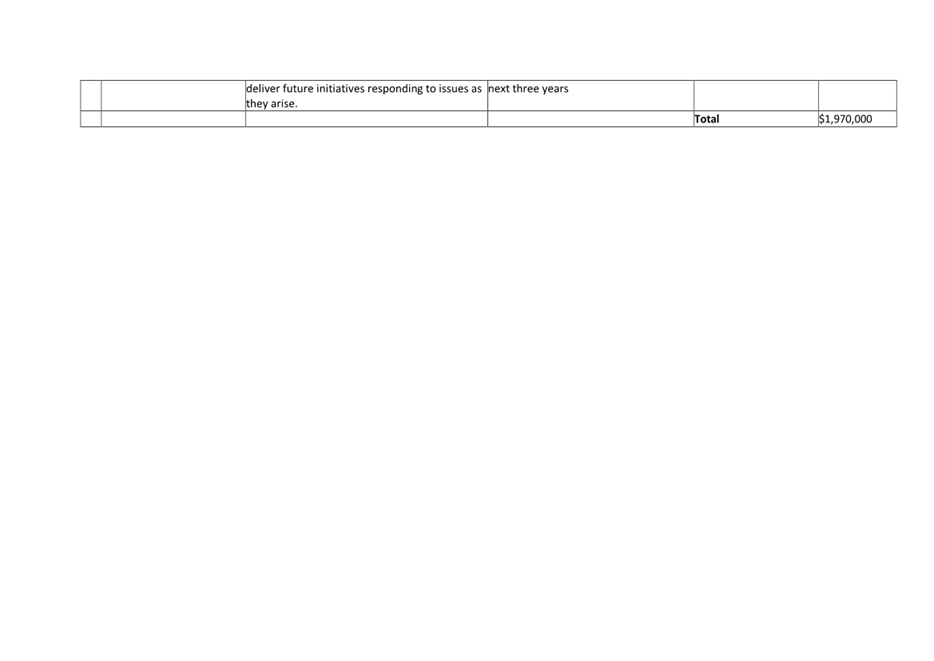
Source - Existing operational budgets. Grants will be paid from the Community
Safety Programme - Better Off Funding. Proposed projects are summarised
in the table below.
|
Project
|
Opening Balance $1,970,000
|
|
City Mission Outreach Positions
|
$560,000
|
|
CCBA Inner-City Patrols
|
$244,000
|
|
Mobile Youth Workers
|
$750,000
|
|
Smart Poles
|
$100,000
|
|
Eastern Suburbs Project
|
$200,000
|
|
Emerging Issues Contingency
|
116,000
|
|
|
Closing Balance $0
|
8. Legal Implications Ngā Hīraunga ā-Ture
8.1 There
is no specific legal context, issue, or implication relevant to this
decision. It should be noted that the Council’s legal and
democratic services unit draft and review funding and transactional agreement
templates and processes.
Other Legal Implications Ētahi atu
Hīraunga-ā-Ture
8.2 See
8.1 above.
9. Risk Management Implications Ngā Hīraunga Tūraru
9.1 The
principal risk involves the Council, having secured Better Off funding, failing
to act in a collaborative manner with a city-wide focus and not optimising the
value of the Fund.
9.1.1 This
risk is rated as low and is effectively mitigated by the collaborative approach
used to identify and recommend initiatives, and the city-wide focus on
responses to current issues.
9.2 There
is a risk that a pressing need will emerge after the Council have allocated the
Fund and Council will be unable to respond.
9.2.1 This
risk is rated low due the level of engagement with partner organisations and
the expertise of staff and Councillors in allocating the fund. The risk
is partially mitigated by the fact that a sum exceeding $116,000 will remain
for future allocation dependent on need.
Attachments Ngā Tāpirihanga
|
No.
|
Title
|
Reference
|
Page
|
|
a ⇩
|
Fresh Events
2024 Better Off Funding
|
24/199746
|
29
|
|
b ⇩
|
City Wide
Safety Projects Proposed for Better Off Funding February 2024
|
24/154726
|
30
|
In addition to the attached documents, the following background
information is available:
|
Document
Name – Location / File Link
|
|
Not
applicable
|
Confirmation of Statutory
Compliance Te Whakatūturutanga ā-Ture
|
Compliance with Statutory Decision-making
Requirements (ss 76 - 81 Local Government Act 2002).
(a) This report contains:
(i) sufficient information about all reasonably practicable
options identified and assessed in terms of their advantages and
disadvantages; and
(ii) adequate consideration of the views and preferences of
affected and interested persons bearing in mind any proposed or previous
community engagement.
(b) The information reflects the level of significance of the
matters covered by the report, as determined in accordance with the Council's
significance and engagement policy.
|
Signatories Ngā Kaiwaitohu
|
Authors
|
Gary Watson -
Manager Community Partnerships
John Filsell -
Head of Community Support and Partnerships
|
|
Approved By
|
John Filsell -
Head of Community Support and Partnerships
Peter Langbein
- Finance Business Partner
Andrew
Rutledge - Acting General Manager Citizens and Community
|
|
Council
21 February 2024
|
|
|
Council
21 February 2024
|
|
|
8. Metropolitan Discretionary Response
Fund - The New Zealand Symphony Orchestra Foundation
|
|
Reference / Te Tohutoro:
|
24/114558
|
|
Report of / Te Pou Matua:
|
Joshua
Wharton, Team Leader Community Funding, Joshua.Wharton@ccc.govt.nz
|
|
Senior Manager / Pouwhakarae:
|
Andrew
Rutledge, Acting General Manager Citizens and Community
(Andrew.Rutledge@ccc.govt.nz)
|
1. Purpose of Report Te Pūtake
Pūrongo
1.1 The
purpose of this report is for the Council to consider an application for
funding from its 2023/24 Discretionary Response Fund from the organisation
listed below.
|
Funding Request Number
|
Organisation
|
Project Name
|
Amount Requested
|
Amount Recommended
|
|
00066885
|
New Zealand Symphony
Orchestra Foundation
|
Beyond Words - A
programme of events to pay tribute those who lost their lives and loved ones
in the Christchurch Mosque Attacks on 15 March 2019.
|
$50,000
|
$0.00
|
1.2 There is currently a balance of $159,565 remaining in the fund.
2. Staff Recommendations / Ngā
Tūtohu
That
the Council:
1. Decline the application from the New Zealand
Symphony Orchestra Foundation to its 2023/24 Discretionary Response Fund for
the Beyond Words Programme.
3. Key Points Ngā Take Matua
Strategic Alignment Te Rautaki Tīaroaro
3.1 The
recommendation to decline the application for funding is consistent with the
Strengthening Communities Together Strategy and the Multicultural Strategy, and
the 2023/24 Discretionary Response Fund Metropolitan Decision Matrix.
Decision Making Authority Te Mana Whakatau
3.2 Determine
the allocation of the Discretionary Response Fund for each community.
3.3 Allocations
must be consistent with any policies, standards or criteria adopted by the
Council.
3.4 The
Fund does not cover:
· Legal challenges or
Environment Court challenges against the Council, Council Controlled
organisations. or Community Board decisions
· Projects or initiatives
that change the scope of a Council project or that will lead to ongoing
operational costs to the Council (though Community Boards can recommend to
the Council that it consider a grant for this purpose).
Assessment of Significance and Engagement Te Aromatawai Whakahirahira
3.5 The decisions in this report are of low significance in relation to
the Christchurch City Council’s Significance and Engagement Policy.
3.6 The level of significance was determined by the number of people
affected and/or with an interest.
3.7 Due to the assessment of low significance, no further community
engagement and consultation is required.
Discussion Kōrerorero
3.8 At the time of writing, the balance of the 2023/24 Discretionary
Response Fund is as below.
|
Total Budget <Enter Year>
|
Granted To Date
|
Available for allocation
|
Balance If Staff Recommendation adopted
|
|
$585,679
|
$426,115
|
$159,565
|
$159,565
|
3.9 $122,814 of the Metropolitan DRF funding pool this financial year
has been approved to 19 organisations under delegation of the Head of the
Community Governance and Partnerships Unit.
3.10 Based
on the current Discretionary Response Fund criteria, the application listed
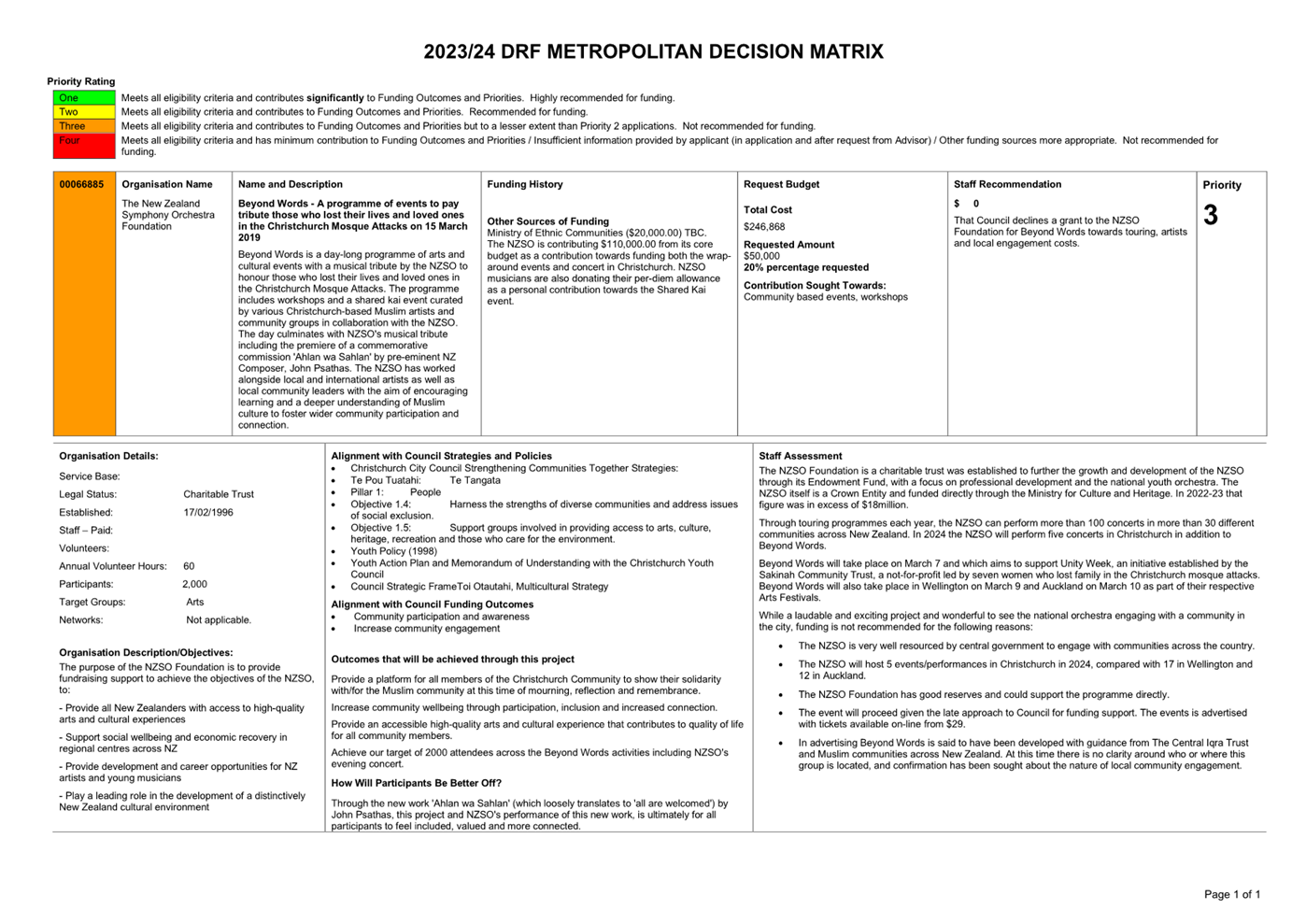
above is eligible for funding. However, consistent with the staff assessment
provided in Attachment A, it is recommended that the application for
funding be declined.
3.11 The
attached Decision Matrix provides detailed information for the
applications. This includes organisational details, project details,
financial information and a staff assessment.
Attachments Ngā Tāpirihanga
|
No.
|
Title
|
Reference
|
Page
|
|
a ⇩
|
Metropolitan Discretionary Response
Fund - January Matrix
|
24/111404
|
37
|
Confirmation of Statutory
Compliance Te Whakatūturutanga ā-Ture
|
Compliance with Statutory Decision-making
Requirements (ss 76 - 81 Local Government Act 2002).
(a) This report contains:
(i) sufficient information about all reasonably practicable
options identified and assessed in terms of their advantages and
disadvantages; and
(ii) adequate consideration of the views and preferences of
affected and interested persons bearing in mind any proposed or previous
community engagement.
(b) The information reflects the level of significance of the
matters covered by the report, as determined in accordance with the Council's
significance and engagement policy.
|
Signatories Ngā Kaiwaitohu
|
Author
|
Josh Wharton -
Team Leader Community Funding
|
|
Approved By
|
Gary Watson -
Manager Community Partnerships
John Filsell -
Head of Community Support and Partnerships
|
|
Council
21 February 2024
|
|
|
Council
21 February 2024
|
|
|
Council
21 February 2024
|
|
|
9. Resolution to Exclude the Public
|
Section 48, Local Government Official
Information and Meetings Act 1987.
I move that the public be excluded from the
following parts of the proceedings of this meeting, namely items listed
overleaf.
Reason for passing this resolution: good
reason to withhold exists under section 7.
Specific grounds under section 48(1) for
the passing of this resolution: Section 48(1)(a)
Note
Section 48(4) of the Local Government
Official Information and Meetings Act 1987 provides as follows:
“(4) Every resolution to exclude the
public shall be put at a time when the meeting is open to the public, and the
text of that resolution (or copies thereof):
(a) Shall
be available to any member of the public who is present; and
(b) Shall
form part of the minutes of the local authority.”
This resolution is made in reliance on
Section 48(1)(a) of the Local Government Official Information and Meetings Act
1987 and the particular interest or interests protected by Section 6 or Section
7 of that Act which would be prejudiced by the holding of the whole or relevant
part of the proceedings of the meeting in public are as follows:
|
Council
21 February 2024
|
|
|
ITEM NO.
|
GENERAL SUBJECT OF EACH MATTER TO BE CONSIDERED
|
SECTION
|
SUBCLAUSE AND REASON UNDER THE ACT
|
PLAIN ENGLISH REASON
|
WHEN REPORTS CAN BE REVIEWED FOR POTENTIAL RELEASE
|
|
10.
|
141 Wigram Road lease
|
s7(2)(b)(ii)
|
Prejudice Commercial Position
|
Information contained in this report contains financial
disclosures that may prejudice the Association's financial position.
|
Upon the establishment of the charitable investment Trust.
|
|
Council
21 February 2024
|
|
Karakia Whakamutunga
Kia
whakairia te tapu
Kia
wātea ai te ara
Kia
turuki whakataha ai
Kia
turuki whakataha ai
Haumi
e. Hui e. Tāiki e